MODULE 7:THE
LEGISLATIVE
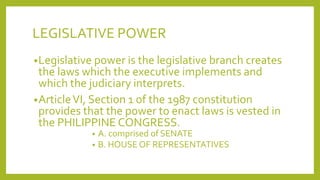
LEGISLATIVE POWER
•Legislative power is the legislative branch creates
the laws which the executive implements and
which the judiciary interprets.
•ArticleVI, Section 1 of the 1987 constitution
provides that the power to enact laws is vested in
the PHILIPPINE CONGRESS.
• A. comprised of SENATE
• B. HOUSE OF REPRESENTATIVES
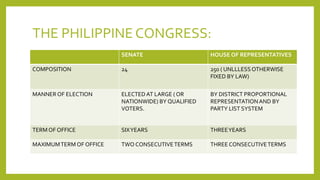
THE PHILIPPINE CONGRESS:
SENATE HOUSE OF REPRESENTATIVES
COMPOSITION 24 250 ( UNLLLESSOTHERWISE
FIXED BY LAW)
MANNER OF ELECTION ELECTED AT LARGE ( OR
NATIONWIDE) BY QUALIFIED
VOTERS.
BY DISTRICT PROPORTIONAL
REPRESENTATIONAND BY
PARTY LIST SYSTEM
TERM OF OFFICE SIXYEARS THREEYEARS
MAXIMUMTERM OF OFFICE TWO CONSECUTIVETERMS THREE CONSECUTIVETERMS
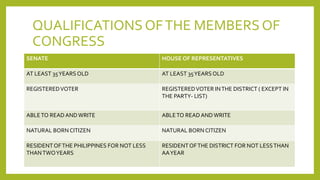
QUALIFICATIONS OFTHE MEMBERSOF
CONGRESS
SENATE HOUSE OF REPRESENTATIVES
AT LEAST 35YEARSOLD AT LEAST 35YEARSOLD
REGISTEREDVOTER REGISTEREDVOTER INTHE DISTRICT ( EXCEPT IN
THE PARTY- LIST)
ABLETO READANDWRITE ABLETO READANDWRITE
NATURAL BORN CITIZEN NATURAL BORN CITIZEN
RESIDENTOFTHE PHILIPPINES FOR NOT LESS
THANTWOYEARS
RESIDENTOFTHE DISTRICT FOR NOT LESSTHAN
AAYEAR
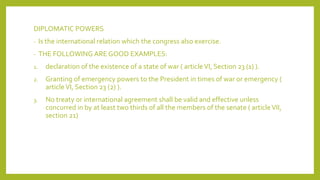
DIPLOMATIC POWERS
- Is the international relation which the congress also exercise.
- THE FOLLOWING ARE GOOD EXAMPLES:
1. declaration of the existence of a state of war ( articleVI, Section 23 (1) ).
2. Granting of emergency powers to the President in times of war or emergency (
articleVI, Section 23 (2) ).
3. No treaty or international agreement shall be valid and effective unless
concurred in by at least two thirds of all the members of the senate ( articleVII,
section 21)
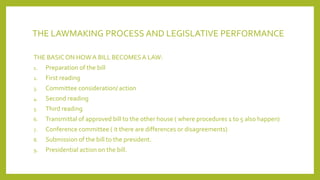
THE LAWMAKING PROCESS AND LEGISLATIVE PERFORMANCE
THE BASIC ON HOW A BILL BECOMESA LAW:
1. Preparation of the bill
2. First reading
3. Committee consideration/ action
4. Second reading
5. Third reading
6. Transmittal of approved bill to the other house ( where procedures 1 to 5 also happen)
7. Conference committee ( it there are differences or disagreements)
8. Submission of the bill to the president.
9. Presidential action on the bill.
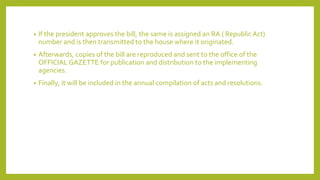
• If the president approves the bill, the same is assigned an RA ( Republic Act)
number and is then transmitted to the house where it originated.
• Afterwards, copies of the bill are reproduced and sent to the office of the
OFFICIAL GAZETTE for publication and distribution to the implementing
agencies.
• Finally, it will be included in the annual compilation of acts and resolutions.

Module 7: THE LEGISLATIVE

  • 1.
  • 2.
    LEGISLATIVE POWER •Legislative poweris the legislative branch creates the laws which the executive implements and which the judiciary interprets. •ArticleVI, Section 1 of the 1987 constitution provides that the power to enact laws is vested in the PHILIPPINE CONGRESS. • A. comprised of SENATE • B. HOUSE OF REPRESENTATIVES
  • 3.
    THE PHILIPPINE CONGRESS: SENATEHOUSE OF REPRESENTATIVES COMPOSITION 24 250 ( UNLLLESSOTHERWISE FIXED BY LAW) MANNER OF ELECTION ELECTED AT LARGE ( OR NATIONWIDE) BY QUALIFIED VOTERS. BY DISTRICT PROPORTIONAL REPRESENTATIONAND BY PARTY LIST SYSTEM TERM OF OFFICE SIXYEARS THREEYEARS MAXIMUMTERM OF OFFICE TWO CONSECUTIVETERMS THREE CONSECUTIVETERMS
  • 4.
    QUALIFICATIONS OFTHE MEMBERSOF CONGRESS SENATEHOUSE OF REPRESENTATIVES AT LEAST 35YEARSOLD AT LEAST 35YEARSOLD REGISTEREDVOTER REGISTEREDVOTER INTHE DISTRICT ( EXCEPT IN THE PARTY- LIST) ABLETO READANDWRITE ABLETO READANDWRITE NATURAL BORN CITIZEN NATURAL BORN CITIZEN RESIDENTOFTHE PHILIPPINES FOR NOT LESS THANTWOYEARS RESIDENTOFTHE DISTRICT FOR NOT LESSTHAN AAYEAR
  • 5.
    DIPLOMATIC POWERS - Isthe international relation which the congress also exercise. - THE FOLLOWING ARE GOOD EXAMPLES: 1. declaration of the existence of a state of war ( articleVI, Section 23 (1) ). 2. Granting of emergency powers to the President in times of war or emergency ( articleVI, Section 23 (2) ). 3. No treaty or international agreement shall be valid and effective unless concurred in by at least two thirds of all the members of the senate ( articleVII, section 21)
  • 6.
    THE LAWMAKING PROCESSAND LEGISLATIVE PERFORMANCE THE BASIC ON HOW A BILL BECOMESA LAW: 1. Preparation of the bill 2. First reading 3. Committee consideration/ action 4. Second reading 5. Third reading 6. Transmittal of approved bill to the other house ( where procedures 1 to 5 also happen) 7. Conference committee ( it there are differences or disagreements) 8. Submission of the bill to the president. 9. Presidential action on the bill.
  • 7.
    • If thepresident approves the bill, the same is assigned an RA ( Republic Act) number and is then transmitted to the house where it originated. • Afterwards, copies of the bill are reproduced and sent to the office of the OFFICIAL GAZETTE for publication and distribution to the implementing agencies. • Finally, it will be included in the annual compilation of acts and resolutions.