Entrepreneurship vs. Entrepreneurs
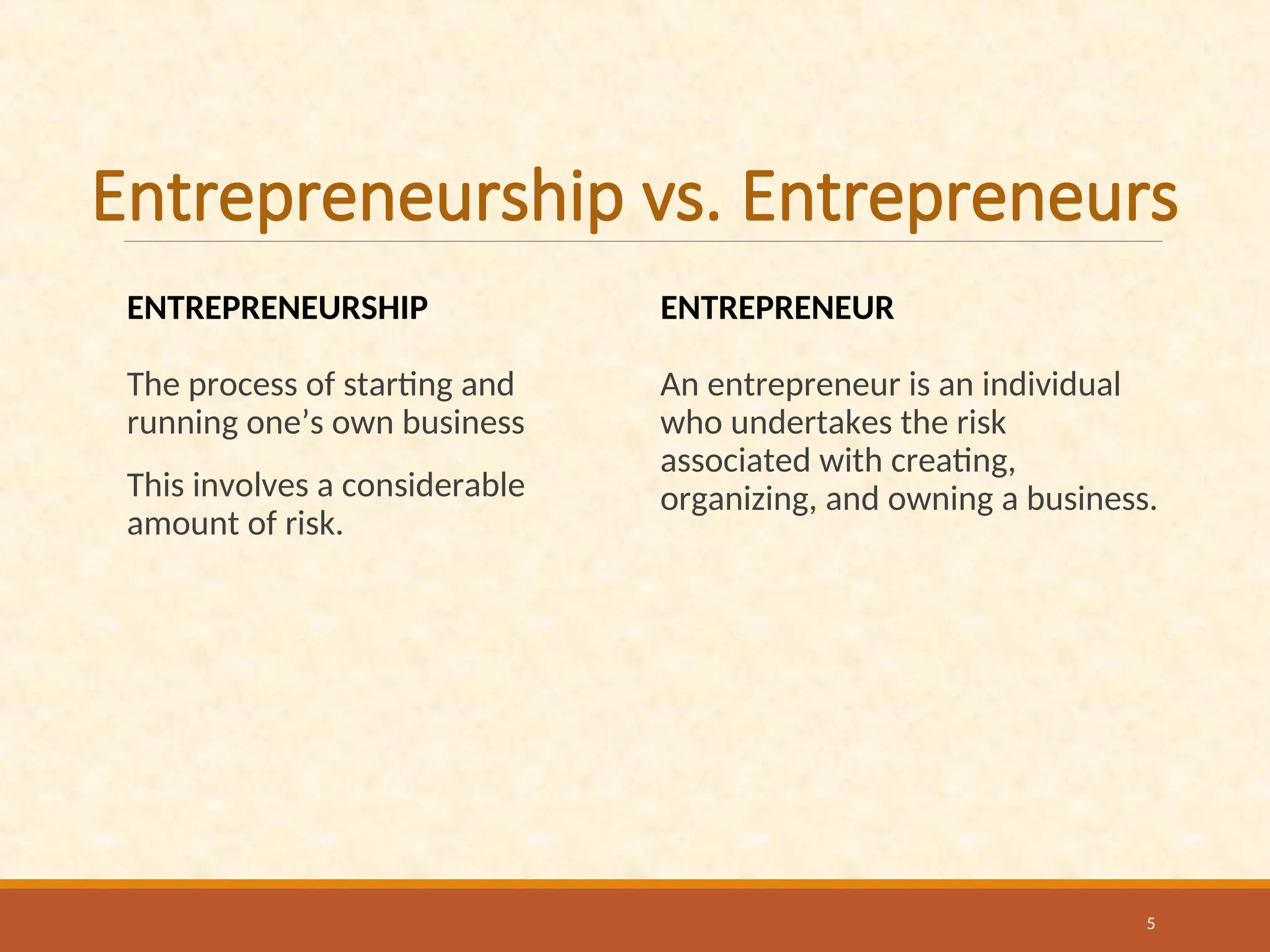
ENTREPRENEURSHIP
Theprocess of starting and
running one’s own business
This involves a considerable
amount of risk.
ENTREPRENEUR
An entrepreneur is an individual
who undertakes the risk
associated with creating,
organizing, and owning a business.
5
6.
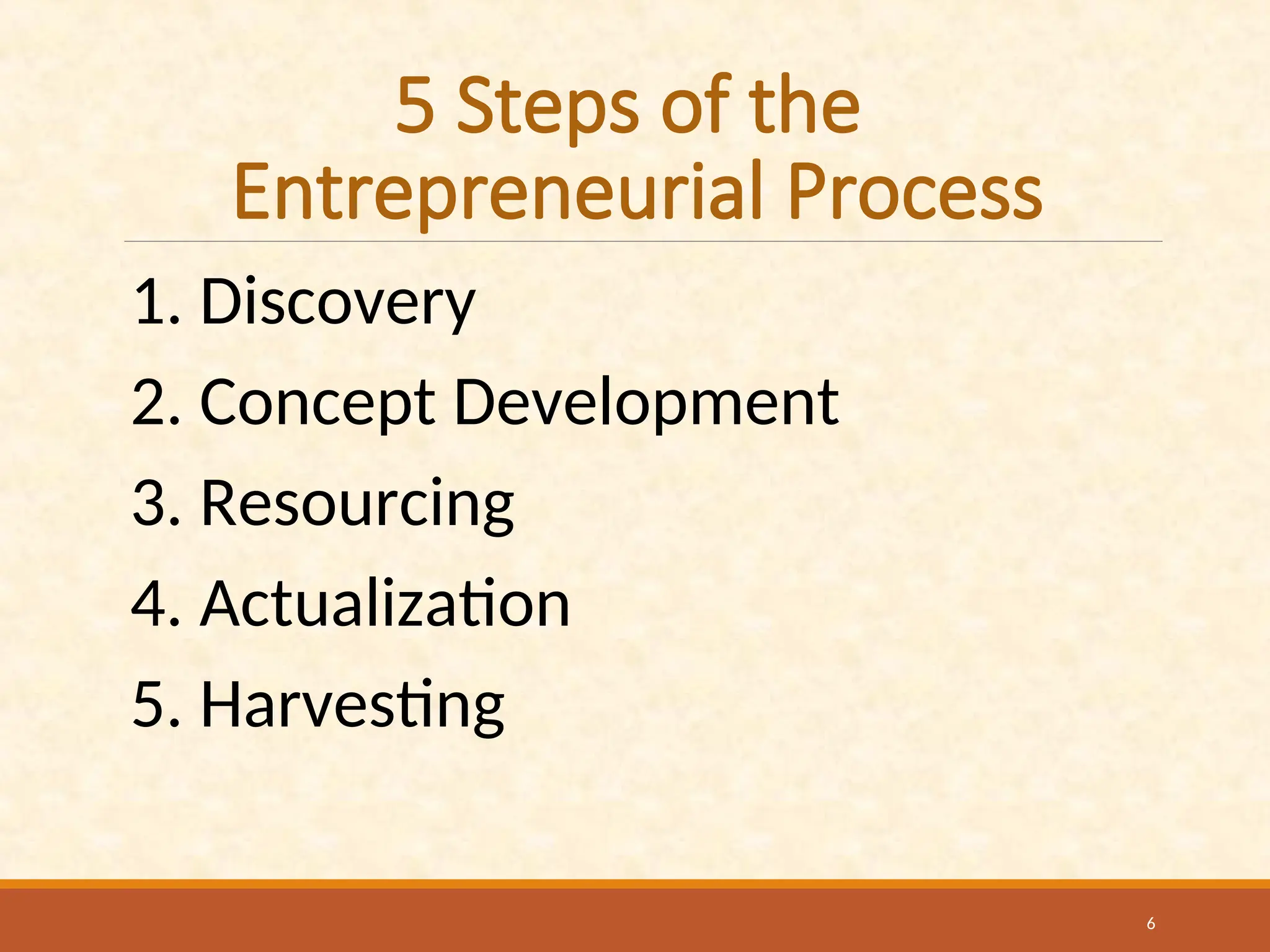
5 Steps ofthe
Entrepreneurial Process
1. Discovery
2. Concept Development
3. Resourcing
4. Actualization
5. Harvesting
6
7.
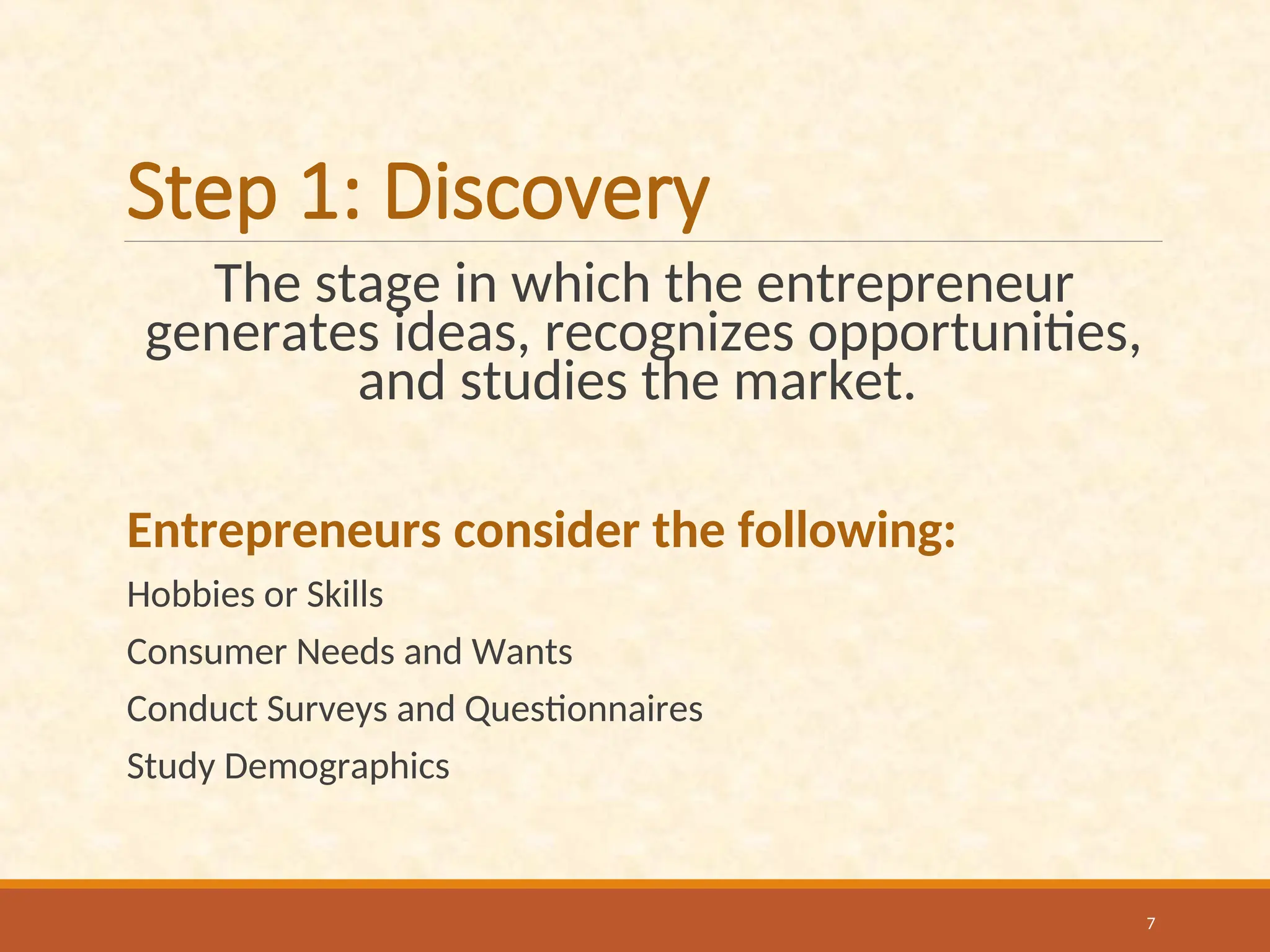
Step 1: Discovery
Thestage in which the entrepreneur
generates ideas, recognizes opportunities,
and studies the market.
Entrepreneurs consider the following:
Hobbies or Skills
Consumer Needs and Wants
Conduct Surveys and Questionnaires
Study Demographics
7
8.
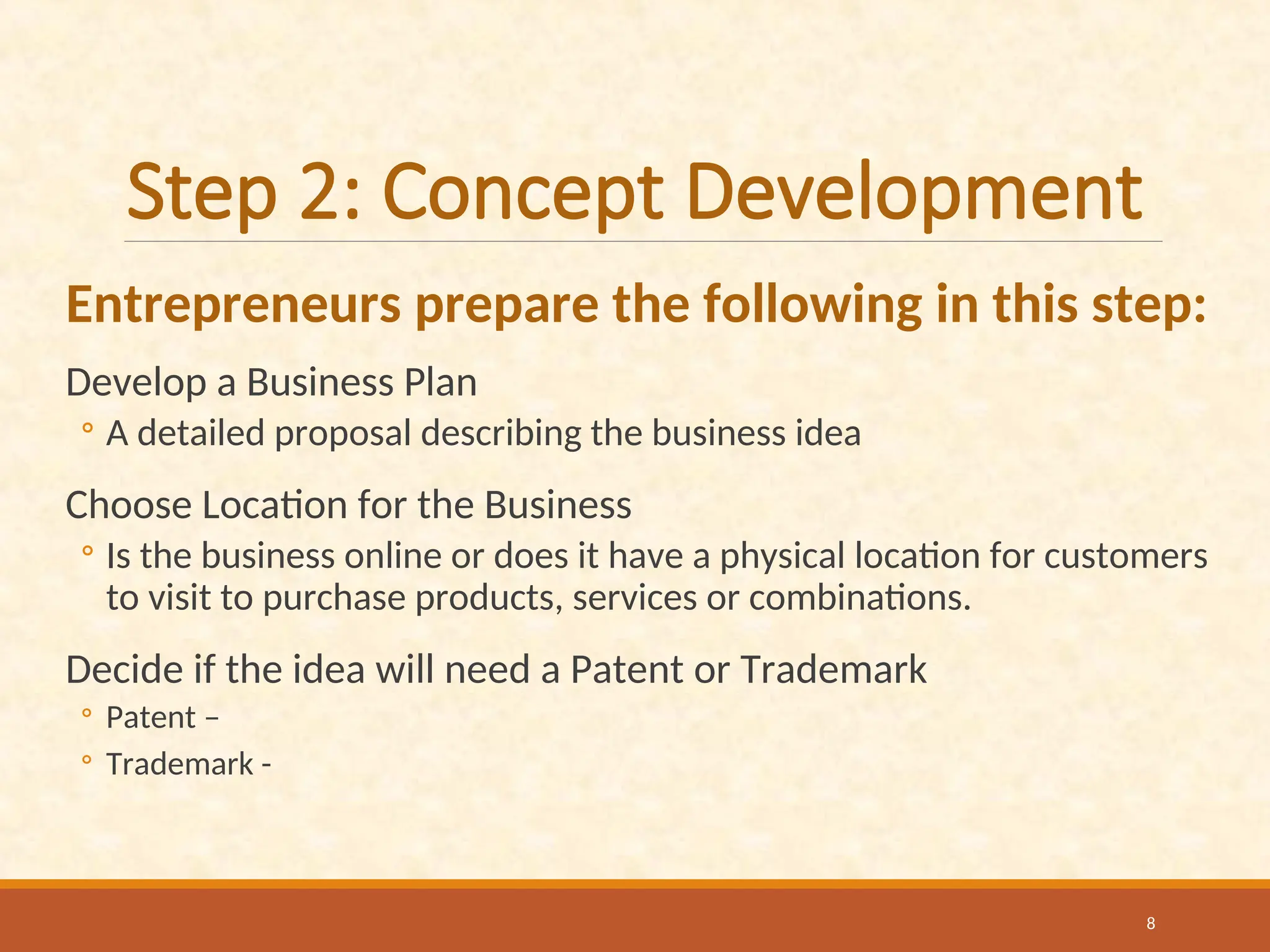
Step 2: ConceptDevelopment
Entrepreneurs prepare the following in this step:
Develop a Business Plan
◦ A detailed proposal describing the business idea
Choose Location for the Business
◦ Is the business online or does it have a physical location for customers
to visit to purchase products, services or combinations.
Decide if the idea will need a Patent or Trademark
◦ Patent –
◦ Trademark -
8
9.
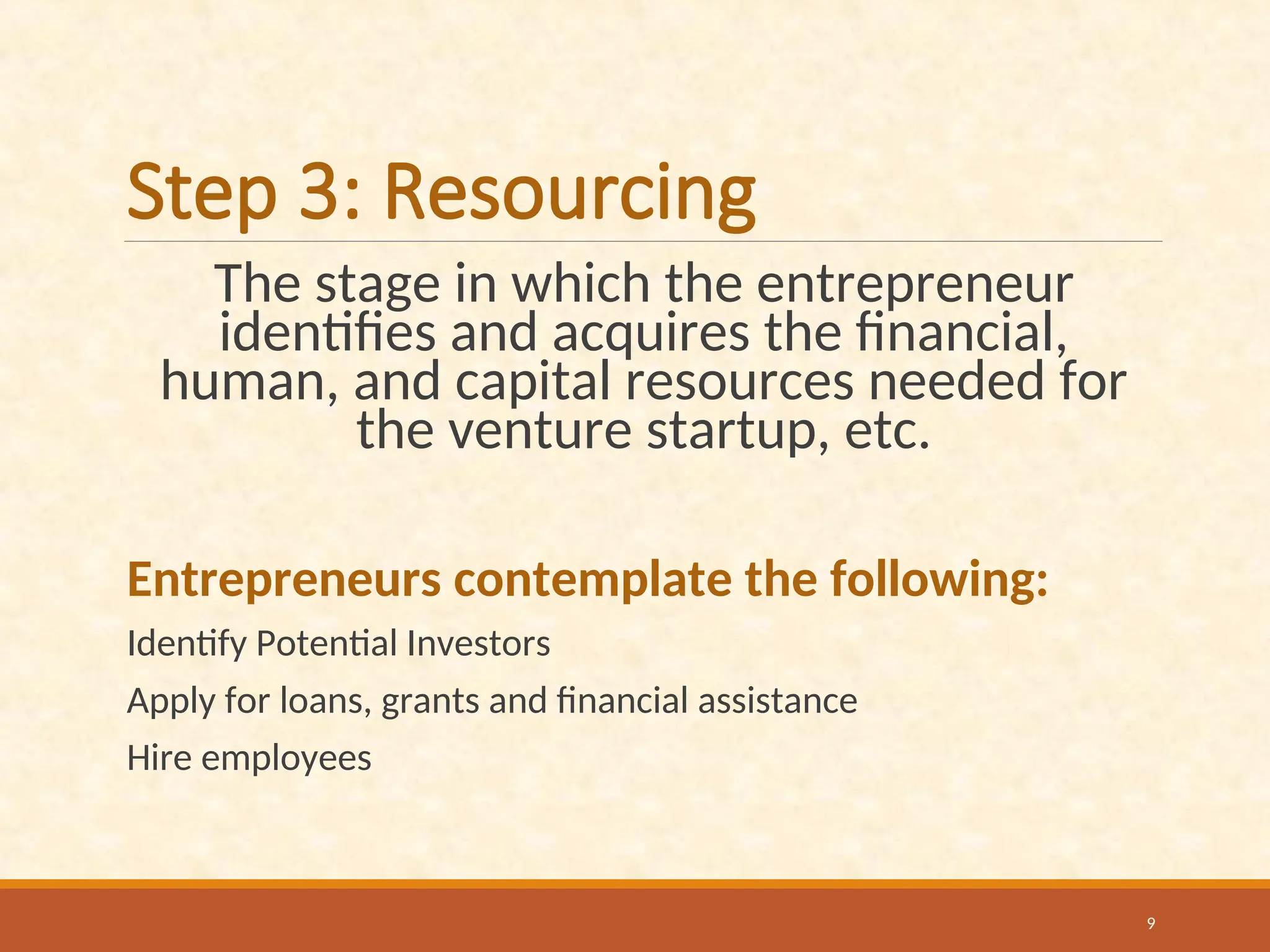
Step 3: Resourcing
Thestage in which the entrepreneur
identifies and acquires the financial,
human, and capital resources needed for
the venture startup, etc.
Entrepreneurs contemplate the following:
Identify Potential Investors
Apply for loans, grants and financial assistance
Hire employees
9
10.
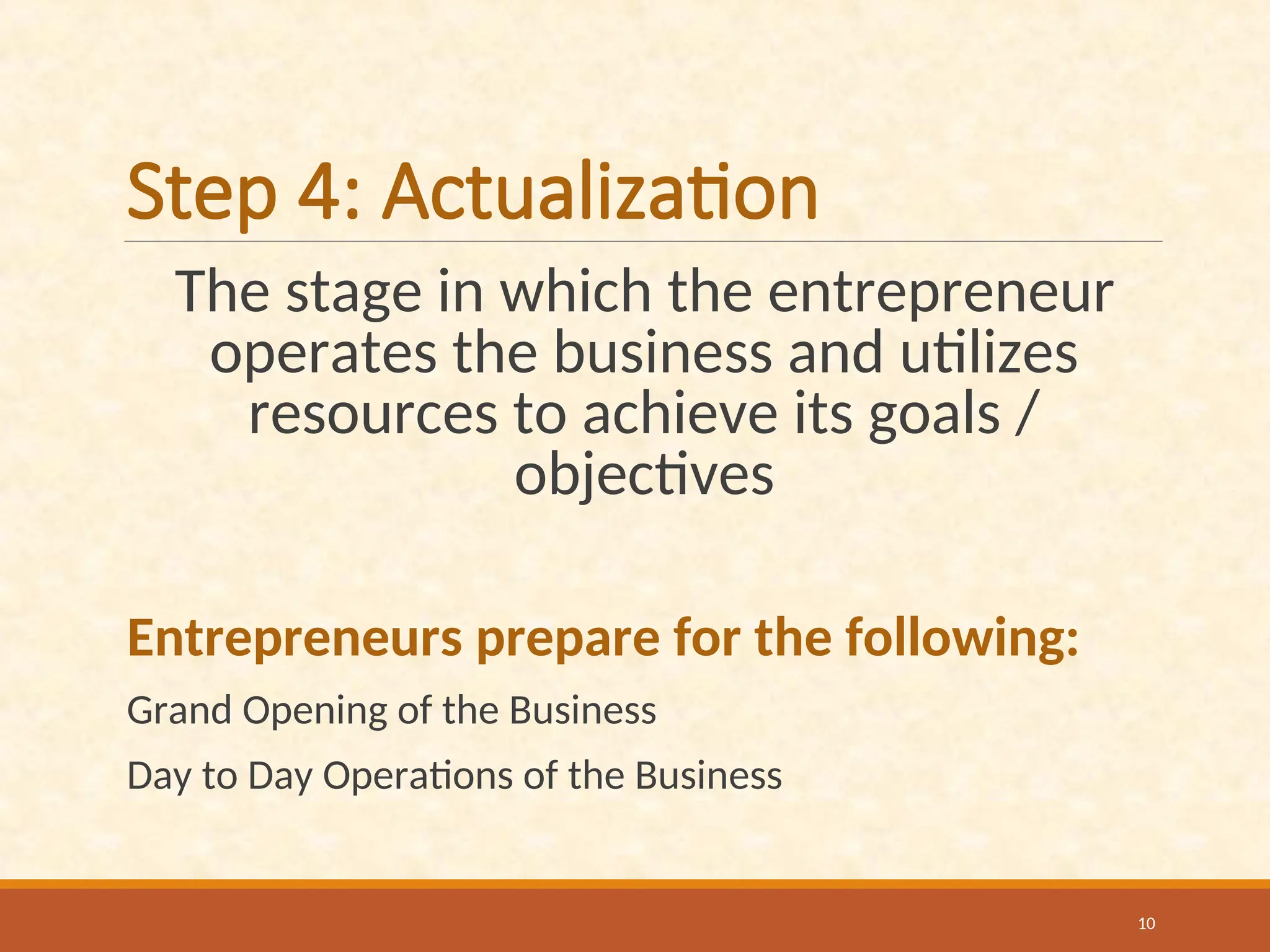
Step 4: Actualization
Thestage in which the entrepreneur
operates the business and utilizes
resources to achieve its goals /
objectives
Entrepreneurs prepare for the following:
Grand Opening of the Business
Day to Day Operations of the Business
10
11.
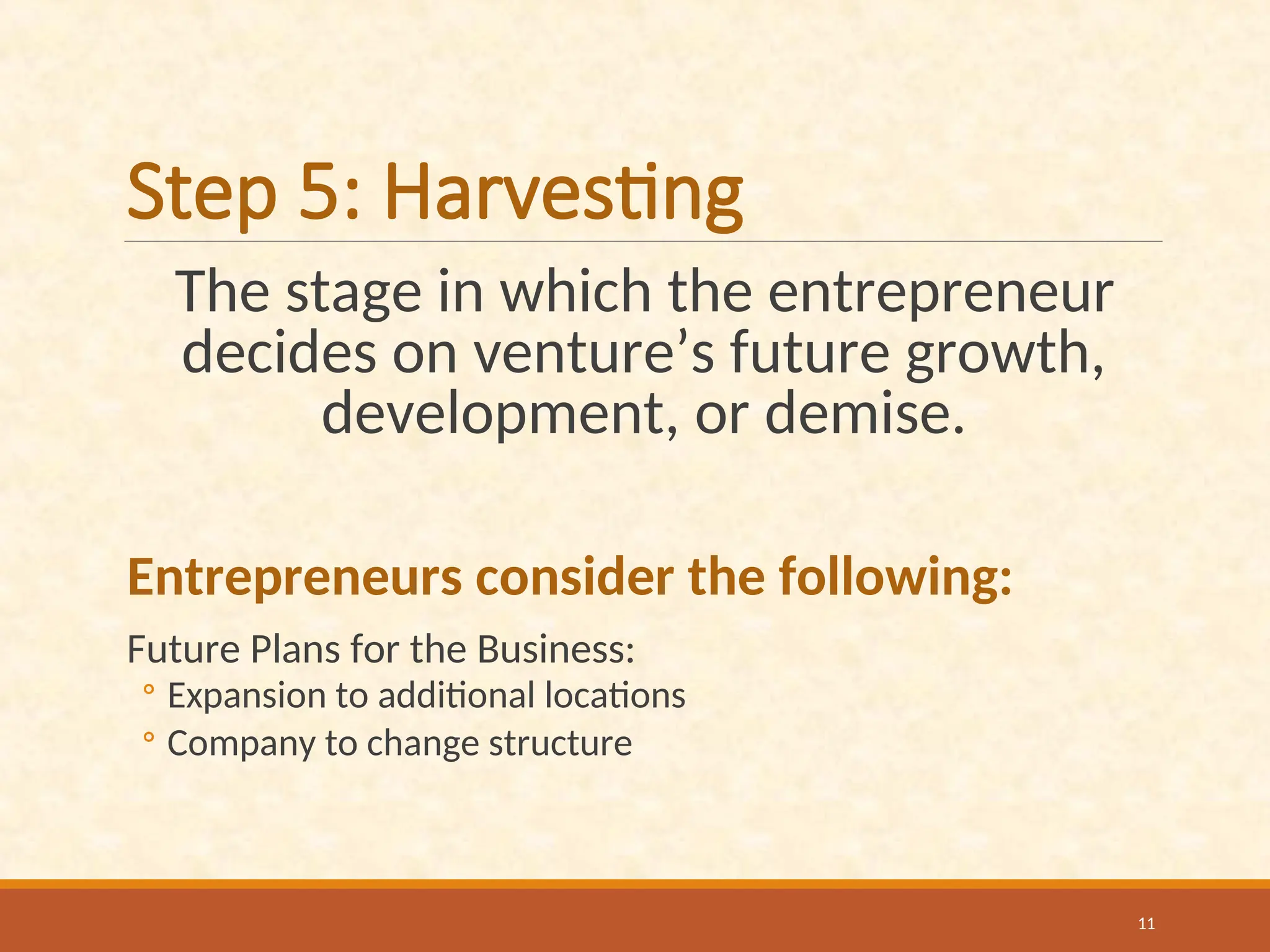
Step 5: Harvesting
Thestage in which the entrepreneur
decides on venture’s future growth,
development, or demise.
Entrepreneurs consider the following:
Future Plans for the Business:
◦ Expansion to additional locations
◦ Company to change structure
11
Starting a Business
1.Develop a Business Plan
2. Acquire Finances
3. Meet Legal Requirements
13
14.
Develop a BusinessPlan
A Business Plan is a detailed proposal
that describes a new business.
Business Plans are:
◦ Presented to potential investors and lenders
◦ Most business plans are 30+ pages
14
15.
Purposes of aBusiness Plan
Business Plans are used to:
◦ Obtain Financing
◦ Banks and Potential Lenders require a business plan
◦ Helps organize and analyze data critical to new business.
◦ Provides a start-up proposal
◦ Provides and outline to follow when starting the business.
15
16.
Components of aBusiness Plan
Executive Summary:
◦ Brief one to two page description of the key points of each
section of the business plan
Product/Service Plan:
◦ Presents Product or Service being offered
◦ Unique features of the Product or Service
Management Team Plan:
◦ Qualifications of the Entrepreneur
◦ Qualifications of any Partners who may be involved in the
business venture
16
17.
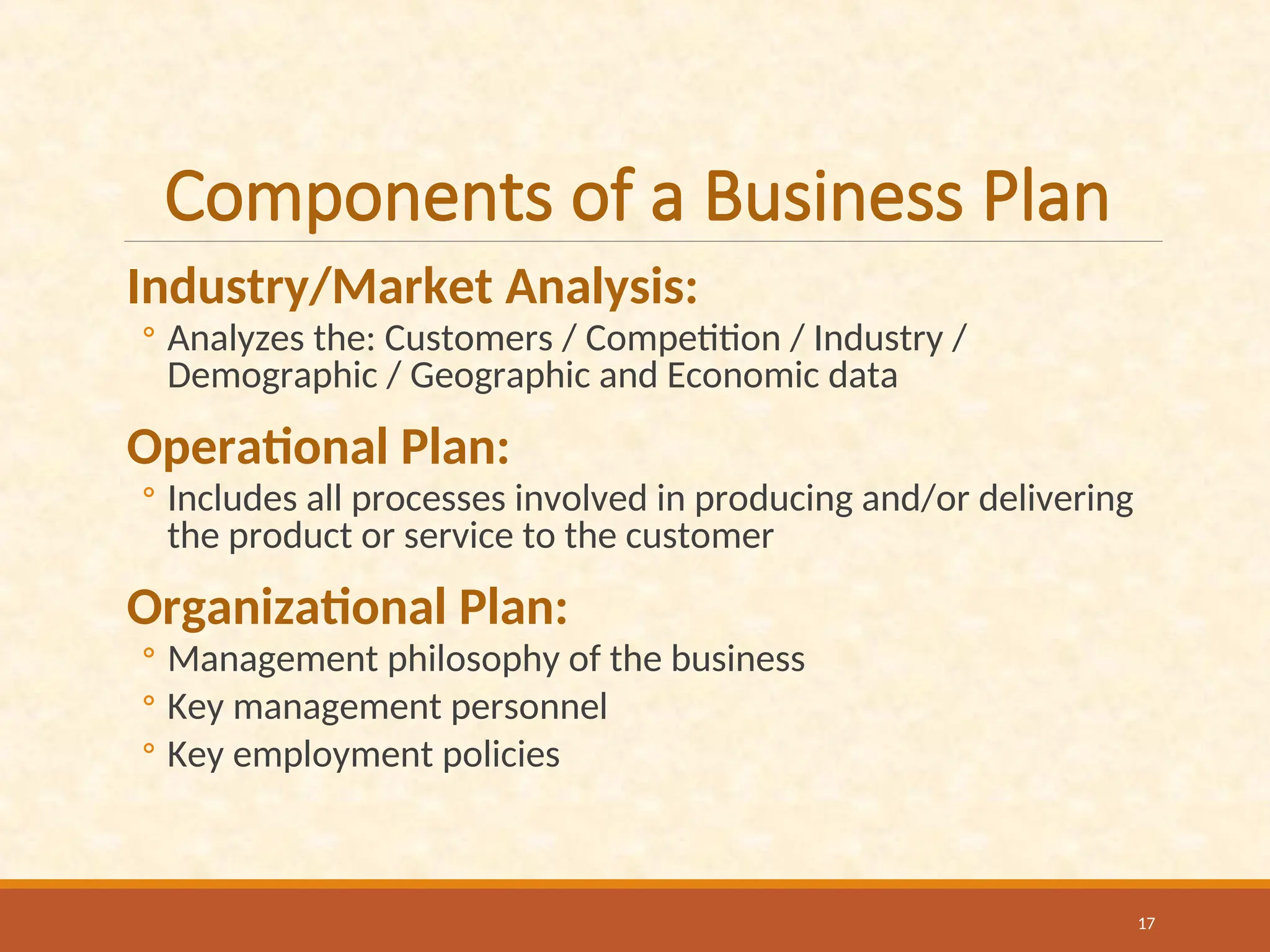
Components of aBusiness Plan
Industry/Market Analysis:
◦ Analyzes the: Customers / Competition / Industry /
Demographic / Geographic and Economic data
Operational Plan:
◦ Includes all processes involved in producing and/or delivering
the product or service to the customer
Organizational Plan:
◦ Management philosophy of the business
◦ Key management personnel
◦ Key employment policies
17
18.
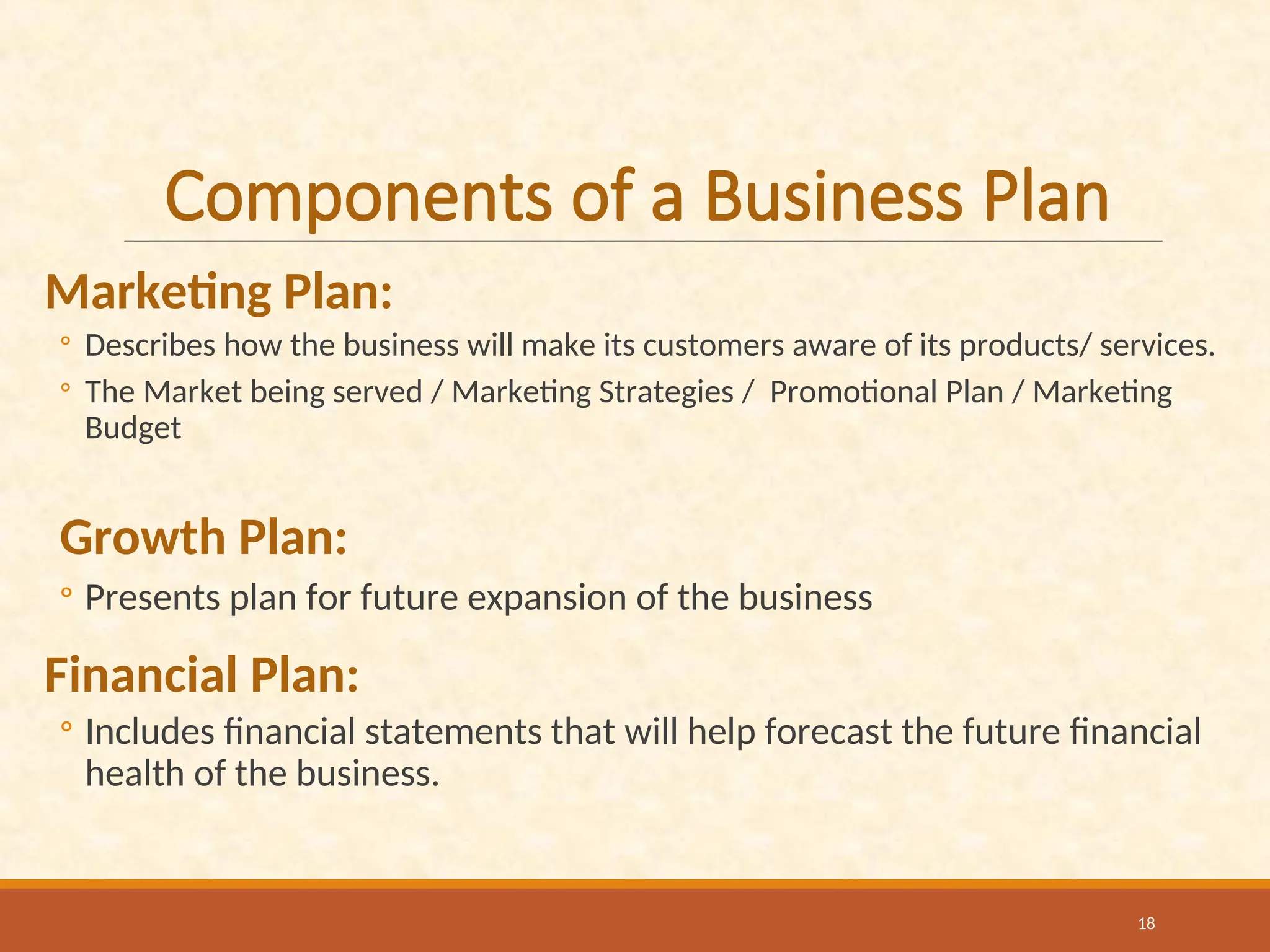
Components of aBusiness Plan
Marketing Plan:
◦ Describes how the business will make its customers aware of its products/ services.
◦ The Market being served / Marketing Strategies / Promotional Plan / Marketing
Budget
Growth Plan:
◦ Presents plan for future expansion of the business
Financial Plan:
◦ Includes financial statements that will help forecast the future financial
health of the business.
18
19.
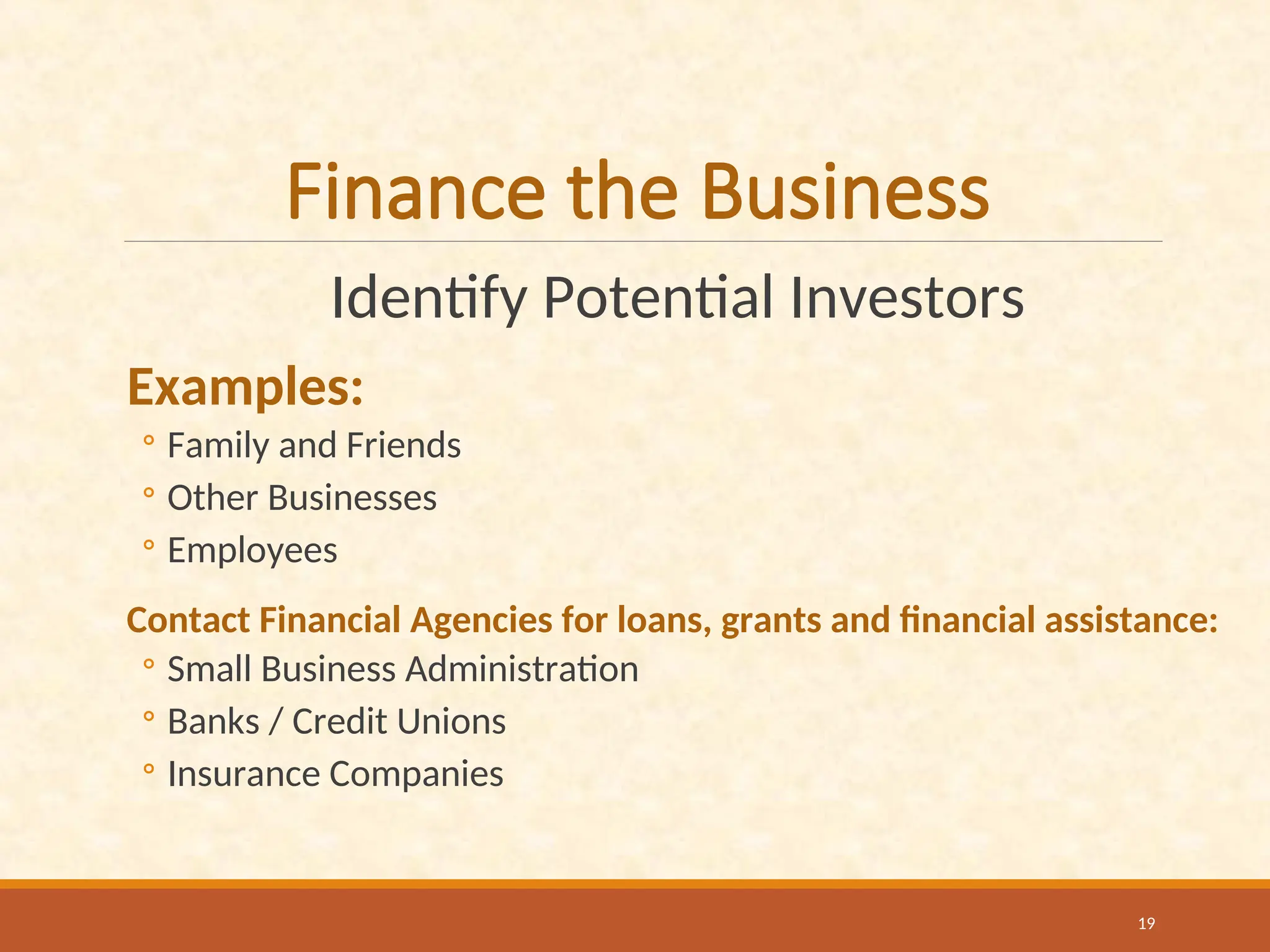
Finance the Business
IdentifyPotential Investors
Examples:
◦ Family and Friends
◦ Other Businesses
◦ Employees
Contact Financial Agencies for loans, grants and financial assistance:
◦ Small Business Administration
◦ Banks / Credit Unions
◦ Insurance Companies
19