Kajang Local Plan for Sustainable Development

Done by:
*Afaq Ahmed – P 71060
*Mohanad Jaafar Talib – P71085
PROFF.DR. RIZA ATIQ ABDULLAH BIN
Date:30/12/2013
introduction

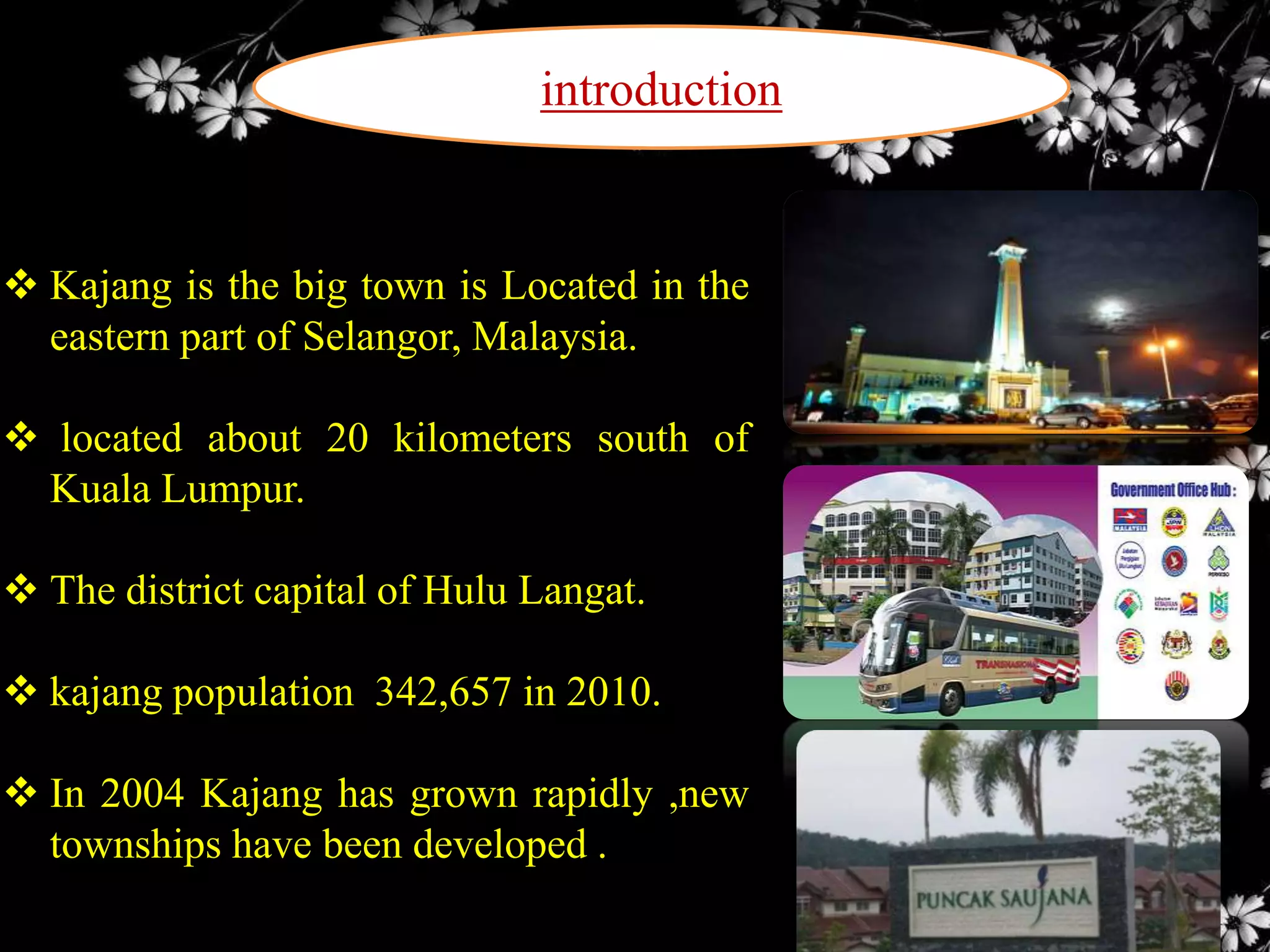
 Kajang is the big town is Located in the
eastern part of Selangor, Malaysia.
 located about 20 kilometers south of
Kuala Lumpur.
 The district capital of Hulu Langat.
 kajang population 342,657 in 2010.
 In 2004 Kajang has grown rapidly ,new
townships have been developed .
Presentation Outline

1. Quality of Development.
2 .Integrating Transport and Development.
3. Minimum environmental impact due to surge in travel demands. .
4 .Development Access: Pedestrians, disabled people, cyclists, public.
transport, private transport.
5 .Parking.
6. Urban Design Principles.
7. Context: compatible with existing landforms and natural features.

8. Safety and Security.
9. Landscape and Biodiversity.
10 .Renewable Energy.
11. Air Quality.
12. Water Quality and Drainage.
Quality of development
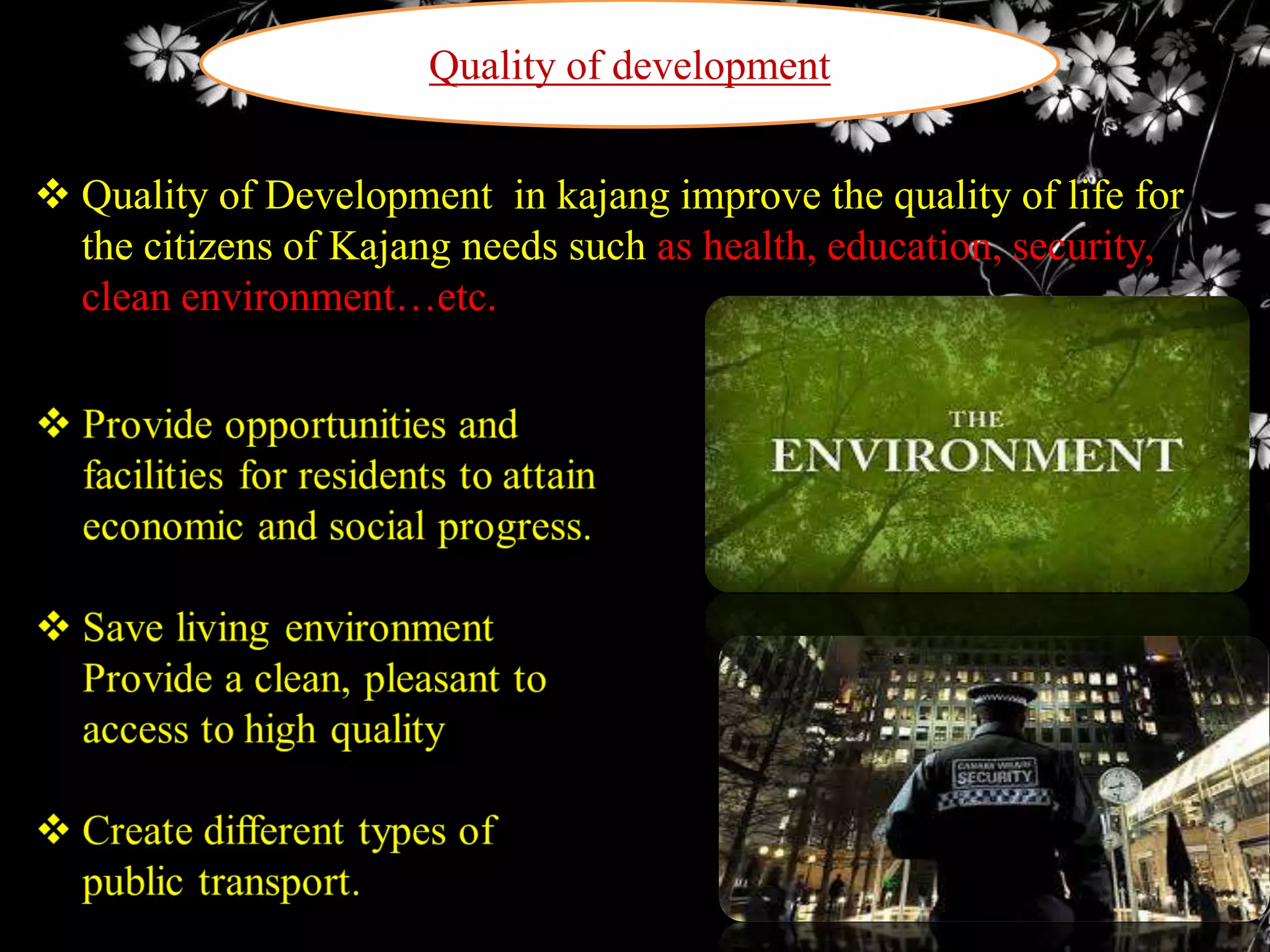
 Quality of Development in kajang improve the quality of life for
the citizens of Kajang needs such as health, education, security,
clean environment…etc.
Integrating Transport and
Development
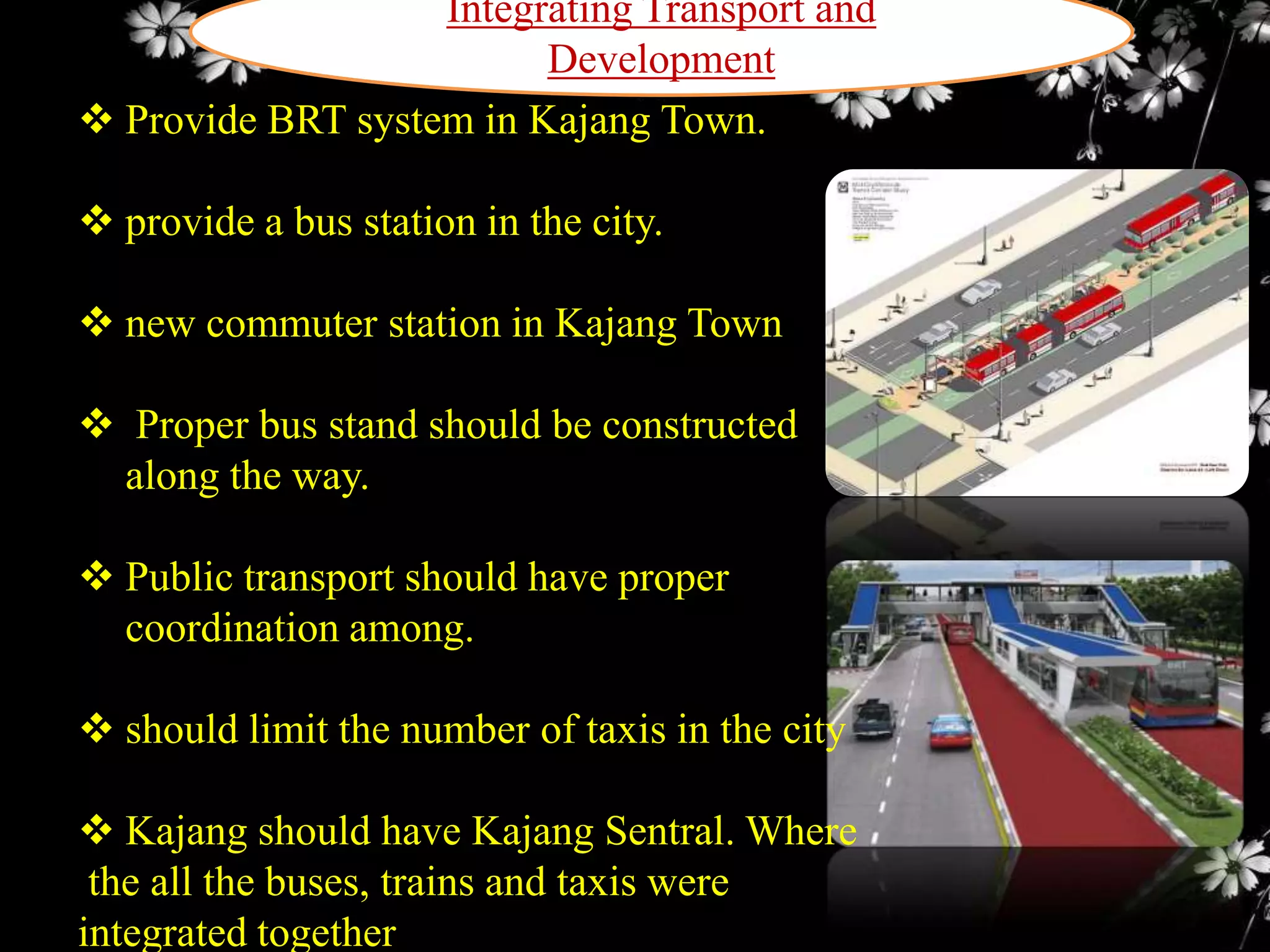
 Provide BRT system in Kajang Town.
 provide a bus station in the city.
 new commuter station in Kajang Town
 Proper bus stand should be constructed
along the way.
 Public transport should have proper
coordination among.
 should limit the number of taxis in the city
 Kajang should have Kajang Sentral. Where
the all the buses, trains and taxis were
integrated together
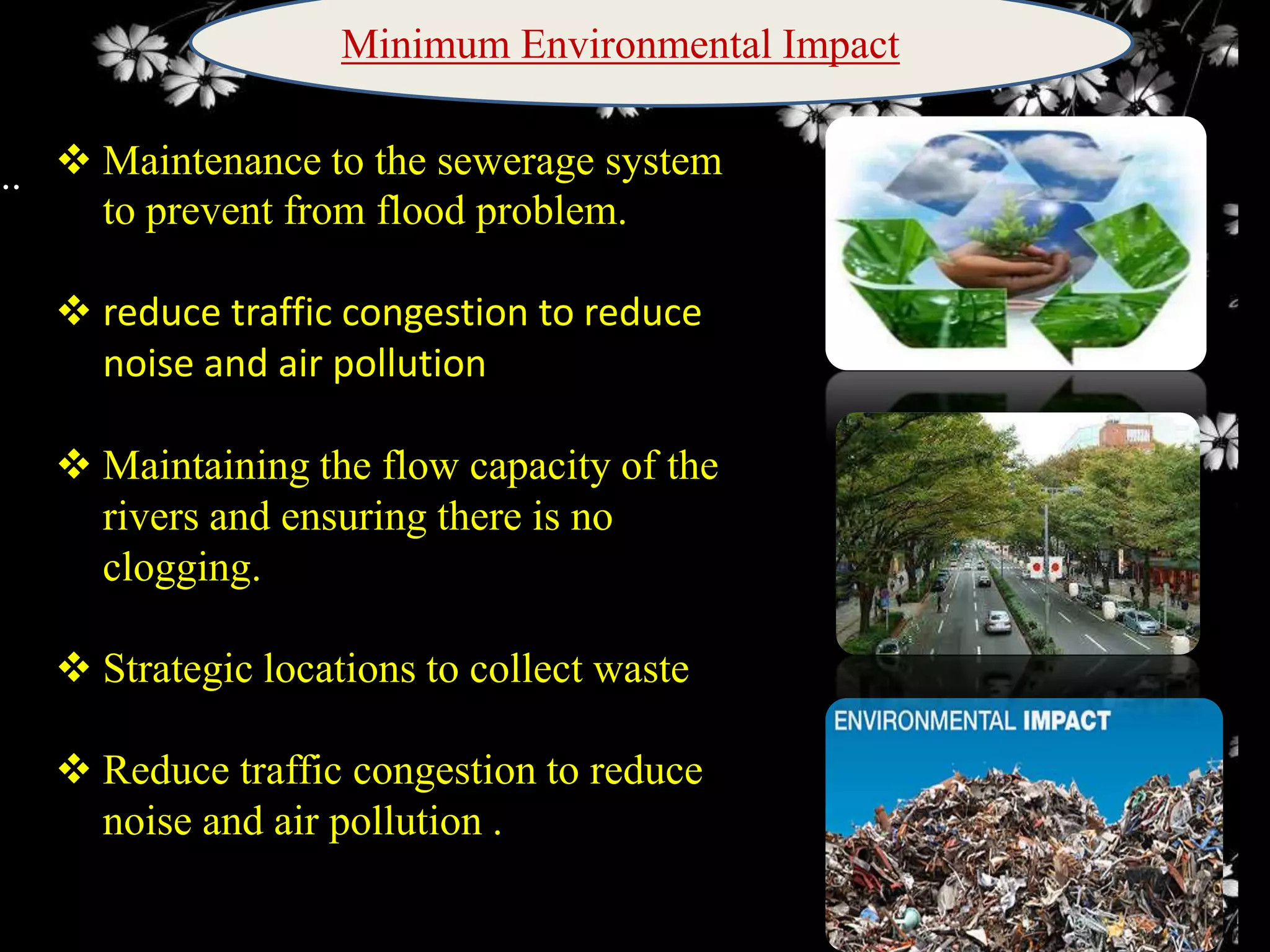
Minimum Environmental Impact
..  Maintenance to the sewerage system
to prevent from flood problem.

 reduce traffic congestion to reduce
noise and air pollution
 Maintaining the flow capacity of the
rivers and ensuring there is no
clogging.
 Strategic locations to collect waste

 Reduce traffic congestion to reduce
noise and air pollution .
development access

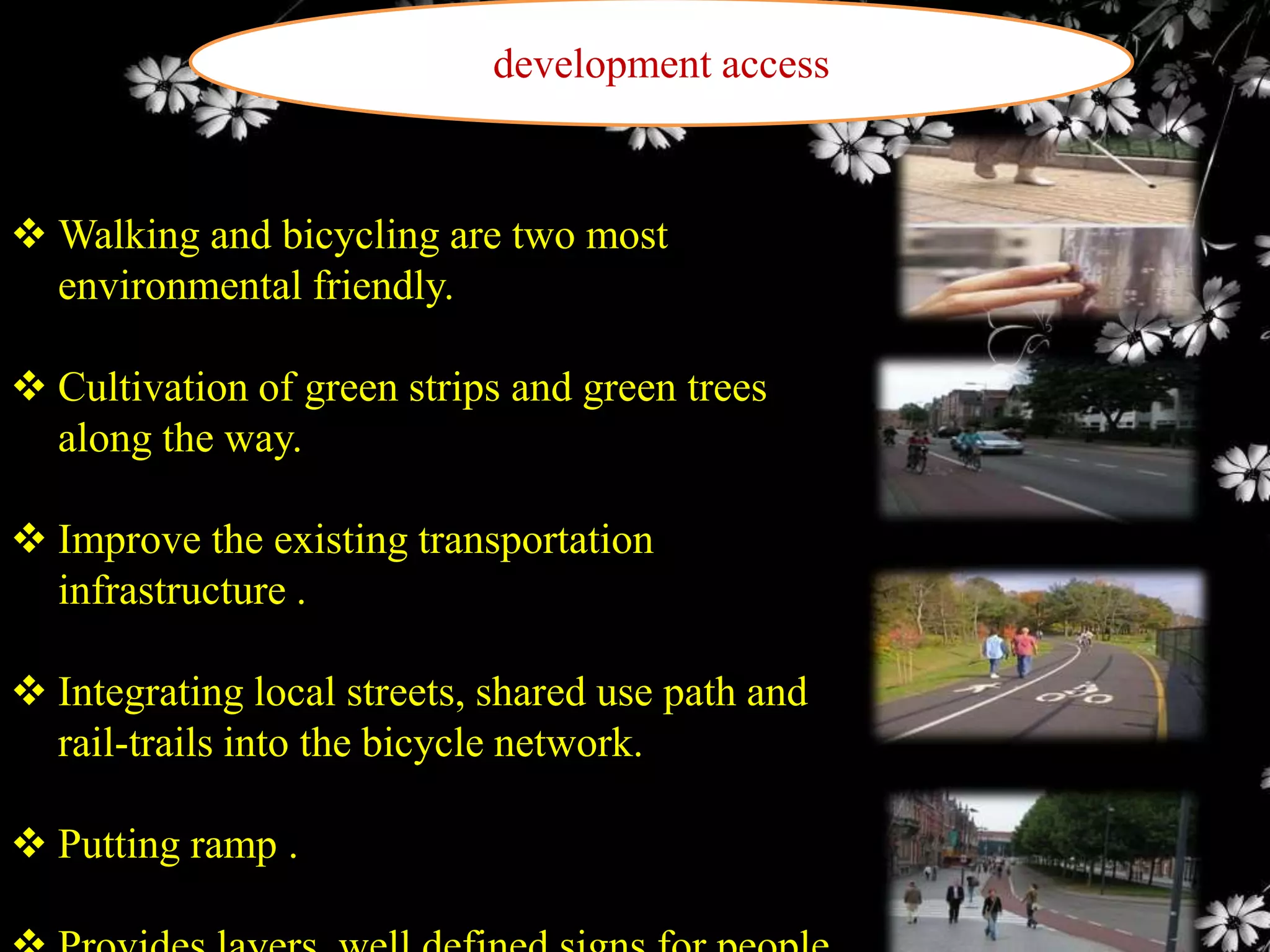
 Walking and bicycling are two most
environmental friendly.
 Cultivation of green strips and green trees
along the way.

 Improve the existing transportation
infrastructure .
 Integrating local streets, shared use path and
rail-trails into the bicycle network.
 Putting ramp .
parking

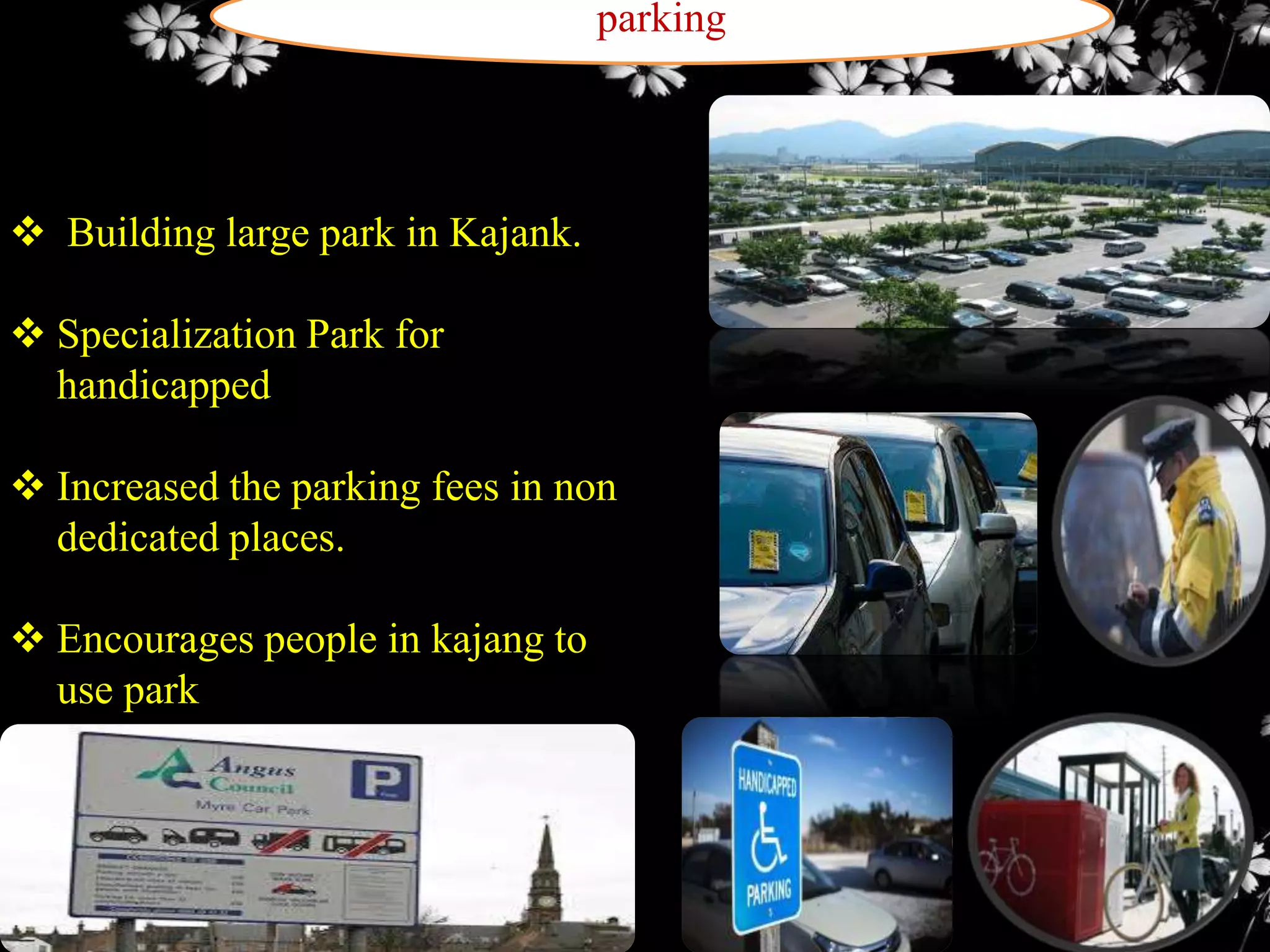
 Building large park in Kajank.

 Specialization Park for
handicapped
 Increased the parking fees in non
dedicated places.
 Encourages people in kajang to
use park
urban design principles

In line with the vision of a World-Class City
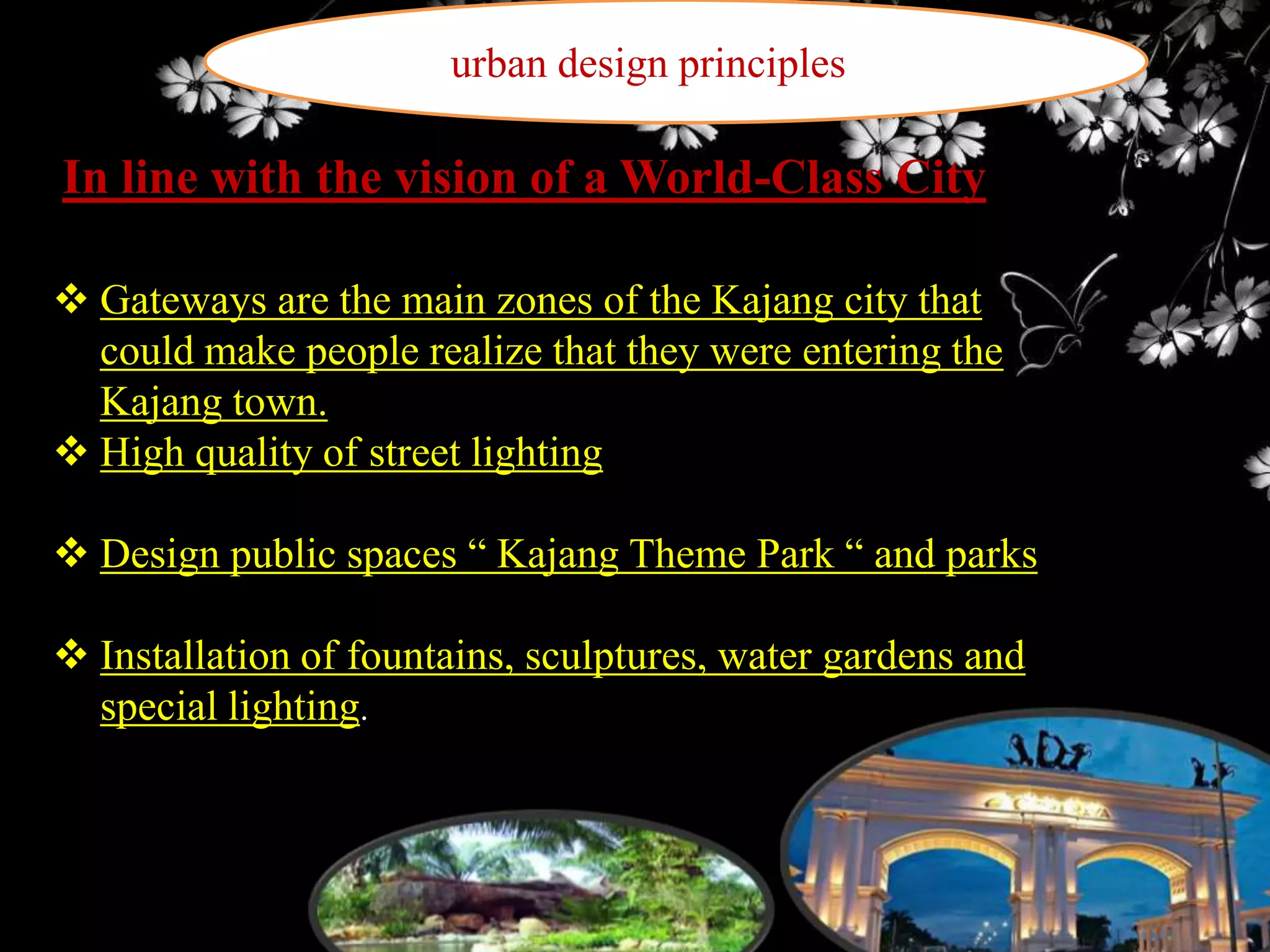
 Gateways are the main zones of the Kajang city that
could make people realize that they were entering the
Kajang town.
 High quality of street lighting
 Design public spaces “ Kajang Theme Park “ and parks
 Installation of fountains, sculptures, water gardens and
special lighting.
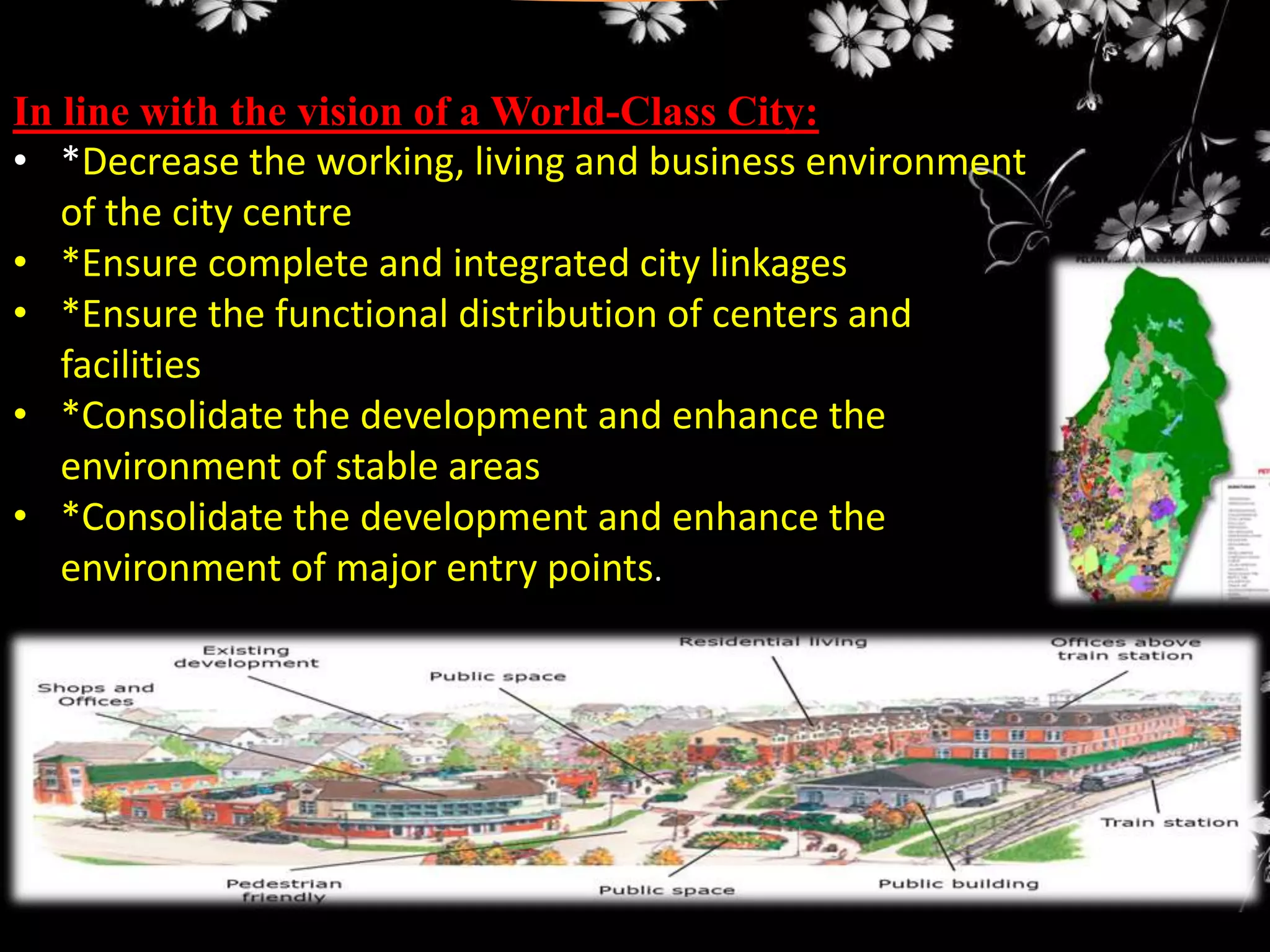
In line with the vision of a World-Class City:
• *Decrease the working, living and business environment
of the city centre
• *Ensure complete and integrated city linkages
• *Ensure the functional distribution of centers and
facilities
• *Consolidate the development and enhance the
environment of stable areas
• *Consolidate the development and enhance the
environment of major entry points.
SECURITY AND SAFETY
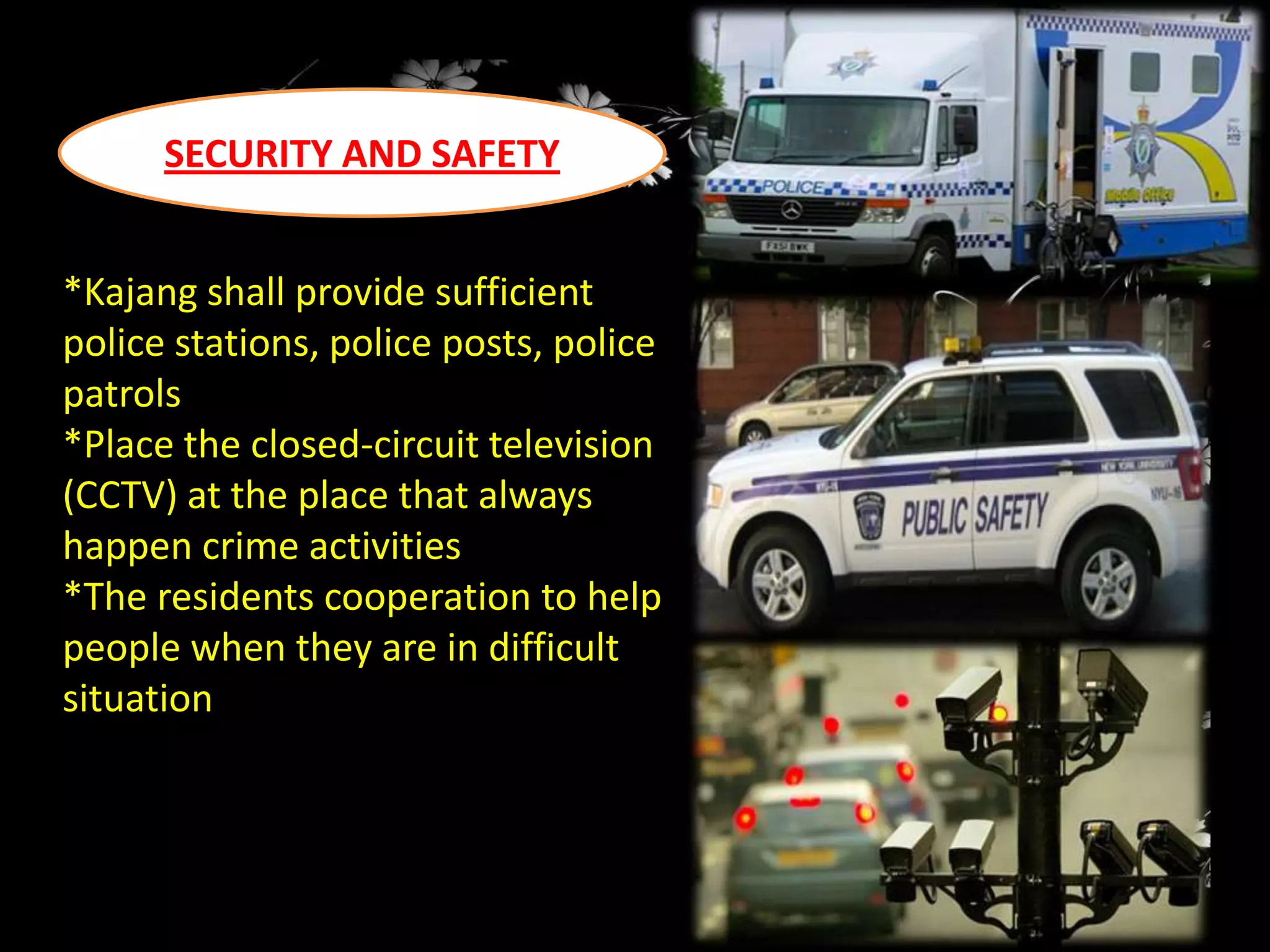
*Kajang shall provide sufficient
police stations, police posts, police
patrols
*Place the closed-circuit television
(CCTV) at the place that always
happen crime activities
*The residents cooperation to help
people when they are in difficult
situation
LANDSCAPE AND BIODIVERSITY

In line with the vision of a WorldClass City
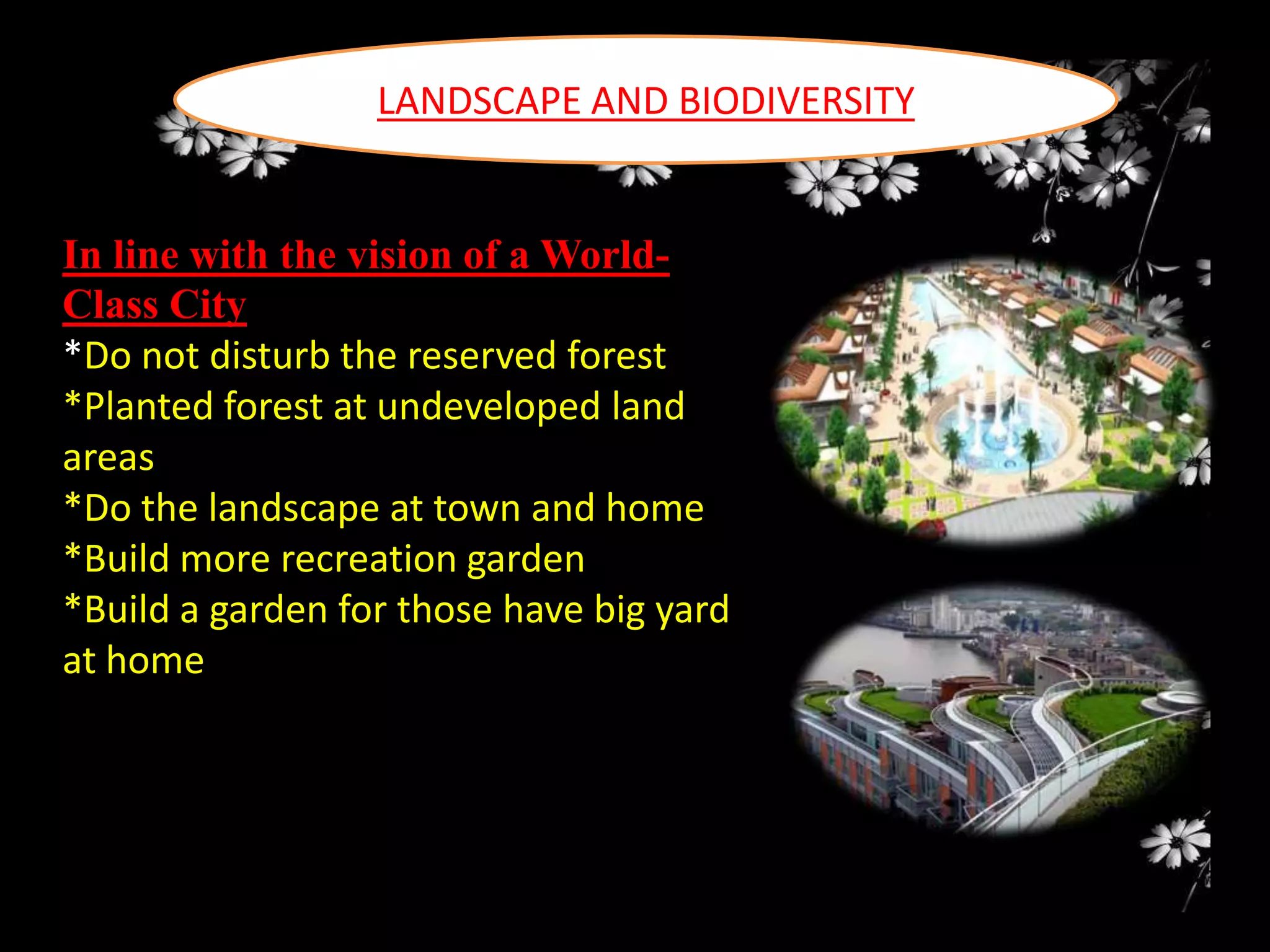
*Do not disturb the reserved forest
*Planted forest at undeveloped land
areas
*Do the landscape at town and home
*Build more recreation garden
*Build a garden for those have big yard
at home
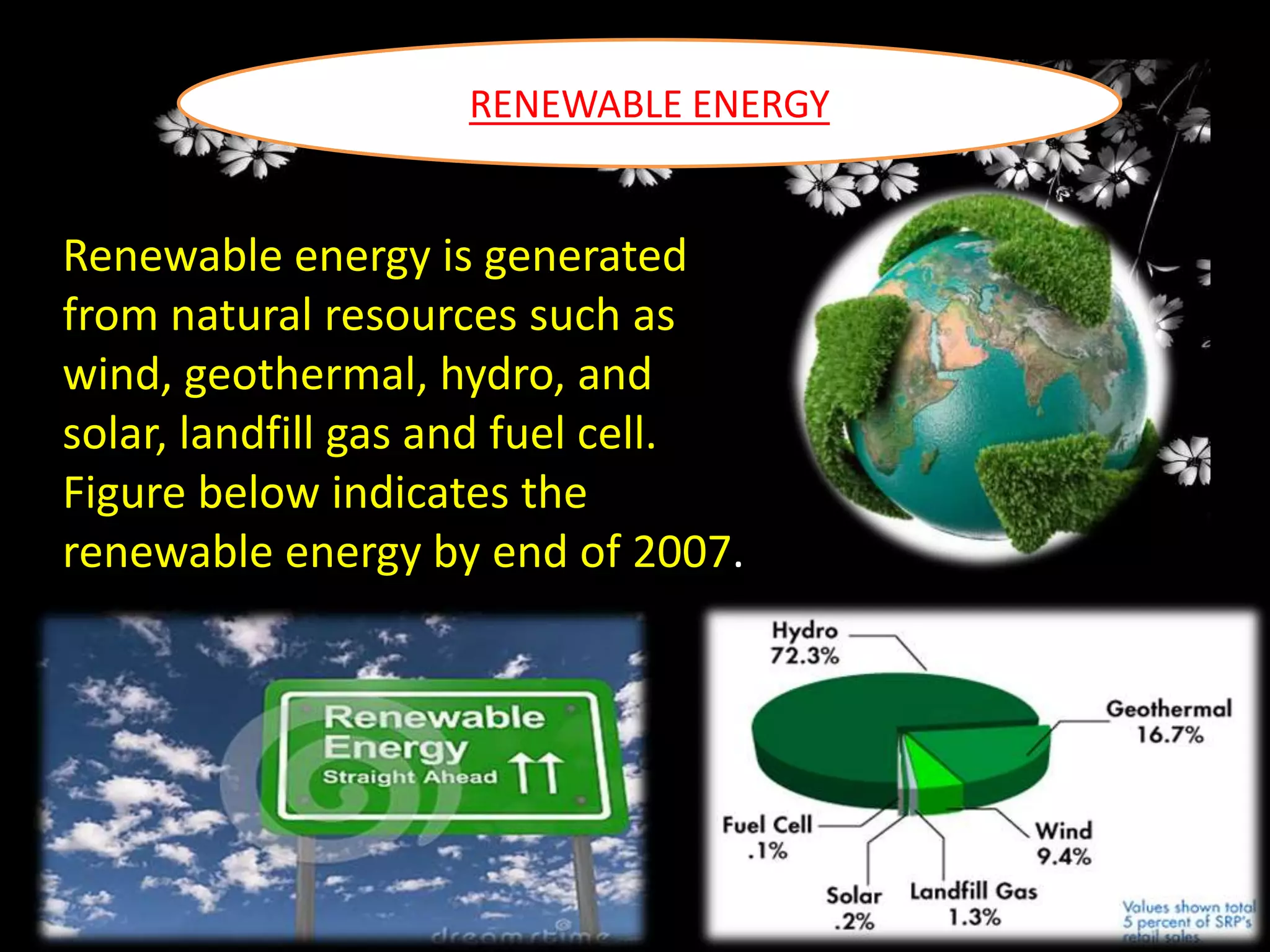
RENEWABLE ENERGY

Renewable energy is generated
from natural resources such as
wind, geothermal, hydro, and
solar, landfill gas and fuel cell.
Figure below indicates the
renewable energy by end of 2007.
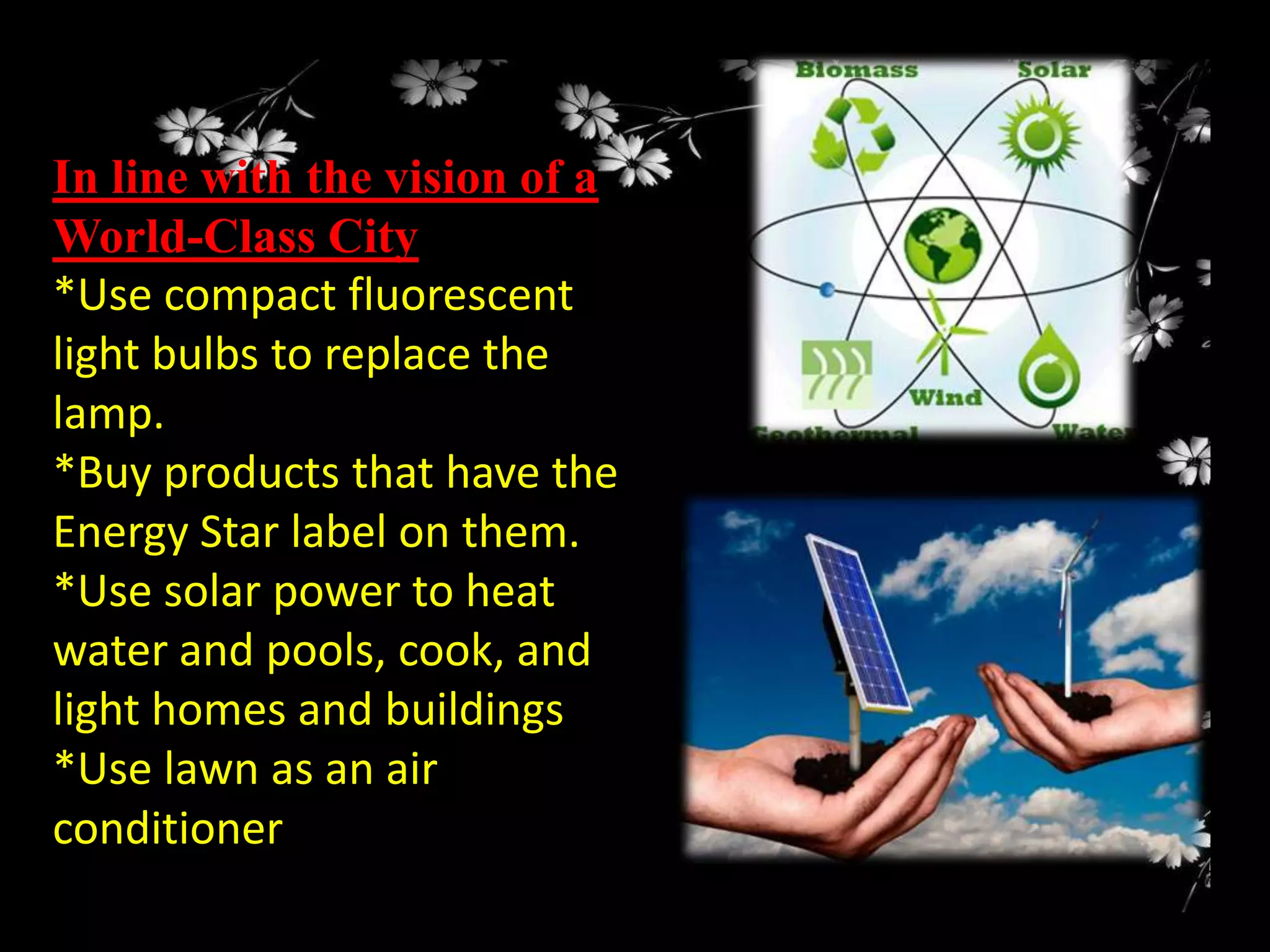
In line with the vision of a
World-Class City
*Use compact fluorescent
light bulbs to replace the
lamp.
*Buy products that have the
Energy Star label on them.
*Use solar power to heat
water and pools, cook, and
light homes and buildings
*Use lawn as an air
conditioner
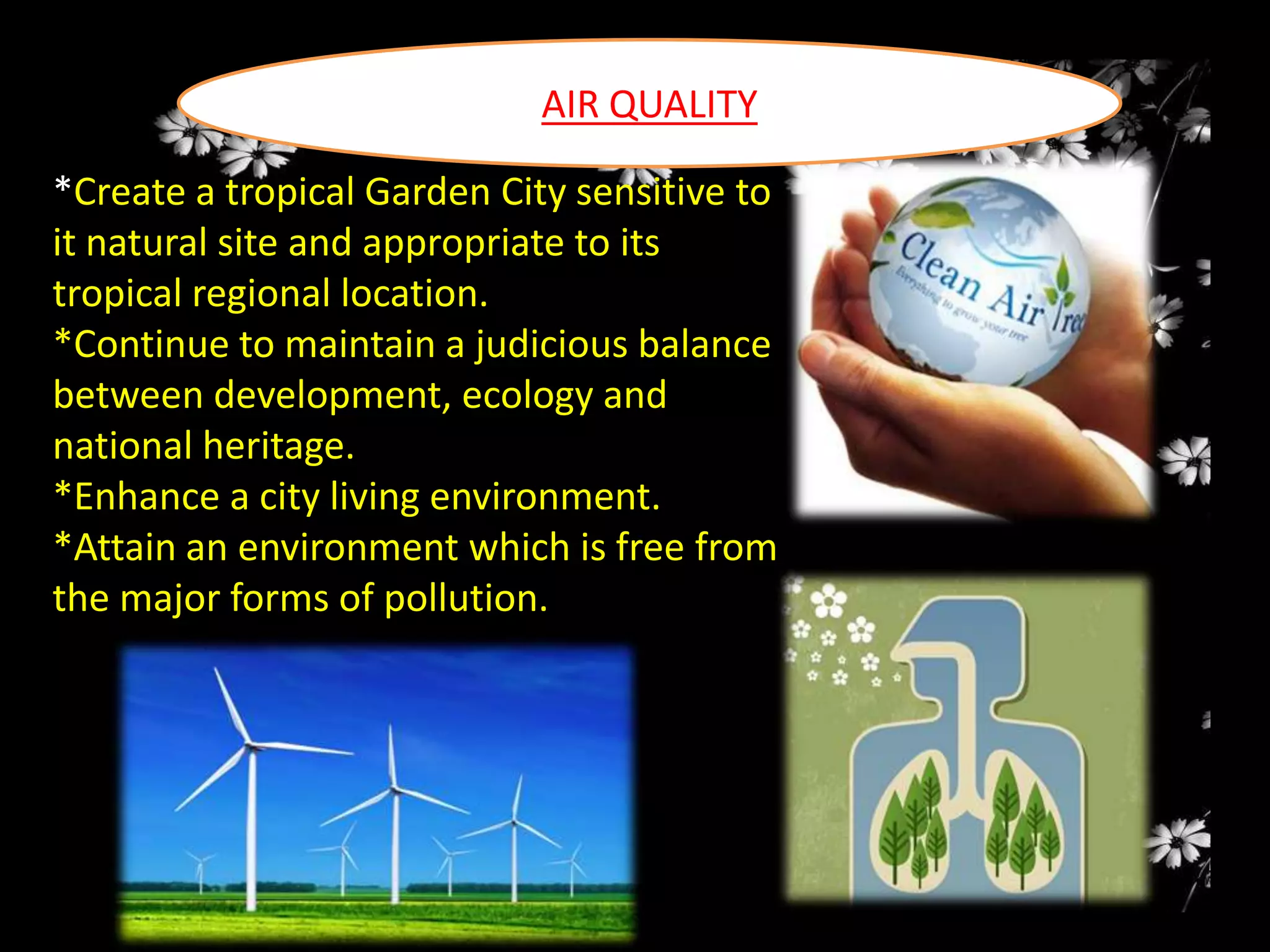
AIR QUALITY
*Create a tropical Garden City sensitive to
it natural site and appropriate to its
tropical regional location.
*Continue to maintain a judicious balance
between development, ecology and
national heritage.
*Enhance a city living environment.
*Attain an environment which is free from
the major forms of pollution.
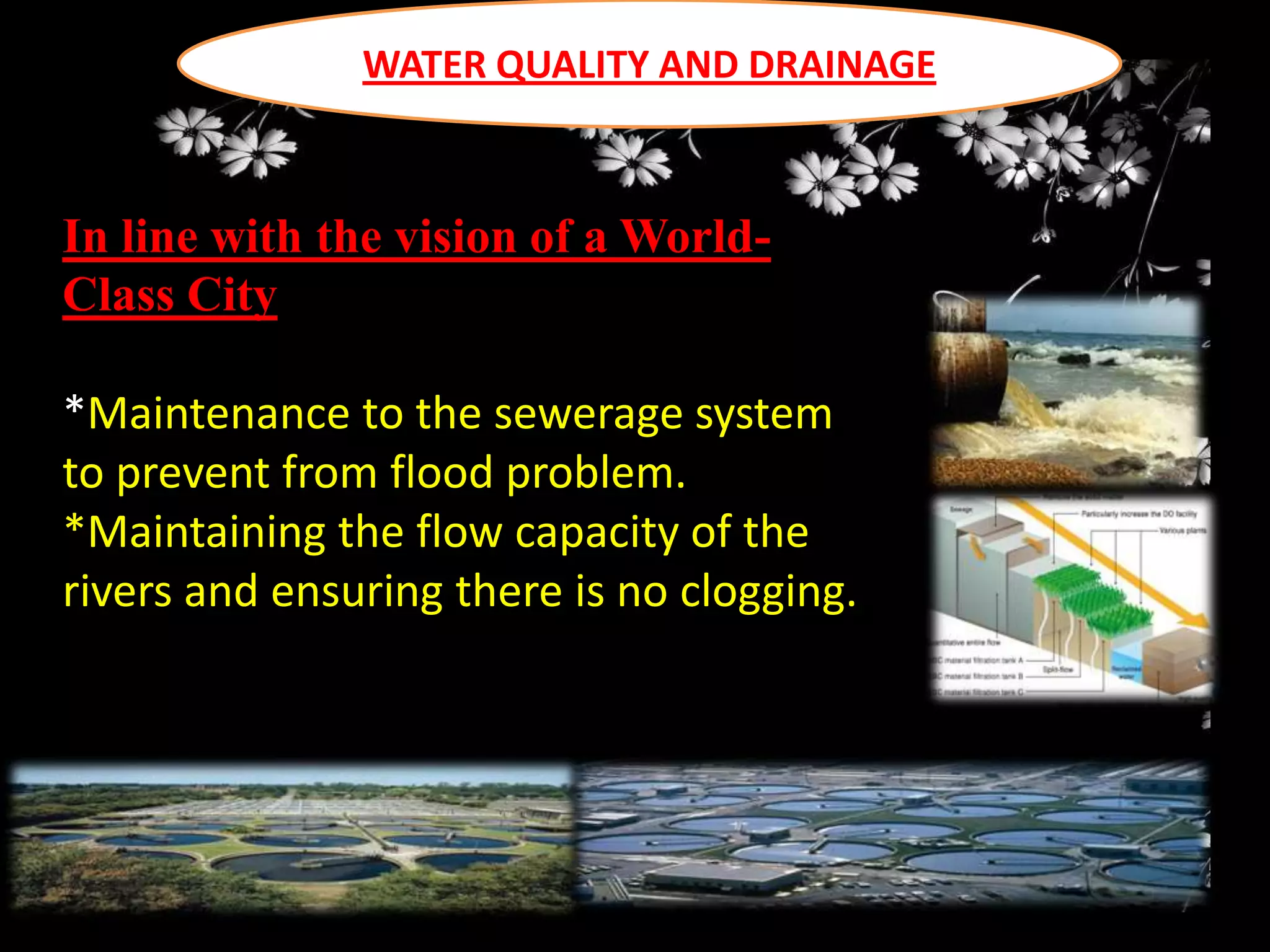
WATER QUALITY AND DRAINAGE

In line with the vision of a WorldClass City
*Maintenance to the sewerage system
to prevent from flood problem.
*Maintaining the flow capacity of the
rivers and ensuring there is no clogging.
CONCLUSION
*Exchange of best practice, knowledge and experience on urban
issues for managing the
Urban environment
*Community programs will provide opportunities for training for
local authorities to develop the skills needed
*The Kajang Municipal Council will require to re-used the lands
in the most efficient way .
*Building at higher densities and with compact layouts
maximizes the use of land and reduces the need to travel by car
Modified project -

Modified project -

  • 1.
    Kajang Local Planfor Sustainable Development Done by: *Afaq Ahmed – P 71060 *Mohanad Jaafar Talib – P71085 PROFF.DR. RIZA ATIQ ABDULLAH BIN Date:30/12/2013
  • 2.
    introduction  Kajang isthe big town is Located in the eastern part of Selangor, Malaysia.  located about 20 kilometers south of Kuala Lumpur.  The district capital of Hulu Langat.  kajang population 342,657 in 2010.  In 2004 Kajang has grown rapidly ,new townships have been developed .
  • 3.
    Presentation Outline 1. Qualityof Development. 2 .Integrating Transport and Development. 3. Minimum environmental impact due to surge in travel demands. . 4 .Development Access: Pedestrians, disabled people, cyclists, public. transport, private transport. 5 .Parking. 6. Urban Design Principles. 7. Context: compatible with existing landforms and natural features. 8. Safety and Security. 9. Landscape and Biodiversity. 10 .Renewable Energy. 11. Air Quality. 12. Water Quality and Drainage.
  • 4.
    Quality of development Quality of Development in kajang improve the quality of life for the citizens of Kajang needs such as health, education, security, clean environment…etc.
  • 5.
    Integrating Transport and Development Provide BRT system in Kajang Town.  provide a bus station in the city.  new commuter station in Kajang Town  Proper bus stand should be constructed along the way.  Public transport should have proper coordination among.  should limit the number of taxis in the city  Kajang should have Kajang Sentral. Where the all the buses, trains and taxis were integrated together
  • 6.
    Minimum Environmental Impact .. Maintenance to the sewerage system to prevent from flood problem.  reduce traffic congestion to reduce noise and air pollution  Maintaining the flow capacity of the rivers and ensuring there is no clogging.  Strategic locations to collect waste  Reduce traffic congestion to reduce noise and air pollution .
  • 7.
    development access  Walkingand bicycling are two most environmental friendly.  Cultivation of green strips and green trees along the way.  Improve the existing transportation infrastructure .  Integrating local streets, shared use path and rail-trails into the bicycle network.  Putting ramp .
  • 8.
    parking  Building largepark in Kajank.  Specialization Park for handicapped  Increased the parking fees in non dedicated places.  Encourages people in kajang to use park
  • 9.
    urban design principles Inline with the vision of a World-Class City  Gateways are the main zones of the Kajang city that could make people realize that they were entering the Kajang town.  High quality of street lighting  Design public spaces “ Kajang Theme Park “ and parks  Installation of fountains, sculptures, water gardens and special lighting.
  • 10.
    In line withthe vision of a World-Class City: • *Decrease the working, living and business environment of the city centre • *Ensure complete and integrated city linkages • *Ensure the functional distribution of centers and facilities • *Consolidate the development and enhance the environment of stable areas • *Consolidate the development and enhance the environment of major entry points.
  • 11.
    SECURITY AND SAFETY *Kajangshall provide sufficient police stations, police posts, police patrols *Place the closed-circuit television (CCTV) at the place that always happen crime activities *The residents cooperation to help people when they are in difficult situation
  • 12.
    LANDSCAPE AND BIODIVERSITY Inline with the vision of a WorldClass City *Do not disturb the reserved forest *Planted forest at undeveloped land areas *Do the landscape at town and home *Build more recreation garden *Build a garden for those have big yard at home
  • 13.
    RENEWABLE ENERGY Renewable energyis generated from natural resources such as wind, geothermal, hydro, and solar, landfill gas and fuel cell. Figure below indicates the renewable energy by end of 2007.
  • 14.
    In line withthe vision of a World-Class City *Use compact fluorescent light bulbs to replace the lamp. *Buy products that have the Energy Star label on them. *Use solar power to heat water and pools, cook, and light homes and buildings *Use lawn as an air conditioner
  • 15.
    AIR QUALITY *Create atropical Garden City sensitive to it natural site and appropriate to its tropical regional location. *Continue to maintain a judicious balance between development, ecology and national heritage. *Enhance a city living environment. *Attain an environment which is free from the major forms of pollution.
  • 16.
    WATER QUALITY ANDDRAINAGE In line with the vision of a WorldClass City *Maintenance to the sewerage system to prevent from flood problem. *Maintaining the flow capacity of the rivers and ensuring there is no clogging.
  • 17.
    CONCLUSION *Exchange of bestpractice, knowledge and experience on urban issues for managing the Urban environment *Community programs will provide opportunities for training for local authorities to develop the skills needed *The Kajang Municipal Council will require to re-used the lands in the most efficient way . *Building at higher densities and with compact layouts maximizes the use of land and reduces the need to travel by car