4 5
Dommelbeemd, Eindhoven, The Netherlands
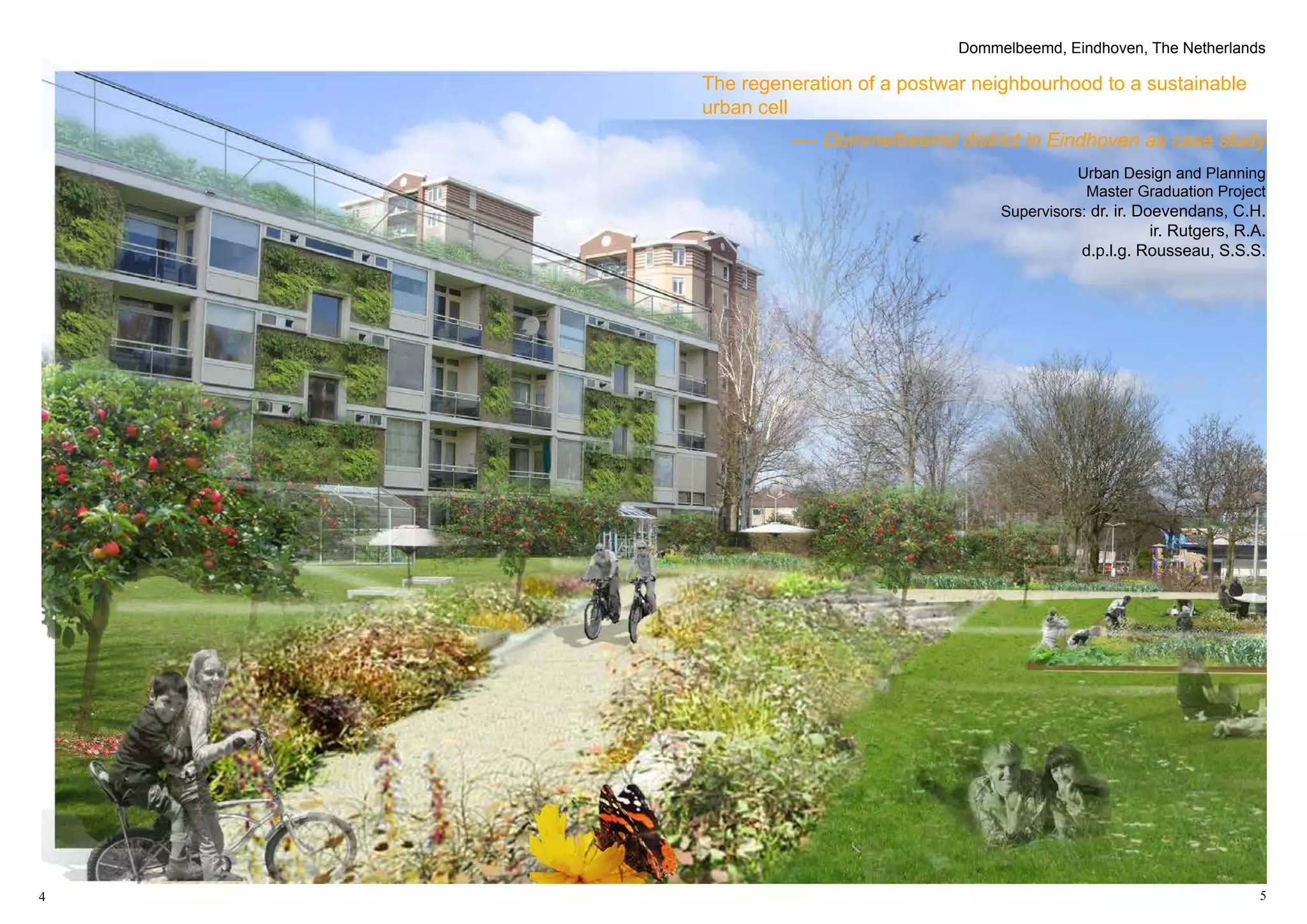
The regeneration of a postwar neighbourhood to a sustainable
urban cell
---- Dommelbeemd district in Eindhoven as case study
Urban Design and Planning
Master Graduation Project
Supervisors: dr. ir. Doevendans, C.H.
ir. Rutgers, R.A.
d.p.l.g. Rousseau, S.S.S.
6 7
Heesterakker
Vaartbroek
Ecarkt
Luytelaer
MORPHOLOGY LOCATION
John.F.Kennedylaand
Sterrenlaan
cut ribbon
ring structure
ribbon structure
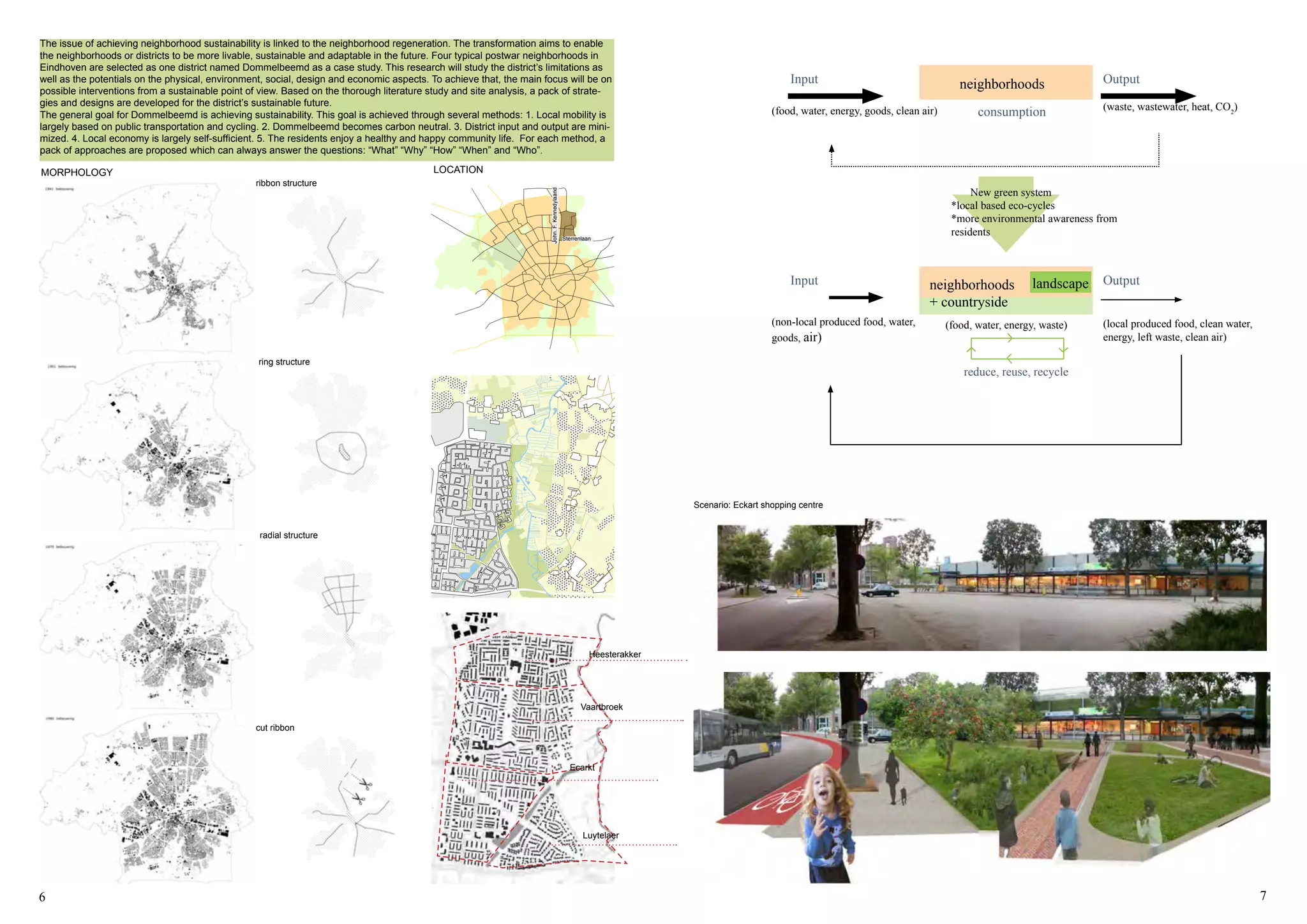
The issue of achieving neighborhood sustainability is linked to the neighborhood regeneration. The transformation aims to enable
the neighborhoods or districts to be more livable, sustainable and adaptable in the future. Four typical postwar neighborhoods in
Eindhoven are selected as one district named Dommelbeemd as a case study. This research will study the district’s limitations as
well as the potentials on the physical, environment, social, design and economic aspects. To achieve that, the main focus will be on
possible interventions from a sustainable point of view. Based on the thorough literature study and site analysis, a pack of strate-
gies and designs are developed for the district’s sustainable future.
The general goal for Dommelbeemd is achieving sustainability. This goal is achieved through several methods: 1. Local mobility is
largely based on public transportation and cycling. 2. Dommelbeemd becomes carbon neutral. 3. District input and output are mini-
mized. 4. Local economy is largely self-sufficient. 5. The residents enjoy a healthy and happy community life. For each method, a
pack of approaches are proposed which can always answer the questions: “What” “Why” “How” “When” and “Who”.
radial structure
neighborhoods
neighborhoods
+ countryside
landscape
New green system
*local based eco-cycles
*more environmental awareness from
residents
Input
Input
(food, water, energy, goods, clean air) consumption
reduce, reuse, recycle
(non-local produced food, water,
goods, air)
(local produced food, clean water,
energy, left waste, clean air)
(food, water, energy, waste)
(waste, wastewater, heat, CO2
)
Output
Output
Scenario: Eckart shopping centre
8 9
150m
150m
150m
350m
200m
350m
200m
4
22
HOV
21
350m
200m
350m
200m
422
21
9.5
7.53.5 22
9.5
P
P P
P
9.5 9.5
P P
9.5
7.53.5 22
9.5
P
P P
P P PP
P
9.5
7.53.5 22
9.5
P
P P
P
Before After
road structure parking lots bus line transformation of parking space transformation of road green
transformation of lake green
10 11
urban built area
housing in countryside
Trees
greenhouse field in Vaartbroek park
greenhouse field
close to Eckart com-
munity centre
greenhouse field
between the district
and countryside
transformation of backyard spaceGreen structure of Dommelbeemd
12 13
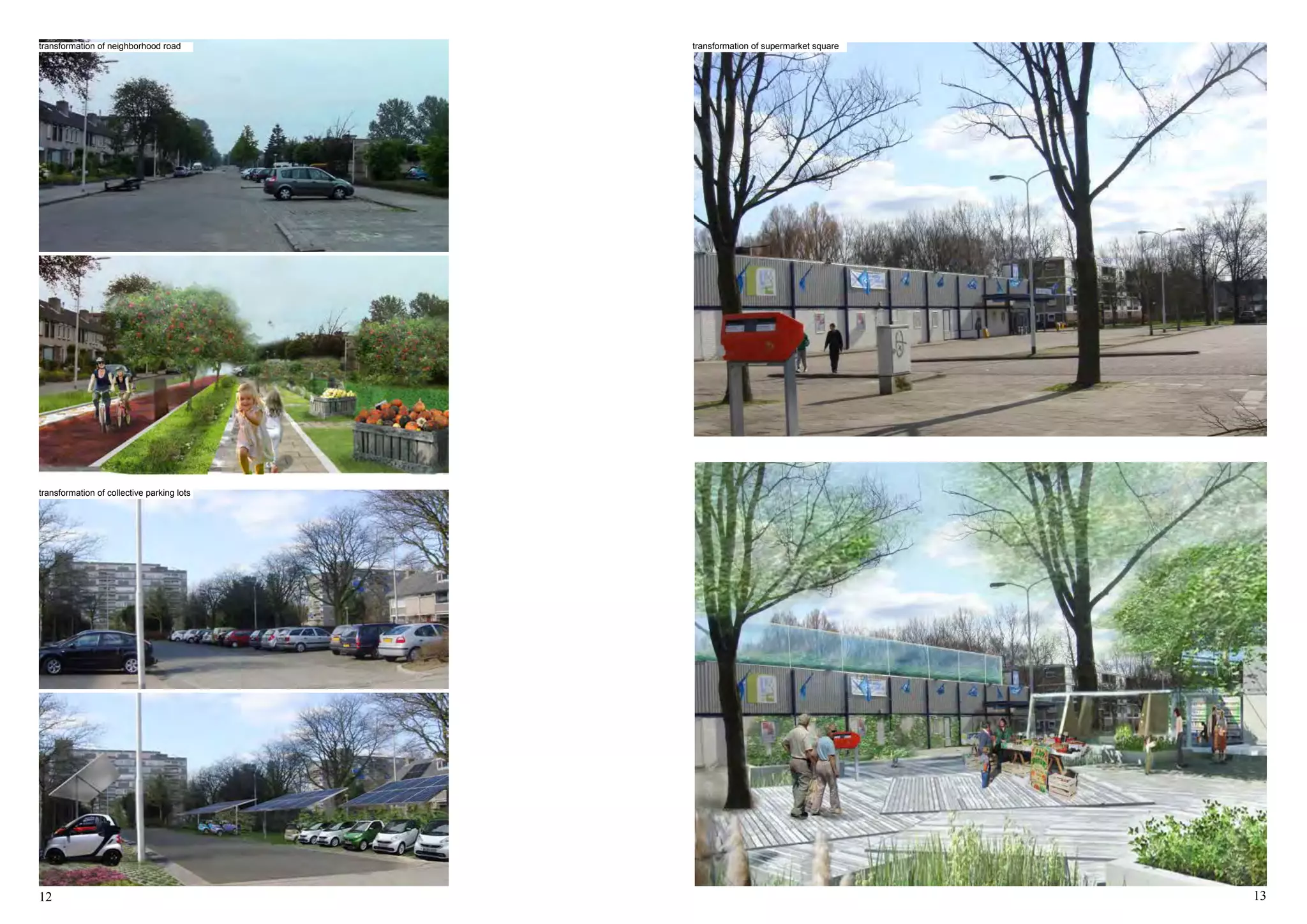
Scenario A: Eckart shopping centre
transformation of supermarket squaretransformation of neighborhood road
transformation of collective parking lots

ZhangXin_portfolio

  • 1.
    4 5 Dommelbeemd, Eindhoven,The Netherlands The regeneration of a postwar neighbourhood to a sustainable urban cell ---- Dommelbeemd district in Eindhoven as case study Urban Design and Planning Master Graduation Project Supervisors: dr. ir. Doevendans, C.H. ir. Rutgers, R.A. d.p.l.g. Rousseau, S.S.S.
  • 2.
    6 7 Heesterakker Vaartbroek Ecarkt Luytelaer MORPHOLOGY LOCATION John.F.Kennedylaand Sterrenlaan cutribbon ring structure ribbon structure The issue of achieving neighborhood sustainability is linked to the neighborhood regeneration. The transformation aims to enable the neighborhoods or districts to be more livable, sustainable and adaptable in the future. Four typical postwar neighborhoods in Eindhoven are selected as one district named Dommelbeemd as a case study. This research will study the district’s limitations as well as the potentials on the physical, environment, social, design and economic aspects. To achieve that, the main focus will be on possible interventions from a sustainable point of view. Based on the thorough literature study and site analysis, a pack of strate- gies and designs are developed for the district’s sustainable future. The general goal for Dommelbeemd is achieving sustainability. This goal is achieved through several methods: 1. Local mobility is largely based on public transportation and cycling. 2. Dommelbeemd becomes carbon neutral. 3. District input and output are mini- mized. 4. Local economy is largely self-sufficient. 5. The residents enjoy a healthy and happy community life. For each method, a pack of approaches are proposed which can always answer the questions: “What” “Why” “How” “When” and “Who”. radial structure neighborhoods neighborhoods + countryside landscape New green system *local based eco-cycles *more environmental awareness from residents Input Input (food, water, energy, goods, clean air) consumption reduce, reuse, recycle (non-local produced food, water, goods, air) (local produced food, clean water, energy, left waste, clean air) (food, water, energy, waste) (waste, wastewater, heat, CO2 ) Output Output Scenario: Eckart shopping centre
  • 3.
    8 9 150m 150m 150m 350m 200m 350m 200m 4 22 HOV 21 350m 200m 350m 200m 422 21 9.5 7.53.5 22 9.5 P PP P 9.5 9.5 P P 9.5 7.53.5 22 9.5 P P P P P PP P 9.5 7.53.5 22 9.5 P P P P Before After road structure parking lots bus line transformation of parking space transformation of road green transformation of lake green
  • 4.
    10 11 urban builtarea housing in countryside Trees greenhouse field in Vaartbroek park greenhouse field close to Eckart com- munity centre greenhouse field between the district and countryside transformation of backyard spaceGreen structure of Dommelbeemd
  • 5.
    12 13 Scenario A:Eckart shopping centre transformation of supermarket squaretransformation of neighborhood road transformation of collective parking lots