Modern vs. Contemporary Design: What’s the Difference?
• Many people think modern and contemporary design are the same. But there’s a world of difference. They
may be synonyms when describing many things, but in design, modern vs. contemporary are quite different.
• Modern design refers to an era that has passed, while contemporary design is all about the now and the
future.
• The most popular modern design era is the mid-century modern era of the 1950s and 1960s. But Art Deco
design of the 1920s or anything from then to the vintage look of the 1970s can also be considered modern.
• Here are the most popular elements and looks of modern vs. contemporary design.
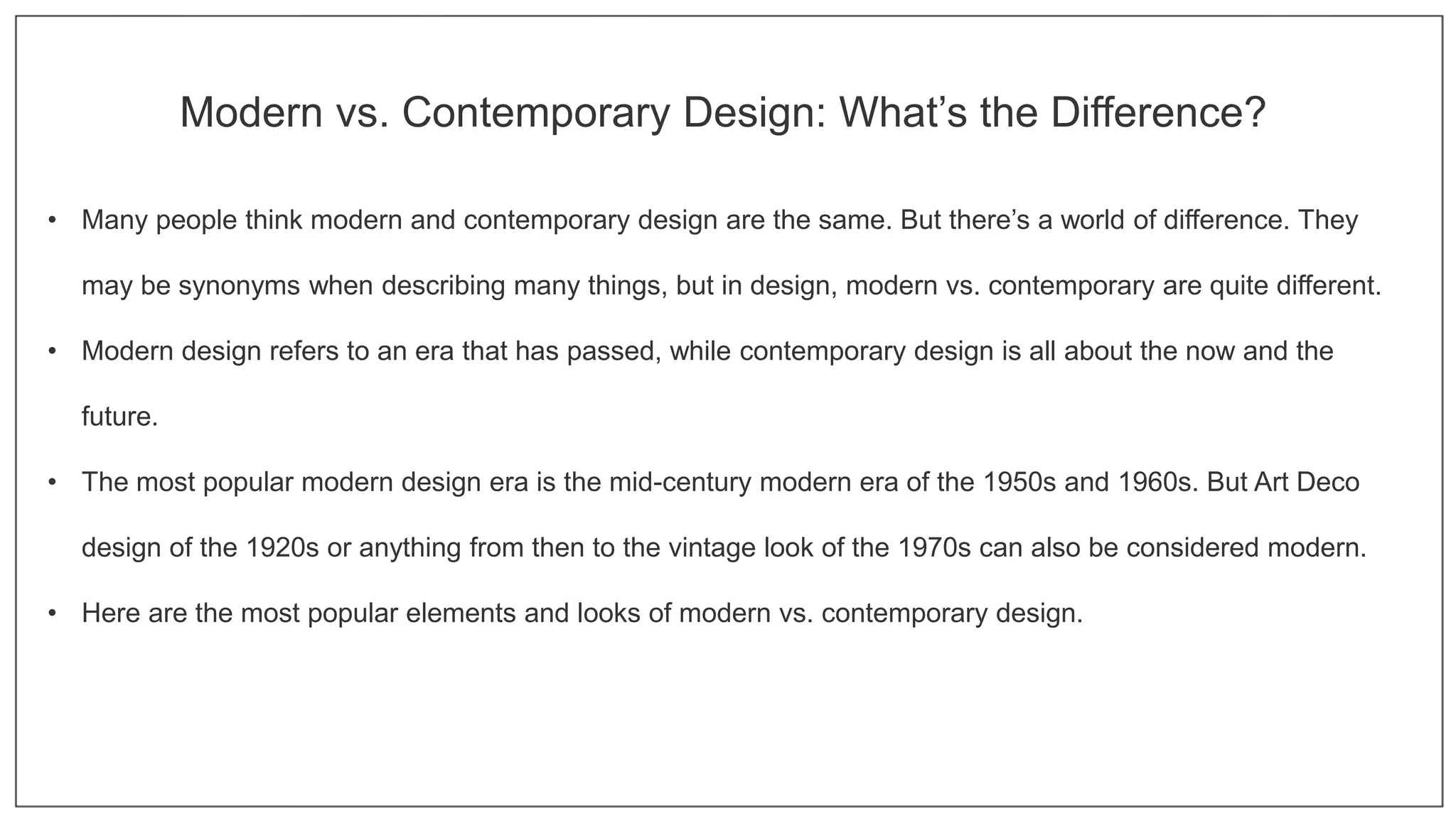
“ Modern design often features wood and earthier elements ’’
Wood elements and nature-inspired decor play an important
part in modern design.
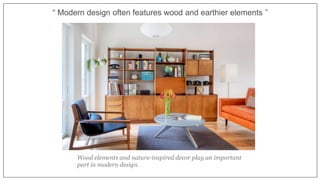
“ Contemporary design features state-of-the-art materials, glass and metals “
Glass, steel, porcelain and concrete are popular
contemporary design materials.
Modern vs. contemporary design colors
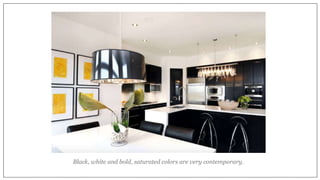
• Contemporary design often sticks to a stricter palate of black, white
and grey. If color is added, the color is often the pure, saturated
tone like true red, indigo or orange.
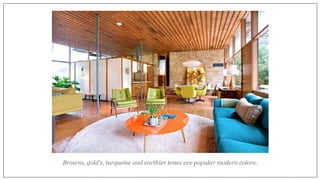
• Modern design colors have an earthier hue and feature shades like
rust, turquoise, brown and olive greens.
• Check out the difference in these two:
Browns, gold's, turquoise and earthier tones are popular modern colors.
Black, white and bold, saturated colors are very contemporary.
Modern vs. contemporary similarities
• Both design styles have three general elements in common, which make them
good design styles to mix and match into your own signature look. The three
shared elements are:
1. The esthetics are both minimalist
2. Clean, architectural lines are their signature
3. They both have an open-space feel
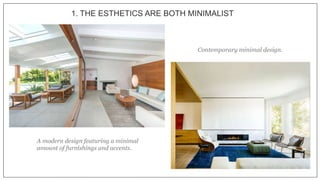
1. THE ESTHETICS ARE BOTH MINIMALIST
A modern design featuring a minimal
amount of furnishings and accents.
Contemporary minimal design.
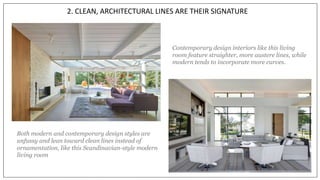
2. CLEAN, ARCHITECTURAL LINES ARE THEIR SIGNATURE
Both modern and contemporary design styles are
unfussy and lean toward clean lines instead of
ornamentation, like this Scandinavian-style modern
living room
Contemporary design interiors like this living
room feature straighter, more austere lines, while
modern tends to incorporate more curves.
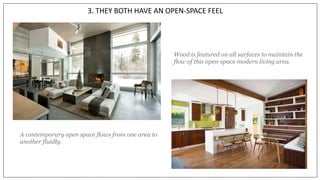
3. THEY BOTH HAVE AN OPEN-SPACE FEEL
Wood is featured on all surfaces to maintain the
flow of this open-space modern living area.
A contemporary open space flows from one area to
another fluidly.
THANK YOU
- Tahseen Jamal Raza

Modern vs Contemporary Design

  • 1.
    Modern vs. ContemporaryDesign: What’s the Difference? • Many people think modern and contemporary design are the same. But there’s a world of difference. They may be synonyms when describing many things, but in design, modern vs. contemporary are quite different. • Modern design refers to an era that has passed, while contemporary design is all about the now and the future. • The most popular modern design era is the mid-century modern era of the 1950s and 1960s. But Art Deco design of the 1920s or anything from then to the vintage look of the 1970s can also be considered modern. • Here are the most popular elements and looks of modern vs. contemporary design.
  • 2.
    “ Modern designoften features wood and earthier elements ’’ Wood elements and nature-inspired decor play an important part in modern design.
  • 3.
    “ Contemporary designfeatures state-of-the-art materials, glass and metals “ Glass, steel, porcelain and concrete are popular contemporary design materials.
  • 4.
    Modern vs. contemporarydesign colors • Contemporary design often sticks to a stricter palate of black, white and grey. If color is added, the color is often the pure, saturated tone like true red, indigo or orange. • Modern design colors have an earthier hue and feature shades like rust, turquoise, brown and olive greens. • Check out the difference in these two:
  • 5.
    Browns, gold's, turquoiseand earthier tones are popular modern colors.
  • 6.
    Black, white andbold, saturated colors are very contemporary.
  • 7.
    Modern vs. contemporarysimilarities • Both design styles have three general elements in common, which make them good design styles to mix and match into your own signature look. The three shared elements are: 1. The esthetics are both minimalist 2. Clean, architectural lines are their signature 3. They both have an open-space feel
  • 8.
    1. THE ESTHETICSARE BOTH MINIMALIST A modern design featuring a minimal amount of furnishings and accents. Contemporary minimal design.
  • 9.
    2. CLEAN, ARCHITECTURALLINES ARE THEIR SIGNATURE Both modern and contemporary design styles are unfussy and lean toward clean lines instead of ornamentation, like this Scandinavian-style modern living room Contemporary design interiors like this living room feature straighter, more austere lines, while modern tends to incorporate more curves.
  • 10.
    3. THEY BOTHHAVE AN OPEN-SPACE FEEL Wood is featured on all surfaces to maintain the flow of this open-space modern living area. A contemporary open space flows from one area to another fluidly.
  • 11.