Models of
Supervision and
Reflection
JAMES SULLIVAN
Capel’s Collaborative Model of Supervision
 Teacher Candidate observes Cooperating Teacher
 TC and CT collaboratively plan and teach
TC teaches independently to learn own style
CT develops a focus on feedback on both
“teaching skills and “ability of the TC to reflect”
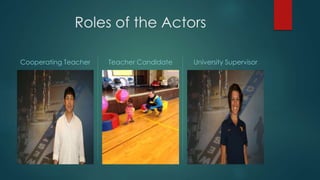
Roles of the Actors
Cooperating Teacher Teacher Candidate University Supervisor
What is Reflection In Teaching?
 Looking at what occurs in the classroom
 Thinking about what you teach and why you teach it
Does it work?
Why Should I Reflect?
 To improve teaching and student comprehension
 To improve the quality of the class content
 To understand what went well and what did not
 To find solutions to teacher and student problems
 To create alternative/ future approaches
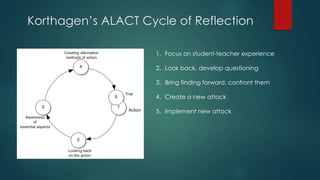
Korthagen’s ALACT Cycle of Reflection
1. Focus on student-teacher experience
2. Look back, develop questioning
3. Bring finding forward, confront them
4. Create a new attack
5. Implement new attack
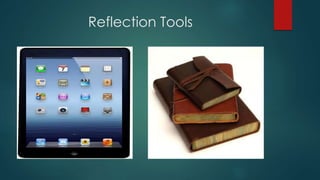
Reflection Tools

Models of supervision_and_reflection

  • 1.
  • 2.
    Capel’s Collaborative Modelof Supervision  Teacher Candidate observes Cooperating Teacher  TC and CT collaboratively plan and teach TC teaches independently to learn own style CT develops a focus on feedback on both “teaching skills and “ability of the TC to reflect”
  • 3.
    Roles of theActors Cooperating Teacher Teacher Candidate University Supervisor
  • 4.
    What is ReflectionIn Teaching?  Looking at what occurs in the classroom  Thinking about what you teach and why you teach it Does it work?
  • 5.
    Why Should IReflect?  To improve teaching and student comprehension  To improve the quality of the class content  To understand what went well and what did not  To find solutions to teacher and student problems  To create alternative/ future approaches
  • 6.
    Korthagen’s ALACT Cycleof Reflection 1. Focus on student-teacher experience 2. Look back, develop questioning 3. Bring finding forward, confront them 4. Create a new attack 5. Implement new attack
  • 7.