Models of disability, Functions, and Outcomes
1. Religious/Moral Model
2. Biomedical Model
3. Functional Model
4. Environmental Model
5. Sociopolitical Model
The Functional, Environmental, and Sociopolitical
Models
are interactive.
 ! guiding assumptions
 ! Human made tool for understanding
 ! Human made tool for guidelines for action
 ! A representation of reality, but not reality
 ! Models are what PWDs live daily.
 ! Models are invented human assumptions.
 ! Models can be, culture-bound and time bound.
 They provide the definitions of disability, who has
a disability and what is the disability.
 These definitions result in diagnoses, labels,
stereotypes, and self-definitions.
 Also operationalizes research variables.
 Definitions reflect the values of the definers.
 To serve as a starting point for government laws,
policies and guidelines.
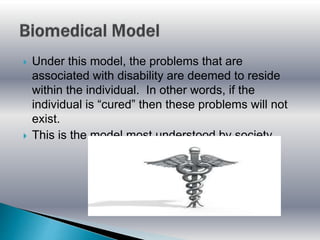
 Under this model, the problems that are
associated with disability are deemed to reside
within the individual. In other words, if the
individual is “cured” then these problems will not
exist.
 This is the model most understood by society.
 The Moral Model is historically the oldest and is less prevalent today.
 It provides the basis for the institutionalization, segregation, and
marginalization of people with disabilities.
 Many cultures associate disability with sin and shame, and disability is
often associates with feelings of guilt, For the individual with the
disability, this model is particularly burdensome.
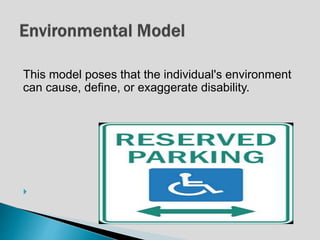
This model poses that the individual's environment
can cause, define, or exaggerate disability.

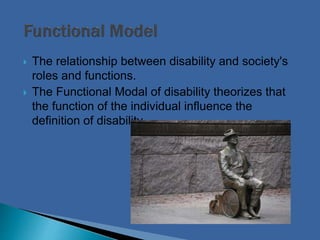
 The relationship between disability and society's
roles and functions.
 The Functional Modal of disability theorizes that
the function of the individual influence the
definition of disability.
 The Sociopolitical Model views disability as a consequence
of environmental, social and attitudinal barriers that prevent
people with impairments from maximum participation in
society.
 This model considers disability to be a collective concern.

Models of disability poster

  • 1.
    Models of disability,Functions, and Outcomes
  • 2.
    1. Religious/Moral Model 2.Biomedical Model 3. Functional Model 4. Environmental Model 5. Sociopolitical Model The Functional, Environmental, and Sociopolitical Models are interactive.
  • 3.
     ! guidingassumptions  ! Human made tool for understanding  ! Human made tool for guidelines for action  ! A representation of reality, but not reality  ! Models are what PWDs live daily.  ! Models are invented human assumptions.  ! Models can be, culture-bound and time bound.
  • 4.
     They providethe definitions of disability, who has a disability and what is the disability.  These definitions result in diagnoses, labels, stereotypes, and self-definitions.  Also operationalizes research variables.  Definitions reflect the values of the definers.  To serve as a starting point for government laws, policies and guidelines.
  • 5.
     Under thismodel, the problems that are associated with disability are deemed to reside within the individual. In other words, if the individual is “cured” then these problems will not exist.  This is the model most understood by society.
  • 6.
     The MoralModel is historically the oldest and is less prevalent today.  It provides the basis for the institutionalization, segregation, and marginalization of people with disabilities.  Many cultures associate disability with sin and shame, and disability is often associates with feelings of guilt, For the individual with the disability, this model is particularly burdensome.
  • 7.
    This model posesthat the individual's environment can cause, define, or exaggerate disability. 
  • 8.
     The relationshipbetween disability and society's roles and functions.  The Functional Modal of disability theorizes that the function of the individual influence the definition of disability.
  • 9.
     The SociopoliticalModel views disability as a consequence of environmental, social and attitudinal barriers that prevent people with impairments from maximum participation in society.  This model considers disability to be a collective concern.