Modal Verbs of
DEDUCTION


           Carlos Pelejero
           Myriam Chiner
           Luis Vancells
USES
• Past: to speculate about the past /to make
  thoughts/ to make guesses about the past based
  on known facts

• Present: make deductions about the present /
  to make guesses about the present based on
  known facts
GRAMMAR STRUCTURE
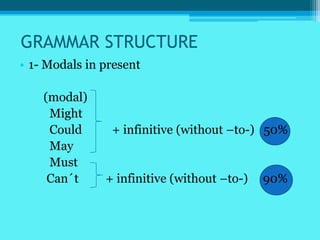
• 1- Modals in present

    (modal)
     Might
     Could      + infinitive (without –to-) 50%
     May
     Must
     Can´t     + infinitive (without –to-)   90%
For example….

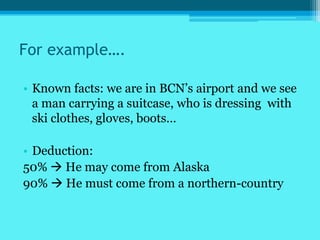
• Known facts: we are in BCN’s airport and we see
  a man carrying a suitcase, who is dressing with
  ski clothes, gloves, boots…

• Deduction:
50%  He may come from Alaska
90%  He must come from a northern-country
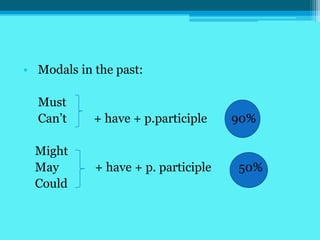
• Modals in the past:

  Must
  Can’t     + have + p.participle    90%

  Might
  May       + have + p. participle   50%
  Could
The opposites of must and
must have are can't and
can't have, not mustn't and
mustn't have
Now… Make deductions!
                 •
BLIND DATE
Relax…     Adventure


         FIST DATE

Modal verbs deduction[1]

  • 1.
    Modal Verbs of DEDUCTION Carlos Pelejero Myriam Chiner Luis Vancells
  • 2.
    USES • Past: tospeculate about the past /to make thoughts/ to make guesses about the past based on known facts • Present: make deductions about the present / to make guesses about the present based on known facts
  • 3.
    GRAMMAR STRUCTURE • 1-Modals in present (modal) Might Could + infinitive (without –to-) 50% May Must Can´t + infinitive (without –to-) 90%
  • 4.
    For example…. • Knownfacts: we are in BCN’s airport and we see a man carrying a suitcase, who is dressing with ski clothes, gloves, boots… • Deduction: 50%  He may come from Alaska 90%  He must come from a northern-country
  • 5.
    • Modals inthe past: Must Can’t + have + p.participle 90% Might May + have + p. participle 50% Could
  • 6.
    The opposites ofmust and must have are can't and can't have, not mustn't and mustn't have
  • 7.
  • 8.
  • 9.
    Relax… Adventure FIST DATE