Mobile
App Development
www.mechlintech.com 805-776-3451
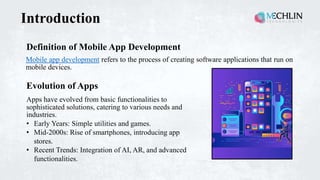
Mobile app development refers to the process of creating software applications that run on
mobile devices.
Evolution of Apps
Apps have evolved from basic functionalities to
sophisticated solutions, catering to various needs and
industries.
• Early Years: Simple utilities and games.
• Mid-2000s: Rise of smartphones, introducing app
stores.
• Recent Trends: Integration of AI, AR, and advanced
functionalities.
Definition of Mobile App Development
Introduction
Mobile app development shares similarities with traditional software development, including web
applications. However, a distinctive feature sets app development apart—the unparalleled ability to harness
native features embedded within mobile devices.
Key Distinction:
In the realm of app development, the significant departure lies in the seamless integration with a device's
intrinsic capabilities. Mobile apps have the unique advantage of tapping into native features such as GPS,
Bluetooth, camera, microphone, and other functions inherently present in smartphones.
Examples of Native Feature Integration:
GPS: Apps can pinpoint user locations for navigation or location-based services.
Bluetooth: Seamless connectivity with other devices for data exchange.
Camera and Microphone: Empowering apps with multimedia capabilities for a dynamic user experience.
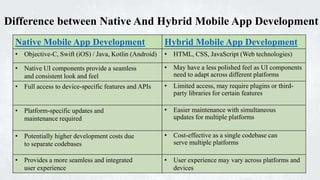
Difference between Native And Hybrid Mobile App Development
Native Mobile App Development Hybrid Mobile App Development
• Objective-C, Swift (iOS) / Java, Kotlin (Android) • HTML, CSS, JavaScript (Web technologies)
• Native UI components provide a seamless
and consistent look and feel
• May have a less polished feel as UI components
need to adapt across different platforms
• Full access to device-specific features and APIs • Limited access, may require plugins or third-
party libraries for certain features
• Platform-specific updates and
maintenance required
• Easier maintenance with simultaneous
updates for multiple platforms
• Potentially higher development costs due
to separate codebases
• Cost-effective as a single codebase can
serve multiple platforms
• Provides a more seamless and integrated
user experience
• User experience may vary across platforms and
devices
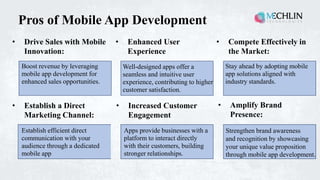
Pros of Mobile App Development
Boost revenue by leveraging
mobile app development for
enhanced sales opportunities.
Apps provide businesses with a
platform to interact directly
with their customers, building
stronger relationships.
• Drive Sales with Mobile
Innovation:
• Increased Customer
Engagement
• Amplify Brand
Presence:
Well-designed apps offer a
seamless and intuitive user
experience, contributing to higher
customer satisfaction.
Establish efficient direct
communication with your
audience through a dedicated
mobile app
• Establish a Direct
Marketing Channel:
• Enhanced User
Experience
Stay ahead by adopting mobile
app solutions aligned with
industry standards.
• Compete Effectively in
the Market:
Strengthen brand awareness
and recognition by showcasing
your unique value proposition
through mobile app development.
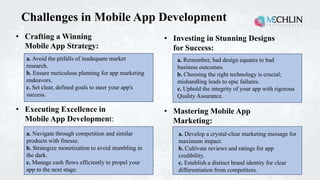
Challenges in Mobile App Development
a. Avoid the pitfalls of inadequate market
research.
b. Ensure meticulous planning for app marketing
endeavors.
c. Set clear, defined goals to steer your app's
success.
• Crafting a Winning
Mobile App Strategy:
• Investing in Stunning Designs
for Success:
a. Remember, bad design equates to bad
business outcomes.
b. Choosing the right technology is crucial;
mishandling leads to epic failures.
c. Uphold the integrity of your app with rigorous
Quality Assurance.
• Mastering Mobile App
Marketing:
• Executing Excellence in
Mobile App Development:
a. Develop a crystal-clear marketing message for
maximum impact.
b. Cultivate reviews and ratings for app
credibility.
c. Establish a distinct brand identity for clear
differentiation from competitors.
a. Navigate through competition and similar
products with finesse.
b. Strategize monetization to avoid stumbling in
the dark.
c. Manage cash flows efficiently to propel your
app to the next stage.
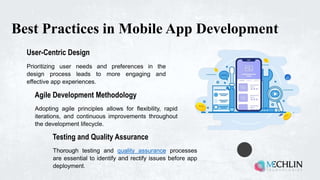
Best Practices in Mobile App Development
Prioritizing user needs and preferences in the
design process leads to more engaging and
effective app experiences.
Adopting agile principles allows for flexibility, rapid
iterations, and continuous improvements throughout
the development lifecycle.
Thorough testing and quality assurance processes
are essential to identify and rectify issues before app
deployment.
User-Centric Design
Agile Development Methodology
Testing and Quality Assurance
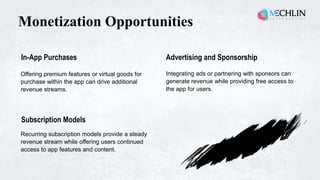
Monetization Opportunities
Recurring subscription models provide a steady
revenue stream while offering users continued
access to app features and content.
Offering premium features or virtual goods for
purchase within the app can drive additional
revenue streams.
In-App Purchases
Integrating ads or partnering with sponsors can
generate revenue while providing free access to
the app for users.
Advertising and Sponsorship
Subscription Models
Conclusion
By addressing challenges and
embracing best practices,
businesses can harness the
potential of mobile apps for
growth and success.
Harnessing Mobile App
Potential
Ultimately, success in mobile app development hinges on delivering
value and exceptional experiences to users.
Creating Value for Users
Remaining adaptable and
responsive to evolving market
trends is crucial for sustained
relevance in the mobile app
landscape.
Adapting to Market Trends
Thank
You!
www.mechlintech.com
805-776-3451
info@mechlintech.com
146/147, A, Sector - A, Shrinath Puram , Kota, Rajasthan 324009, India

Mobile App Development.pptx

  • 1.
  • 2.
    Mobile app developmentrefers to the process of creating software applications that run on mobile devices. Evolution of Apps Apps have evolved from basic functionalities to sophisticated solutions, catering to various needs and industries. • Early Years: Simple utilities and games. • Mid-2000s: Rise of smartphones, introducing app stores. • Recent Trends: Integration of AI, AR, and advanced functionalities. Definition of Mobile App Development Introduction
  • 3.
    Mobile app developmentshares similarities with traditional software development, including web applications. However, a distinctive feature sets app development apart—the unparalleled ability to harness native features embedded within mobile devices. Key Distinction: In the realm of app development, the significant departure lies in the seamless integration with a device's intrinsic capabilities. Mobile apps have the unique advantage of tapping into native features such as GPS, Bluetooth, camera, microphone, and other functions inherently present in smartphones. Examples of Native Feature Integration: GPS: Apps can pinpoint user locations for navigation or location-based services. Bluetooth: Seamless connectivity with other devices for data exchange. Camera and Microphone: Empowering apps with multimedia capabilities for a dynamic user experience.
  • 4.
    Difference between NativeAnd Hybrid Mobile App Development Native Mobile App Development Hybrid Mobile App Development • Objective-C, Swift (iOS) / Java, Kotlin (Android) • HTML, CSS, JavaScript (Web technologies) • Native UI components provide a seamless and consistent look and feel • May have a less polished feel as UI components need to adapt across different platforms • Full access to device-specific features and APIs • Limited access, may require plugins or third- party libraries for certain features • Platform-specific updates and maintenance required • Easier maintenance with simultaneous updates for multiple platforms • Potentially higher development costs due to separate codebases • Cost-effective as a single codebase can serve multiple platforms • Provides a more seamless and integrated user experience • User experience may vary across platforms and devices
  • 5.
    Pros of MobileApp Development Boost revenue by leveraging mobile app development for enhanced sales opportunities. Apps provide businesses with a platform to interact directly with their customers, building stronger relationships. • Drive Sales with Mobile Innovation: • Increased Customer Engagement • Amplify Brand Presence: Well-designed apps offer a seamless and intuitive user experience, contributing to higher customer satisfaction. Establish efficient direct communication with your audience through a dedicated mobile app • Establish a Direct Marketing Channel: • Enhanced User Experience Stay ahead by adopting mobile app solutions aligned with industry standards. • Compete Effectively in the Market: Strengthen brand awareness and recognition by showcasing your unique value proposition through mobile app development.
  • 6.
    Challenges in MobileApp Development a. Avoid the pitfalls of inadequate market research. b. Ensure meticulous planning for app marketing endeavors. c. Set clear, defined goals to steer your app's success. • Crafting a Winning Mobile App Strategy: • Investing in Stunning Designs for Success: a. Remember, bad design equates to bad business outcomes. b. Choosing the right technology is crucial; mishandling leads to epic failures. c. Uphold the integrity of your app with rigorous Quality Assurance. • Mastering Mobile App Marketing: • Executing Excellence in Mobile App Development: a. Develop a crystal-clear marketing message for maximum impact. b. Cultivate reviews and ratings for app credibility. c. Establish a distinct brand identity for clear differentiation from competitors. a. Navigate through competition and similar products with finesse. b. Strategize monetization to avoid stumbling in the dark. c. Manage cash flows efficiently to propel your app to the next stage.
  • 7.
    Best Practices inMobile App Development Prioritizing user needs and preferences in the design process leads to more engaging and effective app experiences. Adopting agile principles allows for flexibility, rapid iterations, and continuous improvements throughout the development lifecycle. Thorough testing and quality assurance processes are essential to identify and rectify issues before app deployment. User-Centric Design Agile Development Methodology Testing and Quality Assurance
  • 8.
    Monetization Opportunities Recurring subscriptionmodels provide a steady revenue stream while offering users continued access to app features and content. Offering premium features or virtual goods for purchase within the app can drive additional revenue streams. In-App Purchases Integrating ads or partnering with sponsors can generate revenue while providing free access to the app for users. Advertising and Sponsorship Subscription Models
  • 9.
    Conclusion By addressing challengesand embracing best practices, businesses can harness the potential of mobile apps for growth and success. Harnessing Mobile App Potential Ultimately, success in mobile app development hinges on delivering value and exceptional experiences to users. Creating Value for Users Remaining adaptable and responsive to evolving market trends is crucial for sustained relevance in the mobile app landscape. Adapting to Market Trends
  • 10.