CRM Modules
An Overview of Key Components
Agenda
• Introduction
• Overview of CRM Modules
• Sales Module
• Marketing Module
• Customer Service Module
• Analytics Module
• Integration Module
• Conclusion
What is CRM?
Definition: Customer Relationship Management.
Purpose: To manage a company's interactions with current and potential customers.
Benefits: Enhances customer satisfaction, boosts sales, and improves efficiency.
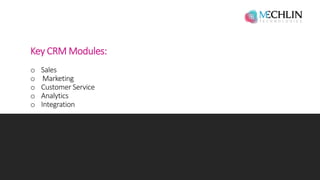
Key CRM Modules:
o Sales
o Marketing
o Customer Service
o Analytics
o Integration
Definition: The Sales Module in a CRM system manages the
entire sales process, from lead generation and opportunity
tracking to sales forecasting and order management.
Benefits:
• Streamlines sales processes and enhances productivity.
• Improves tracking of sales activities, leading to better
forecasting and higher sales conversion rates.
Sales Module
Definition: The Marketing Module in a CRM system automates and
manages marketing campaigns, lead generation, and customer
engagement across various channels.
Benefits: Targets the right audience more effectively and increases
marketing efficiency.
- Tracks campaign performance, leading to better strategy
adjustments and improved ROI.
Marketing Module
Definition: The Customer Service Module in a CRM system handles
customer inquiries, support tickets, and provides tools for managing
and resolving customer issues efficiently.
Benefits:
• Enhances customer satisfaction by improving response times and
service quality.
• Centralizes customer service operations, leading to more organized
and effective issue resolution.
Customer Service Module
Definition: The Analytics Module in a CRM system provides tools for data
analysis, reporting, and generating insights from customer data to inform
strategic decisions.
Benefits:
• Delivers actionable insights and helps in data-driven decision making.
• Monitors performance metrics across sales, marketing, and customer
service to identify areas for improvement.
Analytics Module
Definition: The Integration Module in a CRM system enables the
seamless connection and synchronization of data between the CRM
and other applications, such as ERP systems, email platforms, and
third-party apps.
Benefits:
• Ensures data consistency across systems and enhances overall
system functionality.
• Streamlines operations by enabling smooth data flow and reducing
manual data entry.
Integration Module
• CRM modules are essential for managing various aspects of
customer relationships.
• Choosing the right modules and implementing them
effectively can significantly benefit a business.
Conclusion
Thank you
+1 (805) 776-3451
sales@mechlintech.com
www.mechlintech.com

CRM Modules -An Overview of Key Components.pptx

  • 1.
    CRM Modules An Overviewof Key Components
  • 2.
    Agenda • Introduction • Overviewof CRM Modules • Sales Module • Marketing Module • Customer Service Module • Analytics Module • Integration Module • Conclusion
  • 3.
    What is CRM? Definition:Customer Relationship Management. Purpose: To manage a company's interactions with current and potential customers. Benefits: Enhances customer satisfaction, boosts sales, and improves efficiency.
  • 4.
    Key CRM Modules: oSales o Marketing o Customer Service o Analytics o Integration
  • 5.
    Definition: The SalesModule in a CRM system manages the entire sales process, from lead generation and opportunity tracking to sales forecasting and order management. Benefits: • Streamlines sales processes and enhances productivity. • Improves tracking of sales activities, leading to better forecasting and higher sales conversion rates. Sales Module
  • 6.
    Definition: The MarketingModule in a CRM system automates and manages marketing campaigns, lead generation, and customer engagement across various channels. Benefits: Targets the right audience more effectively and increases marketing efficiency. - Tracks campaign performance, leading to better strategy adjustments and improved ROI. Marketing Module
  • 7.
    Definition: The CustomerService Module in a CRM system handles customer inquiries, support tickets, and provides tools for managing and resolving customer issues efficiently. Benefits: • Enhances customer satisfaction by improving response times and service quality. • Centralizes customer service operations, leading to more organized and effective issue resolution. Customer Service Module
  • 8.
    Definition: The AnalyticsModule in a CRM system provides tools for data analysis, reporting, and generating insights from customer data to inform strategic decisions. Benefits: • Delivers actionable insights and helps in data-driven decision making. • Monitors performance metrics across sales, marketing, and customer service to identify areas for improvement. Analytics Module
  • 9.
    Definition: The IntegrationModule in a CRM system enables the seamless connection and synchronization of data between the CRM and other applications, such as ERP systems, email platforms, and third-party apps. Benefits: • Ensures data consistency across systems and enhances overall system functionality. • Streamlines operations by enabling smooth data flow and reducing manual data entry. Integration Module
  • 10.
    • CRM modulesare essential for managing various aspects of customer relationships. • Choosing the right modules and implementing them effectively can significantly benefit a business. Conclusion
  • 11.
    Thank you +1 (805)776-3451 sales@mechlintech.com www.mechlintech.com