Nye medier
MM’11


             Christian Winther Bech
                     cwb@imv.au.dk
Hvad er nye medier   nye og nye...
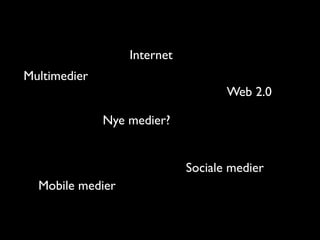
Internet
Multimedier
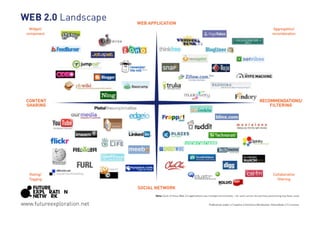
                                    Web 2.0

              Nye medier?


                             Sociale medier
  Mobile medier
Manovich' principper

• Numerisk repræsentation


• Modularitet


• Automatisering


• Variabilitet


• Transcoding (trans- eller gennemkodning)
Transcoding

• Interfacets/computerbilledets to sider


   • menneskelige side i dialog med humanvidenskabelig betydning


   • maskinelle/datalogiske side i dialog med andre computerfiler


 "The ways in which computer models the world, represents data and allows
 us to operate on it; the key operations behind all computer programs (such as
 search, match, sort, filter); the conventions of HCI — in short, what can be
 called the computer’s ontology, epistemology and pragmatics — influence the
 cultural layer of new media: its organization, its emerging genres, its
 contents."
Transcoding

• Transcoding som kulturel dynamik:


   • computerens logik trænger ind i kulturen


   • kulturen fortolker og påvirker computeren (det kulturelle interface)


• Ny digital kultur


• Ny teori om udtrykket
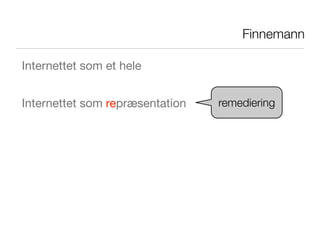
Finnemann

Internettet som et hele


Internettet som repræsentation   remediering
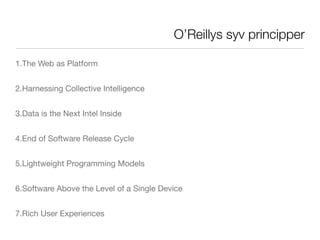
O’Reillys syv principper

1.The Web as Platform


2.Harnessing Collective Intelligence


3.Data is the Next Intel Inside


4.End of Software Release Cycle


5.Lightweight Programming Models


6.Software Above the Level of a Single Device


7.Rich User Experiences
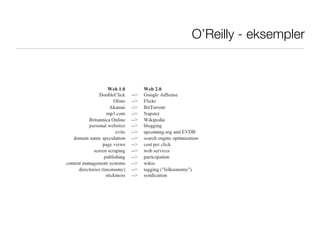
O’Reilly - eksempler
compact definition? [O’Reilly]

I said I'm not fond of definitions, but I woke up this morning
with the start of one in my head: Web 2.0 is the network as
platform, spanning all connected devices; Web 2.0
applications are those that make the most of the intrinsic
advantages of that platform: delivering software as a
continually-updated service that gets better the more people
use it, consuming and remixing data from multiple sources,
including individual users, while providing their own data and
services in a form that allows remixing by others, creating
network effects through an "architecture of participation," and
going beyond the page metaphor of Web 1.0 to deliver rich
user experiences.

http://radar.oreilly.com/archives/2005/10/
The Machine is Us/ing Us

‣ http://www.youtube.com/watch?v=6gmP4nk0EOE
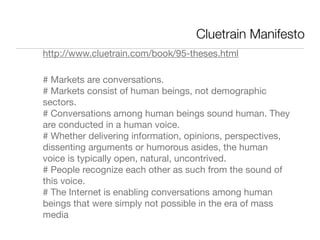
Cluetrain Manifesto
http://www.cluetrain.com/book/95-theses.html

# Markets are conversations.
# Markets consist of human beings, not demographic
sectors.
# Conversations among human beings sound human. They
are conducted in a human voice.
# Whether delivering information, opinions, perspectives,
dissenting arguments or humorous asides, the human
voice is typically open, natural, uncontrived.
# People recognize each other as such from the sound of
this voice.
# The Internet is enabling conversations among human
beings that were simply not possible in the era of mass
media
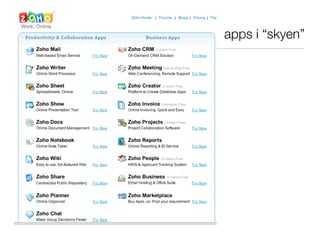
apps i “skyen”
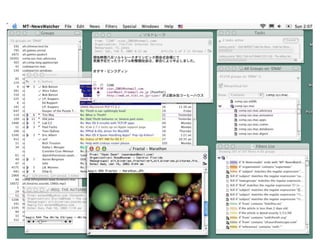
RSS

‣ Really Simple Syndication


‣ Rich Site Summary


‣ http://en.wikipedia.org/wiki/RSS


‣ http://www.cil.au.dk


‣ Ajax - Asynchronous Javascript and XML
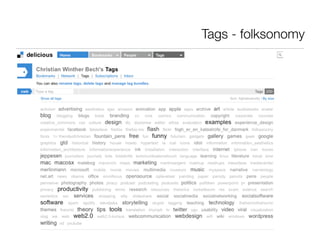
Deling: Social bookmarking
Tags - folksonomy
Mash-ups

‣ DJ Dangermouse: The Grey Album (2004)


‣ mash-up/bastard pop


‣ http://www.youtube.com/watch?v=3zJqihkLcGc


‣ http://video.google.com/videoplay?docid=6805063692754011230&q=george
  +bush+sunday+bloody+sunday &


‣ http://www.atmo.se/?pageID=4&articleID=389
O’Reilly: succeskriterier

‣ Services, not packaged software, with cost-effective scalability
‣ Leveraging the long tail through customer self service
‣ Harnessing collective intellegence
‣ Trusting users as co-developers
‣ Control over unique, hard-to-recreate data sources that get richer
 as more people use them

‣ Software above the level of a single device
‣ Lightweight user interfaces, development models, AND business
 models
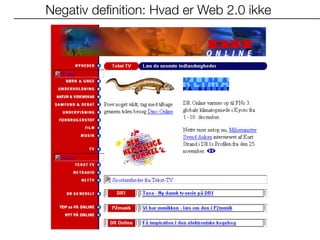
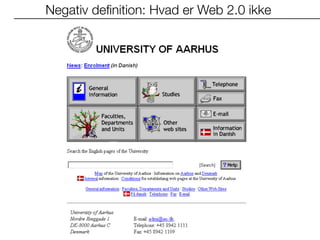
Negativ definition: Hvad er Web 2.0 ikke
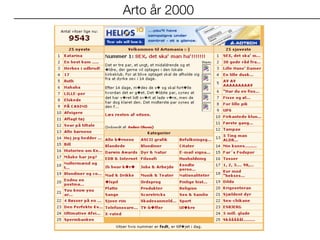
Arto år 2000
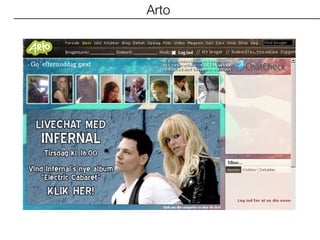
Arto
Yahoo 1999
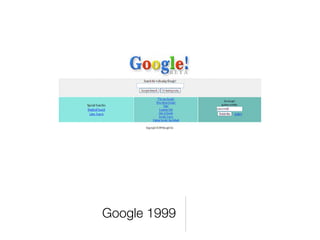
Google 1999
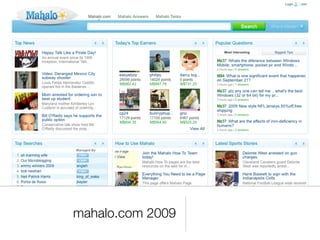
mahalo.com 2009
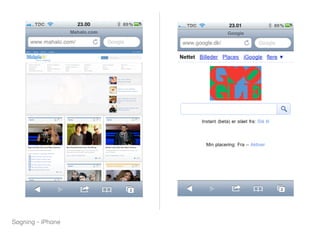
Søgning - iPhone
Google App
Nøglebegreber - brugeren

• Deltagelse


• Åbenhed


• Samtale


• Fællesskab


• Connected


• Netværk
Brugeren

• Brugerinddragelse


• Brugergenereret indhold


• Brugernes sider


• Brugersites / sociale sites


• Brugernes anvendelse
Karakteristika ved Web 2.0

‣ Publikation og broadcasting


‣ Dialog og samarbejde


‣ Netværk (”networking”)


‣ Deling


‣ Tags


‣ RSS


‣ Mash-ups
Mm11 nyemedier-15-02-2011

Mm11 nyemedier-15-02-2011

  • 1.
    Nye medier MM’11 Christian Winther Bech cwb@imv.au.dk
  • 2.
    Hvad er nyemedier nye og nye...
  • 3.
    Internet Multimedier Web 2.0 Nye medier? Sociale medier Mobile medier
  • 4.
    Manovich' principper • Numeriskrepræsentation • Modularitet • Automatisering • Variabilitet • Transcoding (trans- eller gennemkodning)
  • 5.
    Transcoding • Interfacets/computerbilledets tosider • menneskelige side i dialog med humanvidenskabelig betydning • maskinelle/datalogiske side i dialog med andre computerfiler "The ways in which computer models the world, represents data and allows us to operate on it; the key operations behind all computer programs (such as search, match, sort, filter); the conventions of HCI — in short, what can be called the computer’s ontology, epistemology and pragmatics — influence the cultural layer of new media: its organization, its emerging genres, its contents."
  • 6.
    Transcoding • Transcoding somkulturel dynamik: • computerens logik trænger ind i kulturen • kulturen fortolker og påvirker computeren (det kulturelle interface) • Ny digital kultur • Ny teori om udtrykket
  • 7.
    Finnemann Internettet som ethele Internettet som repræsentation remediering
  • 12.
    O’Reillys syv principper 1.TheWeb as Platform 2.Harnessing Collective Intelligence 3.Data is the Next Intel Inside 4.End of Software Release Cycle 5.Lightweight Programming Models 6.Software Above the Level of a Single Device 7.Rich User Experiences
  • 13.
  • 14.
    compact definition? [O’Reilly] Isaid I'm not fond of definitions, but I woke up this morning with the start of one in my head: Web 2.0 is the network as platform, spanning all connected devices; Web 2.0 applications are those that make the most of the intrinsic advantages of that platform: delivering software as a continually-updated service that gets better the more people use it, consuming and remixing data from multiple sources, including individual users, while providing their own data and services in a form that allows remixing by others, creating network effects through an "architecture of participation," and going beyond the page metaphor of Web 1.0 to deliver rich user experiences. http://radar.oreilly.com/archives/2005/10/
  • 15.
    The Machine isUs/ing Us ‣ http://www.youtube.com/watch?v=6gmP4nk0EOE
  • 16.
    Cluetrain Manifesto http://www.cluetrain.com/book/95-theses.html # Marketsare conversations. # Markets consist of human beings, not demographic sectors. # Conversations among human beings sound human. They are conducted in a human voice. # Whether delivering information, opinions, perspectives, dissenting arguments or humorous asides, the human voice is typically open, natural, uncontrived. # People recognize each other as such from the sound of this voice. # The Internet is enabling conversations among human beings that were simply not possible in the era of mass media
  • 17.
  • 18.
    RSS ‣ Really SimpleSyndication ‣ Rich Site Summary ‣ http://en.wikipedia.org/wiki/RSS ‣ http://www.cil.au.dk ‣ Ajax - Asynchronous Javascript and XML
  • 19.
  • 20.
  • 21.
    Mash-ups ‣ DJ Dangermouse:The Grey Album (2004) ‣ mash-up/bastard pop ‣ http://www.youtube.com/watch?v=3zJqihkLcGc ‣ http://video.google.com/videoplay?docid=6805063692754011230&q=george +bush+sunday+bloody+sunday & ‣ http://www.atmo.se/?pageID=4&articleID=389
  • 22.
    O’Reilly: succeskriterier ‣ Services,not packaged software, with cost-effective scalability ‣ Leveraging the long tail through customer self service ‣ Harnessing collective intellegence ‣ Trusting users as co-developers ‣ Control over unique, hard-to-recreate data sources that get richer as more people use them ‣ Software above the level of a single device ‣ Lightweight user interfaces, development models, AND business models
  • 23.
  • 24.
  • 25.
  • 26.
  • 27.
  • 28.
  • 29.
  • 30.
  • 31.
  • 32.
    Nøglebegreber - brugeren •Deltagelse • Åbenhed • Samtale • Fællesskab • Connected • Netværk
  • 33.
    Brugeren • Brugerinddragelse • Brugergenereretindhold • Brugernes sider • Brugersites / sociale sites • Brugernes anvendelse
  • 34.
    Karakteristika ved Web2.0 ‣ Publikation og broadcasting ‣ Dialog og samarbejde ‣ Netværk (”networking”) ‣ Deling ‣ Tags ‣ RSS ‣ Mash-ups