Parallel Structure means . . .


 "using the same pattern of words to
show that two or more ideas have the
  same level of importance" (Purdue
                OWL)
Background
Parallel structures . . .
Come from oral and rhetorical
 (speaking) traditions
Are central to poetic, rhetorical, and
 business writing
Use
Speakers use parallel structures to memorize,
 organize, condense, communicate, and
 persuade
Writers use parallel structures for brevity and power:
  ““The art of art, the glory of expression and the
    sunshine of the light of letters, is simplicity.”
     Walt Whitman, Preface to Leaves of Grass
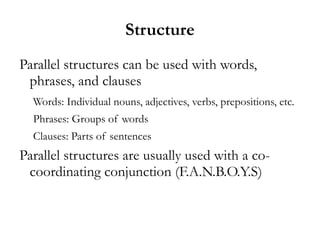
Structure
Parallel structures can be used with words,
 phrases, and clauses
  Words: Individual nouns, adjectives, verbs, prepositions, etc.
  Phrases: Groups of words
  Clauses: Parts of sentences
Parallel structures are usually used with a co-
 coordinating conjunction (F.A.N.B.O.Y.S)
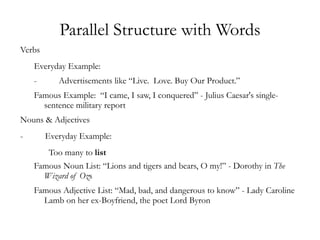
Parallel Structure with Words
Verbs
    Everyday Example:
    -      Advertisements like “Live. Love. Buy Our Product.”
    Famous Example: “I came, I saw, I conquered” - Julius Caesar's single-
      sentence military report
Nouns & Adjectives
-       Everyday Example:
        Too many to list
    Famous Noun List: “Lions and tigers and bears, O my!” - Dorothy in The
      Wizard of Ozs
    Famous Adjective List: “Mad, bad, and dangerous to know” - Lady Caroline
      Lamb on her ex-Boyfriend, the poet Lord Byron
Parallel Structures with Phrases and
                Clauses
Any group of words (phrases)
 or parts of sentence
 (clauses) can be formed into
 parallel structures.
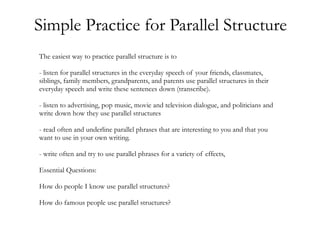
Simple Practice for Parallel Structure
The easiest way to practice parallel structure is to

- listen for parallel structures in the everyday speech of your friends, classmates,
siblings, family members, grandparents, and parents use parallel structures in their
everyday speech and write these sentences down (transcribe).

- listen to advertising, pop music, movie and television dialogue, and politicians and
write down how they use parallel structures

- read often and underline parallel phrases that are interesting to you and that you
want to use in your own writing.

- write often and try to use parallel phrases for a variety of effects,

Essential Questions:

How do people I know use parallel structures?

How do famous people use parallel structures?

Mlc parallel structureintro

  • 1.
    Parallel Structure means. . . "using the same pattern of words to show that two or more ideas have the same level of importance" (Purdue OWL)
  • 2.
    Background Parallel structures .. . Come from oral and rhetorical (speaking) traditions Are central to poetic, rhetorical, and business writing
  • 3.
    Use Speakers use parallelstructures to memorize, organize, condense, communicate, and persuade Writers use parallel structures for brevity and power: ““The art of art, the glory of expression and the sunshine of the light of letters, is simplicity.” Walt Whitman, Preface to Leaves of Grass
  • 4.
    Structure Parallel structures canbe used with words, phrases, and clauses Words: Individual nouns, adjectives, verbs, prepositions, etc. Phrases: Groups of words Clauses: Parts of sentences Parallel structures are usually used with a co- coordinating conjunction (F.A.N.B.O.Y.S)
  • 5.
    Parallel Structure withWords Verbs Everyday Example: - Advertisements like “Live. Love. Buy Our Product.” Famous Example: “I came, I saw, I conquered” - Julius Caesar's single- sentence military report Nouns & Adjectives - Everyday Example: Too many to list Famous Noun List: “Lions and tigers and bears, O my!” - Dorothy in The Wizard of Ozs Famous Adjective List: “Mad, bad, and dangerous to know” - Lady Caroline Lamb on her ex-Boyfriend, the poet Lord Byron
  • 6.
    Parallel Structures withPhrases and Clauses Any group of words (phrases) or parts of sentence (clauses) can be formed into parallel structures.
  • 7.
    Simple Practice forParallel Structure The easiest way to practice parallel structure is to - listen for parallel structures in the everyday speech of your friends, classmates, siblings, family members, grandparents, and parents use parallel structures in their everyday speech and write these sentences down (transcribe). - listen to advertising, pop music, movie and television dialogue, and politicians and write down how they use parallel structures - read often and underline parallel phrases that are interesting to you and that you want to use in your own writing. - write often and try to use parallel phrases for a variety of effects, Essential Questions: How do people I know use parallel structures? How do famous people use parallel structures?