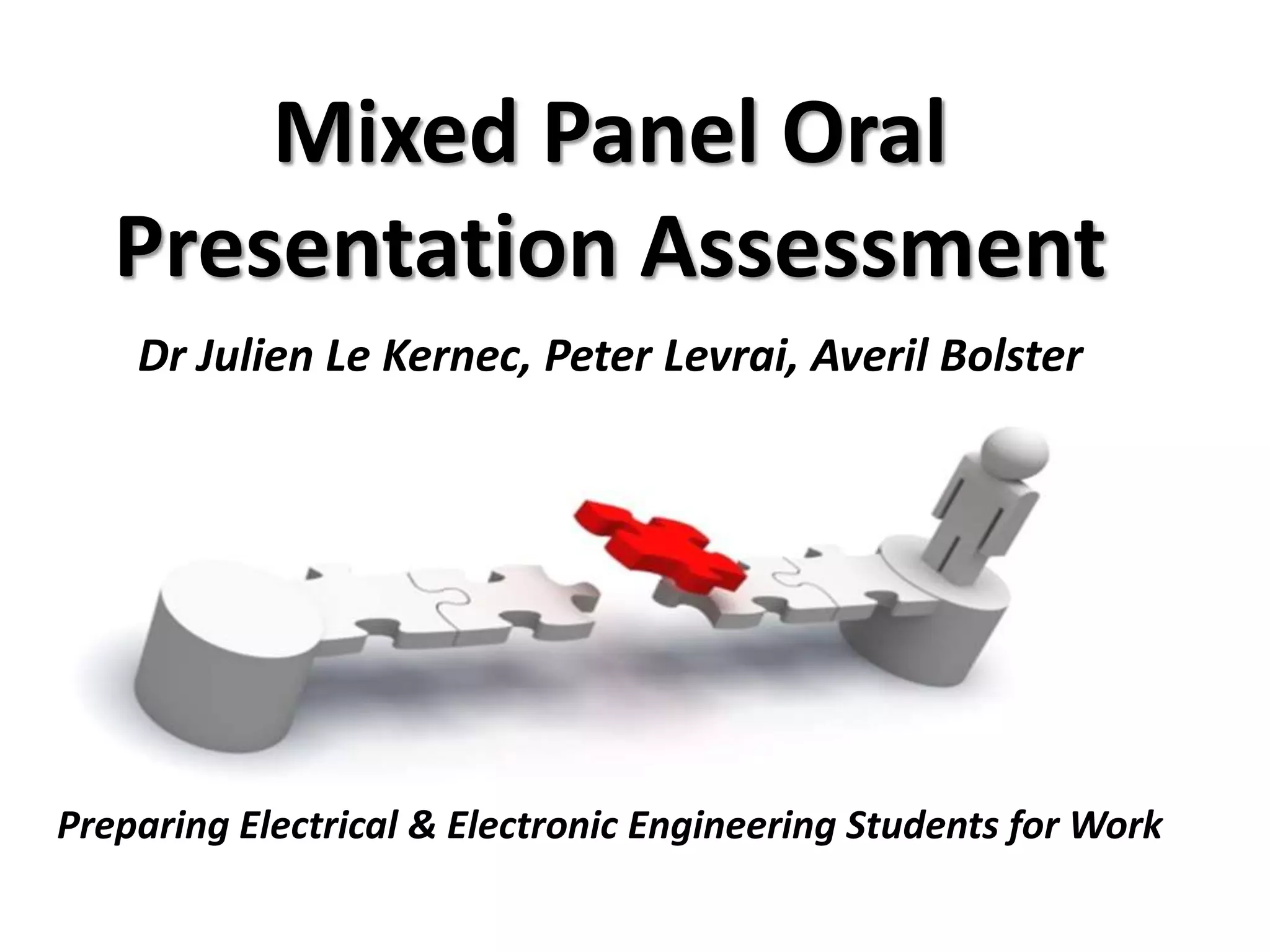
Mixed Panel Oral
Presentation Assessment
Dr Julien Le Kernec, Peter Levrai, Averil Bolster
Preparing Electrical & Electronic Engineering Students for Work
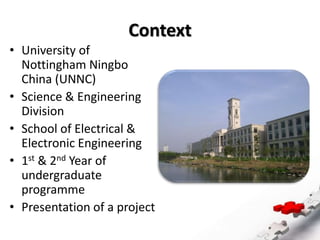
Context
• University of
Nottingham Ningbo
China (UNNC)
• Science & Engineering
Division
• School of Electrical &
Electronic Engineering
• 1st & 2nd Year of
undergraduate
programme
• Presentation of a project
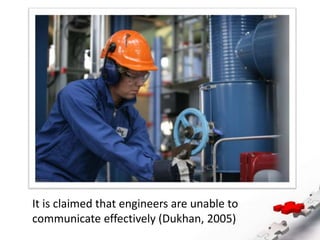
It is claimed that engineers are unable to
communicate effectively (Dukhan, 2005)
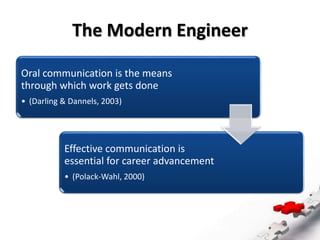
The Modern Engineer
Oral communication is the means
through which work gets done
• (Darling & Dannels, 2003)
Effective communication is
essential for career advancement
• (Polack-Wahl, 2000)
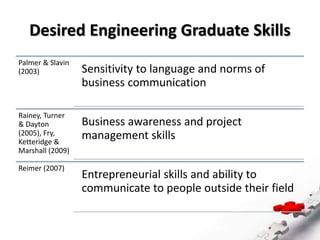
Desired Engineering Graduate Skills
Palmer & Slavin
(2003) Sensitivity to language and norms of
business communication
Rainey, Turner
& Dayton
(2005), Fry,
Ketteridge &
Marshall (2009)
Business awareness and project
management skills
Reimer (2007)
Entrepreneurial skills and ability to
communicate to people outside their field
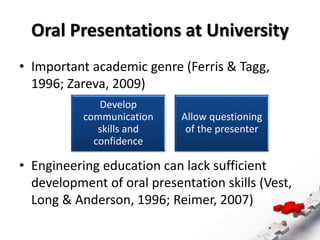
Oral Presentations at University
• Important academic genre (Ferris & Tagg,
1996; Zareva, 2009)
• Engineering education can lack sufficient
development of oral presentation skills (Vest,
Long & Anderson, 1996; Reimer, 2007)
Develop
communication
skills and
confidence
Allow questioning
of the presenter
Why Presentations in EEE
• EEE Faculty staff agreed oral communication
skills were an issue
• Understood the reality of the world their
students would be entering
• Wanted to equip their students with skills to
increase their employability
Rationale For Mixed Panel
• Engineers need to communicate technical
information to colleagues unfamiliar with their
field
• An ability to consider non-technical aspects of
a project will benefit students in the
workplace
• ‘It is easier to teach an engineering student a
little business than a business student a little
engineering’
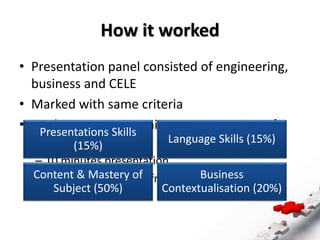
How it worked
• Presentation panel consisted of engineering,
business and CELE
• Marked with same criteria
• Students gave a 15 minute presentation of
their project
– 10 minutes presentation
– 5 minutes questions from mixed panel
Presentations Skills
(15%)
Language Skills (15%)
Content & Mastery of
Subject (50%)
Business
Contextualisation (20%)
Student Opinion
• The majority of students found giving
presentations useful
• The mixed panel made planning harder
• The biggest challenge was thinking of the
business side of the project
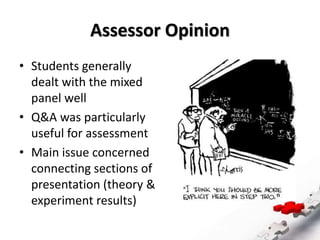
Assessor Opinion
• Students generally
dealt with the mixed
panel well
• Q&A was particularly
useful for assessment
• Main issue concerned
connecting sections of
presentation (theory &
experiment results)
Evaluation of Mixed Panel
Assessment
• Added relevant dimension to a presentation
task and increased authenticity
• Encouraged students to discuss project with
other students
• Exposed students to unexpected questions
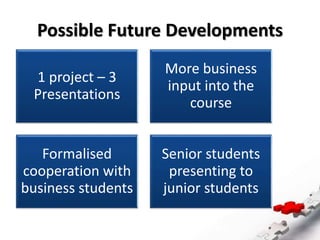
Possible Future Developments
1 project – 3
Presentations
More business
input into the
course
Formalised
cooperation with
business students
Senior students
presenting to
junior students
References
Darling, L & Dannels, DP (2003) Practicing Engineers Talk about the Importance of Talk: A Report on the
Role of Oral Communication in the Workplace. Communication Education, vol. 52, no. 1, pp. 1-16
Dukhan, N (2005) Communication in Undergraduate Research. ITHET 6th Annual International
Conference, Juan Dolio, Dominican Republic
Ferris, D and Tagg, T (1996) Academic Oral Communication Needs of EAP Learners: What Subject-Matter
Instructors Actually Require. TESOL Quarterly. Vol 30, pp31-58
Fry, H, Ketteridge, S & Marshall, S (2009) A handbook for teaching and learning in higher education –
enhancing academic practice, 3rd ed., Routledge,
Palmer, G & Slavin, D (2003) Graduate Engineering Professional Development. Professional
Communication Conference, 2003. IPCC 2003. Proceedings. IEEE International
Polack-Wahl, J (2000). IT IS TIME TO STAND UP AND COMMUNICATE. 30th ASEE/IEEE Frontiers in
Education Conference, Kansas city, MO
Rainey, K, Turner, R & Dayton, D (2005). Do Curricula in Technical Communication Jibe with Managerial
Expectations? A Report About Core Competencies," IEEE International Professional Communication
Conference Proceedings
Riemer, M (2007) Communication Skills for the 21st Century Engineer. Global Journal of Engineering
Education, vol. 11, no. 1, pp. 89-100
Vest, D. Long, M & Anderson, T (1996) Electrical Engineer's Perceptions of communication and their
recommendations for curricular change: results of a national survey IEEE transactions on professional
communication, vol. 39, no. 1, pp. 38-42
Zareva, A (2009) Informational packaging, level of formality , and the use of circumstance adverbials in
L1 and L2 students academic presentations. Journal of English for Academic Purposes. Vol 8, pp.55-68
Thank You
Any Questions?
abolster@umac.mo
julien.lekernec@nottingham.edu.cn
peterlevrai@gmail.com

Mixed Panel Oral Presentation Assessment: Preparing Electrical & Electronic Engineering Students for Work

  • 1.
    Mixed Panel Oral PresentationAssessment Dr Julien Le Kernec, Peter Levrai, Averil Bolster Preparing Electrical & Electronic Engineering Students for Work
  • 2.
    Context • University of NottinghamNingbo China (UNNC) • Science & Engineering Division • School of Electrical & Electronic Engineering • 1st & 2nd Year of undergraduate programme • Presentation of a project
  • 3.
    It is claimedthat engineers are unable to communicate effectively (Dukhan, 2005)
  • 4.
    The Modern Engineer Oralcommunication is the means through which work gets done • (Darling & Dannels, 2003) Effective communication is essential for career advancement • (Polack-Wahl, 2000)
  • 5.
    Desired Engineering GraduateSkills Palmer & Slavin (2003) Sensitivity to language and norms of business communication Rainey, Turner & Dayton (2005), Fry, Ketteridge & Marshall (2009) Business awareness and project management skills Reimer (2007) Entrepreneurial skills and ability to communicate to people outside their field
  • 6.
    Oral Presentations atUniversity • Important academic genre (Ferris & Tagg, 1996; Zareva, 2009) • Engineering education can lack sufficient development of oral presentation skills (Vest, Long & Anderson, 1996; Reimer, 2007) Develop communication skills and confidence Allow questioning of the presenter
  • 7.
    Why Presentations inEEE • EEE Faculty staff agreed oral communication skills were an issue • Understood the reality of the world their students would be entering • Wanted to equip their students with skills to increase their employability
  • 8.
    Rationale For MixedPanel • Engineers need to communicate technical information to colleagues unfamiliar with their field • An ability to consider non-technical aspects of a project will benefit students in the workplace • ‘It is easier to teach an engineering student a little business than a business student a little engineering’
  • 9.
    How it worked •Presentation panel consisted of engineering, business and CELE • Marked with same criteria • Students gave a 15 minute presentation of their project – 10 minutes presentation – 5 minutes questions from mixed panel Presentations Skills (15%) Language Skills (15%) Content & Mastery of Subject (50%) Business Contextualisation (20%)
  • 10.
    Student Opinion • Themajority of students found giving presentations useful • The mixed panel made planning harder • The biggest challenge was thinking of the business side of the project
  • 11.
    Assessor Opinion • Studentsgenerally dealt with the mixed panel well • Q&A was particularly useful for assessment • Main issue concerned connecting sections of presentation (theory & experiment results)
  • 12.
    Evaluation of MixedPanel Assessment • Added relevant dimension to a presentation task and increased authenticity • Encouraged students to discuss project with other students • Exposed students to unexpected questions
  • 13.
    Possible Future Developments 1project – 3 Presentations More business input into the course Formalised cooperation with business students Senior students presenting to junior students
  • 14.
    References Darling, L &Dannels, DP (2003) Practicing Engineers Talk about the Importance of Talk: A Report on the Role of Oral Communication in the Workplace. Communication Education, vol. 52, no. 1, pp. 1-16 Dukhan, N (2005) Communication in Undergraduate Research. ITHET 6th Annual International Conference, Juan Dolio, Dominican Republic Ferris, D and Tagg, T (1996) Academic Oral Communication Needs of EAP Learners: What Subject-Matter Instructors Actually Require. TESOL Quarterly. Vol 30, pp31-58 Fry, H, Ketteridge, S & Marshall, S (2009) A handbook for teaching and learning in higher education – enhancing academic practice, 3rd ed., Routledge, Palmer, G & Slavin, D (2003) Graduate Engineering Professional Development. Professional Communication Conference, 2003. IPCC 2003. Proceedings. IEEE International Polack-Wahl, J (2000). IT IS TIME TO STAND UP AND COMMUNICATE. 30th ASEE/IEEE Frontiers in Education Conference, Kansas city, MO Rainey, K, Turner, R & Dayton, D (2005). Do Curricula in Technical Communication Jibe with Managerial Expectations? A Report About Core Competencies," IEEE International Professional Communication Conference Proceedings Riemer, M (2007) Communication Skills for the 21st Century Engineer. Global Journal of Engineering Education, vol. 11, no. 1, pp. 89-100 Vest, D. Long, M & Anderson, T (1996) Electrical Engineer's Perceptions of communication and their recommendations for curricular change: results of a national survey IEEE transactions on professional communication, vol. 39, no. 1, pp. 38-42 Zareva, A (2009) Informational packaging, level of formality , and the use of circumstance adverbials in L1 and L2 students academic presentations. Journal of English for Academic Purposes. Vol 8, pp.55-68
  • 15.