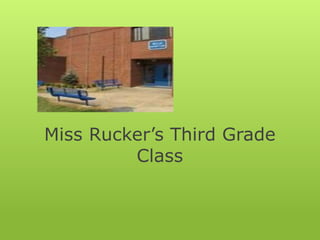
Miss Rucker’s Third Grade
Class
Student population
24 students
2 IEP students
2 504 students
1 gifted student
13 girls and 11 boys
3 students with parent(s) in prison
2 students residing with grandparents
1 non-reader
Student statistics—August 2013
 55% of students tested below grade level in reading
according to DIBELS
 65% below grade level in math according to SMI
 75% are not on a career/college readiness path
according to Achieve 3000 Level Set
Student statistics—May 2014
 35% of students tested below grade level in reading
according to DIBELS
 25% below grade level in math according to SMI
 45% are not on a career/college readiness path
according to Achieve 3000 Level Set
Classroom arrangement
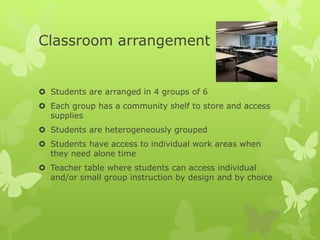
 Students are arranged in 4 groups of 6
 Each group has a community shelf to store and access
supplies
 Students are heterogeneously grouped
 Students have access to individual work areas when
they need alone time
 Teacher table where students can access individual
and/or small group instruction by design and by choice
Classroom helps
 Computer center where students can practice skills or
look up information
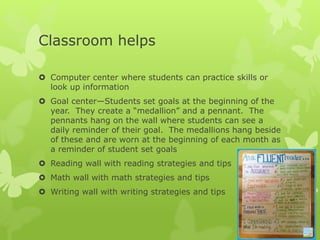
 Goal center—Students set goals at the beginning of the
year. They create a “medallion” and a pennant. The
pennants hang on the wall where students can see a
daily reminder of their goal. The medallions hang beside
of these and are worn at the beginning of each month as
a reminder of student set goals
 Reading wall with reading strategies and tips
 Math wall with math strategies and tips
 Writing wall with writing strategies and tips
Collaboration opportunities
 Whole group discussions
 Table discussions
 Partner discussion and share
 Editing buddies
 Reading buddies
 Math buddies
Classroom projects
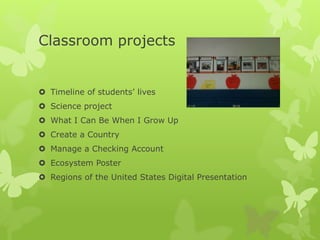
 Timeline of students’ lives
 Science project
 What I Can Be When I Grow Up
 Create a Country
 Manage a Checking Account
 Ecosystem Poster
 Regions of the United States Digital Presentation
Technology Access
 1 classroom i-pad
 7 student laptops
 1 mobile i-pad cart to share (30 i-pads)
 1 mobile laptop cart to share (30 laptops)
 6 mobile i-pads to share

Miss rucker’s third grade class

  • 1.
  • 2.
    Student population 24 students 2IEP students 2 504 students 1 gifted student 13 girls and 11 boys 3 students with parent(s) in prison 2 students residing with grandparents 1 non-reader
  • 3.
    Student statistics—August 2013 55% of students tested below grade level in reading according to DIBELS  65% below grade level in math according to SMI  75% are not on a career/college readiness path according to Achieve 3000 Level Set
  • 4.
    Student statistics—May 2014 35% of students tested below grade level in reading according to DIBELS  25% below grade level in math according to SMI  45% are not on a career/college readiness path according to Achieve 3000 Level Set
  • 5.
    Classroom arrangement  Studentsare arranged in 4 groups of 6  Each group has a community shelf to store and access supplies  Students are heterogeneously grouped  Students have access to individual work areas when they need alone time  Teacher table where students can access individual and/or small group instruction by design and by choice
  • 6.
    Classroom helps  Computercenter where students can practice skills or look up information  Goal center—Students set goals at the beginning of the year. They create a “medallion” and a pennant. The pennants hang on the wall where students can see a daily reminder of their goal. The medallions hang beside of these and are worn at the beginning of each month as a reminder of student set goals  Reading wall with reading strategies and tips  Math wall with math strategies and tips  Writing wall with writing strategies and tips
  • 7.
    Collaboration opportunities  Wholegroup discussions  Table discussions  Partner discussion and share  Editing buddies  Reading buddies  Math buddies
  • 8.
    Classroom projects  Timelineof students’ lives  Science project  What I Can Be When I Grow Up  Create a Country  Manage a Checking Account  Ecosystem Poster  Regions of the United States Digital Presentation
  • 9.
    Technology Access  1classroom i-pad  7 student laptops  1 mobile i-pad cart to share (30 i-pads)  1 mobile laptop cart to share (30 laptops)  6 mobile i-pads to share