By: Zayra Rendon
2nd
 SSCG16The student will demonstrate
knowledge of the operation of the federal
judiciary.
 Miranda v. Arizona
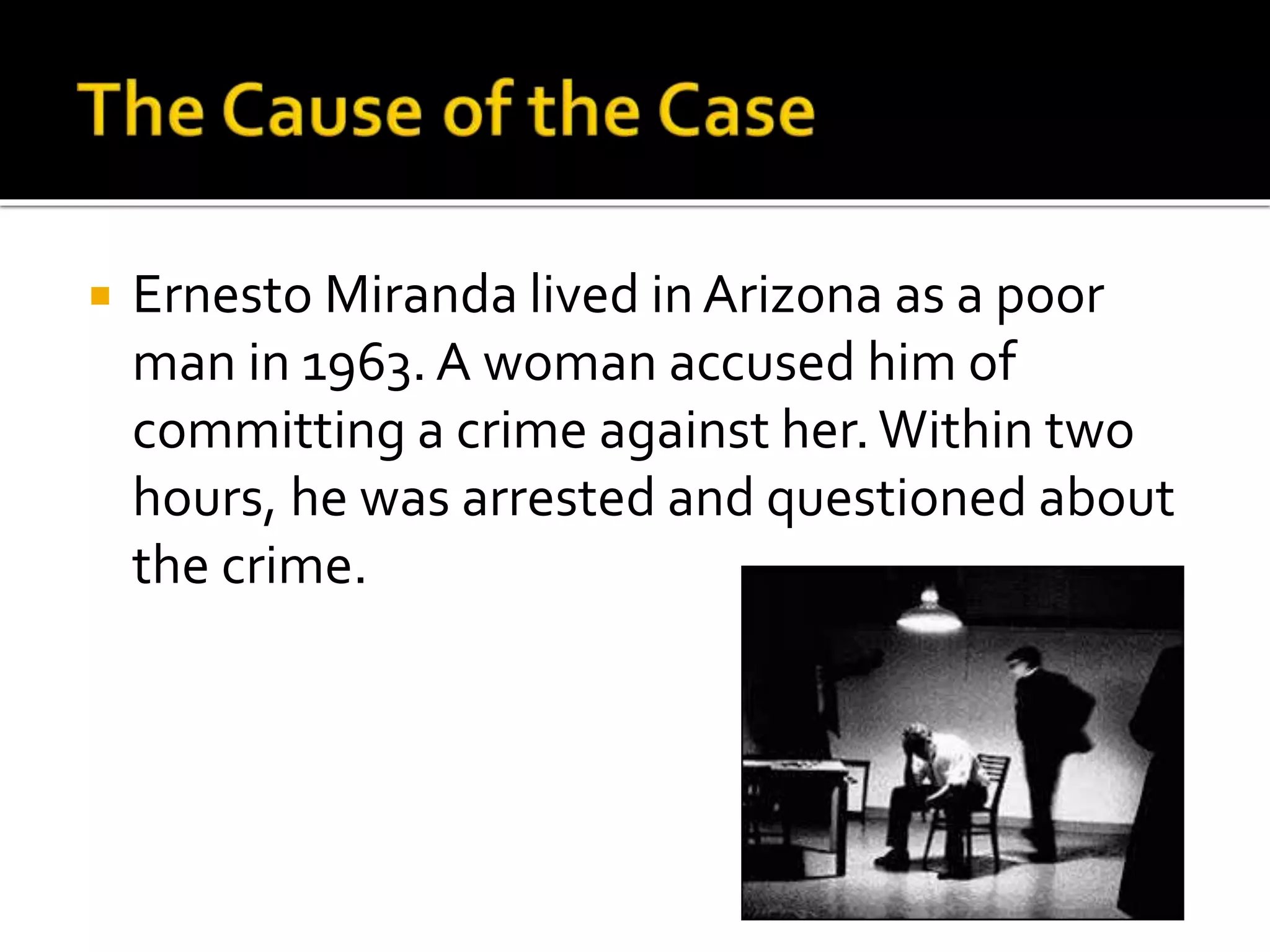
 Ernesto Miranda lived in Arizona as a poor
man in 1963. A woman accused him of
committing a crime against her.Within two
hours, he was arrested and questioned about
the crime.
 In the United States, people accused of crimes have
only certain rights granted from the constitution.
 The 15th amendment states that we have the right to
remain silent.
 The 16th amendment states that we have the right to have
a lawyer to defend ourselves.
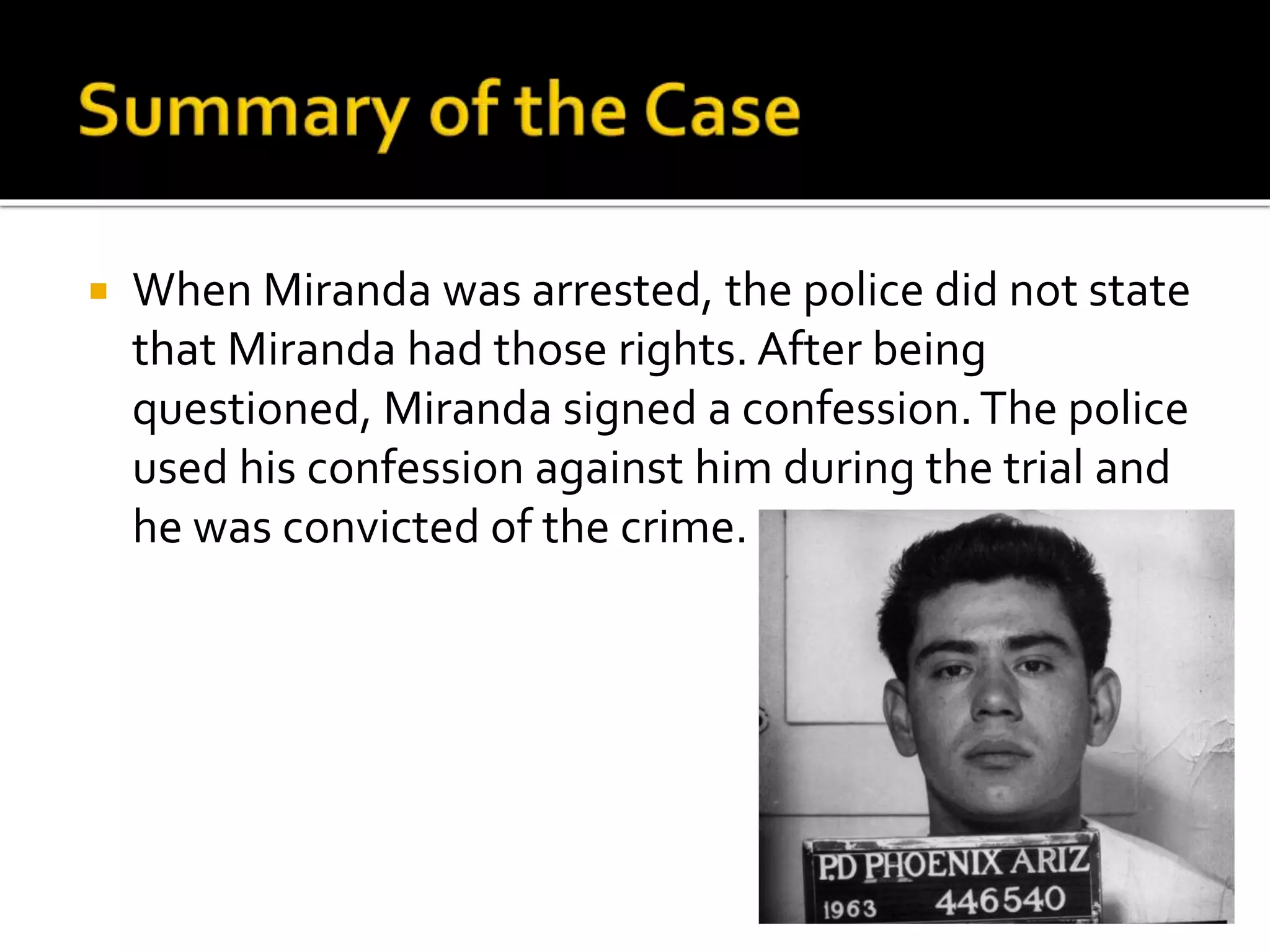
 When Miranda was arrested, the police did not state
that Miranda had those rights. After being
questioned, Miranda signed a confession.The police
used his confession against him during the trial and
he was convicted of the crime.
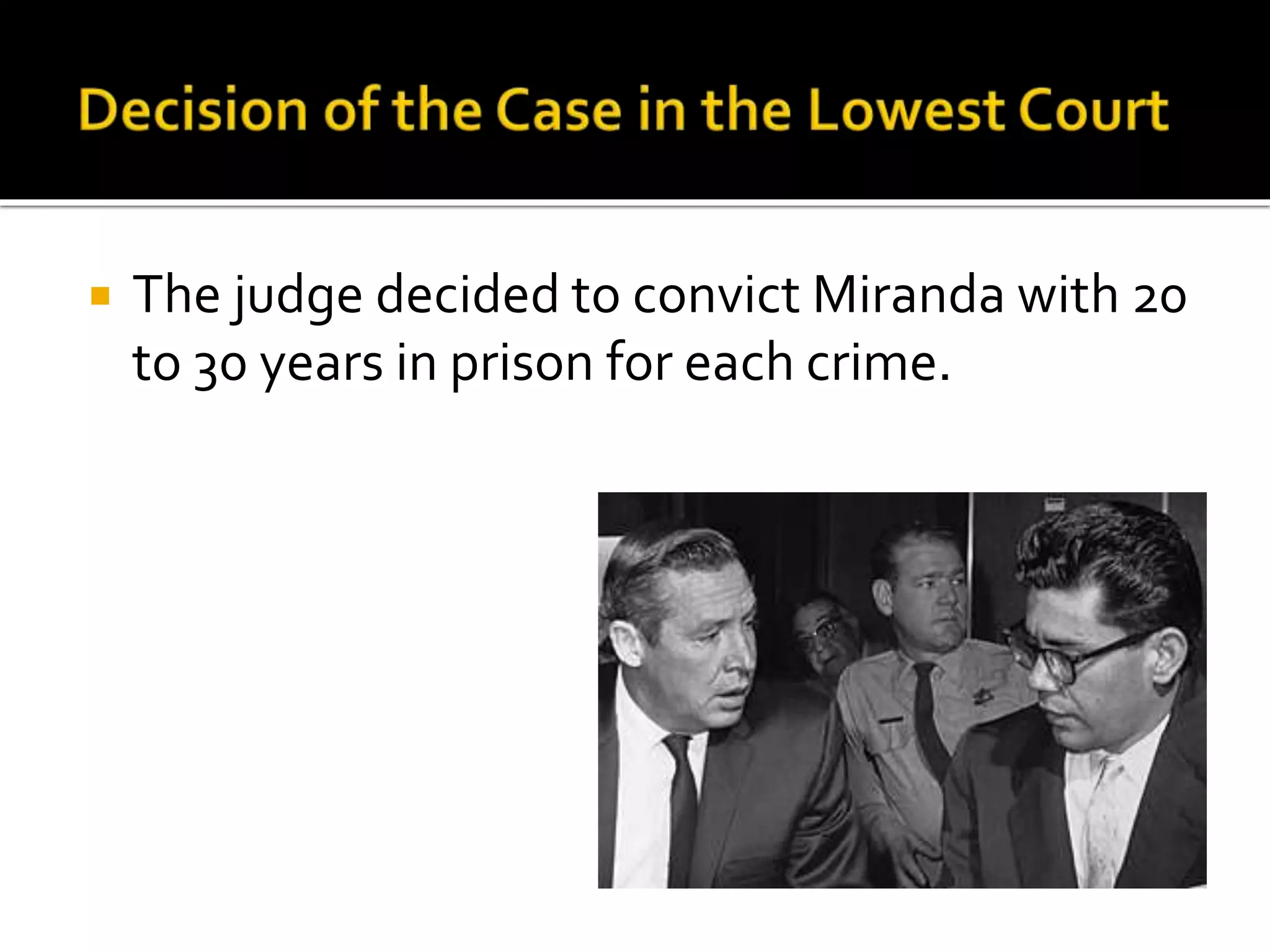
 The judge decided to convict Miranda with 20
to 30 years in prison for each crime.
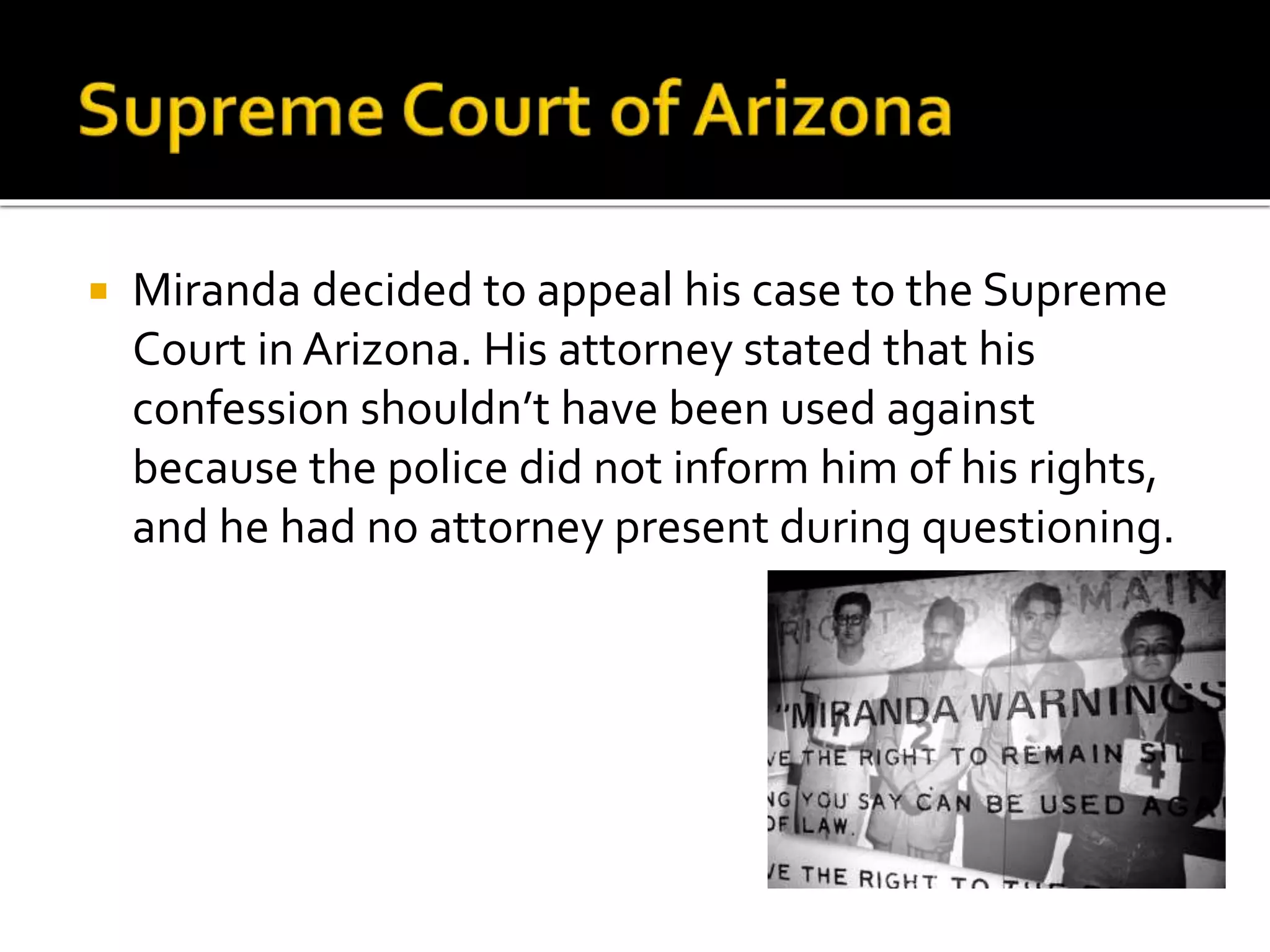
 Miranda decided to appeal his case to the Supreme
Court in Arizona. His attorney stated that his
confession shouldn’t have been used against
because the police did not inform him of his rights,
and he had no attorney present during questioning.
 The government argued that since Miranda
has been convicted to multiple crimes before,
he should’ve know his rights to begin with.
They denied his appeal and kept the charges
on Miranda.
 The Supreme Court agreed to hear Miranda’s
Case.They ruled, in a 5-4 decision, that the
prosecution could not continue.They could
not use Miranda’s confession against him
because the police failed to inform him about
his rights.
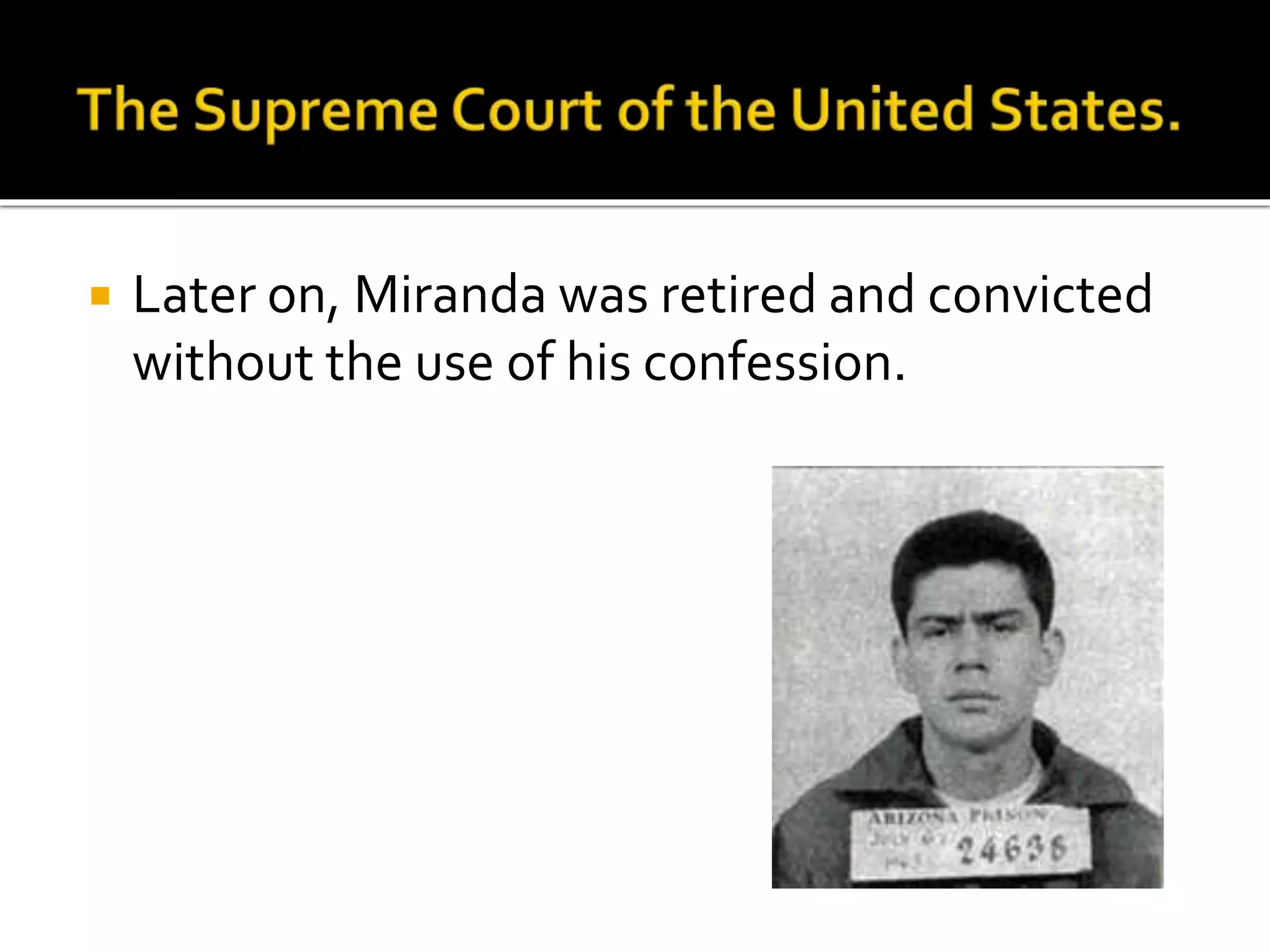
 Later on, Miranda was retired and convicted
without the use of his confession.
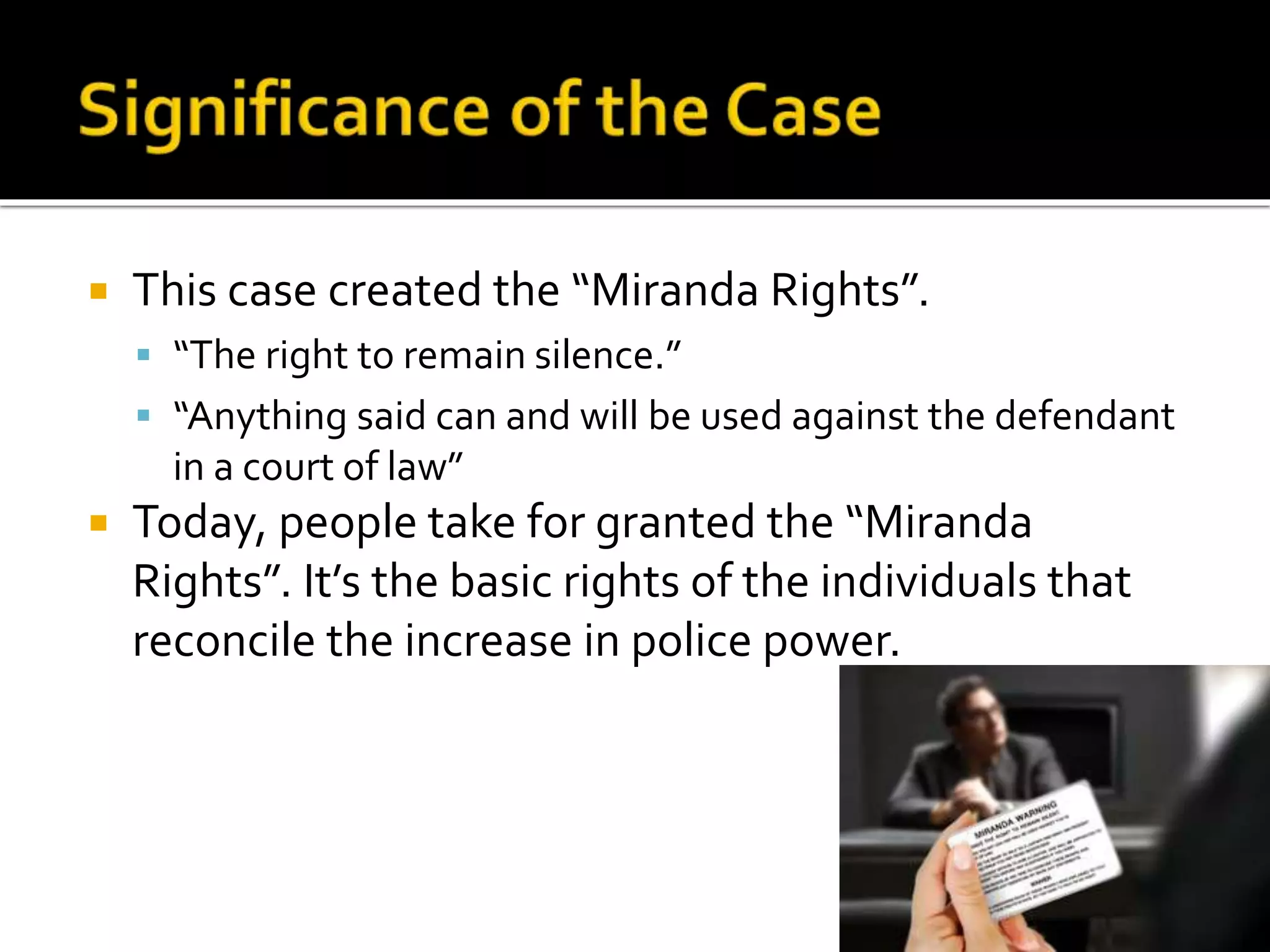
 This case created the “Miranda Rights”.
 “The right to remain silence.”
 “Anything said can and will be used against the defendant
in a court of law”
 Today, people take for granted the “Miranda
Rights”. It’s the basic rights of the individuals that
reconcile the increase in police power.
 The “Miranda Rights” is still in forced. It has
been upheld all these years and it’s still
accepted as a valid precedent by appellate
courts.

Miranda v. arizona

  • 1.
  • 2.
     SSCG16The studentwill demonstrate knowledge of the operation of the federal judiciary.
  • 3.
  • 4.
     Ernesto Mirandalived in Arizona as a poor man in 1963. A woman accused him of committing a crime against her.Within two hours, he was arrested and questioned about the crime.
  • 5.
     In theUnited States, people accused of crimes have only certain rights granted from the constitution.  The 15th amendment states that we have the right to remain silent.  The 16th amendment states that we have the right to have a lawyer to defend ourselves.
  • 6.
     When Mirandawas arrested, the police did not state that Miranda had those rights. After being questioned, Miranda signed a confession.The police used his confession against him during the trial and he was convicted of the crime.
  • 7.
     The judgedecided to convict Miranda with 20 to 30 years in prison for each crime.
  • 8.
     Miranda decidedto appeal his case to the Supreme Court in Arizona. His attorney stated that his confession shouldn’t have been used against because the police did not inform him of his rights, and he had no attorney present during questioning.
  • 9.
     The governmentargued that since Miranda has been convicted to multiple crimes before, he should’ve know his rights to begin with. They denied his appeal and kept the charges on Miranda.
  • 10.
     The SupremeCourt agreed to hear Miranda’s Case.They ruled, in a 5-4 decision, that the prosecution could not continue.They could not use Miranda’s confession against him because the police failed to inform him about his rights.
  • 11.
     Later on,Miranda was retired and convicted without the use of his confession.
  • 12.
     This casecreated the “Miranda Rights”.  “The right to remain silence.”  “Anything said can and will be used against the defendant in a court of law”  Today, people take for granted the “Miranda Rights”. It’s the basic rights of the individuals that reconcile the increase in police power.
  • 13.
     The “MirandaRights” is still in forced. It has been upheld all these years and it’s still accepted as a valid precedent by appellate courts.