P R E S E N T E D B Y
S R I S H T I M A S S E Y
M S C ( N ) I S T Y E A R
E R A C O L L E G E O F N U R S I N G
Minor Discomforts And
Complication Of Pueperium
Introduction
 Following the birth of the baby and
expulsion of the placenta, the mother enters
a period of physical and psychological
recuperation, and this period is called
pueperium , starts immediately after the
delivery of the placenta and membranes and
continues for 6 weeks.
Definition
 Pueperium is the period following
childbirth during which the body
tissues , specially the pelvic organs
revert back approximately to the pre-
pregnant state both anatomically and
physiologically
-D C Dutta
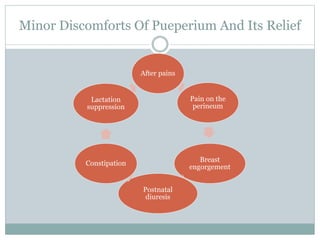
Minor Discomforts Of Pueperium And Its Relief
After pains
Pain on the
perineum
Breast
engorgement
Postnatal
diuresis
Constipation
Lactation
suppression
After pains
 It is the spasmodic, intermittent pain felt in the
back and lower abdomen after delivery for a
variable period of 2-4 days.
 Presence of blood clots or bits after the birth leads
to spasmodic hypertonic contraction contraction of
the uterus in an attempt to expel them out.
Management
Massage the uterus with
expulsion of the clot
Administer analgesics
and antispasmodics
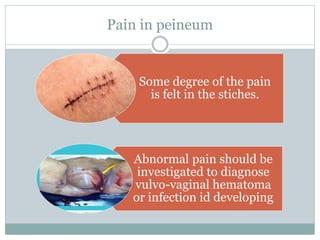
Pain in peineum
Some degree of the pain
is felt in the stiches.
Abnormal pain should be
investigated to diagnose
vulvo-vaginal hematoma
or infection id developing
Management
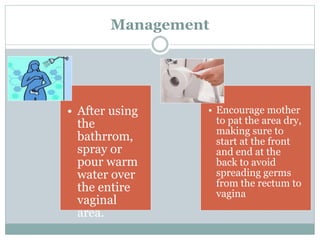
• After using
the
bathrrom,
spray or
pour warm
water over
the entire
vaginal
area.
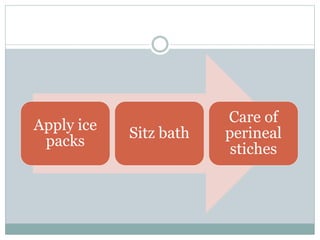
• Encourage mother
to pat the area dry,
making sure to
start at the front
and end at the
back to avoid
spreading germs
from the rectum to
vagina
Apply ice
packs
Sitz bath
Care of
perineal
stiches
Breast Engorgement
 May occur about the third day postpartum and is
often regarded by mothers as the result of the milk
coming in.
 The mother approaches with pain and tense feeling
of the breasts, generalised malaise and painful
breastfeeding
Management
 Encourage the mother to consume lots of
fluids.
 Support the breast with binder or brassiere.
 Express the milk manually.
 The baby should be put to breast regularly
after the expression of milk.
 Analgesics may also be prescribed to relieve
pain.
Postnatal diuresis
 Within 12 hours of the birth the women
begins to loose excess tissue fluid
accumulated during pregnancy.
 The profuse diaphoresis occurs especially at
night for the first 2-3 days after childbirth.
Management
Keep the mother clean and dry
Change the dress frequently
Change the bed sheet
Keep the mother well hydrated
Constipation
 The problem is much less because of early
ambulation and liberalisation of dietary intake.
 Encourage the mother to take a diet containing
sufficient amount of roughage and fluids is enough
to move the bowel.
 If necessary mild laxative such as Igol 2 tea spoons
may be advised at bed time.
Complication of the pueperium
Heamorrhage
 Post partum heamorrgae is defined as
excessive blood loss during or after the third
stage of labour.
 The average blood loss is 500 ml at vaginal
delivery and 1000 ml at cesarean delivery.
 Early postpartum hemorrhage
 Is described as that occuring within the first 24
hours.
 Late postpartum hemorrahage
 Most frequently occurs 1-2 weeks after delivery but
may occur upto 6 weeks of postpartum.
Etiology
 Uterine atony
 Retained products of conception
 Uterine rupture
 Uterine inversion
 Placenta accreta
 Infection
 Subinvolution .
Diagnosis
 History collection
 Physical examination
 Cbc count
 Prothrombin test
 Activated partial thromboplastin time
(PT/aPTT).
Treatment
 O2 administration
 Bimanual massage
 Removal of blood clots from the utreus
 Empty the bladder
 Carboprost , IM , 0.25mg, every 15 minutes, not
exceeds 3 doses.
 Misoprostol for the treatment of post partum
hemorrahge.
Surgical Management
 When the conservative therapy fails, surgery is done
either bilateral uterine artery ligation or hypogastric
artery ligation.
 Uterine artery ligation is thought to be successful in
80-95% of patients.
 It this fails , hypogastric artery ligation is an option.
Pueperal Pyrexia
 Definition
 A rise of temperature reaching 100
degree measured orally within first 10
days following delivery is called
pueperal pyrexia
Causes
 Pueperal sepsis
 Urinary tract infection
 Mastitis
 Infection of caesarean section wound.
 Pulomary infection
 Septic pelvic thrombophlebitis
 Unknown origin.
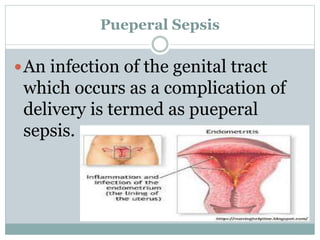
Pueperal Sepsis
An infection of the genital tract
which occurs as a complication of
delivery is termed as pueperal
sepsis.
Risk factors
 Chronic debilitating disease.
 Poor standards of hygiene
 Pre- term labour.
 Poor aseptic techniques.
 Presence of dead tissue
 Retained fragements.
 Frequent vaginal examination.
 Prolonged or obstructed labour.
Mode of infection
 Essentially a wound infection.
 Placental site, lacerations of the genital
tract or caesarean section wounds may
be infected in the following ways
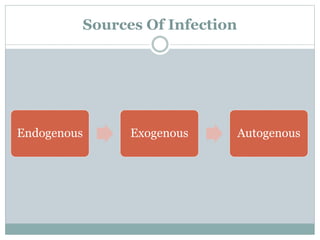
Sources Of Infection
Endogenous Exogenous Autogenous
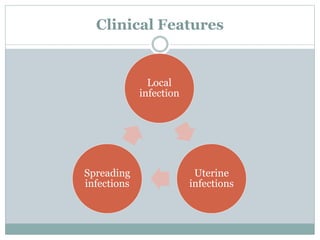
Clinical Features
Local
infection
Uterine
infections
Spreading
infections
Investigation
 History collection
 Physical examination
 Assess the severity of the disease
 High vaginal $ Endocervical swabs for culture and
senstivity.
 “CLEAN CATCH” mid stream specimen of urine for
analysis for culture and senstivity.
 Cbc count, BUN , Serum creatinine.
Management
Preventive
Curative
Surgical Treatment
Perineal
wound
Hysterectomy
Subinvolution
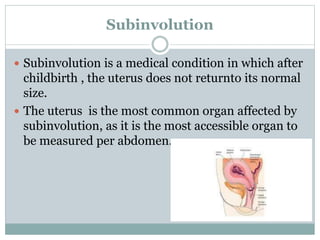
 Subinvolution is a medical condition in which after
childbirth , the uterus does not returnto its normal
size.
 The uterus is the most common organ affected by
subinvolution, as it is the most accessible organ to
be measured per abdomen.
Causes
 Grand multiparity
 Overdistention in case of twins
 Maternal ill health
 Prolapse of the uterus
 Caesarean section
 Uterine fibroids.
 Long labour
 Retained placenta
Symptoms
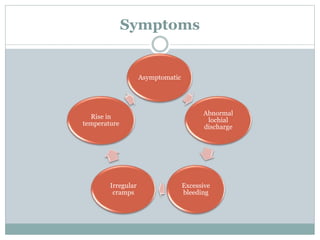
Asymptomatic
Abnormal
lochial
discharge
Excessive
bleeding
Irregular
cramps
Rise in
temperature
Signs
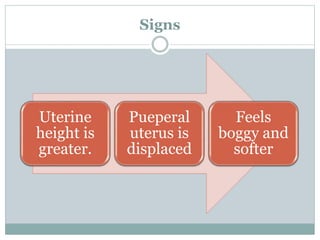
Uterine
height is
greater.
Pueperal
uterus is
displaced
Feels
boggy and
softer
Management
 Adminster antibiotics
 Exploration of the uterus in retained
products
 Ergometrine so often prescribed to enhance
the involution process by reducing the blood
flow of the uterus is of no value in
prophylaxis.
Bibliography
 D C Dutta(2004) “ textbook of obstetrics”, 6th edition
, India, New Central book agency, Page No 433- 444.
 Myles(2003) “ textbook for midwives”, 14th edition,
Philadelphia, Churchill Livingstone publishers, Page
No 625- 653.
 www.healthline.com.

Minor discomforts
  • 1.
    P R ES E N T E D B Y S R I S H T I M A S S E Y M S C ( N ) I S T Y E A R E R A C O L L E G E O F N U R S I N G Minor Discomforts And Complication Of Pueperium
  • 2.
    Introduction  Following thebirth of the baby and expulsion of the placenta, the mother enters a period of physical and psychological recuperation, and this period is called pueperium , starts immediately after the delivery of the placenta and membranes and continues for 6 weeks.
  • 3.
    Definition  Pueperium isthe period following childbirth during which the body tissues , specially the pelvic organs revert back approximately to the pre- pregnant state both anatomically and physiologically -D C Dutta
  • 4.
    Minor Discomforts OfPueperium And Its Relief After pains Pain on the perineum Breast engorgement Postnatal diuresis Constipation Lactation suppression


  • 5.
    After pains  Itis the spasmodic, intermittent pain felt in the back and lower abdomen after delivery for a variable period of 2-4 days.  Presence of blood clots or bits after the birth leads to spasmodic hypertonic contraction contraction of the uterus in an attempt to expel them out.
  • 6.
    Management Massage the uteruswith expulsion of the clot Administer analgesics and antispasmodics
  • 7.
    Pain in peineum Somedegree of the pain is felt in the stiches. Abnormal pain should be investigated to diagnose vulvo-vaginal hematoma or infection id developing
  • 8.
    Management • After using the bathrrom, sprayor pour warm water over the entire vaginal area. • Encourage mother to pat the area dry, making sure to start at the front and end at the back to avoid spreading germs from the rectum to vagina
  • 9.
    Apply ice packs Sitz bath Careof perineal stiches
  • 10.
    Breast Engorgement  Mayoccur about the third day postpartum and is often regarded by mothers as the result of the milk coming in.  The mother approaches with pain and tense feeling of the breasts, generalised malaise and painful breastfeeding
  • 11.
    Management  Encourage themother to consume lots of fluids.  Support the breast with binder or brassiere.  Express the milk manually.  The baby should be put to breast regularly after the expression of milk.  Analgesics may also be prescribed to relieve pain.
  • 12.
    Postnatal diuresis  Within12 hours of the birth the women begins to loose excess tissue fluid accumulated during pregnancy.  The profuse diaphoresis occurs especially at night for the first 2-3 days after childbirth.
  • 13.
    Management Keep the motherclean and dry Change the dress frequently Change the bed sheet Keep the mother well hydrated
  • 14.
    Constipation  The problemis much less because of early ambulation and liberalisation of dietary intake.  Encourage the mother to take a diet containing sufficient amount of roughage and fluids is enough to move the bowel.  If necessary mild laxative such as Igol 2 tea spoons may be advised at bed time.
  • 15.
    Complication of thepueperium Heamorrhage  Post partum heamorrgae is defined as excessive blood loss during or after the third stage of labour.  The average blood loss is 500 ml at vaginal delivery and 1000 ml at cesarean delivery.
  • 16.
     Early postpartumhemorrhage  Is described as that occuring within the first 24 hours.  Late postpartum hemorrahage  Most frequently occurs 1-2 weeks after delivery but may occur upto 6 weeks of postpartum.
  • 17.
    Etiology  Uterine atony Retained products of conception  Uterine rupture  Uterine inversion  Placenta accreta  Infection  Subinvolution .
  • 18.
    Diagnosis  History collection Physical examination  Cbc count  Prothrombin test  Activated partial thromboplastin time (PT/aPTT).
  • 19.
    Treatment  O2 administration Bimanual massage  Removal of blood clots from the utreus  Empty the bladder  Carboprost , IM , 0.25mg, every 15 minutes, not exceeds 3 doses.  Misoprostol for the treatment of post partum hemorrahge.
  • 20.
    Surgical Management  Whenthe conservative therapy fails, surgery is done either bilateral uterine artery ligation or hypogastric artery ligation.  Uterine artery ligation is thought to be successful in 80-95% of patients.  It this fails , hypogastric artery ligation is an option.
  • 21.
    Pueperal Pyrexia  Definition A rise of temperature reaching 100 degree measured orally within first 10 days following delivery is called pueperal pyrexia
  • 22.
    Causes  Pueperal sepsis Urinary tract infection  Mastitis  Infection of caesarean section wound.  Pulomary infection  Septic pelvic thrombophlebitis  Unknown origin.
  • 23.
    Pueperal Sepsis An infectionof the genital tract which occurs as a complication of delivery is termed as pueperal sepsis.
  • 24.
    Risk factors  Chronicdebilitating disease.  Poor standards of hygiene  Pre- term labour.  Poor aseptic techniques.  Presence of dead tissue  Retained fragements.  Frequent vaginal examination.  Prolonged or obstructed labour.
  • 25.
    Mode of infection Essentially a wound infection.  Placental site, lacerations of the genital tract or caesarean section wounds may be infected in the following ways
  • 26.
    Sources Of Infection EndogenousExogenous Autogenous
  • 27.
  • 28.
    Investigation  History collection Physical examination  Assess the severity of the disease  High vaginal $ Endocervical swabs for culture and senstivity.  “CLEAN CATCH” mid stream specimen of urine for analysis for culture and senstivity.  Cbc count, BUN , Serum creatinine.
  • 29.
  • 30.
  • 31.
    Subinvolution  Subinvolution isa medical condition in which after childbirth , the uterus does not returnto its normal size.  The uterus is the most common organ affected by subinvolution, as it is the most accessible organ to be measured per abdomen.
  • 32.
    Causes  Grand multiparity Overdistention in case of twins  Maternal ill health  Prolapse of the uterus  Caesarean section  Uterine fibroids.  Long labour  Retained placenta
  • 33.
  • 34.
  • 35.
    Management  Adminster antibiotics Exploration of the uterus in retained products  Ergometrine so often prescribed to enhance the involution process by reducing the blood flow of the uterus is of no value in prophylaxis.
  • 39.
    Bibliography  D CDutta(2004) “ textbook of obstetrics”, 6th edition , India, New Central book agency, Page No 433- 444.  Myles(2003) “ textbook for midwives”, 14th edition, Philadelphia, Churchill Livingstone publishers, Page No 625- 653.  www.healthline.com.