Minimum Viable Product#leanstartupEric Ries (@ericries)http://StartupLessonsLearned.blogspot.com
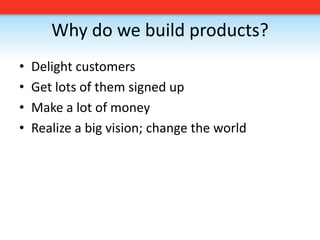
Why do we build products?Delight customersGet lots of them signed upMake a lot of moneyRealize a big vision; change the world
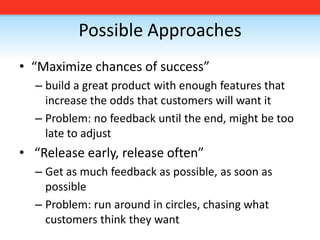
Possible Approaches“Maximize chances of success”build a great product with enough features that increase the odds that customers will want itProblem: no feedback until the end, might be too late to adjust “Release early, release often”Get as much feedback as possible, as soon as possibleProblem: run around in circles, chasing what customers think they want
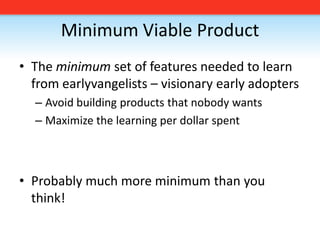
Minimum Viable ProductThe minimum set of features needed to learn from earlyvangelists – visionary early adoptersAvoid building products that nobody wantsMaximize the learning per dollar spentProbably much more minimum than you think!
Minimum Viable ProductVisionary customers can “fill in the gaps” on missing features, if the product solves a real problemAllows us to achieve a big vision in small increments without going in circlesRequires a commitment to iteration
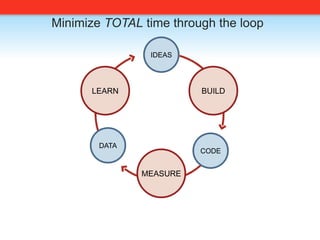
Minimize TOTAL time through the loopIDEASLEARNBUILDDATACODEMEASURE
ExamplesBuilding IMVU in six months2004 “Kerry vs. Bush avatar debate”Lean Startup workshopVIP link in the header
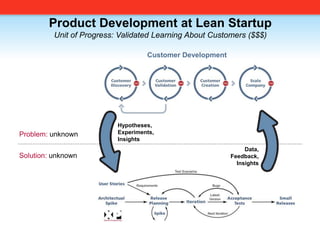
Product Development at Lean StartupUnit of Progress: Validated Learning About Customers ($$$)Customer DevelopmentHypotheses,Experiments,InsightsProblem: unknownData,Feedback,InsightsSolution: unknown
TechniquesSmoke testing with landing pages, AdWordsSEM on five dollars a dayIn-product split testingPaper prototypesCustomer discovery/validationRemoving features (“cut and paste”)
FearsFalse negative: “customers would have liked the full product, but the MVP sucks, so we abandoned the vision”Visionary complex: “but customers don’t know what they want!”Too busy to learn: “it would be faster to just build it right, all this measuring distracts from delighting customers”
Thanks!Startup Lessons Learned Blog

Minimum Viable Product

  • 1.
    Minimum Viable Product#leanstartupEricRies (@ericries)http://StartupLessonsLearned.blogspot.com
  • 2.
    Why do webuild products?Delight customersGet lots of them signed upMake a lot of moneyRealize a big vision; change the world
  • 3.
    Possible Approaches“Maximize chancesof success”build a great product with enough features that increase the odds that customers will want itProblem: no feedback until the end, might be too late to adjust “Release early, release often”Get as much feedback as possible, as soon as possibleProblem: run around in circles, chasing what customers think they want
  • 4.
    Minimum Viable ProductTheminimum set of features needed to learn from earlyvangelists – visionary early adoptersAvoid building products that nobody wantsMaximize the learning per dollar spentProbably much more minimum than you think!
  • 5.
    Minimum Viable ProductVisionarycustomers can “fill in the gaps” on missing features, if the product solves a real problemAllows us to achieve a big vision in small increments without going in circlesRequires a commitment to iteration
  • 6.
    Minimize TOTAL timethrough the loopIDEASLEARNBUILDDATACODEMEASURE
  • 7.
    ExamplesBuilding IMVU insix months2004 “Kerry vs. Bush avatar debate”Lean Startup workshopVIP link in the header
  • 8.
    Product Development atLean StartupUnit of Progress: Validated Learning About Customers ($$$)Customer DevelopmentHypotheses,Experiments,InsightsProblem: unknownData,Feedback,InsightsSolution: unknown
  • 9.
    TechniquesSmoke testing withlanding pages, AdWordsSEM on five dollars a dayIn-product split testingPaper prototypesCustomer discovery/validationRemoving features (“cut and paste”)
  • 10.
    FearsFalse negative: “customerswould have liked the full product, but the MVP sucks, so we abandoned the vision”Visionary complex: “but customers don’t know what they want!”Too busy to learn: “it would be faster to just build it right, all this measuring distracts from delighting customers”
  • 11.