Lecture OverviewLecture Overview
Lymphatic System and Components
– What is lymph and how does it travel?
General Immune Reaction- Inflammation
– What is one function of the cells carried in
lymph?
Selected Topics in Immunity
Lymphatic SystemLymphatic System
Absorbs excess fluid from the tissues
Returns this fluid to the circulatory system
or the heart
Additional function in Immunity
Components of the LymphaticComponents of the Lymphatic
SystemSystem
Lymph
Lymphatic Tissue
Lymphatic Vessels
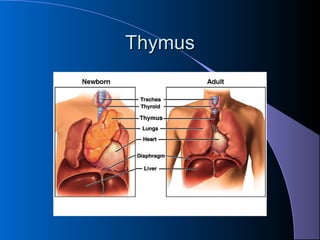
Thymus
Bone Marrow
Spleen
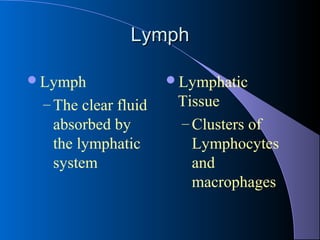
LymphLymph
Lymph
– The clear fluid
absorbed by
the lymphatic
system
Lymphatic
Tissue
– Clusters of
Lymphocytes
and
macrophages
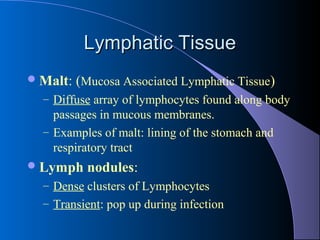
Lymphatic TissueLymphatic Tissue
Malt: (Mucosa Associated Lymphatic Tissue)
– Diffuse array of lymphocytes found along body
passages in mucous membranes.
– Examples of malt: lining of the stomach and
respiratory tract
Lymph nodules:
– Dense clusters of Lymphocytes
– Transient: pop up during infection
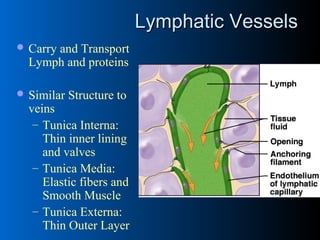
Lymphatic VesselsLymphatic Vessels
 Carry and Transport
Lymph and proteins
 Similar Structure to
veins
– Tunica Interna:
Thin inner lining
and valves
– Tunica Media:
Elastic fibers and
Smooth Muscle
– Tunica Externa:
Thin Outer Layer
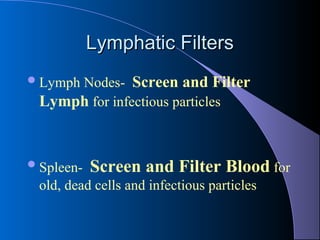
Lymphatic FiltersLymphatic Filters
Lymph Nodes- Screen and Filter
Lymph for infectious particles
Spleen- Screen and Filter Blood for
old, dead cells and infectious particles
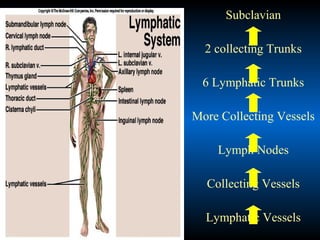
Subclavian
2 collecting Trunks
6 Lymphatic Trunks
More Collecting Vessels
Lymph Nodes
Collecting Vessels
Lymphatic Vessels
Lymphatic MovementLymphatic Movement
No pump
Rhythmic contraction of the lymph vessels
Skeletal Muscles
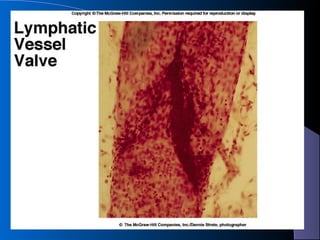
How is backflow prevented?
Immune Cell GeneratorsImmune Cell Generators
Bone Marrow- Makes B- Cells
Thymus- Makes T- Cells
ThymusThymus
Break for
Dynamic Human
InflammationInflammation
Non-specific response to tissue trauma or
infection
44 signs of Inflammationsigns of Inflammation
Redness
Swelling
Heat
Pain
What’s the purpose of pain?
Purpose of InflammationPurpose of Inflammation
Remove Invading Pathogens
Remove Debris of Damaged Tissues
Initiate Tissue Repair
Mediators of InflammationMediators of Inflammation
Chemical Messengers
Leukocyte
Chemical MessengersChemical Messengers
 Released by mast cells in response to damage
 Bradykinin, Histamine, and Leukotrienes
– Increases Local Blood Flow to distressed area
 Stimulates Vasodilation
 Increases Permeability of Capillaries
 What’s Accomplished?
Chemical MessengersChemical Messengers
Bradykinin, Histamine, and Leukotrienes
– Increases Local Blood Flow
 Stimulates Vasodilation
 Increases Permeability of Capillaries
What’s Accomplished?
– Heats area causes redness and swelling
– Dilutes toxins and helps Remove waste
– Supplies oxygen and nutrients for tissue repair
Pain ResponsePain Response
Purpose?
Causes?
Pain ResponsePain Response
Purpose? Prevents further injury to area.
Causes?
– Direct Nerve Damage
– Pressure from Swelling
– Chemical Stimulation particularly bradykinin
Leukocyte DeploymentLeukocyte Deployment
Leukocyte: any white blood cell including
T cells, B cells, granulocytes, platelets,
basophils, mast cells, monocytes and
macrophages
Leukocytes Migrate toward inflammed area
Why? TO KILL and RECRUIT
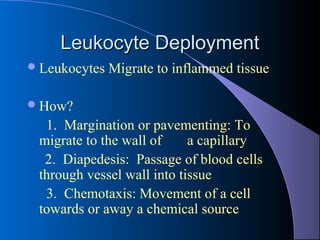
Leukocyte DeploymentLeukocyte Deployment
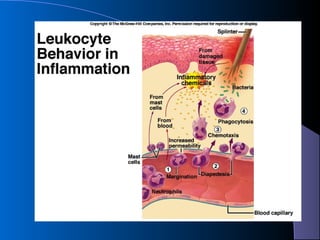
Leukocytes Migrate to inflammed tissue
How?
1. Margination or pavementing: To
migrate to the wall of a capillary
2. Diapedesis: Passage of blood cells
through vessel wall into tissue
3. Chemotaxis: Movement of a cell
towards or away a chemical source
What do the leukocytes planWhat do the leukocytes plan
to do?to do?
Phagocytosis: release of toxic chemicals
Recruit more leukocytes
PhagocytosisPhagocytosis
Leukocytes consume and destroy foreign
invaders and dead cells
Ejected as Pus
Break forBreak for
Dynamic HumanDynamic Human
Selected Topics in ImmunitySelected Topics in Immunity

sistem limfatik