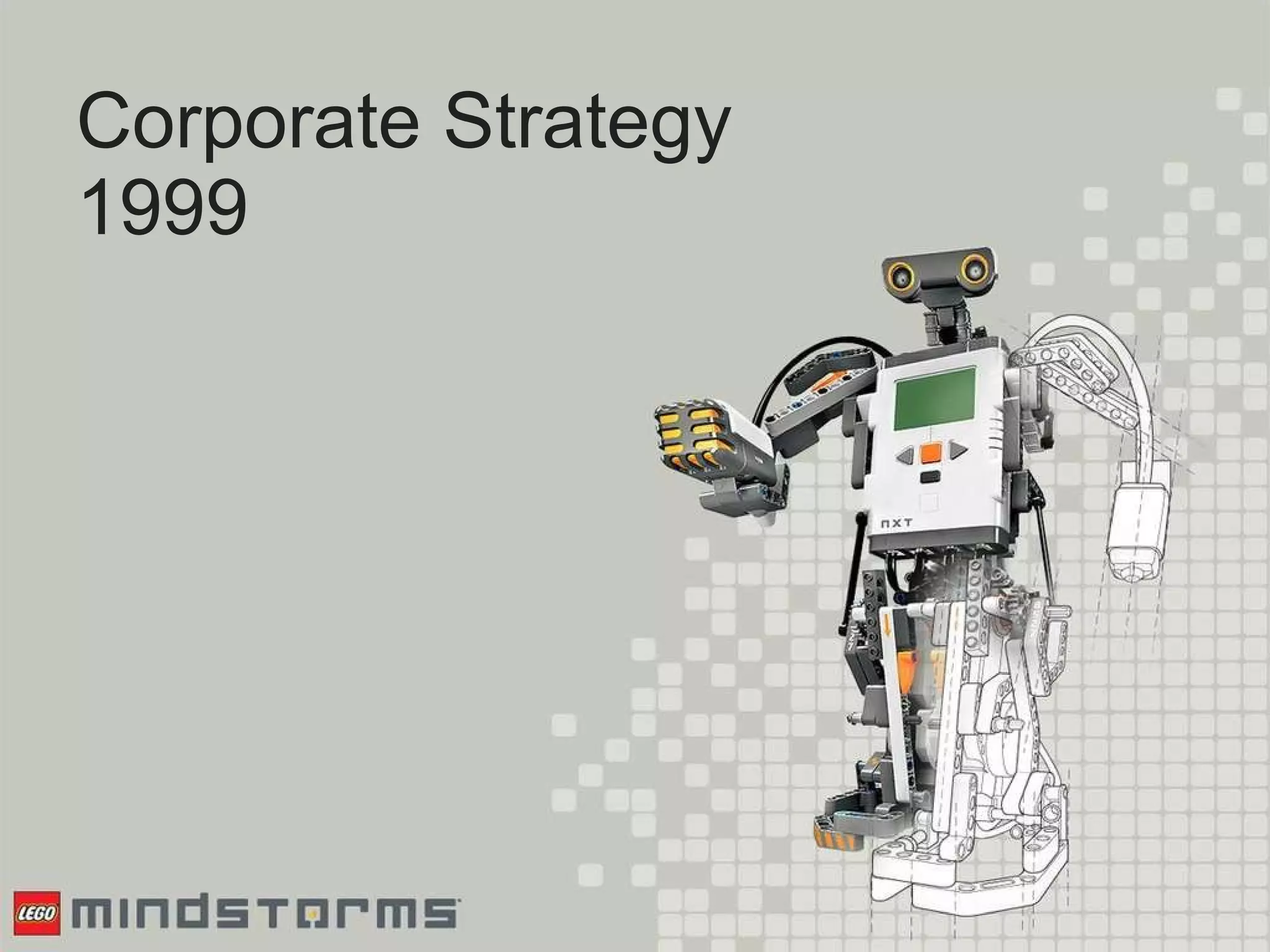
Corporate Strategy 1999
Founded in Denmark, 1932 Worlds 5th largest toy manufacturer Manufactures, distributes and retails plastic building block kits - LEGO Primo, LEGO Duplo, LEGO System and LEGO Technic Employees 10 000 people  Revenue US$1.1 billion CEO, Kjeld Kirk Kristiansen New businesses - LEGOland, LEGO Lifestyle, LEGO Media, LEGO Mindstroms LEGO Group
1984 Early R+D 1986 Launched computerized building set for schools; deemed  premature 1993 Strategic business unit created after the successful trial of  a programmable brick 1995 Home PC ownership and Internet usage is sky-rocketing.  Market dominated by game-oriented  ‘edutainment’  products  1996 Target market identified: Conscious, Caring  and Capable  parents, (CCC),  20% of US households 1997 LEGO Mindstorms launches LEGO Mindstorms
Integrate or continue unabated?
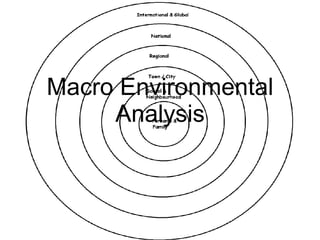
Macro Environmental   Analysis
Political Instability in the developing world; WTO free-trade negotiations breakdown; and European Parliament elections.
Economic Euro introduced as Denmark abolishes the Krone; changes to the Danish taxation system; and the Internet boom is still aiding economic growth
Sociological Changing attitudes to early childhood development; away from instructional methods; and leisure time is evolving from outdoor activities.
Technological Speed of information technology increasing; communication networks impacting on society; and internet and  PC games impacting the toy market.
Legal Labour market reforms in Denmark; and  potential changes to intellectual property laws.
Environmental Increasing global concern for the environment; over consumption and over population; governments intervening
Industry   Analysis
Industry Rivalry
Flexibility Adaptation; speed to market; pricing; and  distribution. Innovation In products; services; support; and  technology features. R+D Continual new and exciting products Brand awareness Market appeal Economies of scale Vital for profit margin Business Synergies Across LEGO group Critical Success Factors
SWOT   Analysis
Strengths LEGO Resolved vision; Outstanding reputation; Extensive distribution network; Success in addressing org. mindset problems; and High brand awareness amongst target market. Mindstorms Astute marketing; Flexible, timely operations; Global vision; Products reflect LEGO’s foundation; and  Strong launch and initial sales.
Weaknesses LEGO ‘ Instructionism’  products; Poor sales growth in recent years; and Viewed as ‘ entertainment ’ rather than ‘ education’ company. Mindstorms Partnership conflicts. Staff that lack LEGO knowledge
Opportunities LEGO New alliances with major players, i.e. Lucas Films and Star Wars brand; and Economies of scale opportunities through integration with Mindstorms . Mindstorms Further market penetration; and Establish new target market with schools.
Threats LEGO Declining profitability; New competitors; and Increased internal conflicts; Mindstorms Unfamiliar substantive competitors, i.e. Sony, Microsoft, Nintendo and Sega.
Company  Analysis
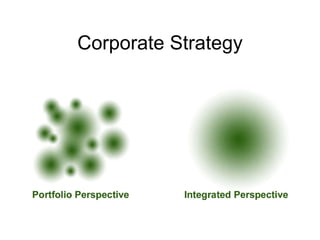
Corporate Strategy Perspectives
LEGO’S Current Corporate Strategy Since the early 90’s senior management have been working towards an integrated organisation perspective; CEO was preaching a universal approach revolving around ideas, exuberance and values; and Merging activities and processes to become more efficient, realizing synergies ahead of retaining responsiveness.
LEGO’S Current Corporate Strategy Formally structured core business; Strategy was focused on planning, forecasting trends, and product programming. The fitness program , involves reducing organisational layers and staff, clearer lines of responsibilities and a greater customer focus. Predictable product lifecycles; Continuous marginal improvement;
Business Strategy Perspectives
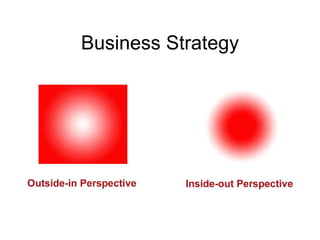
LEGO’S Current Business Strategy Variance in business strategies across the SBU’s; New business units have an outside-in perspective;  Core business has an inside-out perspective; but Recent core activities project a change towards a market focused strategy (outside-in strategy).
Functional  Analysis
Mindstorms Capabilities HR Experienced early challenges; hired  externally; global recruitment; seeking fast  paced innovative employees. Marketing Decentralised from LEGO core. Pricing For price leadership. Distribution Hybrid non-traditional channeling created  conflict with the core distribution. Promotion Outsourced PR/advertising focused only on  the US market.
Mindstorms Performance Financial Sales are 1% of LEGO; goal to increase  growth rapidly; high cash needs; and financial  losses in 1998 resulted in 1000 job losses. Customer Creating awareness; online communities are  attracting adults; competitive robotic events  are attracting children. Internal Build strong supply chains; operational  efficiency; economies of scale.  Growth Synergies aligned with constructionist values  and core  competencies; responsiveness to  market through innovative.
Recommendations
Hybrid Corporate Perspective
Manufacturing and Production Sharing value-added activities; Lean manufacturing; Parallel production processes; and Economies of scale.
Suppliers and Channel Partners Aligning positions to improve competitiveness; Channel partner synergies; and Strengthening existing relationships
Internal Cultural Challenges Remain innovative; via The creation of a Mindstorms Champion Group.
Finance Leveraging resources; Reduced operating costs; Sustainable growth; and Increased Profit margins.
References De Wit, B and Meyer, R 2004,  Strategy:process, content, context. International Thomson, Singapore Ireland R D., Hoskisson R E. &  Hitt M A., 2008,  Understanding Business Strategy, Concepts & Cases  2 nd  Ed. Cengage Learning,  Hubbard, G 1990, Analysing a Case, in Cases of Strategic Management: Australia and New Zealand, G Lewis, A Morkel, G Hubbard, G Stockoprt, and S Davenport (eds), 2 nd  ed, pp. viii-xvi,  Prentice Hall Sydney Porter, M, (1998)  Competitive Strategy: Techniques for analyzing industries and competitors , Free Press  1999 Statistics, Denmark viewed on August 10, 2009 <http://www.dst.dk/HomeUK/Guide/economico/1999.aspx >  Environmental Issues – Global Issues viewed on August 10, 2009 <  http://www. globalissues .org/issue/168/environmental-issues > Lego Financial Accounts 2001 viewed on August 20, 2009 <  http://cache.LEGO ョョ. com/downloads/aboutus/accounts2001eng. pdf > Lego Mindstorms – What went wrong? Viewed on August 20, 2009 <  http://www. techuser .net/LEGO ョ. html > Lego Pressroom Archives displaying historic financials viewed on August 20, 2009 < http://www1.LEGO ョ. com/eng/info/default.asp? page=pressdetail & contentid=99 & countrycode=2057 & yearcode=2000 & oldXML=true &archive=true > Effects of Overconsumption and Increasing Populations viewed on August 10, 2009 <  http://www. globalissues .org/article/216/effects-of-over-consumption-and-increasing-populations > BCG Growth-Share Matrix viewed on August 20, 2009 <  http://www. netmba . com/strategy/matrix/bcg/ > Historic Exchange rates viewed on 10 August, 2009 < http://www.xe.com/ict/>
Image References Slide 1 -  http://wallpapers.free-review. net/r ?12 2 -  http://www. viajejet . com/wp-content/viajes/fotos-de-uno-de-los-parque-de-legoland .jpg 3 -  http: //perfectgift . exteen .com/images/toys/LEGO_Mindstorms_NXT_2.jpg 4 -  http://www. robotoys .com/LOGO_PIXEL_01.gif 5 -  http://www. dep .org. uk/downloads/personalglobaldiagram .gif 6 -  http://image63. webshots .com/63/3/19/6/453531906Rnpyvp_fs.jpg 7 -  http://www. digitalbirmingham .co.uk/blog/wpcontent/uploads/2009/03/fibre-optic.jpg 8 -  http: //thundafunda .com/3993/images/1600_1200/children-pictures/cute-boy-playing-video-games-computer.jpg 9-  http://www. digitalbirmingham .co.uk/blog/wp-content/uploads/2009/03/fibre-optic.jpg 10 -  http://www. unisa . edu . au/crma/images/criminal_justice_jurisprudence .jpg 11  http://www.ban.org/ban_news/2008/images/080415_beware_free_electronic_waste_collection_events_300dpi.jpg 12 -  http://www. geovista . psu .edu/images/img5-1_industry_analysis_NEW2.jpg 14 -  http://farm1.static. flickr .com/24/99387355_9ef08fe070.jpg? v=1154158149 15 -  http://lams. epfl .ch/course/marketing2008/mktg2008_week3_wegmann_2_swot_1.jpg 16 -  http: //legomyphoto .files. wordpress .com/2008/09/imgp4895.jpg 17 -  http: //legomyphoto .files. wordpress .com/2008/09/day113.jpg 18-  http: //legomyphoto .files. wordpress .com/2008/09/day117.jpg 19 -  http://saber-scorpion. com/lego/images/Halo/army_mareenz .jpg 20 -  http://farm1.static.flickr.com/117/305410323_effd579e8f.jpg   22 & 23 -  http://www. a-jenterprises . com/Bios/lego %20people.jpg 25 -  http: //legomyphoto .files. wordpress .com/2009/03/day283.jpg? w=500 & h=334 26 -  http://www.me. unlv .edu/Undergraduate/coursenotes/egg102/9794-parts.jpg 27 -  http://engk12. ece . missouri . edu/LegoCamp/pictures/NXT %20Robots/LEGO%20NXT%20Brick.jpg 28 -  http: //blogs .wsd1.org/etr/files/browserloop2. png 29 -  http://www. lego .com/info/images/pho102x170dkMindstorms.jpg 31 -  http://www.guardian.co.uk/lifeandstyle/gallery/2009/mar/26/lego-pictures?picture=345081215 32  -  http://images. doublebrick .ru/sets/sl/lego-7734-1.jpg 33 -  http://www.1000steine.com/brickset/images/852513-1.jpg

Mindstorms 1999 Strategy

  • 1.
  • 2.
    Founded in Denmark,1932 Worlds 5th largest toy manufacturer Manufactures, distributes and retails plastic building block kits - LEGO Primo, LEGO Duplo, LEGO System and LEGO Technic Employees 10 000 people Revenue US$1.1 billion CEO, Kjeld Kirk Kristiansen New businesses - LEGOland, LEGO Lifestyle, LEGO Media, LEGO Mindstroms LEGO Group
  • 3.
    1984 Early R+D1986 Launched computerized building set for schools; deemed premature 1993 Strategic business unit created after the successful trial of a programmable brick 1995 Home PC ownership and Internet usage is sky-rocketing. Market dominated by game-oriented ‘edutainment’ products 1996 Target market identified: Conscious, Caring and Capable parents, (CCC), 20% of US households 1997 LEGO Mindstorms launches LEGO Mindstorms
  • 4.
  • 5.
  • 6.
    Political Instability inthe developing world; WTO free-trade negotiations breakdown; and European Parliament elections.
  • 7.
    Economic Euro introducedas Denmark abolishes the Krone; changes to the Danish taxation system; and the Internet boom is still aiding economic growth
  • 8.
    Sociological Changing attitudesto early childhood development; away from instructional methods; and leisure time is evolving from outdoor activities.
  • 9.
    Technological Speed ofinformation technology increasing; communication networks impacting on society; and internet and PC games impacting the toy market.
  • 10.
    Legal Labour marketreforms in Denmark; and potential changes to intellectual property laws.
  • 11.
    Environmental Increasing globalconcern for the environment; over consumption and over population; governments intervening
  • 12.
    Industry Analysis
  • 13.
  • 14.
    Flexibility Adaptation; speedto market; pricing; and distribution. Innovation In products; services; support; and technology features. R+D Continual new and exciting products Brand awareness Market appeal Economies of scale Vital for profit margin Business Synergies Across LEGO group Critical Success Factors
  • 15.
    SWOT Analysis
  • 16.
    Strengths LEGO Resolvedvision; Outstanding reputation; Extensive distribution network; Success in addressing org. mindset problems; and High brand awareness amongst target market. Mindstorms Astute marketing; Flexible, timely operations; Global vision; Products reflect LEGO’s foundation; and Strong launch and initial sales.
  • 17.
    Weaknesses LEGO ‘Instructionism’ products; Poor sales growth in recent years; and Viewed as ‘ entertainment ’ rather than ‘ education’ company. Mindstorms Partnership conflicts. Staff that lack LEGO knowledge
  • 18.
    Opportunities LEGO Newalliances with major players, i.e. Lucas Films and Star Wars brand; and Economies of scale opportunities through integration with Mindstorms . Mindstorms Further market penetration; and Establish new target market with schools.
  • 19.
    Threats LEGO Decliningprofitability; New competitors; and Increased internal conflicts; Mindstorms Unfamiliar substantive competitors, i.e. Sony, Microsoft, Nintendo and Sega.
  • 20.
  • 21.
  • 22.
    LEGO’S Current CorporateStrategy Since the early 90’s senior management have been working towards an integrated organisation perspective; CEO was preaching a universal approach revolving around ideas, exuberance and values; and Merging activities and processes to become more efficient, realizing synergies ahead of retaining responsiveness.
  • 23.
    LEGO’S Current CorporateStrategy Formally structured core business; Strategy was focused on planning, forecasting trends, and product programming. The fitness program , involves reducing organisational layers and staff, clearer lines of responsibilities and a greater customer focus. Predictable product lifecycles; Continuous marginal improvement;
  • 24.
  • 25.
    LEGO’S Current BusinessStrategy Variance in business strategies across the SBU’s; New business units have an outside-in perspective; Core business has an inside-out perspective; but Recent core activities project a change towards a market focused strategy (outside-in strategy).
  • 26.
  • 27.
    Mindstorms Capabilities HRExperienced early challenges; hired externally; global recruitment; seeking fast paced innovative employees. Marketing Decentralised from LEGO core. Pricing For price leadership. Distribution Hybrid non-traditional channeling created conflict with the core distribution. Promotion Outsourced PR/advertising focused only on the US market.
  • 28.
    Mindstorms Performance FinancialSales are 1% of LEGO; goal to increase growth rapidly; high cash needs; and financial losses in 1998 resulted in 1000 job losses. Customer Creating awareness; online communities are attracting adults; competitive robotic events are attracting children. Internal Build strong supply chains; operational efficiency; economies of scale. Growth Synergies aligned with constructionist values and core competencies; responsiveness to market through innovative.
  • 29.
  • 30.
  • 31.
    Manufacturing and ProductionSharing value-added activities; Lean manufacturing; Parallel production processes; and Economies of scale.
  • 32.
    Suppliers and ChannelPartners Aligning positions to improve competitiveness; Channel partner synergies; and Strengthening existing relationships
  • 33.
    Internal Cultural ChallengesRemain innovative; via The creation of a Mindstorms Champion Group.
  • 34.
    Finance Leveraging resources;Reduced operating costs; Sustainable growth; and Increased Profit margins.
  • 35.
    References De Wit,B and Meyer, R 2004, Strategy:process, content, context. International Thomson, Singapore Ireland R D., Hoskisson R E. & Hitt M A., 2008, Understanding Business Strategy, Concepts & Cases 2 nd Ed. Cengage Learning, Hubbard, G 1990, Analysing a Case, in Cases of Strategic Management: Australia and New Zealand, G Lewis, A Morkel, G Hubbard, G Stockoprt, and S Davenport (eds), 2 nd ed, pp. viii-xvi, Prentice Hall Sydney Porter, M, (1998) Competitive Strategy: Techniques for analyzing industries and competitors , Free Press 1999 Statistics, Denmark viewed on August 10, 2009 <http://www.dst.dk/HomeUK/Guide/economico/1999.aspx > Environmental Issues – Global Issues viewed on August 10, 2009 < http://www. globalissues .org/issue/168/environmental-issues > Lego Financial Accounts 2001 viewed on August 20, 2009 < http://cache.LEGO ョョ. com/downloads/aboutus/accounts2001eng. pdf > Lego Mindstorms – What went wrong? Viewed on August 20, 2009 < http://www. techuser .net/LEGO ョ. html > Lego Pressroom Archives displaying historic financials viewed on August 20, 2009 < http://www1.LEGO ョ. com/eng/info/default.asp? page=pressdetail & contentid=99 & countrycode=2057 & yearcode=2000 & oldXML=true &archive=true > Effects of Overconsumption and Increasing Populations viewed on August 10, 2009 < http://www. globalissues .org/article/216/effects-of-over-consumption-and-increasing-populations > BCG Growth-Share Matrix viewed on August 20, 2009 < http://www. netmba . com/strategy/matrix/bcg/ > Historic Exchange rates viewed on 10 August, 2009 < http://www.xe.com/ict/>
  • 36.
    Image References Slide1 - http://wallpapers.free-review. net/r ?12 2 - http://www. viajejet . com/wp-content/viajes/fotos-de-uno-de-los-parque-de-legoland .jpg 3 - http: //perfectgift . exteen .com/images/toys/LEGO_Mindstorms_NXT_2.jpg 4 - http://www. robotoys .com/LOGO_PIXEL_01.gif 5 - http://www. dep .org. uk/downloads/personalglobaldiagram .gif 6 - http://image63. webshots .com/63/3/19/6/453531906Rnpyvp_fs.jpg 7 - http://www. digitalbirmingham .co.uk/blog/wpcontent/uploads/2009/03/fibre-optic.jpg 8 - http: //thundafunda .com/3993/images/1600_1200/children-pictures/cute-boy-playing-video-games-computer.jpg 9- http://www. digitalbirmingham .co.uk/blog/wp-content/uploads/2009/03/fibre-optic.jpg 10 - http://www. unisa . edu . au/crma/images/criminal_justice_jurisprudence .jpg 11 http://www.ban.org/ban_news/2008/images/080415_beware_free_electronic_waste_collection_events_300dpi.jpg 12 - http://www. geovista . psu .edu/images/img5-1_industry_analysis_NEW2.jpg 14 - http://farm1.static. flickr .com/24/99387355_9ef08fe070.jpg? v=1154158149 15 - http://lams. epfl .ch/course/marketing2008/mktg2008_week3_wegmann_2_swot_1.jpg 16 - http: //legomyphoto .files. wordpress .com/2008/09/imgp4895.jpg 17 - http: //legomyphoto .files. wordpress .com/2008/09/day113.jpg 18- http: //legomyphoto .files. wordpress .com/2008/09/day117.jpg 19 - http://saber-scorpion. com/lego/images/Halo/army_mareenz .jpg 20 - http://farm1.static.flickr.com/117/305410323_effd579e8f.jpg 22 & 23 - http://www. a-jenterprises . com/Bios/lego %20people.jpg 25 - http: //legomyphoto .files. wordpress .com/2009/03/day283.jpg? w=500 & h=334 26 - http://www.me. unlv .edu/Undergraduate/coursenotes/egg102/9794-parts.jpg 27 - http://engk12. ece . missouri . edu/LegoCamp/pictures/NXT %20Robots/LEGO%20NXT%20Brick.jpg 28 - http: //blogs .wsd1.org/etr/files/browserloop2. png 29 - http://www. lego .com/info/images/pho102x170dkMindstorms.jpg 31 - http://www.guardian.co.uk/lifeandstyle/gallery/2009/mar/26/lego-pictures?picture=345081215 32 - http://images. doublebrick .ru/sets/sl/lego-7734-1.jpg 33 - http://www.1000steine.com/brickset/images/852513-1.jpg

Editor's Notes

  • #2 Speaker - PHILLIP Welcome and group introductions
  • #3 CLARE LEGO founded in Billund, Denmark, 1932, is the worlds 5th largest toy manufacturer Famous for its interlocking plastic building blocks Which are sold under 4 age related brands - LEGO Primo, LEGO Duplo, LEGO System and LEGO Technic. Employing almost 10 000 people across the globe Revenue just short of US$1.1billion Traditionally, the business is organised into various strategic business units in Europe, the Americas, Asia-Pacific and Japan and business units focused on the global supply chain. CEO, K Kristensen, (founders grandson) wishes LEGO to become ‘ th e most powerful brand in the world among families with children by 2005’. To aid this goal, LEGO begun adding new business lines in the 1990s – LEGOland Theme Parks - Windsor, UK (1996); California, US (1999); and Gunzberg, Germany (2003 completion) LEGO Lifestyle (1991) - consumer products such as clothing, footwear, bags, watches and puzzles LEGO Media (1996) - children&apos;s software, music, video and books LEGO Dacta - school use AND………LEGO Mindstorms
  • #4 CLARE Mindstorms R+D began in the 80’s In 1986 LEGO Launched an early school version but was deemed premature for the consumer marker due to low PC ownership Development continued through the late 80’s And in 1993 after LEGO successfully tested a programmable brick a new strategic unit was created. As PC ownership and internet usage increased. Lego saw a emerging market, The new products were to target CCC parents, approx. 20% of US households. March 1997 Mindstorms launches
  • #5 CLARE The introduction of Mindstorms was a radical change for Lego Group. It was separated from the core business from Research &amp; Development to production and marketing. It even created its own channel partners and supply chains. This has created various advantages such as increased responsiveness and market agility, but its operating style has been viewed by core Lego management as against the norm, thus creating a conundrum for Kristiansen regarding future directions – whether to integrate the new business or allow it to continue unabated This analysis will put forward recommendations to the Lego group in regards to the best strategy for the Mindstorms business that will maintain the Lego brand, benefit customers globally and drive economies of scale within the core business. In order to present these recommendations, an extensive internal and external environmental analysis has been undertaken, along with identification of the critical success factors, current capabilities and performance
  • #6 SANDEEP For those of us, that are to old to remember or to young to know, lets take a broad look at what 1999 was like and the factors that may have been influencing LEGO’s operations.
  • #7 SANDEEP Political instability in some regions of the developing world (i.e Balkans); World Trade Organisation December negotiations in Seattle breakdown due to contrasts between USA, European Union and developing nations proposals on free trade; European Parliament Elections, may see a shift in policies
  • #8 SANDEEP Common European Currency, euro announced. Denmark officially abolishes krone; Denmark announces more uniform taxation system to be introduced; The internet bubble is bigger than ever and still ‘bubbling’
  • #9 SANDEEP Changing attitudes to early childhood development, away from instructional methods The use of leisure-time by young children is evolving away from traditional past-times, such as outdoor activities
  • #10 SANDEEP Speed of information technology rapidly changing, Increase societal impacts of communication and networks Widespread use of internet and advanced video/PC games impacts the global toy market
  • #11 SANDEEP Denmark announce labour market reforms in relation to unemployment schemes. Rapid changes in technology especially in the internet impacted world legal bodies to consider updating the intellectual property law
  • #12 SANDEEP Concerns that the global economy could be seriously effected by over consumption and increasing populations; Governments intervention such the EU ban tobacco advertising and smoking in public places.
  • #13 CLARE How were these environmental factors affecting the toy industry?
  • #14 CLARE Threat of new entrants High: risk of existing competitors (e.g. K&apos;Nex) entering the computerised building block market Medium: risk of competitors outside the toy industry (Sony, EA), who have existing brand relationships with the target market through games and software. Buying power of suppliers High:  Heavy reliance on partnerships in order to keep the unit lean  Threat of substitutes High:  due to the plethora of education and entertainment options available Buying power of customers Low: in the consumer market, due to size and fragmentation. High : in the schools market where many decisions are centralised Competitive rivalry High: heavy competition from entrenched competitors and new entrants to the market
  • #15 SANDEEP For the LEGO Mindstorms business to survive within the highly competitive global toy industry the Critical Success Factors are: Flexibility to adapt to market requirements including product design, speed to market, pricing, proper distribution channels and service and support from core business management and staff. Innovation in products, so that the target market does not become bored and move to a more exciting product. Consumers in this market also expect more and more in terms of service, support, technological features Research &amp; Development investment to ensure that new, exciting and relevant products are brought to market ahead of the competition Brand awareness and appeal to the target markets. Economies of scale for production is essential due to the high cost of R&amp;D, marketing and distribution Multi-Business synergy across the LEGO group
  • #16 PHILLIP Given that the dilemma is to whether Majgaard integrates Mindstorms into the LEGO core or not. We have chosen to address the SWOT analysis as a comparison of the two bodies - Lego Core and Mindstorms Business unit.
  • #17 PHILLIP LEGO Resolved vision, outstanding reputation and extensive brand awareness Extensive distribution network, well-established buyer relationships Proven success in addressing organisational and mindset problems i.e. 1994 Compass Management program, 1999 Fitness Program High brand awareness amongst the target market MINDSTORMS Astute marketing Flexible, timely operations Global vision Products reflect LEGO’s‘constructionism’ foundation Strong launch and initial sales
  • #18 PHILLIP LEGO Products tending towards ‘instructionism’ Poor sales growth in the late 1990&apos;s Viewed as an &amp;quot;entertainment&amp;quot;, rather than an &amp;quot;education&amp;quot; company MINDSTORMS Partnership conflicts Staff that lack LEGO insider knowledge
  • #19 PHILLIP LEGO New alliances with major players, i.e.  Lucasfilms – Stars Wars brand Economies of scale opportunities with integration of Mindstorms   MINDSTORMS Further penetration into the existing target market Establish new target market with schools
  • #20 PHILLIP LEGO Declining profitability New competitors Increased Internal conflicts MINDSTORMS Unfamiliar substantial competitors i.e. Microsoft, Sony, Nintendo, Sega
  • #21 PHILLIP Lets take a closer look at the current strategies, capabilities and performance of Mindstorms and the Lego Core.
  • #22 PHILLIP Majgaard’s dilemma reflects the diametric poles of corporate level strategy perspectives. The portfolio organisation perspective - Is a business conglomerate where individual business responsiveness is emphasised. And The integrated organisation perspective - Is where synergy is fundamental throughout the entire group of businesses. (De Wit and Meyer 2004)
  • #23 PHILLIP Since the early 1990’s senior management at LEGO had been working towards an integrated organisation perspective. Kristiansen was preaching a universal approach revolving around the LEGO ideas, exuberance and values. This translated to merging activities and processes to become more efficient by realising synergies ahead of retaining responsiveness.
  • #24 PHILLIP The formally structured core business was successful in dealing with predictable product lifecycles and achieving continuous marginal improvement. The corporate level strategy was focused on planning, forecasting trends, and product programming.   The latest strategic approach, the Fitness Program, involved reducing organisational layers and staff and establishing clearer lines of responsibilities, thereby creating a greater customer focus.
  • #25 PHILLIP Majgaard’s solution not only had to address the corporate level strategy. It had to address the business level strategies of the core and the various SBU. Typically, a business can have either of these perspectives. An outside-in perspective - where emphasis is on markets over resources and the business is opportunity driven. Or An inside-out perspective - where the internal strengths are utelised and resources assist in attaining a distinctive position. (De Wit and Meyer 2004)
  • #26 PHILLIP The Strategic Business Units had varied business level strategies. The four new business units, (Mindstorms, Legoland, Media, Lifestyle, Dacta) had a greater outside-in perspective emphasising markets over resources. They were opportunity driven, based on market demand, environmental adaptation and focused on attaining an advantageous strategic position for LEGO. In contrast, the core SBU’s (including the new products team) displayed a greater inside-out perspective concentrating on internal recourses over external markets. However, recent joint ventures such as the new Star Wars LEGO with Lucas Films indicate that Kristensen’s integrated corporate strategy may have influenced the traditional SBU approach. 
  • #27 CLARE In 1999, the LEGO Mindstorms team was responsible for their own functional departments; separate to the core LEGO business.  This allowed flexibility with regards to adapting their functions to fit the unique product offering of Mindstorms and was not dictated to by the traditional processes of the LEGO core group. This separation however, meant that the team did not take advantage of economies of scale or leverage the existing capabilities and knowledge of LEGO Group staff.   This structure, whilst causing issues within the LEGO group allowed Mindstorms to develop and launch to market a highly innovative, successful new product.
  • #28 CLARE HR The Mindstorms team experienced initial challenges in recruiting staff from within the company, as the over-riding attitude was that ‘h ey didn’t want to be too closely associated with Mindstorms in case it failed ’ .  Due to this hurdle, the Mindstorms team had to seek expertise outside the core group. This resulted in a support services team that was partially located in the U.S to be closer to the target market and hiring people who had specific industry knowledge, yet lacked company knowledge.  This geographic diversity meant that the Mindstorms business was truly positioned to think globally. The culture of the people they hired and the innovative nature of the team meant that it was managed and led very differently than the core group.  They operated in a fast-paced, informal environment where employees worked in partnerships with their external stakeholders, with caused friction with the LEGO group. Marketing As this was an innovative product offering, with a completely different marketing message than the traditional LEGO products, Marketing was decentralized and controlled by Mindstorms. Pricing In stark contrast to the LEGO ‘ma gic number ’ of not selling anything for more than $39.99, the Mindstorms marketing team employed a strategy of price leadership, due to the uniqueness of their offering and sold their products for between $200 - $219. Distribution Mindstorms forged LEGO’s traditional distribution channels and utilised electronics stores, direct sales through LEGO and CCC companies to get their product to market.  This caused friction because developing these channels were unprofitable and had the potential to damage relationships with long-term distributors, which they still relied on for the remainder of the LEGO business Promotion Because of the strategy to build a lean team, it meant Mindstorms had to seek expertise outside of the LEGOGroup.  They outsourced their PR and advertising.  As these agencies were located in the U.S it allowed Mindstorms to develop meaningful messages to their largest target market although it did not allow for local adaptation of messages as was the case with the LEGO group with marketing functions in local markets.
  • #29 SANDEEP The purpose is to link various key indicators to larger scale objectives of LEGO including vision and strategy.  The focus is to have a measure of various performance based metrics based on the Balanced Scorecard, which includes; financial outcomes, customer, internal business processes and learning and growth. Financial: launched to the global market in January 1998 and sold approximately 100,000 units in its first year.  This translates to approximately 154 million DKK, or 2% of LEGO Group sales in 1998.  Considering this was a new product, LEGO strategy is to increase growth rapidly at 20% per year compared to average sales growth of 3% between 1995-1998.  As the cash needs of the Mindstorms business would be high, the strategy would be to invest heavily to increase market share and create cash inflow or divest/no further investment in Mindstorms. This is especially important because in 1998, high investments in new products led to cash outflow almost DKK 1500 Mill, resulting in an earnings loss of almost DKK 200 Mill.  Almost 1000 employees have been let go in 1998 (www1.LEGO ョ .com) Customer : Whilst there is a strong market need to create high consumer awareness, this needs to be achieved without expensive marketing campaigns and assume a dynamic, price leadership position.  Online communities such as LEGO Mindstorms learning centres attracted adults, additionally LEGO robotic events to attract 9-16 year olds especially in the US helped to capture attention of the new products. Internal Business Processes : As Mindstorms is a separate SBU, research and development and sales were not part of the core LEGO group. The purpose is to build strong supply chains, lean manufacturing methods and economies of scale. Learning &amp; Growth : To ensure alignment and synergies with core constructionist values and continue to be innovative and responsive to market needs. Measures that can be introduced include Employee Satisfaction surveys and completing gap analysis between Mindstorms and LEGO Group for core competencies based on performance
  • #30 PHILLIP Based on the analysis undertaken and the strategic vision of the core LEGO group, it is recommended that LEGO Mindstorms be integrated into the core group with components of a portfolio approach.
  • #31 CLARE Thereby undertaking a hybrid corporate strategy that takes advantage of and captitalising on synergies whilst remaining responsive in key areas. What will the hybrid approach look like?
  • #32 SANDEEP Manufacturing and Production (sharing valued-added activities) Lean manufacturing and parallel production processes would be implemented into core manufacturing methods to enhance value and increase reliability and flow. The economies of scale created by this centralised production would assist in driving a more aligned pricing strategy and reap benefits to customers.
  • #33 PHILLIP Supplier and strategic channel partnerships (aligning positions to improve competitiveness) Channel partner synergies would be monitored for leveraging value creation versus disturbing existing relationships which are important for the LEGO core business.  
  • #34 CLARE Internal cultural challenges (remaining innovative) A Mindstorms Champion Group will be created, with members who represent each functional area of the core LEGO group. These members would promote the benefits of Mindstorms and have the political clout to break through bureaucratic barriers yet have the ability to create consensus and direction.
  • #35 SANDEEP Financial (leveraging resources) Projections show that Mindstorms will contribute increasingly to LEGO Group sales as operating margins are high at 20% and there is sustained growth from integrating some of the functions. Integrating Mindstorms into the LEGO group will actually reduce operating costs due to lean optimization in the whole organization. This will improve dramatically the overall profit margin by an additional 4% per every year.