Book Report
by: Joseph Archival
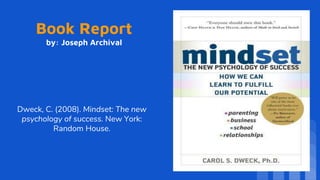
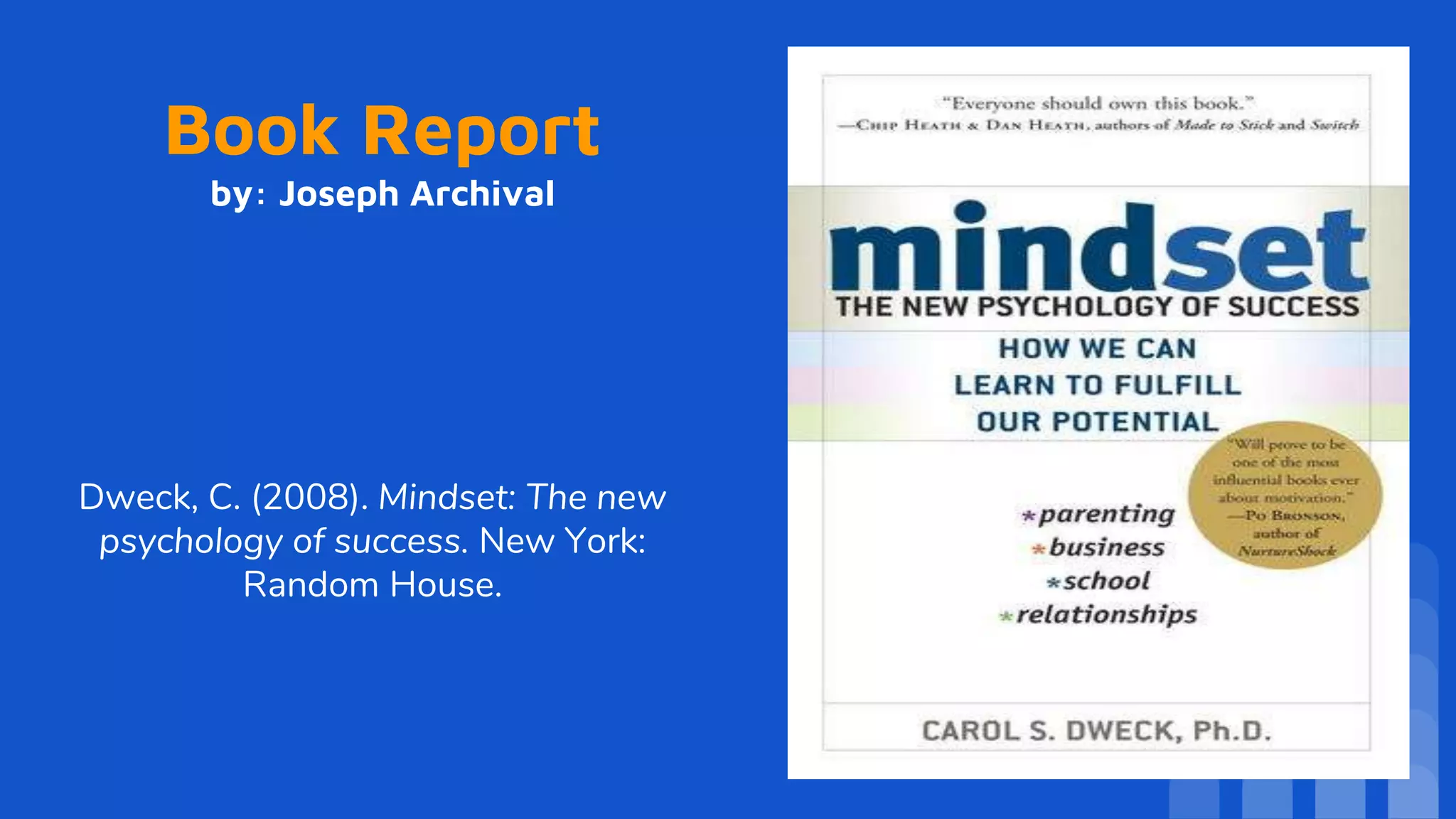
Dweck, C. (2008). Mindset: The new
psychology of success. New York:
Random House.
Background
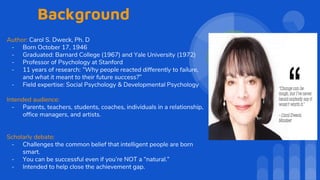
Author: Carol S. Dweck, Ph. D
- Born October 17, 1946
- Graduated: Barnard College (1967) and Yale University (1972)
- Professor of Psychology at Stanford
- 11 years of research: “Why people reacted differently to failure,
and what it meant to their future success?”
- Field expertise: Social Psychology & Developmental Psychology
Intended audience:
- Parents, teachers, students, coaches, individuals in a relationship,
office managers, and artists.
Scholarly debate:
- Challenges the common belief that intelligent people are born
smart.
- You can be successful even if you’re NOT a “natural.”
- Intended to help close the achievement gap.
Summary
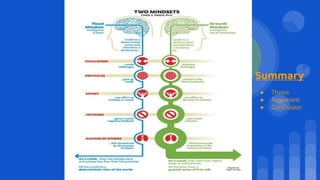
● Thesis
● Argument
● Conclusion
Evidence
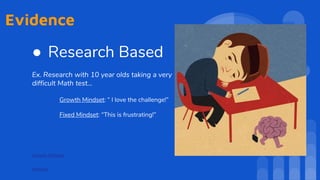
● Research Based
Ex. Research with 10 year olds taking a very
difficult Math test…
Growth Mindset: “ I love the challenge!”
Fixed Mindset: “This is frustrating!”
Growth Mindset
Mindset
Supporting Arguments
“Cheat vs. Study”
Blackwell, L., Trzesniewski, K., & Dweck, C. (2007). Implicit Theories of Intelligence Predict
Achievement Across an Adolescent Transition: A Longitudinal Study and an Intervention. Child Development,
78(1), 246-263.
“Find someone worse”
Nussbaum, A., & Dweck, C. (2008). Defensiveness versus remediation: Self-theories and modes of self-
esteem maintenance. Personality And Social Psychology Bulletin, 34(5), 599-612.
“Run from difficulty”
Hong, Y., Chiu, C., Dweck, C., Lin, D., Wan, W., & Diener, Ed. (1999). Implicit Theories, Attributions, and
Coping: A Meaning System Approach. Journal of Personality and Social Psychology, 77(3), 588-599.
Supporting Arguments
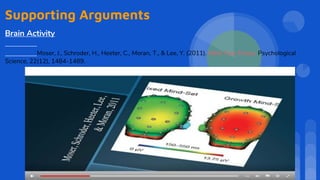
Brain Activity
Moser, J., Schroder, H., Heeter, C., Moran, T., & Lee, Y. (2011). Mind Your Errors. Psychological
Science, 22(12), 1484-1489.
Supporting Arguments
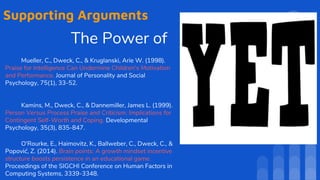
The Power of
Mueller, C., Dweck, C., & Kruglanski, Arie W. (1998).
Praise for Intelligence Can Undermine Children's Motivation
and Performance. Journal of Personality and Social
Psychology, 75(1), 33-52.
Kamins, M., Dweck, C., & Dannemiller, James L. (1999).
Person Versus Process Praise and Criticism: Implications for
Contingent Self-Worth and Coping. Developmental
Psychology, 35(3), 835-847.
O'Rourke, E., Haimovitz, K., Ballweber, C., Dweck, C., &
Popović, Z. (2014). Brain points: A growth mindset incentive
structure boosts persistence in an educational game.
Proceedings of the SIGCHI Conference on Human Factors in
Computing Systems, 3339-3348.
Supporting Arguments
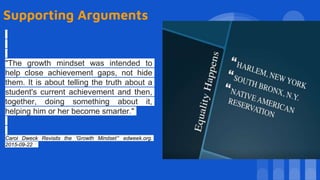
"The growth mindset was intended to
help close achievement gaps, not hide
them. It is about telling the truth about a
student's current achievement and then,
together, doing something about it,
helping him or her become smarter."
Carol Dweck Revisits the 'Growth Mindset’” edweek.org.
2015-09-22
Review
Strengths
- Based on research
- Lots of examples
- Filled with interesting anecdotes
- Christopher Reeves
- Seabiscuit
- John Wooden
- Jaime Escalante
- George Dantzig (student)
Weaknesses
- Repetitive
- Overgeneralized / Oversimplified
conclusions
- Oakland Athletics
- “Curse of the Bambino”
- Janet Cooke (Pulitzer
winner)
- “Either / Or”
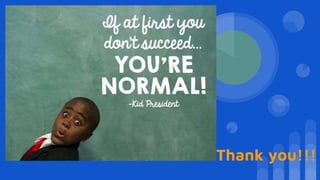
Thank you!!!
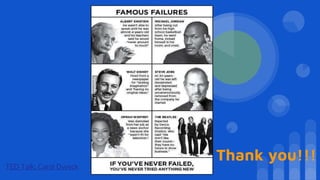
TED Talk: Carol Dweck
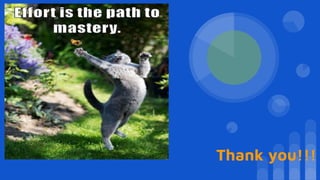
Thank you!!!
Thank you!!!
Thank you!!!

"Mindset" (A Book Review)

  • 1.
    Book Report by: JosephArchival Dweck, C. (2008). Mindset: The new psychology of success. New York: Random House.
  • 2.
    Background Author: Carol S.Dweck, Ph. D - Born October 17, 1946 - Graduated: Barnard College (1967) and Yale University (1972) - Professor of Psychology at Stanford - 11 years of research: “Why people reacted differently to failure, and what it meant to their future success?” - Field expertise: Social Psychology & Developmental Psychology Intended audience: - Parents, teachers, students, coaches, individuals in a relationship, office managers, and artists. Scholarly debate: - Challenges the common belief that intelligent people are born smart. - You can be successful even if you’re NOT a “natural.” - Intended to help close the achievement gap.
  • 3.
  • 4.
    Evidence ● Research Based Ex.Research with 10 year olds taking a very difficult Math test… Growth Mindset: “ I love the challenge!” Fixed Mindset: “This is frustrating!” Growth Mindset Mindset
  • 5.
    Supporting Arguments “Cheat vs.Study” Blackwell, L., Trzesniewski, K., & Dweck, C. (2007). Implicit Theories of Intelligence Predict Achievement Across an Adolescent Transition: A Longitudinal Study and an Intervention. Child Development, 78(1), 246-263. “Find someone worse” Nussbaum, A., & Dweck, C. (2008). Defensiveness versus remediation: Self-theories and modes of self- esteem maintenance. Personality And Social Psychology Bulletin, 34(5), 599-612. “Run from difficulty” Hong, Y., Chiu, C., Dweck, C., Lin, D., Wan, W., & Diener, Ed. (1999). Implicit Theories, Attributions, and Coping: A Meaning System Approach. Journal of Personality and Social Psychology, 77(3), 588-599.
  • 6.
    Supporting Arguments Brain Activity Moser,J., Schroder, H., Heeter, C., Moran, T., & Lee, Y. (2011). Mind Your Errors. Psychological Science, 22(12), 1484-1489.
  • 7.
    Supporting Arguments The Powerof Mueller, C., Dweck, C., & Kruglanski, Arie W. (1998). Praise for Intelligence Can Undermine Children's Motivation and Performance. Journal of Personality and Social Psychology, 75(1), 33-52. Kamins, M., Dweck, C., & Dannemiller, James L. (1999). Person Versus Process Praise and Criticism: Implications for Contingent Self-Worth and Coping. Developmental Psychology, 35(3), 835-847. O'Rourke, E., Haimovitz, K., Ballweber, C., Dweck, C., & Popović, Z. (2014). Brain points: A growth mindset incentive structure boosts persistence in an educational game. Proceedings of the SIGCHI Conference on Human Factors in Computing Systems, 3339-3348.
  • 8.
    Supporting Arguments "The growthmindset was intended to help close achievement gaps, not hide them. It is about telling the truth about a student's current achievement and then, together, doing something about it, helping him or her become smarter." Carol Dweck Revisits the 'Growth Mindset’” edweek.org. 2015-09-22
  • 9.
    Review Strengths - Based onresearch - Lots of examples - Filled with interesting anecdotes - Christopher Reeves - Seabiscuit - John Wooden - Jaime Escalante - George Dantzig (student) Weaknesses - Repetitive - Overgeneralized / Oversimplified conclusions - Oakland Athletics - “Curse of the Bambino” - Janet Cooke (Pulitzer winner) - “Either / Or”
  • 10.
  • 11.
  • 12.
  • 13.