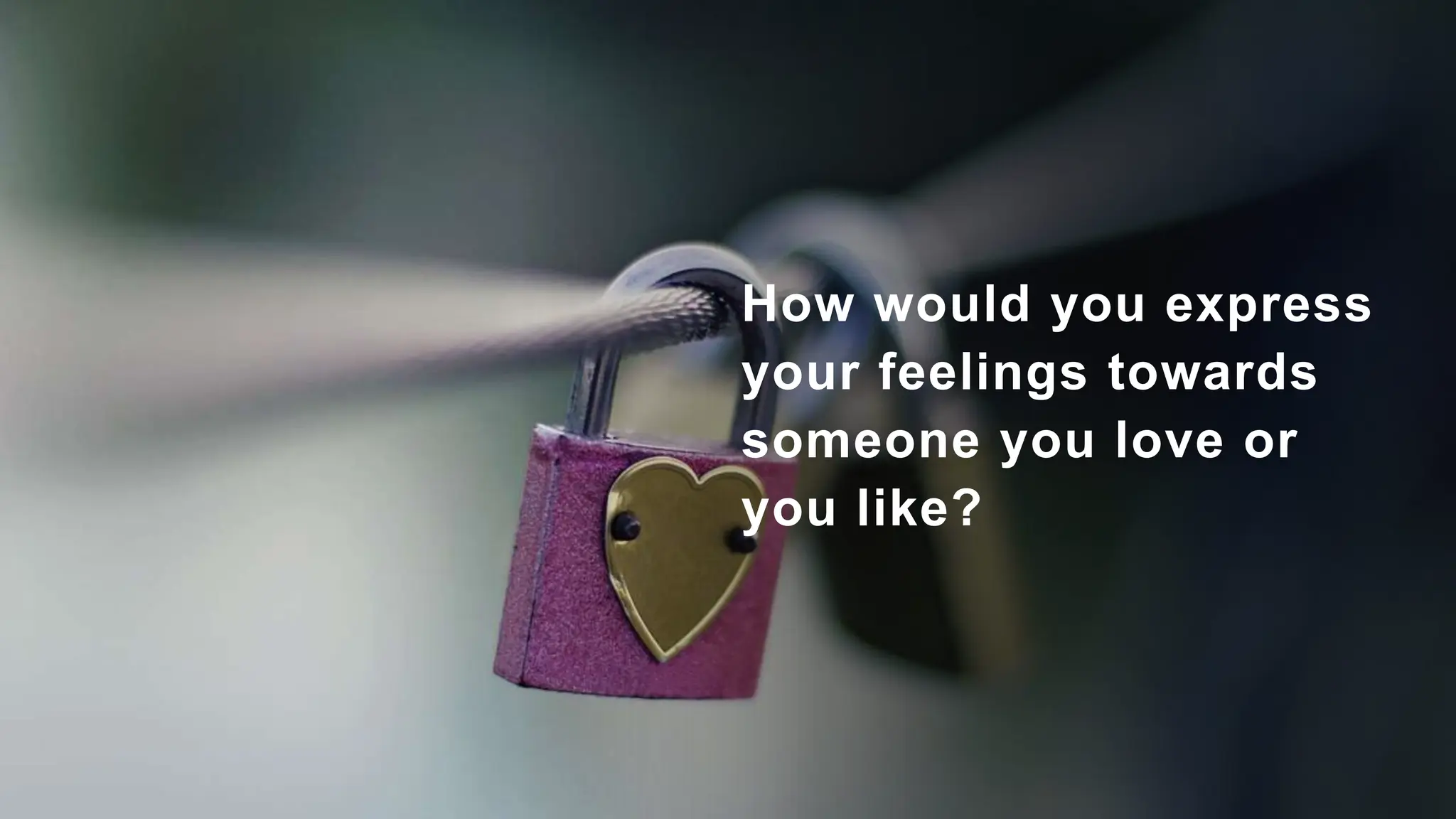
How would you express
your feelings towards
someone you love or
you like?
Communication
and the Media
JK Gulle
Expectations
At the end of this lesson, you are expected to:
a. Describe the nature of communication and the concepts related to it;
b. Identify the different parts of the communication process;
c. Appreciate the importance of success in communication;
d. Create a flowchart using the different parts of the communication
process.
Pretest
Communication and
the Media
Communication has never been more
challenged than in today’s media-
saturated world.
What is
Communication?
Communication is taken from the
Latin word commūnicāre, which
means “to share” or “to divide out”.
Communication is a process of sharing
ideas and opinions about issues,
people, events and places between or
among persons through various
channels to gain common
understanding.
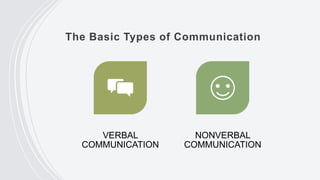
The Basic Types of Communication
VERBAL
COMMUNICATION
NONVERBAL
COMMUNICATION
Verbal Communication
When communication happens
verbally, vocally or through written
words expressing or conveying a
message, this is known as verbal
communication.
Verbal communication has two types:
Oral Communication: communication which happens through word of mouth, spoken
words, conversations, and also any messages or information that are shared or exchanged
between one another through speech or word of mouth is called oral communication.
Written Communication: This is a type of communication that is expressed through written
word or often written sign which refers to the languages used in any medium.
Nonverbal
Communication
Any communication without the use of
mouth (voice), spoken words,
conversation and written languages is
called Nonverbal Communication.
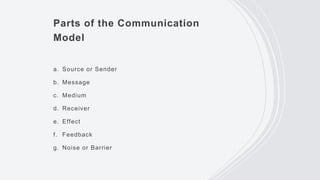
Parts of the Communication
Model
a. Source or Sender
b. Message
c. Medium
d. Receiver
e. Effect
f. Feedback
g. Noise or Barrier
Activities
Activity 1: Flowchart Making
Direction:
1. Think of a scenario or situation at home or in school where in
communication happens.
2. Create a simple flowchart below that explains your chosen scenario.
3. Use an icon to represent the parts of your communication model.
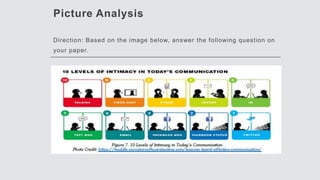
Picture Analysis
Direction: Based on the image below, answer the following question on
your paper.
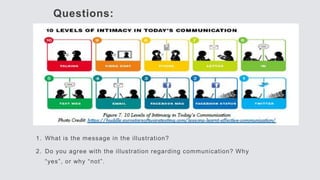
Questions:
1. What is the message in the illustration?
2. Do you agree with the illustration regarding communication? Why
“yes”, or why “not”.

MIL_Communication and the Media.pptx

  • 1.
    How would youexpress your feelings towards someone you love or you like?
  • 2.
  • 3.
    Expectations At the endof this lesson, you are expected to: a. Describe the nature of communication and the concepts related to it; b. Identify the different parts of the communication process; c. Appreciate the importance of success in communication; d. Create a flowchart using the different parts of the communication process.
  • 4.
  • 5.
    Communication and the Media Communicationhas never been more challenged than in today’s media- saturated world.
  • 6.
    What is Communication? Communication istaken from the Latin word commūnicāre, which means “to share” or “to divide out”. Communication is a process of sharing ideas and opinions about issues, people, events and places between or among persons through various channels to gain common understanding.
  • 7.
    The Basic Typesof Communication VERBAL COMMUNICATION NONVERBAL COMMUNICATION
  • 8.
    Verbal Communication When communicationhappens verbally, vocally or through written words expressing or conveying a message, this is known as verbal communication.
  • 9.
    Verbal communication hastwo types: Oral Communication: communication which happens through word of mouth, spoken words, conversations, and also any messages or information that are shared or exchanged between one another through speech or word of mouth is called oral communication. Written Communication: This is a type of communication that is expressed through written word or often written sign which refers to the languages used in any medium.
  • 10.
    Nonverbal Communication Any communication withoutthe use of mouth (voice), spoken words, conversation and written languages is called Nonverbal Communication.
  • 11.
    Parts of theCommunication Model a. Source or Sender b. Message c. Medium d. Receiver e. Effect f. Feedback g. Noise or Barrier
  • 12.
    Activities Activity 1: FlowchartMaking Direction: 1. Think of a scenario or situation at home or in school where in communication happens. 2. Create a simple flowchart below that explains your chosen scenario. 3. Use an icon to represent the parts of your communication model.
  • 13.
    Picture Analysis Direction: Basedon the image below, answer the following question on your paper.
  • 14.
    Questions: 1. What isthe message in the illustration? 2. Do you agree with the illustration regarding communication? Why “yes”, or why “not”.