Speech Arts
Concepts of Speech
and Communication
refers to the use of the oral medium of
passing information, whether formally or
informally, by a speaker to an audience.
The information could be a speaker's way
to be understood on a topic, building an
argument, and evoking emotions among
the audience.
This type of communication is instrumental
to public speaking as it enhances
engagement with a live audience
regarding a specific topic or a set of topics.
Therefore, speech communication is
useful in delivering real-time
communication to a live audience.
What Is The
Difference Between
Speech And
Communication?
Speech
The expression of words,
thoughts and feelings by
articulate sounds
Speech
is also a vocal form of
communication that includes sounds or
a combination of sounds that function as
a principal carrier of meaning and is
spoken or written in the form of a word,
sentence, or conversation
Communication
Sharing information by
writing, speaking or another
medium.
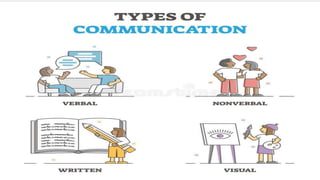
MODES OF
COMMUNICATION
Verbal Communication
which includes the use of
language, sounds, and tone
of voice
Verbal Communication
encompasses all communication using spoken
words, or unspoken words as in the case with
sign language. It is important to understand
how to effectively communicate your ideas
verbally in order to avoid misunderstandings
and maximize interest while you speak.
Verbal Communication
Make sure to use the right type of
language, speak clearly, know your
audience, respond in the best way, and
use an appropriate tone when speaking
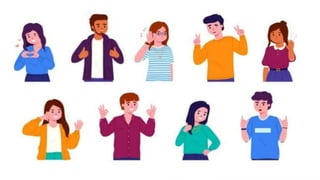
Non-verbal Communication
which includes body language
and facial expressions
Non-verbal Communication
What is actually being said is only half the
battle — the rest lies in what isn’t being
said. This means your tone, facial
expressions, body language, hand
movements, and eye contact.
Non-verbal Communication
When you make yourself aware of what
the rest of you is doing as you speak, you
can make corrections and eventually use
all the right nonverbal cues to convey your
point
Written Communication
such as through journals,
emails, blogs, and text
messages
Written Communication
is a form of verbal communication, but it is so
different than spoken verbal communication that
this form gets its own separate type. Written
communication can take the form of anything you
write or type such as letters, emails, notes, texts,
billboards, even a message written in the sky!
Written Communication
With written communication, it is important
you know your audience, your purpose,
and maintain consistency throughout your
written message.
visual communication
which involves signs,
symbols, pictures, graphics,
and emojis
visual communication
is one you may not have heard of, but it is
one that complements the other types of
communication well. Visual communication
is delivering information, messages, and
points by way of graphical representations,
or visual aids.
7 Contexts of
Communication
Intrapersonal
communication with oneself. Impression
formation and decision making. symbols
and meaning, observations and
attributions; ego involvement and
persuasion. Self talk, Visualization
Interpersonal
Face-to-face communication.
Relationship maintenance strategies;
relational intimacy; relationship control;
interpersonal attraction. More research.
All traditions.
Small Group
Communication with a group of people.
Gender and group leadership; group
vulnerability; groups and stories; group
decision making; task difficulty. At least 3
and less than seven
Organizational
Communication within and among large and
extended environments. Organizational

hierarchy and power; culture and
organizational life; employee morale; opinions
and worker satisfaction. Hierarchy.
Public/Rhetorical
Communication to a large group of listeners.
Audience. Communication apprehension;
delivery effectiveness; speech and text
criticism; ethical speechmaking; popular culture
analysis. Speech, debate, entertain, perform,
persuade.
Mass/Media
communication to a very large audience
through mediated forms. Use of media;
affiliation and television programming;
television and values; media and need
fulfillment; effects of social networking sites.
Television, news, Facebook.
Cultural
religion, race, geography, age, sex, gender.
Communication between and among
members of different cultures. Culture and
rule-setting; culture and anxiety;
hegemony; ethnocentrism
Communication
Process
Elements of the
Communication
Referent
A referent motivates the sender (or receiver) to
share information (message, objects, sounds,
sights, time schedule, ideas, perceptions,
sensation, emotion, odour, etc.) that may
initiate communication.
Referent
For example, a nurse, sighting a patient
with difficulty in breathing may serve as a
referent to the nurse promoting her to
initiate communication with the patient.
Sender
A sender is a person who encodes &
sends the message to the expected
receiver through an appropriate
channel.
Sender
A sender is the source of the message that
is generated to be delivered to the receiver
after appropriate stimulus from the referent.
Message
The message is the content of
communication & may contain verbal,
nonverbal or symbolic language.
Message
Perception & personal factors of the sender &
receiver may sometimes distort this element &
the intended outcome of communication may
not be achieved. For ex, the same message
may be communicated or perceived differently
by two individuals.
Channel
A channel is a medium through which a
message is sent or received between two or
more people. Several channels can be used to
send or receive the message, i.e seeing,
hearing, touching, smelling, & tasting.
Channel
While selecting channels of communication,
several factors must be considered: availability
of channel()s , purpose, suitability, types of
receivers, types of message, preference of
sender & receivers, communication skills of the
sender, cost, etc.
Receiver
A receiver is an individual or a group of individuals
intended to receive, decode & interpret the
message sent by the sender/source of message. A
receiver also known as decoder. He is expected to
have the ability & skills to receive, decode &
interpret the message.
Feedback
It is a return message sent by the receiver to
the sender. It is most essential element of the
communication process as it shows that the
receiver has understood the primary message
sent by the sender & the communication
process is now consider complete
Feedback
A successful communication must be a
two-way process where the sender sends
the message & receives feedback from the
receiver. These feedback could be verbal &
nonverbal.
Confounding elements
• These elements are not a direct part of the flow of
the communication process but influence the
communication process significantly indirected.
These elements are interpersonal variables of the
sender & the receiver & the environment where the
communication process take place.
Confounding elements
Interpersonal variables such as perception,
beliefs, values, sociocultural background,
educational & developmental levels, emotion,
gender, physical & mental health, etc. may
significantly affect the communication process.
Classification Of
Channels Of
Communication
• Visual channel: Facial expression, body
language, posture, gestures, pictures & written
words, electronic mails, mass media, etc.
• Auditory channel: Spoken words, sounds,
telephone or mobile communications, delivering
audio content (radio, voicemail), etc.
• Tactile channel: Touch sensations,
therapeutic touch, etc.
• Combined channel: Audiovisual
media, consoling a person with touch
& spoken words.
Speech Arts.pptx

Speech Arts.pptx

  • 1.
  • 2.
  • 3.
    refers to theuse of the oral medium of passing information, whether formally or informally, by a speaker to an audience. The information could be a speaker's way to be understood on a topic, building an argument, and evoking emotions among the audience.
  • 4.
    This type ofcommunication is instrumental to public speaking as it enhances engagement with a live audience regarding a specific topic or a set of topics. Therefore, speech communication is useful in delivering real-time communication to a live audience.
  • 5.
    What Is The DifferenceBetween Speech And Communication?
  • 7.
    Speech The expression ofwords, thoughts and feelings by articulate sounds
  • 8.
    Speech is also avocal form of communication that includes sounds or a combination of sounds that function as a principal carrier of meaning and is spoken or written in the form of a word, sentence, or conversation
  • 10.
  • 11.
  • 13.
    Verbal Communication which includesthe use of language, sounds, and tone of voice
  • 14.
    Verbal Communication encompasses allcommunication using spoken words, or unspoken words as in the case with sign language. It is important to understand how to effectively communicate your ideas verbally in order to avoid misunderstandings and maximize interest while you speak.
  • 15.
    Verbal Communication Make sureto use the right type of language, speak clearly, know your audience, respond in the best way, and use an appropriate tone when speaking
  • 17.
    Non-verbal Communication which includesbody language and facial expressions
  • 18.
    Non-verbal Communication What isactually being said is only half the battle — the rest lies in what isn’t being said. This means your tone, facial expressions, body language, hand movements, and eye contact.
  • 19.
    Non-verbal Communication When youmake yourself aware of what the rest of you is doing as you speak, you can make corrections and eventually use all the right nonverbal cues to convey your point
  • 21.
    Written Communication such asthrough journals, emails, blogs, and text messages
  • 22.
    Written Communication is aform of verbal communication, but it is so different than spoken verbal communication that this form gets its own separate type. Written communication can take the form of anything you write or type such as letters, emails, notes, texts, billboards, even a message written in the sky!
  • 23.
    Written Communication With writtencommunication, it is important you know your audience, your purpose, and maintain consistency throughout your written message.
  • 25.
    visual communication which involvessigns, symbols, pictures, graphics, and emojis
  • 26.
    visual communication is oneyou may not have heard of, but it is one that complements the other types of communication well. Visual communication is delivering information, messages, and points by way of graphical representations, or visual aids.
  • 28.
  • 29.
    Intrapersonal communication with oneself.Impression formation and decision making. symbols and meaning, observations and attributions; ego involvement and persuasion. Self talk, Visualization
  • 31.
    Interpersonal Face-to-face communication. Relationship maintenancestrategies; relational intimacy; relationship control; interpersonal attraction. More research. All traditions.
  • 33.
    Small Group Communication witha group of people. Gender and group leadership; group vulnerability; groups and stories; group decision making; task difficulty. At least 3 and less than seven
  • 35.
    Organizational Communication within andamong large and extended environments. Organizational hierarchy and power; culture and organizational life; employee morale; opinions and worker satisfaction. Hierarchy.
  • 37.
    Public/Rhetorical Communication to alarge group of listeners. Audience. Communication apprehension; delivery effectiveness; speech and text criticism; ethical speechmaking; popular culture analysis. Speech, debate, entertain, perform, persuade.
  • 39.
    Mass/Media communication to avery large audience through mediated forms. Use of media; affiliation and television programming; television and values; media and need fulfillment; effects of social networking sites. Television, news, Facebook.
  • 41.
    Cultural religion, race, geography,age, sex, gender. Communication between and among members of different cultures. Culture and rule-setting; culture and anxiety; hegemony; ethnocentrism
  • 43.
  • 45.
  • 46.
    Referent A referent motivatesthe sender (or receiver) to share information (message, objects, sounds, sights, time schedule, ideas, perceptions, sensation, emotion, odour, etc.) that may initiate communication.
  • 47.
    Referent For example, anurse, sighting a patient with difficulty in breathing may serve as a referent to the nurse promoting her to initiate communication with the patient.
  • 48.
    Sender A sender isa person who encodes & sends the message to the expected receiver through an appropriate channel.
  • 49.
    Sender A sender isthe source of the message that is generated to be delivered to the receiver after appropriate stimulus from the referent.
  • 50.
    Message The message isthe content of communication & may contain verbal, nonverbal or symbolic language.
  • 51.
    Message Perception & personalfactors of the sender & receiver may sometimes distort this element & the intended outcome of communication may not be achieved. For ex, the same message may be communicated or perceived differently by two individuals.
  • 52.
    Channel A channel isa medium through which a message is sent or received between two or more people. Several channels can be used to send or receive the message, i.e seeing, hearing, touching, smelling, & tasting.
  • 53.
    Channel While selecting channelsof communication, several factors must be considered: availability of channel()s , purpose, suitability, types of receivers, types of message, preference of sender & receivers, communication skills of the sender, cost, etc.
  • 54.
    Receiver A receiver isan individual or a group of individuals intended to receive, decode & interpret the message sent by the sender/source of message. A receiver also known as decoder. He is expected to have the ability & skills to receive, decode & interpret the message.
  • 55.
    Feedback It is areturn message sent by the receiver to the sender. It is most essential element of the communication process as it shows that the receiver has understood the primary message sent by the sender & the communication process is now consider complete
  • 56.
    Feedback A successful communicationmust be a two-way process where the sender sends the message & receives feedback from the receiver. These feedback could be verbal & nonverbal.
  • 57.
    Confounding elements • Theseelements are not a direct part of the flow of the communication process but influence the communication process significantly indirected. These elements are interpersonal variables of the sender & the receiver & the environment where the communication process take place.
  • 58.
    Confounding elements Interpersonal variablessuch as perception, beliefs, values, sociocultural background, educational & developmental levels, emotion, gender, physical & mental health, etc. may significantly affect the communication process.
  • 59.
  • 60.
    • Visual channel:Facial expression, body language, posture, gestures, pictures & written words, electronic mails, mass media, etc. • Auditory channel: Spoken words, sounds, telephone or mobile communications, delivering audio content (radio, voicemail), etc.
  • 61.
    • Tactile channel:Touch sensations, therapeutic touch, etc. • Combined channel: Audiovisual media, consoling a person with touch & spoken words.