@itielshwartz
Microservices are ‘easy’
dependencies are hard:
The right way to build
a cloud-native CI/CD
Itiel Shwartz
@itielshwartz
About me
Joined Rookout as a first developer
and production engineer
Previously Worked at Forter and
eBay as a backend engineer
@itielshwartz on both Github
and Twitter
personal blog at: https://etlsh.com
@itielshwartz
@itielshwartz
So is this talk going to be -
why K8S and helm are so awesome?
@itielshwartz
HELL NO!
@itielshwartz
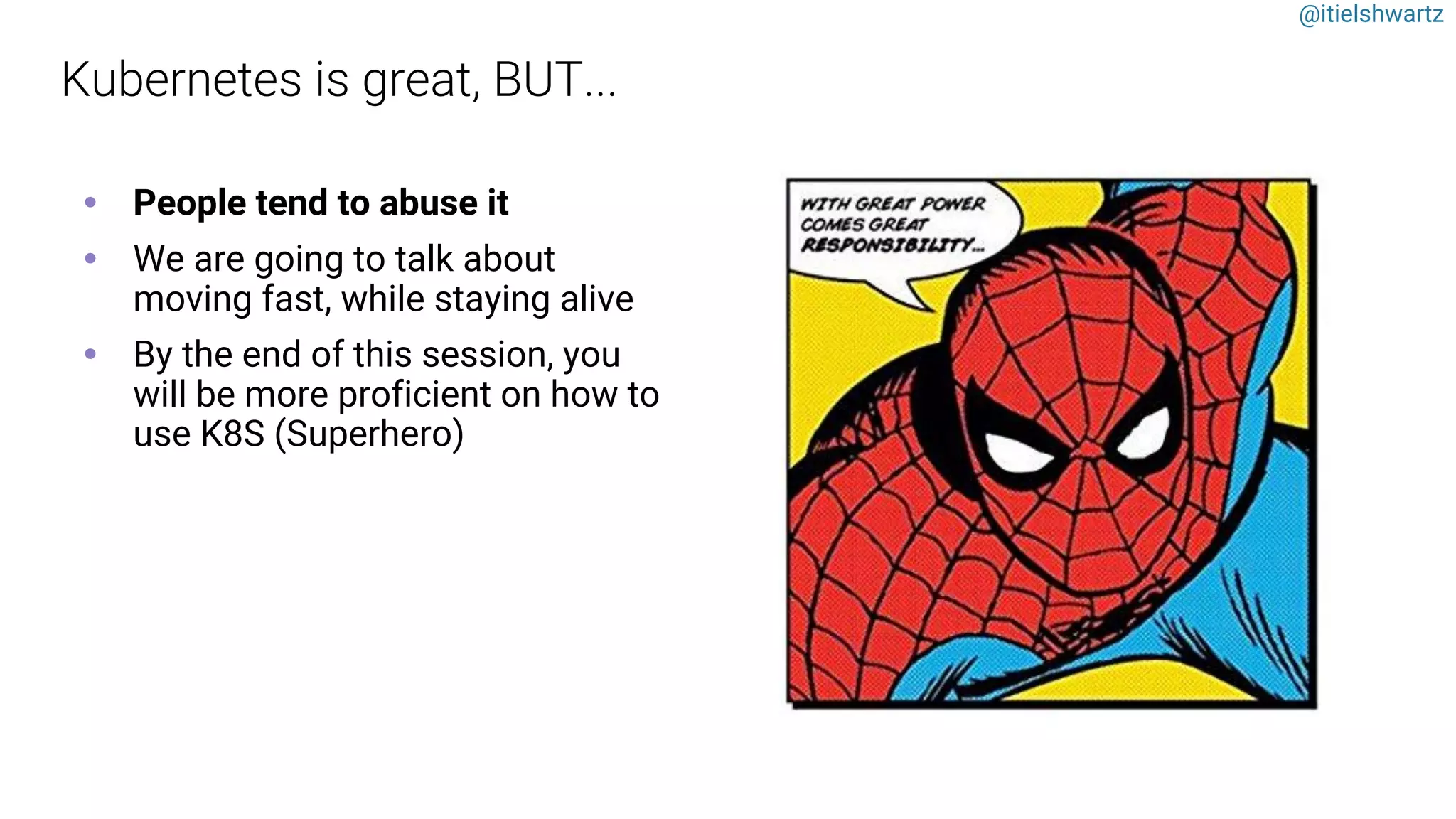
• People tend to abuse it
• We are going to talk about
moving fast, while staying alive
• By the end of this session, you
will be more proficient on how to
use K8S (Superhero)
@itielshwartz
1. Build a basic app
2. K8S it
3. See why K8S isn’t enough
4. Helm it
5. Little Jenkins CI/CD
6. Conclusion
@itielshwartz
The monolith
@itielshwartz
@itielshwartz
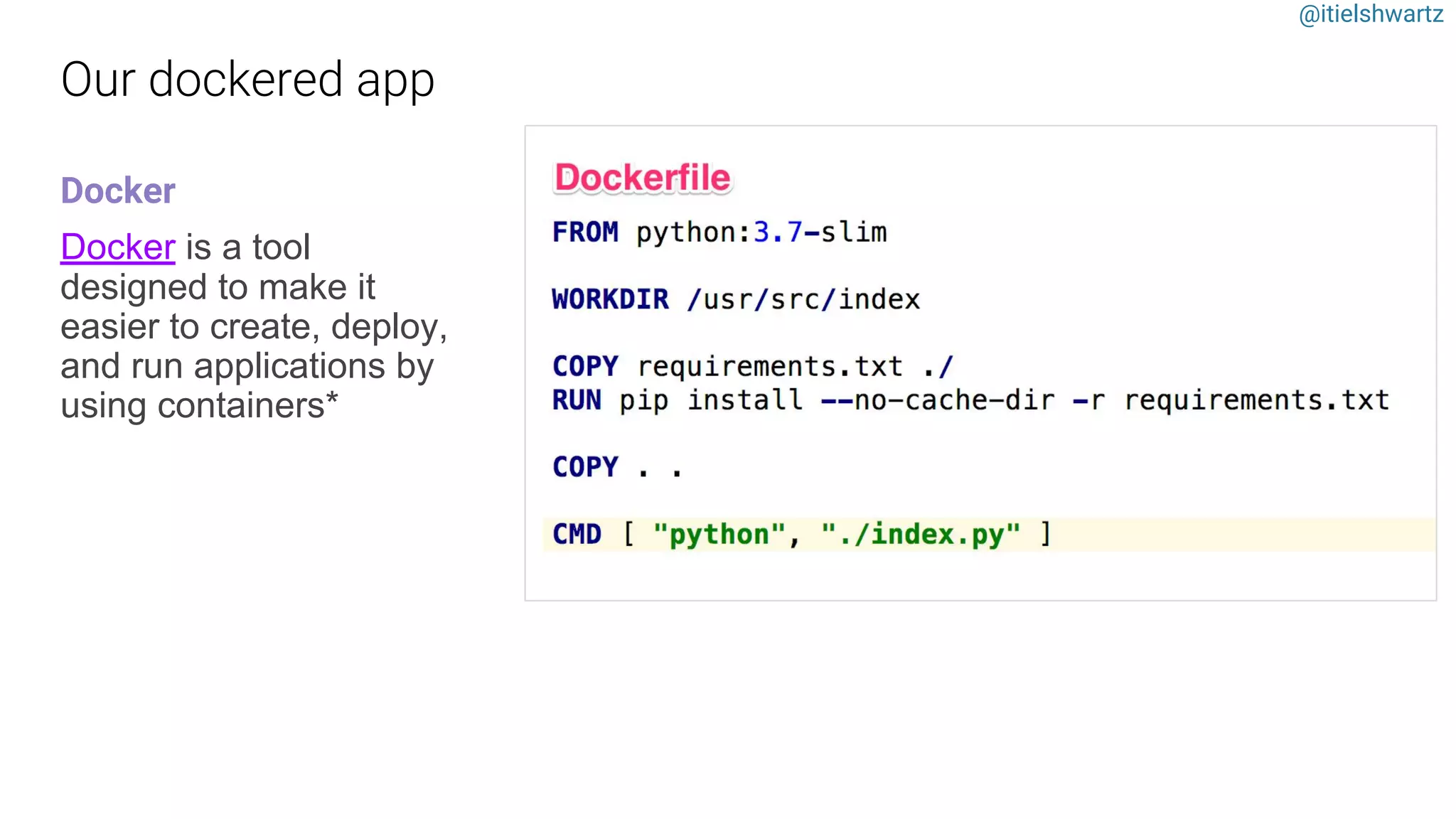
Docker
Docker is a tool
designed to make it
easier to create, deploy,
and run applications by
using containers*
@itielshwartz
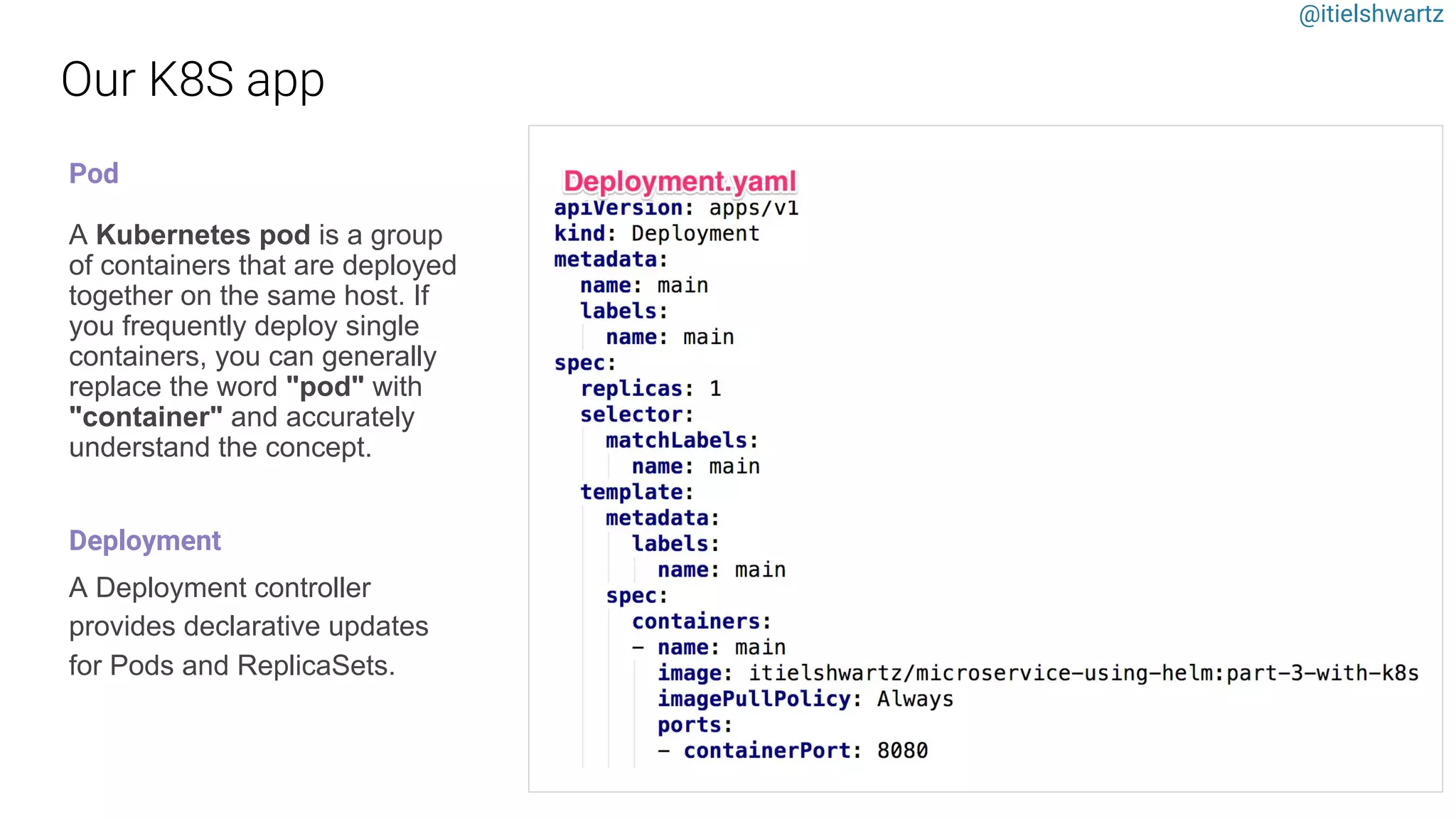
Pod
A Kubernetes pod is a group
of containers that are deployed
together on the same host. If
you frequently deploy single
containers, you can generally
replace the word "pod" with
"container" and accurately
understand the concept.
Deployment
A Deployment controller
provides declarative updates
for Pods and ReplicaSets.
@itielshwartz
K8S is so easy!
@itielshwartz
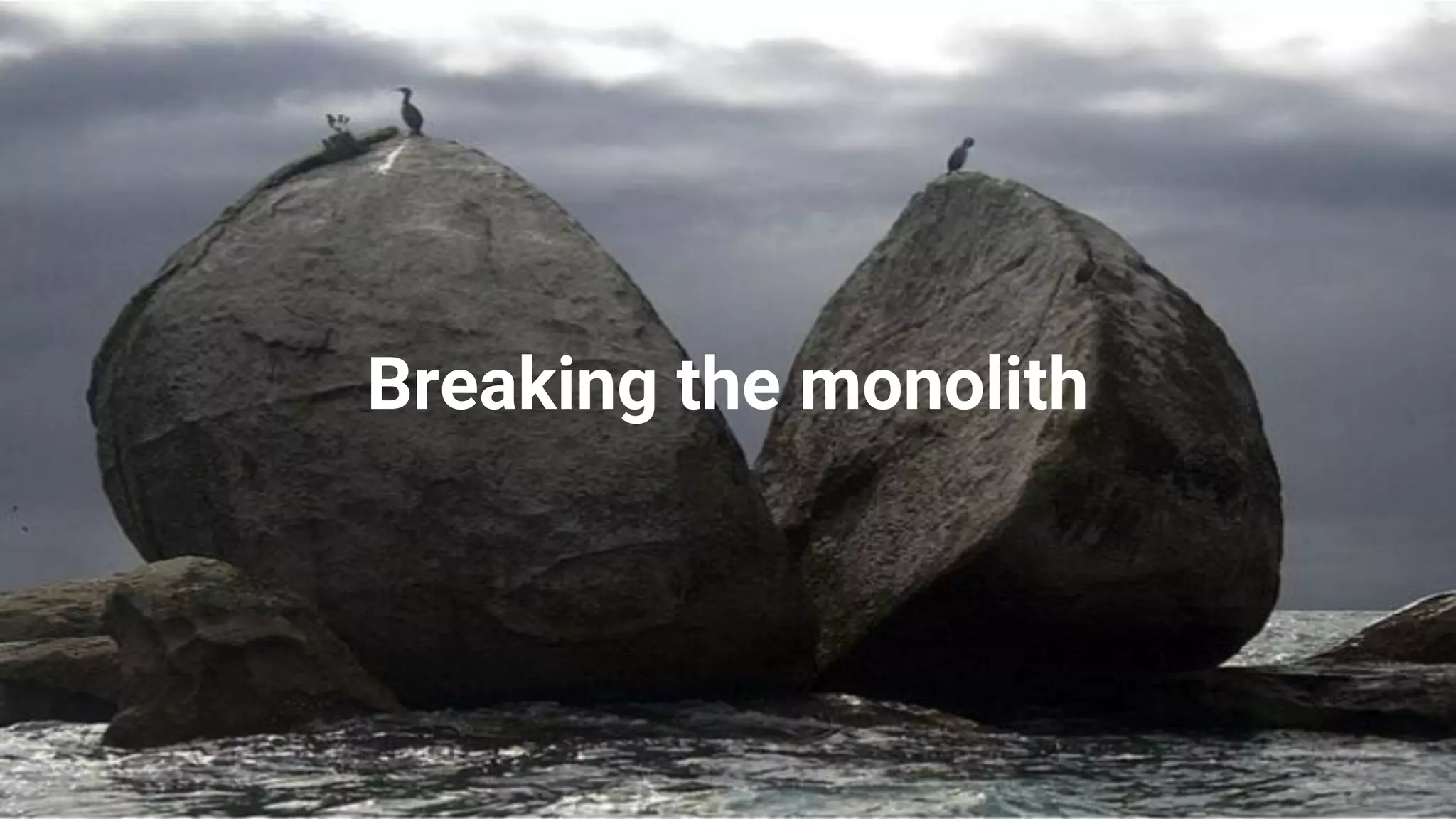
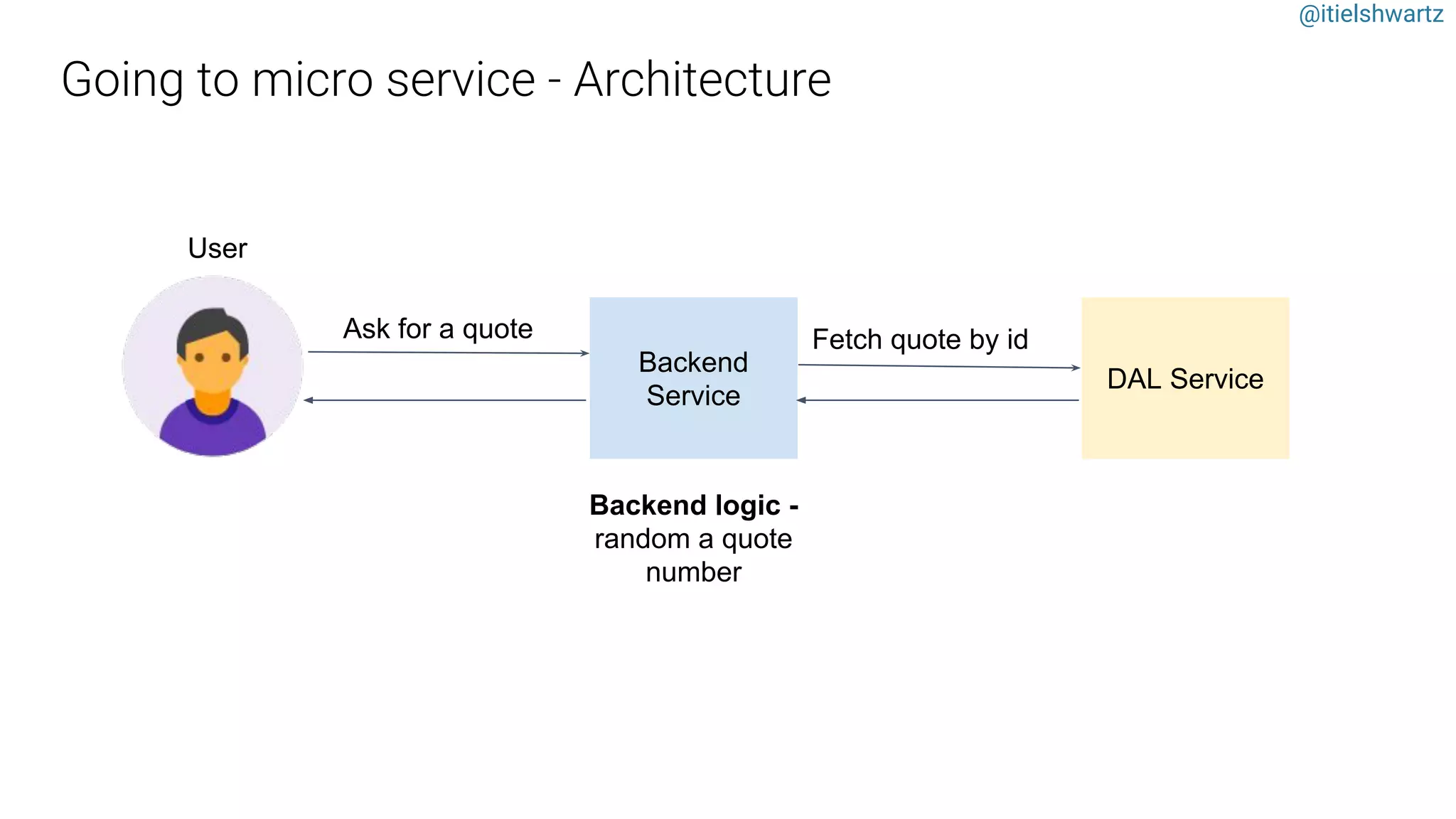
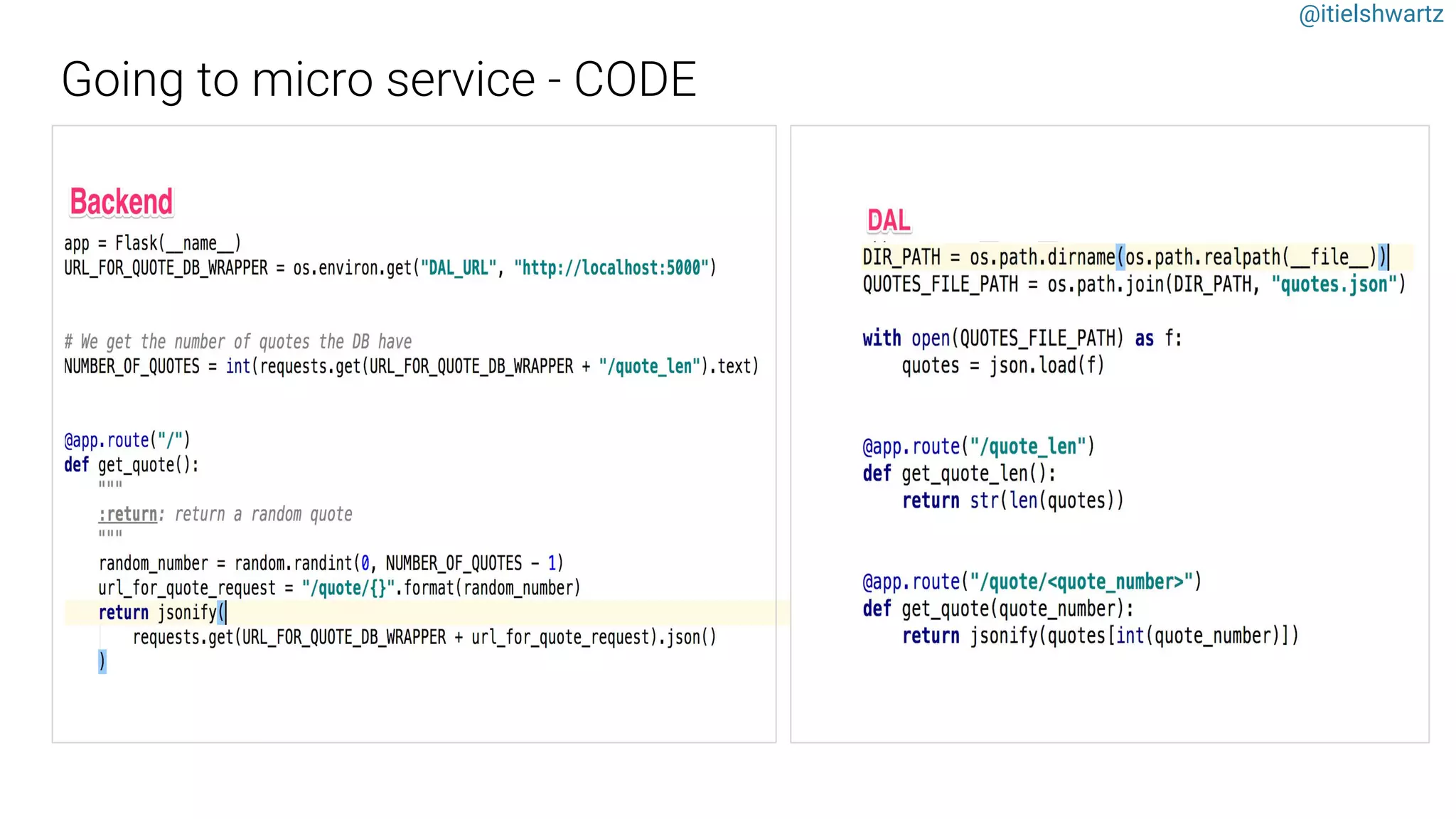
Breaking the monolith
@itielshwartz
Backend
Service
DAL Service
User
Ask for a quote
Backend logic -
random a quote
number
Fetch quote by id
@itielshwartz
@itielshwartz
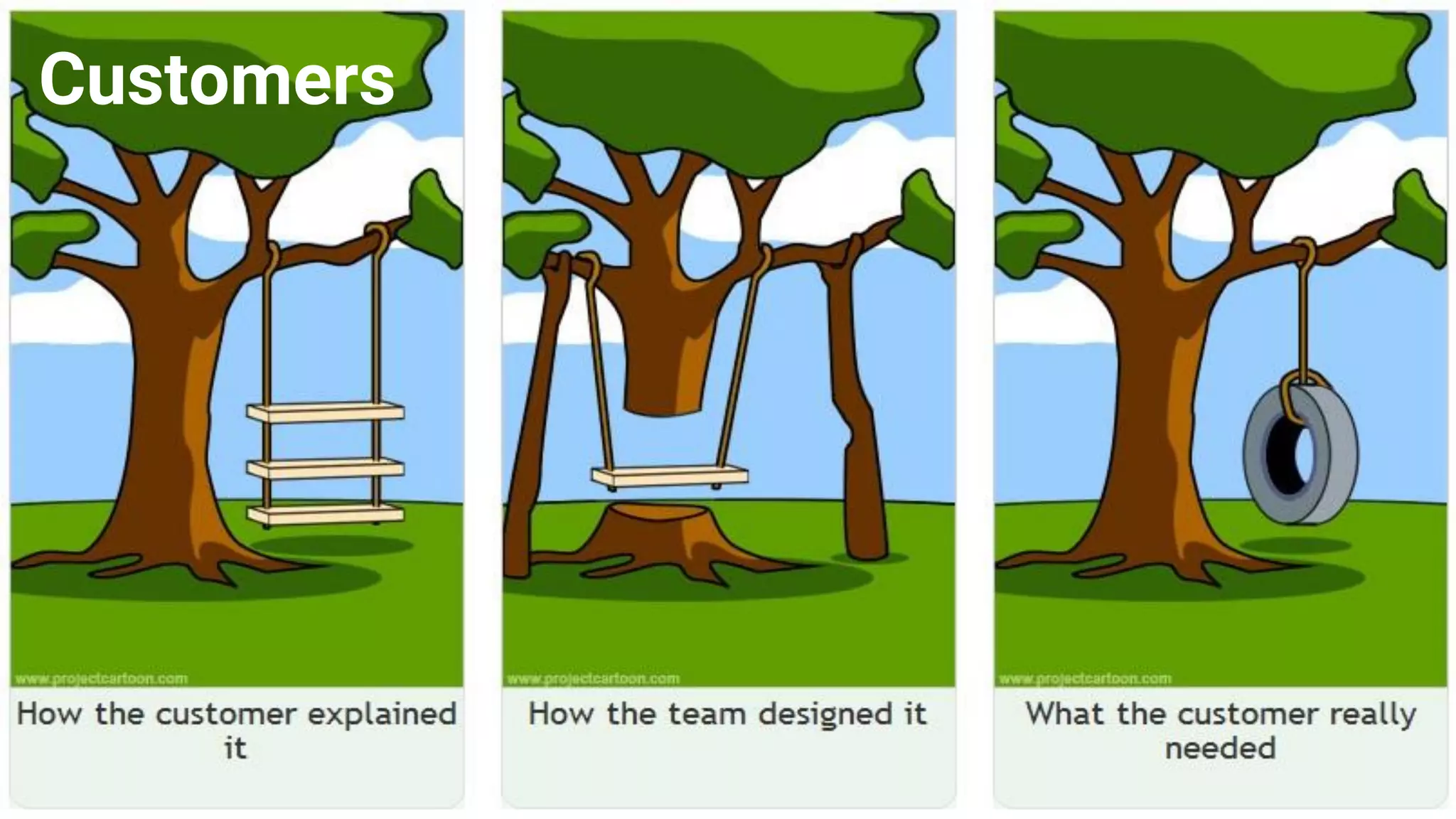
Customers
@itielshwartz
@itielshwartz
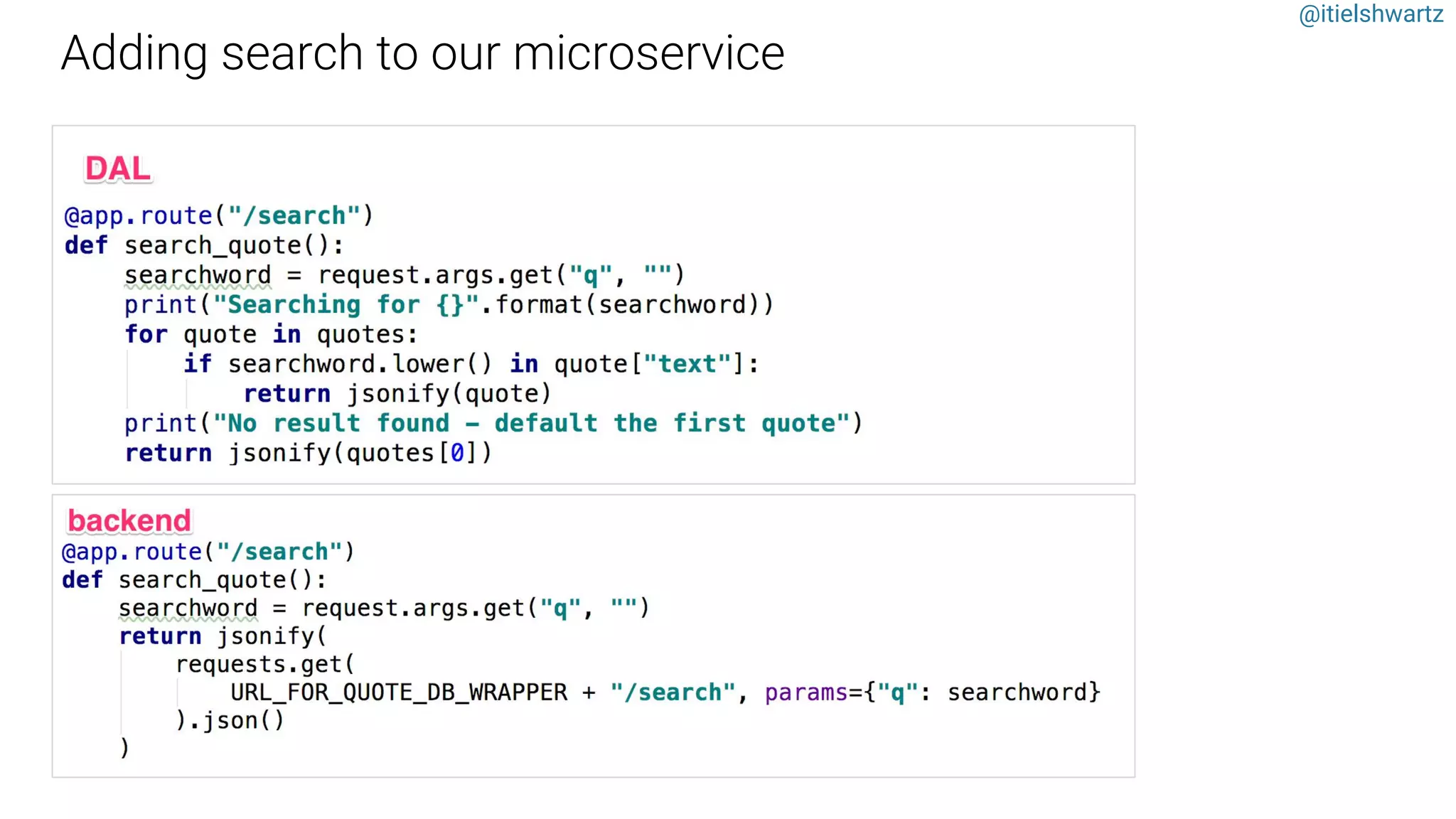
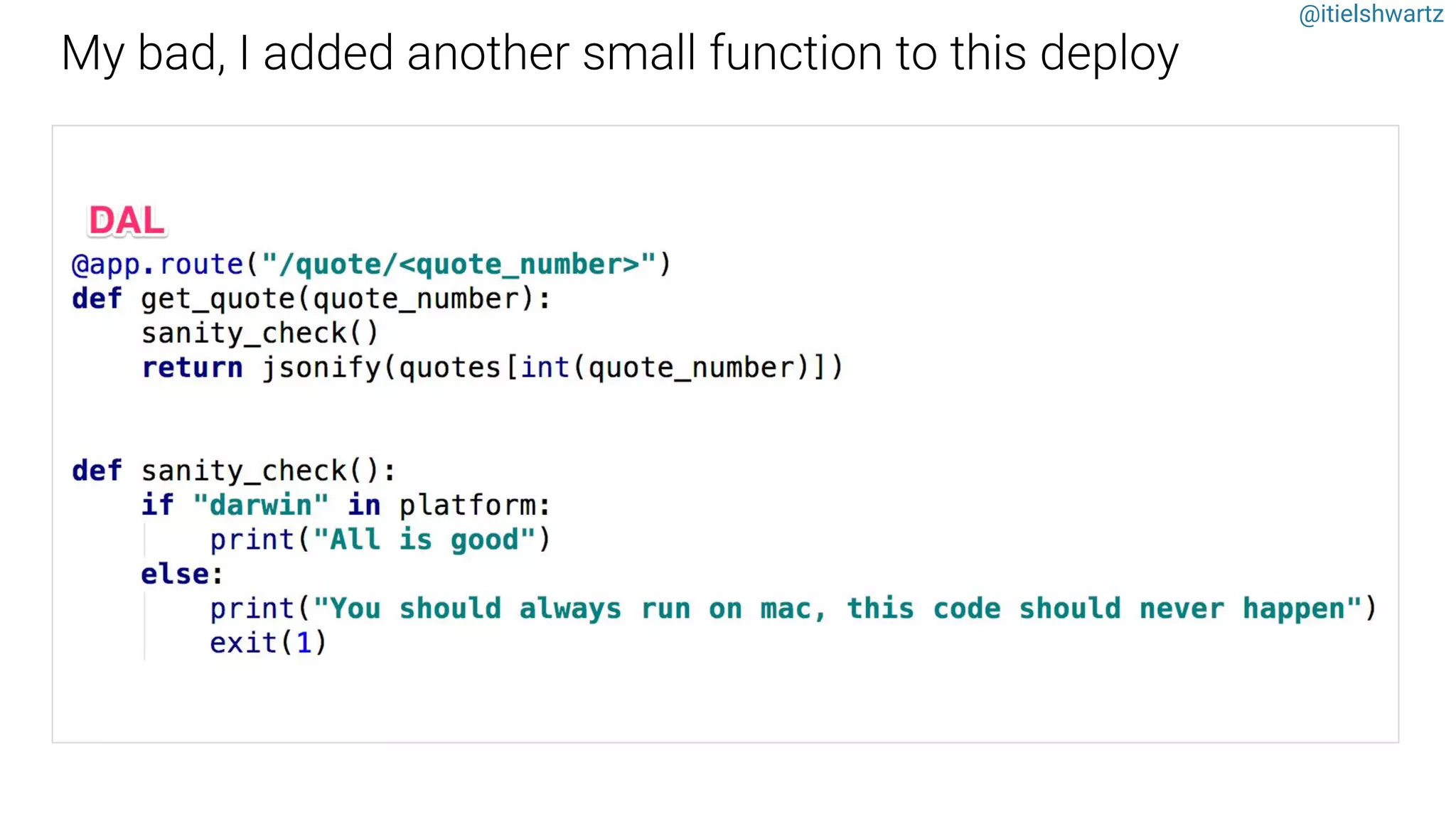
Now we can get and search quotes :)
@itielshwartz
let’s not panic
@itielshwartz
@itielshwartz
All I need is to revert the DAL
Phew... this was close
@itielshwartz
Ok, let’s not panicOk, let’s not panic
@itielshwartz
All I need is to revert everything...
@itielshwartz
Ok let’s not panic
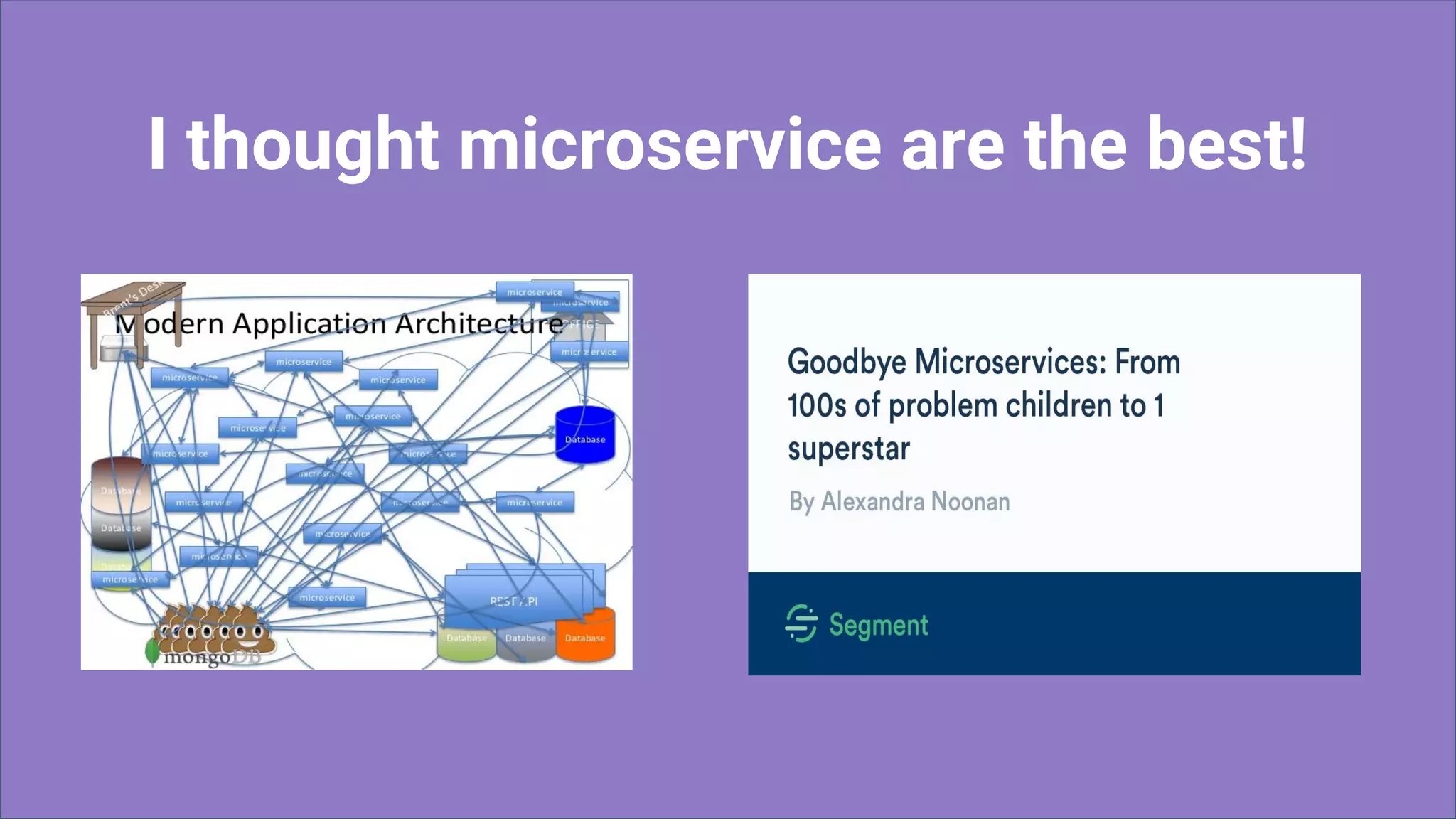
I thought microservice are the best!
@itielshwartz
1. We write a lot of boilerplate for each microservice
• Deployment.yaml , service.yaml, LB.yaml , configmap.yaml
2. No easy way testing those microservices before prod
• we need to configure each env
3. No version control for the dependencies between microservices!!!
@itielshwartz
1. The ability to deploy new code to production - everyone is talking about it!
2. The ability to test the system e2e very fast before going to production
3. Fast rollback - Your system will break! Not a question of if, but a question of when.
@itielshwartz
Helm to the rescue
@itielshwartz
Helm describes itself as the “The package manager for Kubernetes”
sounds pretty straightforward right? No? Maybe? Does it help you to Download packages?
Upload packages? Deploy envs? State control? Cluster control? Templating?
@itielshwartz
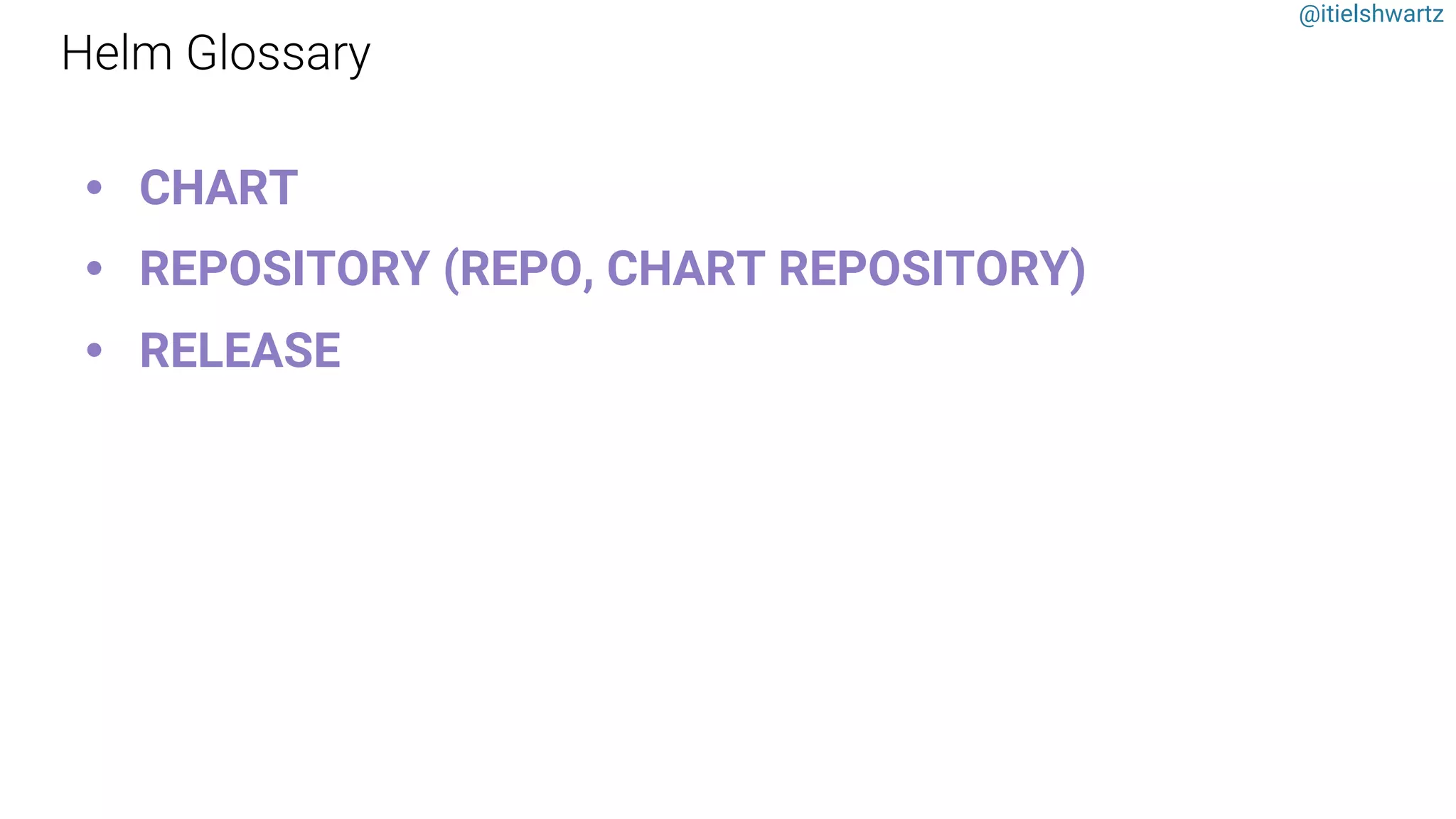
• CHART
• REPOSITORY (REPO, CHART REPOSITORY)
• RELEASE
@itielshwartz
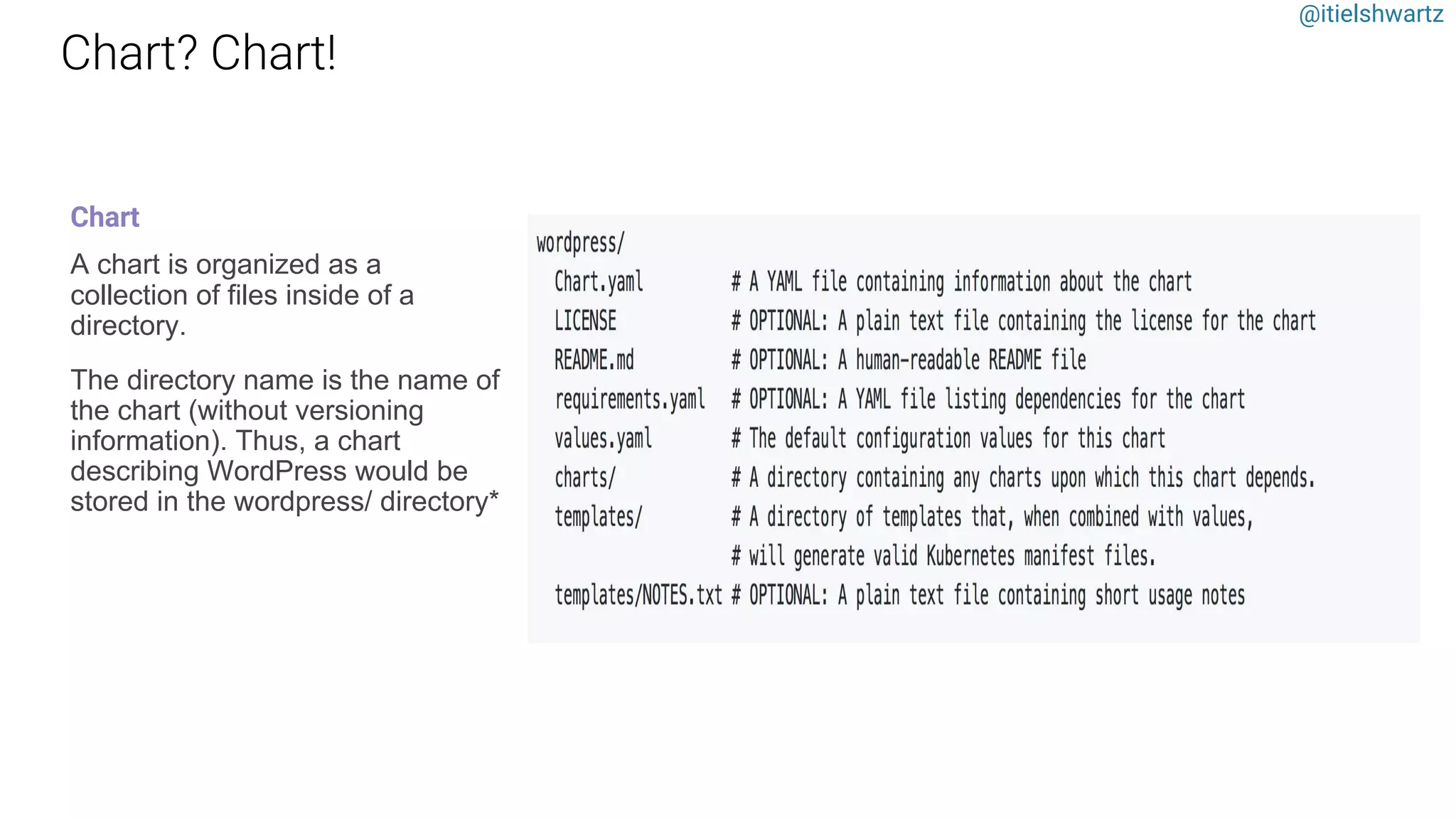
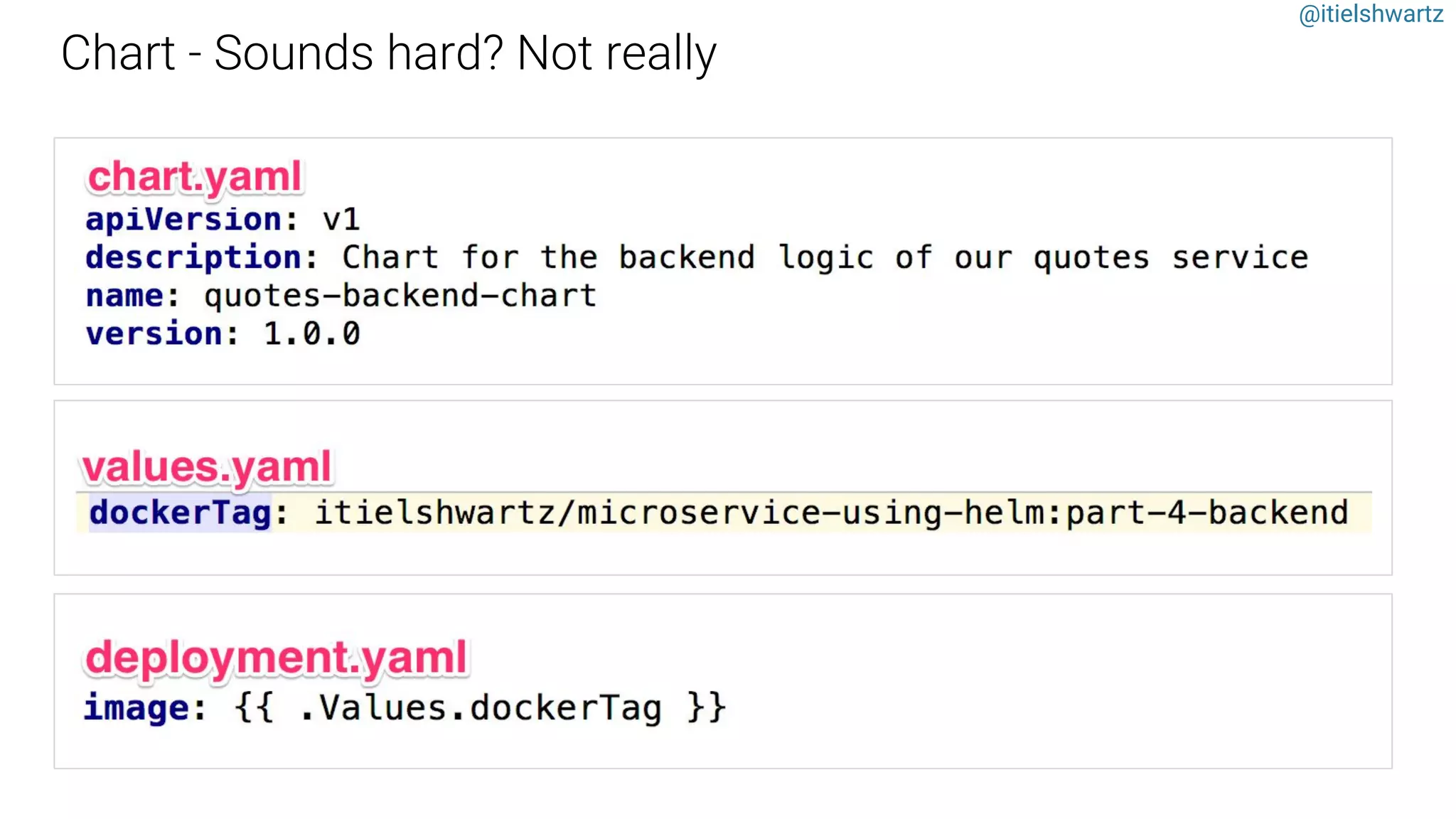
Chart
A chart is organized as a
collection of files inside of a
directory.
The directory name is the name of
the chart (without versioning
information). Thus, a chart
describing WordPress would be
stored in the wordpress/ directory*
@itielshwartz
@itielshwartz
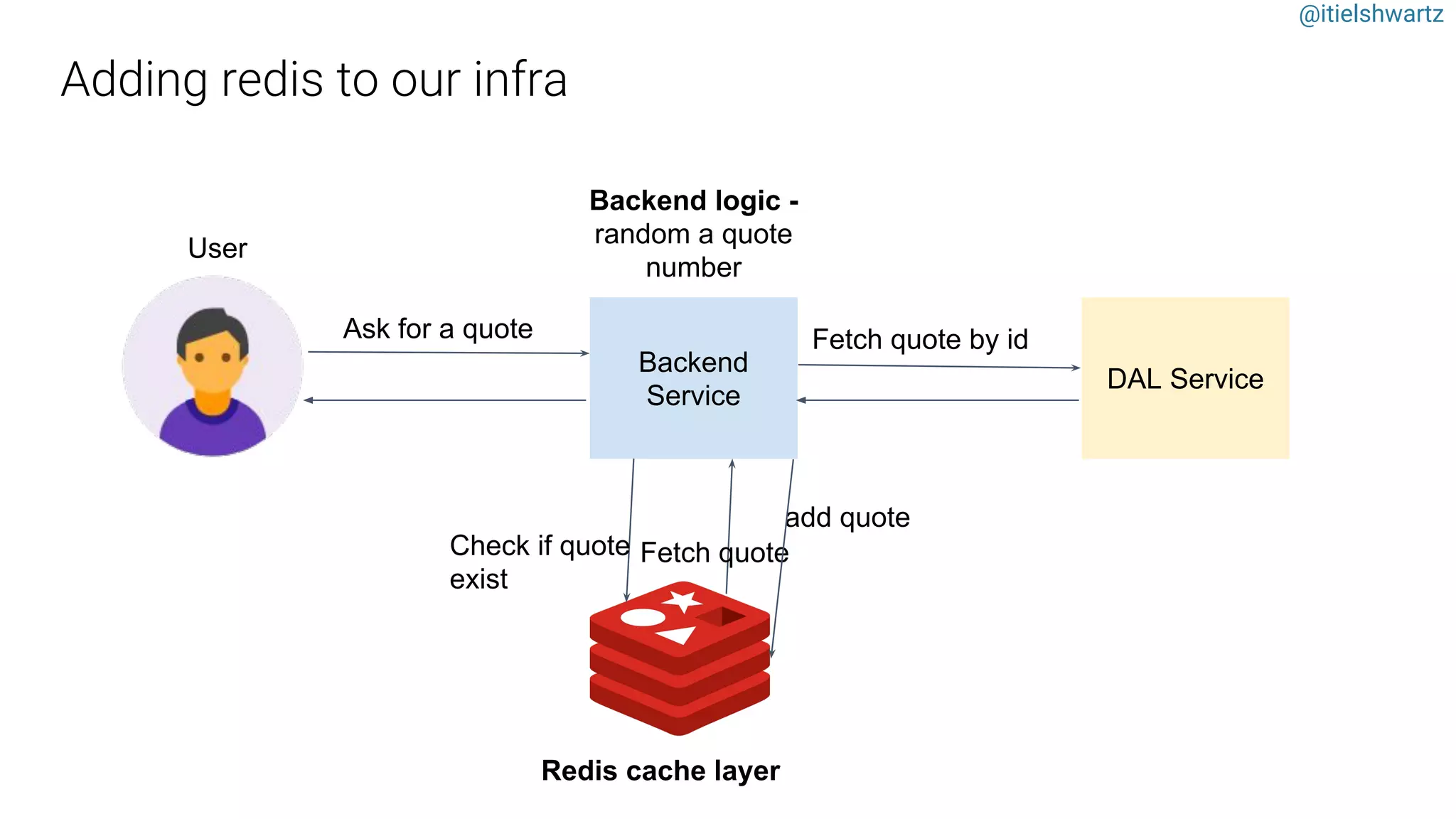
Backend
Service
DAL Service
User
Ask for a quote
Backend logic -
random a quote
number
Fetch quote by id
Redis cache layer
add quote
Fetch quoteCheck if quote
exist
@itielshwartz
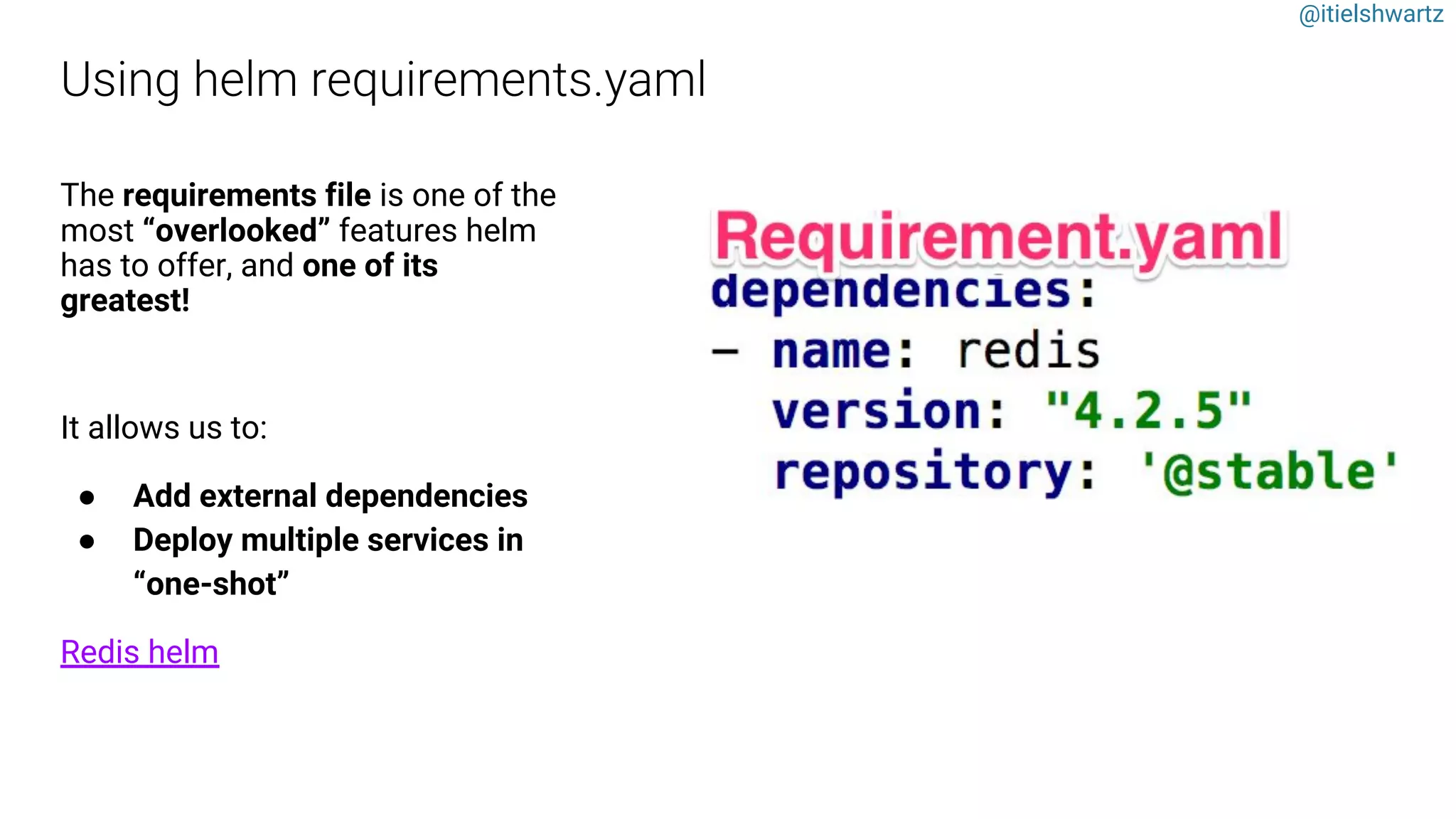
The requirements file is one of the
most “overlooked” features helm
has to offer, and one of its
greatest!
It allows us to:
● Add external dependencies
● Deploy multiple services in
“one-shot”
Redis helm
@itielshwartz
Umbrella chart
@itielshwartz
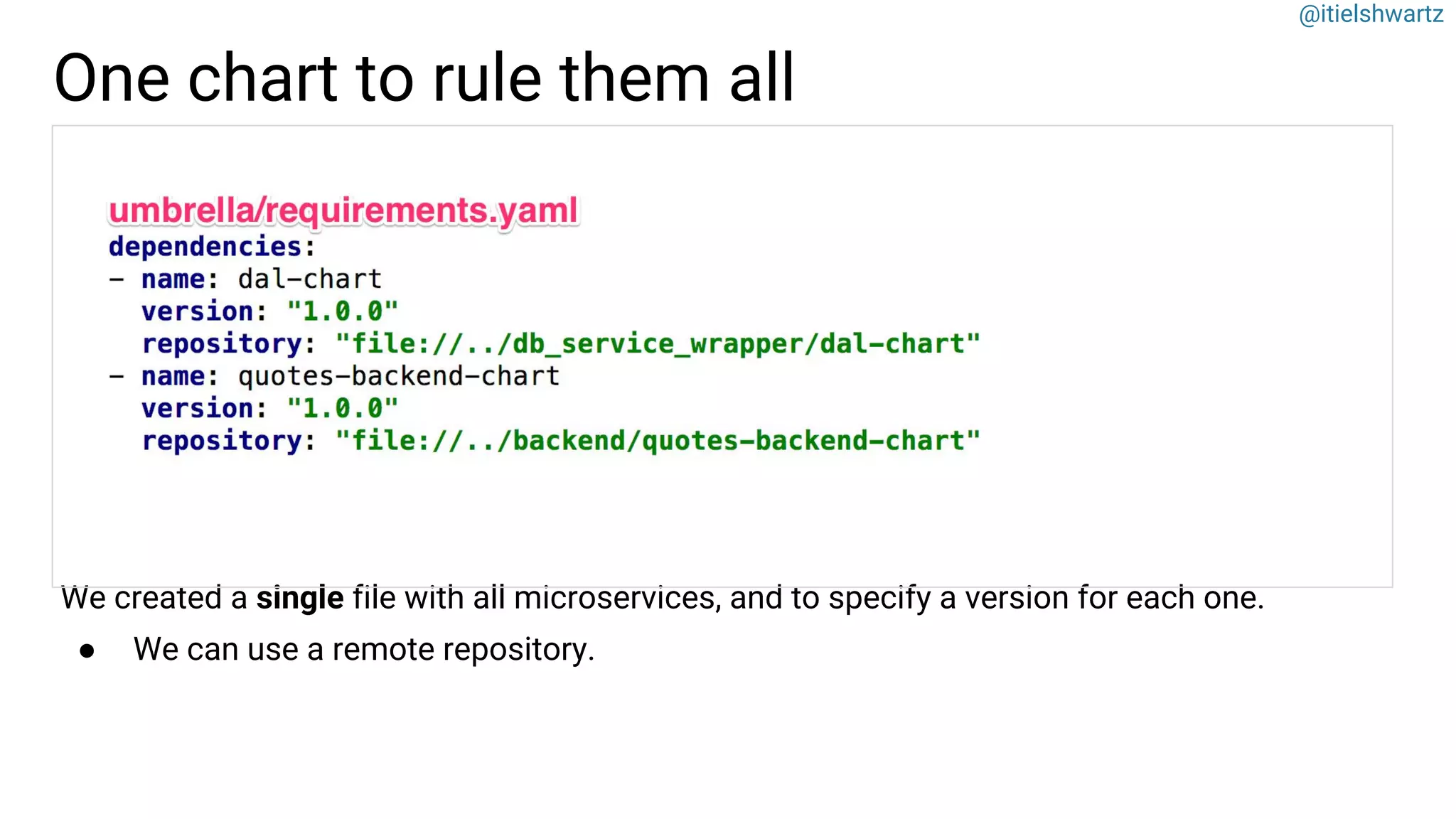
We created a single file with all microservices, and to specify a version for each one.
● We can use a remote repository.
One chart to rule them all
@itielshwartz
The power of a single helm chart for deployment:
1. We now have a single-source of truth about our microservices versions.
2. We can rollback to a previous deployment (and by that revert all changes in all
microservices) . (helm rollback X)
3. We can Deploy to a new namespace! Meaning adding prod env and staging env using
the same files. (helm --namespace prod)
4. We can inject different variable based on the env we are deploying to (using the
values.yaml files) (helm -f prod.yaml)
@itielshwartz
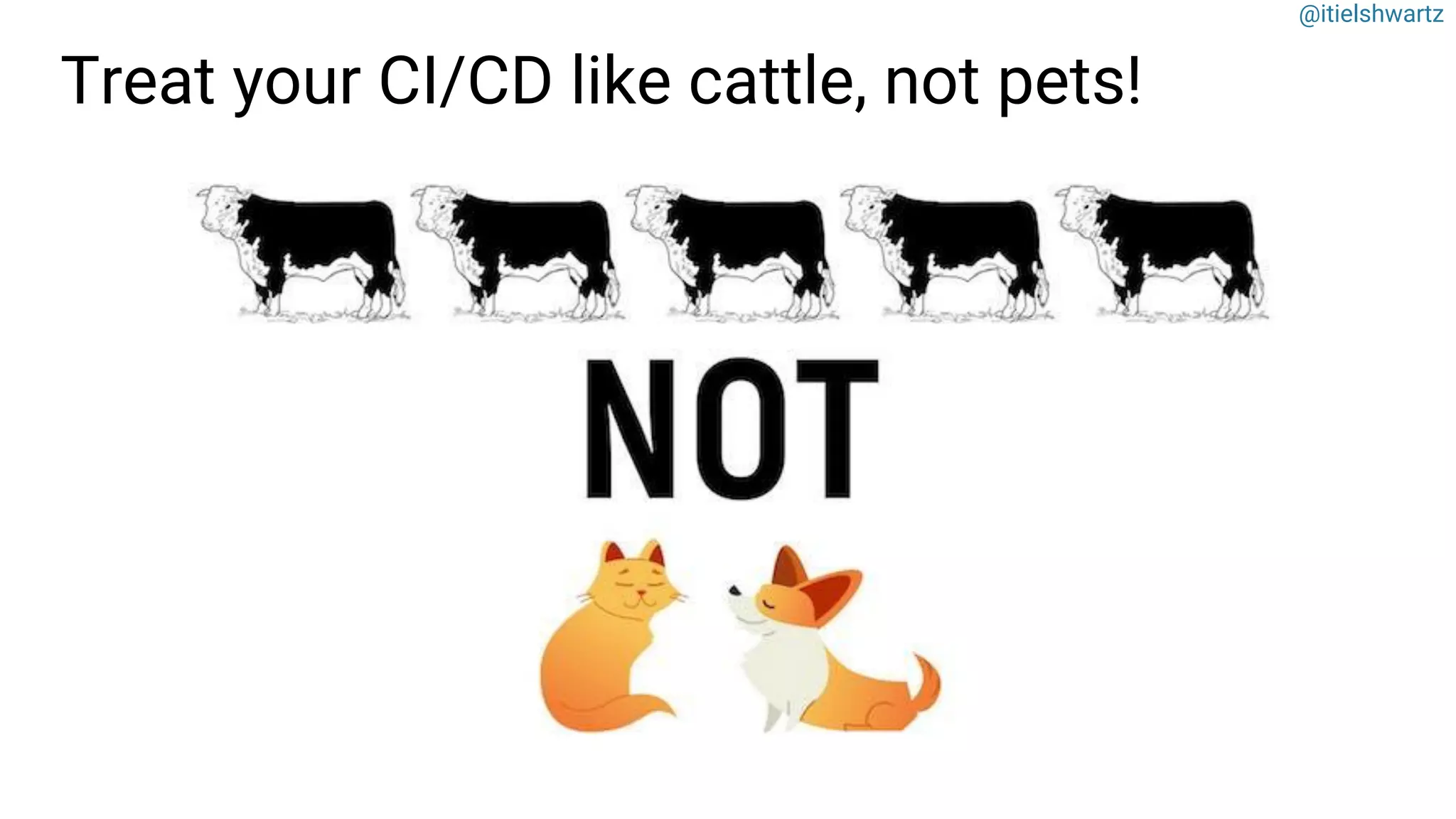
Treat your CI/CD like cattle, not pets!
@itielshwartz
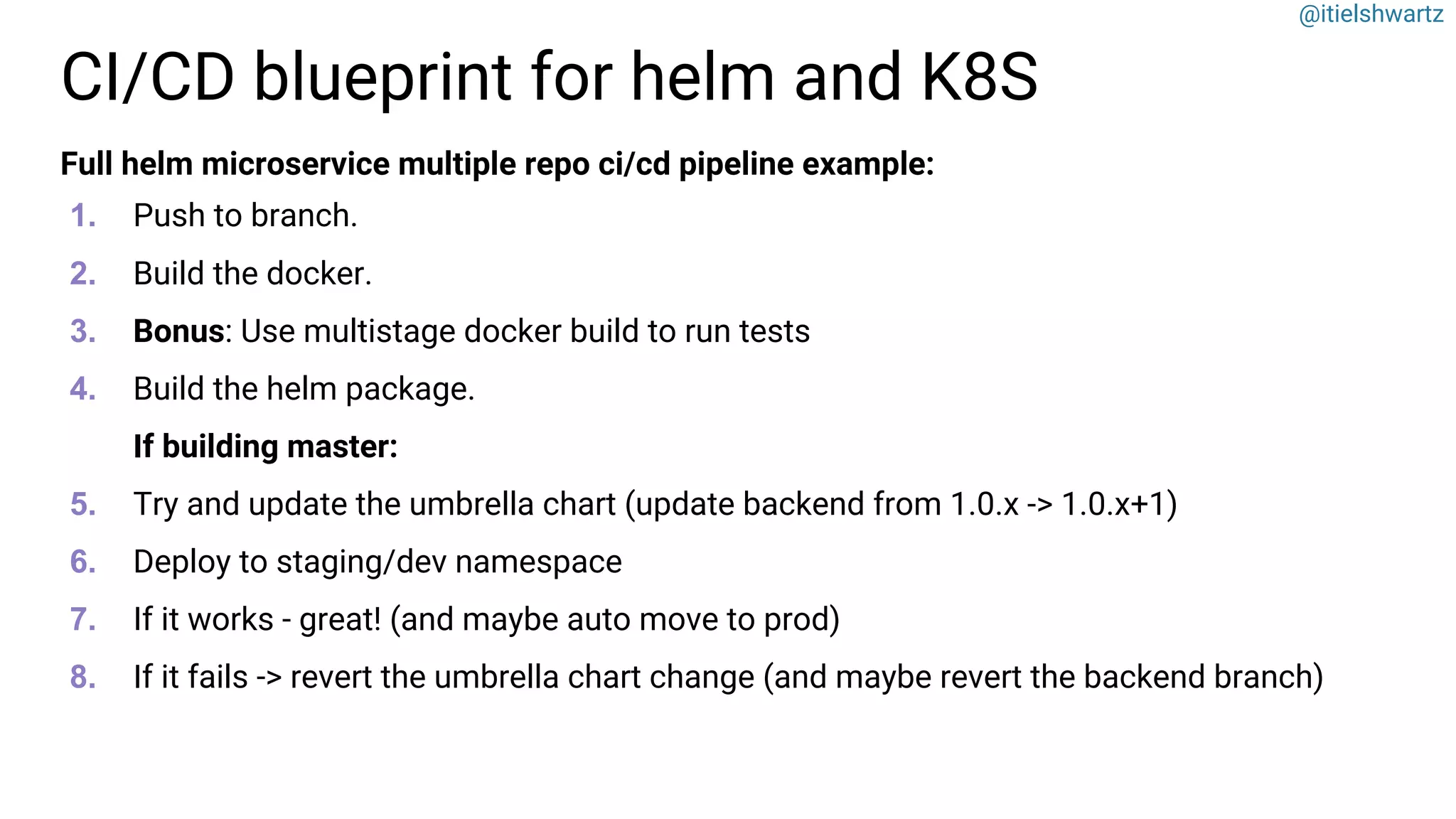
CI/CD blueprint for helm and K8S
Full helm microservice multiple repo ci/cd pipeline example:
1. Push to branch.
2. Build the docker.
3. Bonus: Use multistage docker build to run tests
4. Build the helm package.
If building master:
5. Try and update the umbrella chart (update backend from 1.0.x -> 1.0.x+1)
6. Deploy to staging/dev namespace
7. If it works - great! (and maybe auto move to prod)
8. If it fails -> revert the umbrella chart change (and maybe revert the backend branch)
@itielshwartz
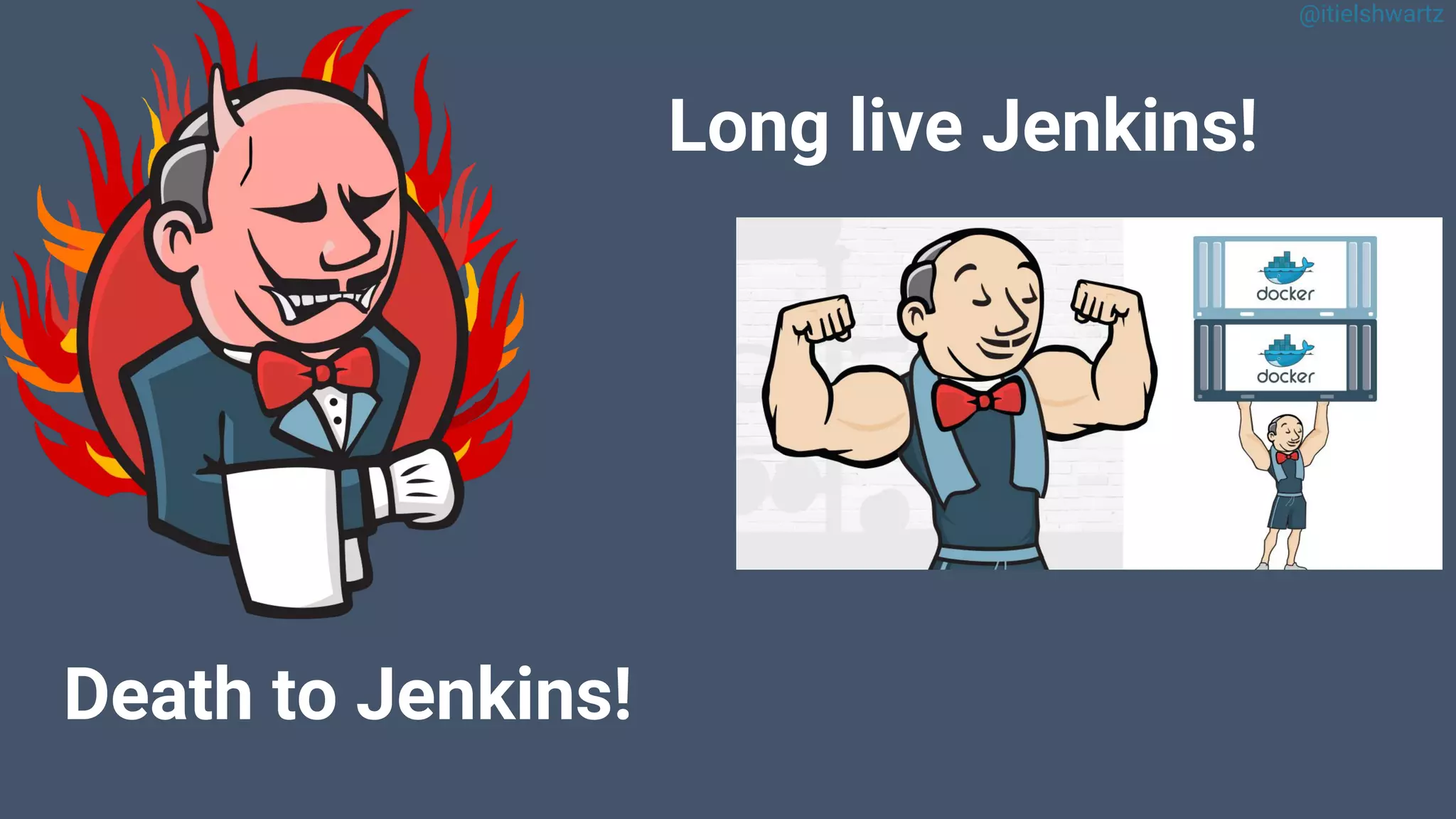
Long live Jenkins!
Death to Jenkins!
@itielshwartz
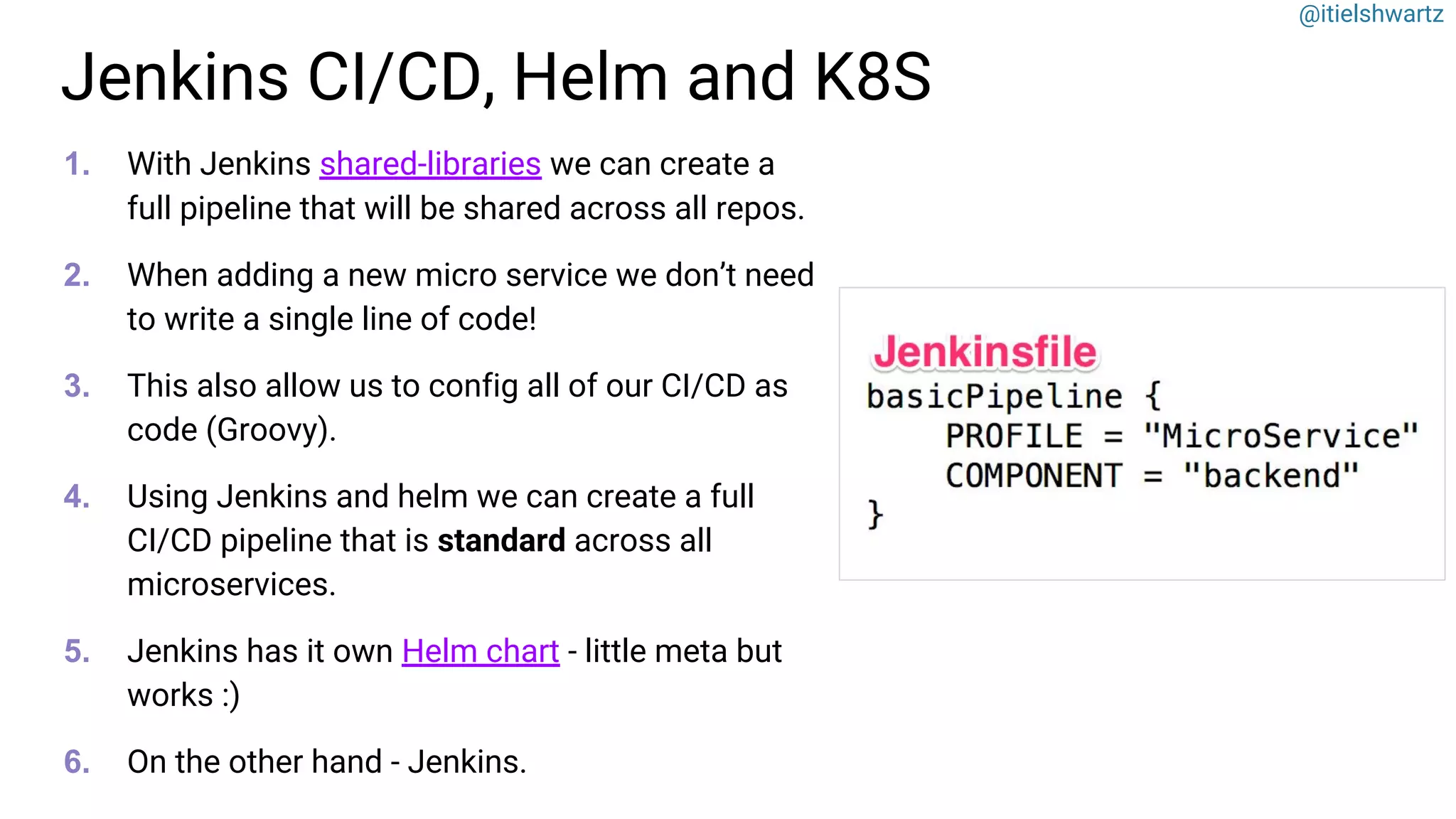
Jenkins CI/CD, Helm and K8S
1. With Jenkins shared-libraries we can create a
full pipeline that will be shared across all repos.
2. When adding a new micro service we don’t need
to write a single line of code!
3. This also allow us to config all of our CI/CD as
code (Groovy).
4. Using Jenkins and helm we can create a full
CI/CD pipeline that is standard across all
microservices.
5. Jenkins has it own Helm chart - little meta but
works :)
6. On the other hand - Jenkins.
@itielshwartz
Conclusion
1. Managing microservice is hard.
2. Helm can make it easier.
3. All source code can be found on my github:
https://github.com/itielshwartz/microservices-using-helm
We live in a cool time, where the problem is not deploying - but deploying too fast
:)
@itielshwartz
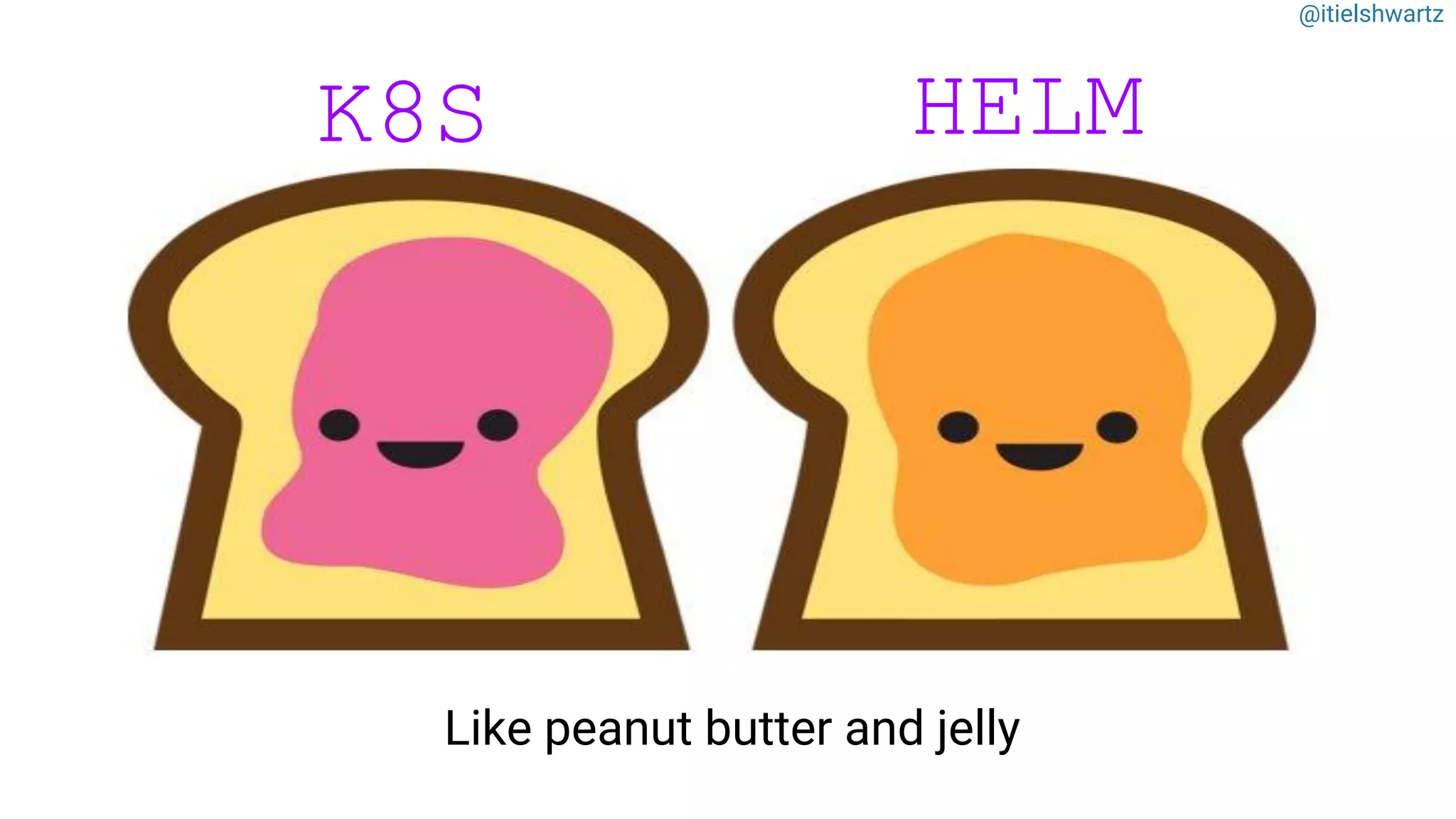
K8S HELM
Like peanut butter and jelly
@itielshwartz

Microservices are ‘easy’ dependencies are hard