How Micro Elements Are Used

         Shutter Island
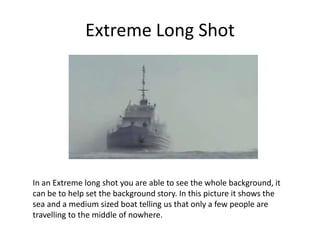
Extreme Long Shot


In an Extreme long shot you are able to see the whole background, it
can be to help set the background story. In this picture it shows the
sea and a medium sized boat telling us that only a few people are
travelling to the middle of nowhere.
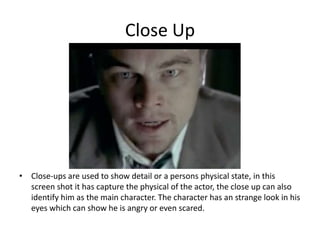
Close Up


• Close-ups are used to show detail or a persons physical state, in this
  screen shot it has capture the physical of the actor, the close up can also
  identify him as the main character. The character has an strange look in his
  eyes which can show he is angry or even scared.
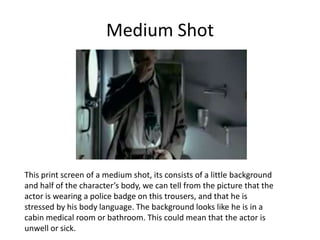
Medium Shot


This print screen of a medium shot, its consists of a little background
and half of the character’s body, we can tell from the picture that the
actor is wearing a police badge on this trousers, and that he is
stressed by his body language. The background looks like he is in a
cabin medical room or bathroom. This could mean that the actor is
unwell or sick.
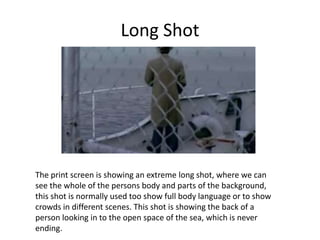
Long Shot


The print screen is showing an extreme long shot, where we can
see the whole of the persons body and parts of the background,
this shot is normally used too show full body language or to show
crowds in different scenes. This shot is showing the back of a
person looking in to the open space of the sea, which is never
ending.
PAN
The camera is placed on a tripod, where is can
scan the scene horizontally. This movement is
often used when following an actor, so that
they are kept in the middle of the frame, or so
scan the scene.
TILT
• This is very similar to a pan movement, it is
  when the camera scans the scene vertically.
  This movement is used for scanning a building
  in a frame, or even scanning a person for head
  to toe.
ZOOM
• Is literally when you zoom into or out of the
  scene/frame. It can be used to zoom from an
  extreme long shot to an extreme close-up. The
  zoom pace however can vary it from a ‘smash
  zoom’ to a slow zoom where the camera
  zooms in inch by inch.
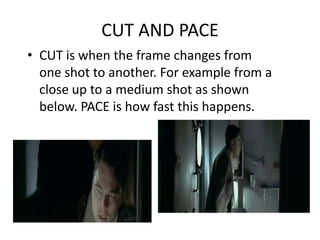
CUT AND PACE
• CUT is when the frame changes from
  one shot to another. For example from a
  close up to a medium shot as shown
  below. PACE is how fast this happens.
PERFORMANCE
• The performance is all about the vocal
  delivery and the emotions they show, to try
  and make their performance as realistic as
  possible. During the opening sequence of
  Shutter Island Leonardo Di’Caprio who is the
  main character is very sea sick, so he must
  convict his audience he is sick by how he talks
  and acts, for example he walks with a dizzy
  notion and is sick sea when we first see him.
NON-DIEGECTIC
• This is when the actors cannot hear the sound
  but the audience can. For example in a
  psychological thriller the eerie music played to
  emphasis the scene is non-diegitic, because it
  has been added in after, so the actors do not
  here this only the audience does.
DIEGETIC
• This is when the source of the sound is visible
  to the actors for example, the voices of
  characters (dialogue), sound made by objects
  in the story for example if a car is passing by in
  the background we and the actors can hear it,
  or if music instruments are playing.
MISE-EN-SCENE


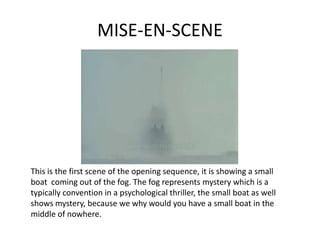
This is the first scene of the opening sequence, it is showing a small
boat coming out of the fog. The fog represents mystery which is a
typically convention in a psychological thriller, the small boat as well
shows mystery, because we why would you have a small boat in the
middle of nowhere.

Micro-Elements

  • 1.
    How Micro ElementsAre Used Shutter Island
  • 2.
    Extreme Long Shot Inan Extreme long shot you are able to see the whole background, it can be to help set the background story. In this picture it shows the sea and a medium sized boat telling us that only a few people are travelling to the middle of nowhere.
  • 3.
    Close Up • Close-upsare used to show detail or a persons physical state, in this screen shot it has capture the physical of the actor, the close up can also identify him as the main character. The character has an strange look in his eyes which can show he is angry or even scared.
  • 4.
    Medium Shot This printscreen of a medium shot, its consists of a little background and half of the character’s body, we can tell from the picture that the actor is wearing a police badge on this trousers, and that he is stressed by his body language. The background looks like he is in a cabin medical room or bathroom. This could mean that the actor is unwell or sick.
  • 5.
    Long Shot The printscreen is showing an extreme long shot, where we can see the whole of the persons body and parts of the background, this shot is normally used too show full body language or to show crowds in different scenes. This shot is showing the back of a person looking in to the open space of the sea, which is never ending.
  • 6.
    PAN The camera isplaced on a tripod, where is can scan the scene horizontally. This movement is often used when following an actor, so that they are kept in the middle of the frame, or so scan the scene.
  • 7.
    TILT • This isvery similar to a pan movement, it is when the camera scans the scene vertically. This movement is used for scanning a building in a frame, or even scanning a person for head to toe.
  • 8.
    ZOOM • Is literallywhen you zoom into or out of the scene/frame. It can be used to zoom from an extreme long shot to an extreme close-up. The zoom pace however can vary it from a ‘smash zoom’ to a slow zoom where the camera zooms in inch by inch.
  • 9.
    CUT AND PACE •CUT is when the frame changes from one shot to another. For example from a close up to a medium shot as shown below. PACE is how fast this happens.
  • 10.
    PERFORMANCE • The performanceis all about the vocal delivery and the emotions they show, to try and make their performance as realistic as possible. During the opening sequence of Shutter Island Leonardo Di’Caprio who is the main character is very sea sick, so he must convict his audience he is sick by how he talks and acts, for example he walks with a dizzy notion and is sick sea when we first see him.
  • 11.
    NON-DIEGECTIC • This iswhen the actors cannot hear the sound but the audience can. For example in a psychological thriller the eerie music played to emphasis the scene is non-diegitic, because it has been added in after, so the actors do not here this only the audience does.
  • 12.
    DIEGETIC • This iswhen the source of the sound is visible to the actors for example, the voices of characters (dialogue), sound made by objects in the story for example if a car is passing by in the background we and the actors can hear it, or if music instruments are playing.
  • 13.
    MISE-EN-SCENE This is thefirst scene of the opening sequence, it is showing a small boat coming out of the fog. The fog represents mystery which is a typically convention in a psychological thriller, the small boat as well shows mystery, because we why would you have a small boat in the middle of nowhere.