NanoTour 2017 - University of the Freestate:
Opening the doors of the future for todays society
Michael Ellis
Manager: Science Communication
michael.ellis@saasta.ac.za
+27 12 392 9300 / +27 72 287 7496
@NRF_SAASTA / @MzansiMike
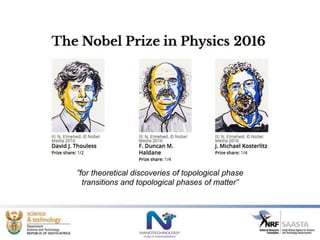
”for theoretical discoveries of topological phase
transitions and topological phases of matter”
UFS Nano Facility Tour: Overall Objectives
• Raise awareness of nanotechnology
research undertaken at the centre by
reaching diverse audiences in an
accessible way.
• Creating opportunities for
collaboration among nanotechnology
centres and industry.
• Stimulating interest in nanotechnology
as a career by creating opportunities for
learners and educators to understand
nanotechnology and to meet the
scientists and researchers making a
difference in this exciting field.
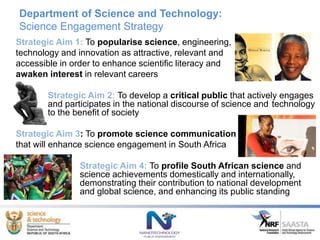
Department of Science and Technology:
Science Engagement Strategy
Strategic Aim 1: To popularise science, engineering,
technology and innovation as attractive, relevant and
accessible in order to enhance scientific literacy and
awaken interest in relevant careers
Strategic Aim 2: To develop a critical public that actively engages
and participates in the national discourse of science and technology
to the benefit of society
Strategic Aim 3: To promote science communication
that will enhance science engagement in South Africa
Strategic Aim 4: To profile South African science and
science achievements domestically and internationally,
demonstrating their contribution to national development
and global science, and enhancing its public standing
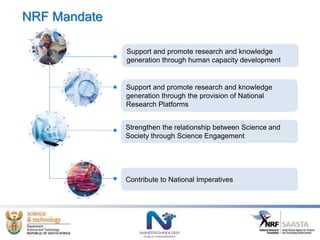
Support and promote research and knowledge
generation through human capacity development
Strengthen the relationship between Science and
Society through Science Engagement
Contribute to National Imperatives
Support and promote research and knowledge
generation through the provision of National
Research Platforms
NRF Mandate
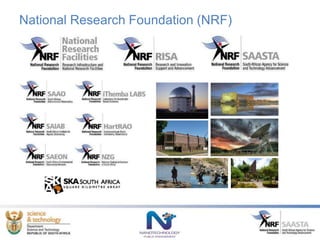
National Research Foundation (NRF)
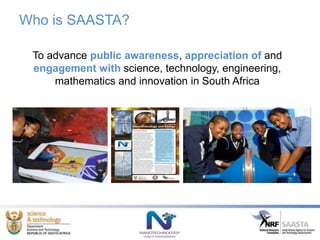
Who is SAASTA?
To advance public awareness, appreciation of and
engagement with science, technology, engineering,
mathematics and innovation in South Africa
PRETORIA
JOHANNESBURG
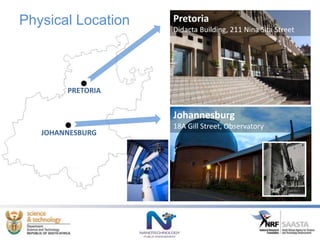
Physical Location Pretoria
Didacta Building, 211 Nina Sita Street
Johannesburg
18A Gill Street, Observatory
SAASTA Science Communication Division
Englis
h
South
ern
Sotho
North
ern
Sotho
Tshive
nda
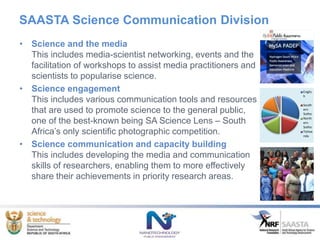
• Science and the media
This includes media-scientist networking, events and the
facilitation of workshops to assist media practitioners and
scientists to popularise science.
• Science engagement
This includes various communication tools and resources
that are used to promote science to the general public,
one of the best-known being SA Science Lens – South
Africa’s only scientific photographic competition.
• Science communication and capacity building
This includes developing the media and communication
skills of researchers, enabling them to more effectively
share their achievements in priority research areas.
SAASTA Science Communication Projects
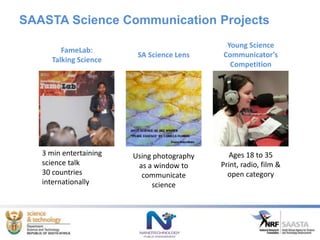
Using photography
as a window to
communicate
science
Young Science
Communicator’s
Competition
Ages 18 to 35
Print, radio, film &
open category
SA Science Lens
FameLab:
Talking Science
3 min entertaining
science talk
30 countries
internationally
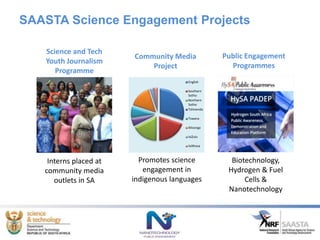
Science and Tech
Youth Journalism
Programme
SAASTA Science Engagement Projects
Community Media
Project
English
Southern
Sotho
Northern
Sotho
Tshivenda
Tswana
Xitsonga
IsiZulu
IsiXhosa
Promotes science
engagement in
indigenous languages
Public Engagement
Programmes
Biotechnology,
Hydrogen & Fuel
Cells &
Nanotechnology
Interns placed at
community media
outlets in SA
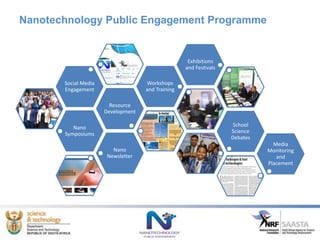
Nanotechnology Public Engagement Programme
Nano
Symposiums
Resource
Development
Social Media
Engagement
Workshops
and Training
Exhibitions
and Festivals
School
Science
Debates
Nano
Newsletter
Media
Monitoring
and
Placement
#NanoTour2017
@npeptweet / @nrf_saasta
www.npep.co.za
Enkosi
Thank you
Re a leboga
Siyabonga
Dankie

Michael ellis presentation

  • 1.
    NanoTour 2017 -University of the Freestate: Opening the doors of the future for todays society Michael Ellis Manager: Science Communication michael.ellis@saasta.ac.za +27 12 392 9300 / +27 72 287 7496 @NRF_SAASTA / @MzansiMike
  • 2.
    ”for theoretical discoveriesof topological phase transitions and topological phases of matter”
  • 14.
    UFS Nano FacilityTour: Overall Objectives • Raise awareness of nanotechnology research undertaken at the centre by reaching diverse audiences in an accessible way. • Creating opportunities for collaboration among nanotechnology centres and industry. • Stimulating interest in nanotechnology as a career by creating opportunities for learners and educators to understand nanotechnology and to meet the scientists and researchers making a difference in this exciting field.
  • 15.
    Department of Scienceand Technology: Science Engagement Strategy Strategic Aim 1: To popularise science, engineering, technology and innovation as attractive, relevant and accessible in order to enhance scientific literacy and awaken interest in relevant careers Strategic Aim 2: To develop a critical public that actively engages and participates in the national discourse of science and technology to the benefit of society Strategic Aim 3: To promote science communication that will enhance science engagement in South Africa Strategic Aim 4: To profile South African science and science achievements domestically and internationally, demonstrating their contribution to national development and global science, and enhancing its public standing
  • 16.
    Support and promoteresearch and knowledge generation through human capacity development Strengthen the relationship between Science and Society through Science Engagement Contribute to National Imperatives Support and promote research and knowledge generation through the provision of National Research Platforms NRF Mandate
  • 17.
  • 18.
    Who is SAASTA? Toadvance public awareness, appreciation of and engagement with science, technology, engineering, mathematics and innovation in South Africa
  • 19.
    PRETORIA JOHANNESBURG Physical Location Pretoria DidactaBuilding, 211 Nina Sita Street Johannesburg 18A Gill Street, Observatory
  • 20.
    SAASTA Science CommunicationDivision Englis h South ern Sotho North ern Sotho Tshive nda • Science and the media This includes media-scientist networking, events and the facilitation of workshops to assist media practitioners and scientists to popularise science. • Science engagement This includes various communication tools and resources that are used to promote science to the general public, one of the best-known being SA Science Lens – South Africa’s only scientific photographic competition. • Science communication and capacity building This includes developing the media and communication skills of researchers, enabling them to more effectively share their achievements in priority research areas.
  • 21.
    SAASTA Science CommunicationProjects Using photography as a window to communicate science Young Science Communicator’s Competition Ages 18 to 35 Print, radio, film & open category SA Science Lens FameLab: Talking Science 3 min entertaining science talk 30 countries internationally
  • 22.
    Science and Tech YouthJournalism Programme SAASTA Science Engagement Projects Community Media Project English Southern Sotho Northern Sotho Tshivenda Tswana Xitsonga IsiZulu IsiXhosa Promotes science engagement in indigenous languages Public Engagement Programmes Biotechnology, Hydrogen & Fuel Cells & Nanotechnology Interns placed at community media outlets in SA
  • 23.
    Nanotechnology Public EngagementProgramme Nano Symposiums Resource Development Social Media Engagement Workshops and Training Exhibitions and Festivals School Science Debates Nano Newsletter Media Monitoring and Placement
  • 24.
  • 25.
    Enkosi Thank you Re aleboga Siyabonga Dankie

Editor's Notes

  • #20 Reunert Telescope The original Observatory in Johannesburg was initially a meteorological institution. When it was later decided to diversify into astronomical observation, the then director, Robert Innes, acquired a telescope with the help of Dr Theodore Reunert. It was the Observatory’s first piece of astronomical equipment. Then known as the nine-inch telescope, the instrument was installed in 1907, opening up a whole new view of the universe. One of the first observations made through the telescope was the apparent disappearance of the rings of Saturn. Fortunately, all it took was a slight retouching of the objective lens by the manufacturer, and both the telescope (and the universe) was returned to normal. The telescope was renamed the Reunert Telescope in 1924, in honour of Dr Reunert’s instrumentation. Innes, who was also the founding director of the Observatory, was using the telescope in conjunction with a series of photographic plates when he discovered Proxima-centauri (the star closest to our sun) in 1915. It is a tiny Red Dwarf star some 4,22 light years away from earth, and the third member of the Alpha Centauri triple system. This was the first of many multi-star observations that Innes subsequently documented, along with his observations of the large satellites of Jupiter. Innes Telescope This Telescope was named after the founding director of the Johannesburg Observatory, Sir Robert Innes. A street leading to the Observatory site and an office building Innes used were also named after him. The Innes Telescope is a 26,5 inch refractor telescope, which has been refurbished by SAASTA and is still functional. The Astronomy Society of South Africa uses this telescope every second Wednesday of the month to observe the skies. It is also used by SAASTA for sky viewing together with members of public and schools.