Citizen Science –
a brief introduction
Muki Haklay, Extreme Citizen Science group
Department of Geography, UCL
Twitter: @mhaklay / @ucl_excites
• Background to citizen science
• Overview of citizen science activities today across
aspects – Modes of participation; Relationships
between scientists and the public; Disciplines; and
Cultures
• Aspects of citizen science – data quality, engaging
participants.
Synopsis
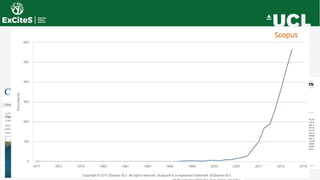
• In the past decade, the awareness to citizen
science has grown rapidly
Citizen Science today
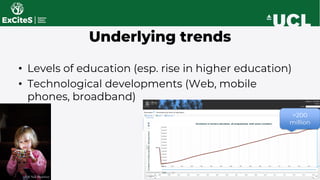
• Levels of education (esp. rise in higher education)
• Technological developments (Web, mobile
phones, broadband)
Underlying trends
>200
million
R Nial Bradshaw
Haklay, Mazumdar & Wardlaw, 2018, Citizen Science for Observing and Understanding the Earth, Earth Observation, Open Science, and Innovation
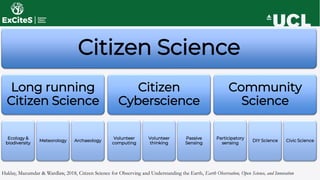
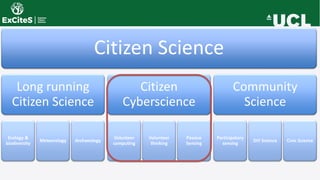
Citizen Science
Long running
Citizen Science
Ecology &
biodiversity
Meteorology Archaeology
Citizen
Cyberscience
Volunteer
computing
Volunteer
thinking
Passive
Sensing
Community
Science
Participatory
sensing
DIY Science Civic Science
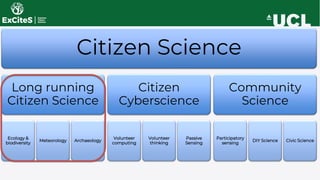
Citizen Science
Long running
Citizen Science
Ecology &
biodiversity
Meteorology Archaeology
Citizen
Cyberscience
Volunteer
computing
Volunteer
thinking
Passive
Sensing
Community
Science
Participatory
sensing
DIY Science Civic Science
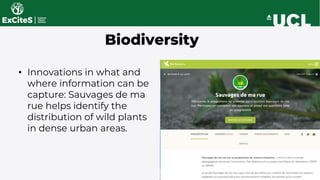
Biodiversity
• Innovations in what and
where information can be
capture: Sauvages de ma
rue helps identify the
distribution of wild plants
in dense urban areas.
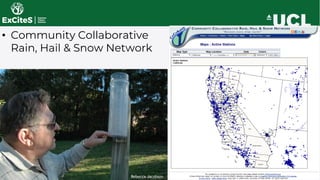
• Community Collaborative
Rain, Hail & Snow Network
Rebecca Jacobson
© Audubon Cal.
Jennifer Jewett / USFWS
© WMO–No. 919
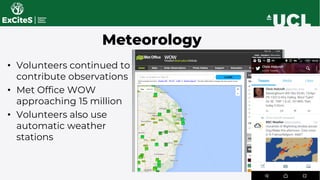
Meteorology
• Volunteers continued to
contribute observations
• Met Office WOW
approaching 15 million
• Volunteers also use
automatic weather
stations
Citizen Science
Long running
Citizen Science
Ecology &
biodiversity
Meteorology Archaeology
Citizen
Cyberscience
Volunteer
computing
Volunteer
thinking
Passive
Sensing
Community
Science
Participatory
sensing
DIY Science Civic Science
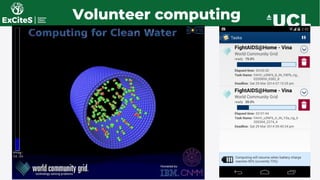
Volunteer computing
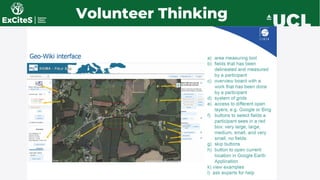
Volunteer Thinking
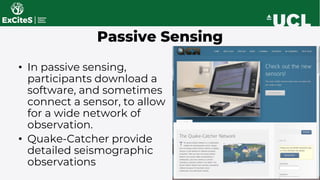
• In passive sensing,
participants download a
software, and sometimes
connect a sensor, to allow
for a wide network of
observation.
• Quake-Catcher provide
detailed seismographic
observations
Passive Sensing
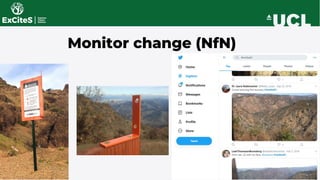
Monitor change (NfN)
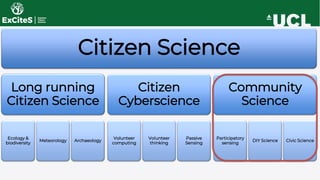
Citizen Science
Long running
Citizen Science
Ecology &
biodiversity
Meteorology Archaeology
Citizen
Cyberscience
Volunteer
computing
Volunteer
thinking
Passive
Sensing
Community
Science
Participatory
sensing
DIY Science Civic Science
Mapping for Change
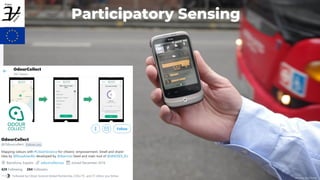
Participatory Sensing
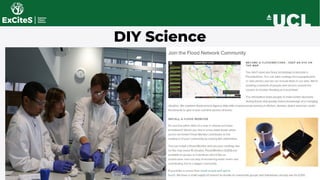
DIY Science
Imane Baiz, CRI Paris
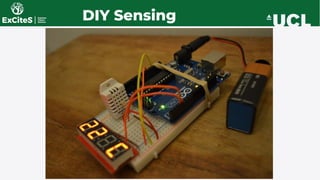
DIY Sensing
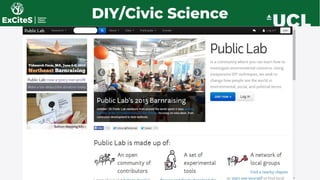
More information at http://publiclaboratory.org
DIY/Civic Science
• In the shared document, let’s see what experience
we share: Have you ever participated in a citizen
science activity? These might have involved
making ecological observations, weather
observations, volunteer computing (SETI@Home).
Write all those that you’ve experienced or please
tell us if you have no experience.
Task 2
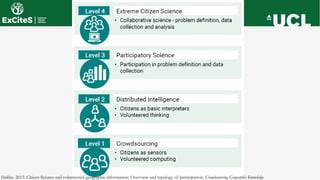
Haklay. 2013. Citizen Science and volunteered geographic information: Overview and typology of participation, Crowdsourcing Geographic Knowledge
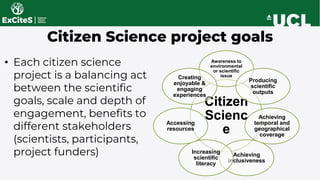
Citizen
Scienc
e
Awareness to
environmental
or scientific
issue
Producing
scientific
outputs
Achieving
temporal and
geographical
coverage
Achieving
inclusiveness
Increasing
scientific
literacy
Accessing
resources
Creating
enjoyable &
engaging
experiences
Citizen Science project goals
• Each citizen science
project is a balancing act
between the scientific
goals, scale and depth of
engagement, benefits to
different stakeholders
(scientists, participants,
project funders)
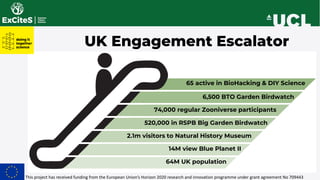
64M UK population
14M view Blue Planet II
520,000 in RSPB Big Garden Birdwatch
6,500 BTO Garden Birdwatch
65 active in BioHacking & DIY Science
74,000 regular Zooniverse participants
UK Engagement Escalator
This project has received funding from the European Union’s Horizon 2020 research and innovation programme under grant agreement No 709443
2.1m visitors to Natural History Museum
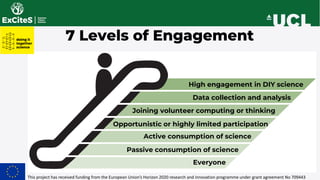
Everyone
Passive consumption of science
Opportunistic or highly limited participation
Data collection and analysis
High engagement in DIY science
Joining volunteer computing or thinking
7 Levels of Engagement
Active consumption of science
This project has received funding from the European Union’s Horizon 2020 research and innovation programme under grant agreement No 709443
Summary
• Citizen science has historical precedents, but new
types of activities and participants. This is the result
of societal and technical trends.
• Citizen science includes a wide range of activities,
and if gaining recognition among the public and
within the area of research
• Not everyone want deep engagement, but there
are methodology for a fully participatory process

citizen science - a brief introduction

  • 1.
    Citizen Science – abrief introduction Muki Haklay, Extreme Citizen Science group Department of Geography, UCL Twitter: @mhaklay / @ucl_excites
  • 2.
    • Background tocitizen science • Overview of citizen science activities today across aspects – Modes of participation; Relationships between scientists and the public; Disciplines; and Cultures • Aspects of citizen science – data quality, engaging participants. Synopsis
  • 3.
    • In thepast decade, the awareness to citizen science has grown rapidly Citizen Science today
  • 4.
    • Levels ofeducation (esp. rise in higher education) • Technological developments (Web, mobile phones, broadband) Underlying trends >200 million R Nial Bradshaw
  • 5.
    Haklay, Mazumdar &Wardlaw, 2018, Citizen Science for Observing and Understanding the Earth, Earth Observation, Open Science, and Innovation Citizen Science Long running Citizen Science Ecology & biodiversity Meteorology Archaeology Citizen Cyberscience Volunteer computing Volunteer thinking Passive Sensing Community Science Participatory sensing DIY Science Civic Science
  • 6.
    Citizen Science Long running CitizenScience Ecology & biodiversity Meteorology Archaeology Citizen Cyberscience Volunteer computing Volunteer thinking Passive Sensing Community Science Participatory sensing DIY Science Civic Science
  • 7.
    Biodiversity • Innovations inwhat and where information can be capture: Sauvages de ma rue helps identify the distribution of wild plants in dense urban areas.
  • 8.
    • Community Collaborative Rain,Hail & Snow Network Rebecca Jacobson
  • 9.
    © Audubon Cal. JenniferJewett / USFWS © WMO–No. 919 Meteorology • Volunteers continued to contribute observations • Met Office WOW approaching 15 million • Volunteers also use automatic weather stations
  • 10.
    Citizen Science Long running CitizenScience Ecology & biodiversity Meteorology Archaeology Citizen Cyberscience Volunteer computing Volunteer thinking Passive Sensing Community Science Participatory sensing DIY Science Civic Science
  • 11.
  • 12.
  • 13.
    • In passivesensing, participants download a software, and sometimes connect a sensor, to allow for a wide network of observation. • Quake-Catcher provide detailed seismographic observations Passive Sensing
  • 14.
  • 15.
    Citizen Science Long running CitizenScience Ecology & biodiversity Meteorology Archaeology Citizen Cyberscience Volunteer computing Volunteer thinking Passive Sensing Community Science Participatory sensing DIY Science Civic Science
  • 16.
  • 17.
  • 18.
  • 19.
    More information athttp://publiclaboratory.org DIY/Civic Science
  • 20.
    • In theshared document, let’s see what experience we share: Have you ever participated in a citizen science activity? These might have involved making ecological observations, weather observations, volunteer computing (SETI@Home). Write all those that you’ve experienced or please tell us if you have no experience. Task 2
  • 21.
    Haklay. 2013. CitizenScience and volunteered geographic information: Overview and typology of participation, Crowdsourcing Geographic Knowledge
  • 22.
    Citizen Scienc e Awareness to environmental or scientific issue Producing scientific outputs Achieving temporaland geographical coverage Achieving inclusiveness Increasing scientific literacy Accessing resources Creating enjoyable & engaging experiences Citizen Science project goals • Each citizen science project is a balancing act between the scientific goals, scale and depth of engagement, benefits to different stakeholders (scientists, participants, project funders)
  • 23.
    64M UK population 14Mview Blue Planet II 520,000 in RSPB Big Garden Birdwatch 6,500 BTO Garden Birdwatch 65 active in BioHacking & DIY Science 74,000 regular Zooniverse participants UK Engagement Escalator This project has received funding from the European Union’s Horizon 2020 research and innovation programme under grant agreement No 709443 2.1m visitors to Natural History Museum
  • 24.
    Everyone Passive consumption ofscience Opportunistic or highly limited participation Data collection and analysis High engagement in DIY science Joining volunteer computing or thinking 7 Levels of Engagement Active consumption of science This project has received funding from the European Union’s Horizon 2020 research and innovation programme under grant agreement No 709443
  • 25.
    Summary • Citizen sciencehas historical precedents, but new types of activities and participants. This is the result of societal and technical trends. • Citizen science includes a wide range of activities, and if gaining recognition among the public and within the area of research • Not everyone want deep engagement, but there are methodology for a fully participatory process