


Mexican History Through Art
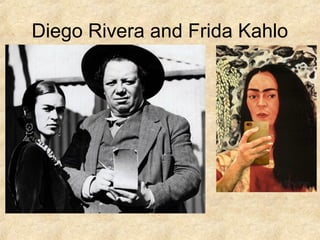
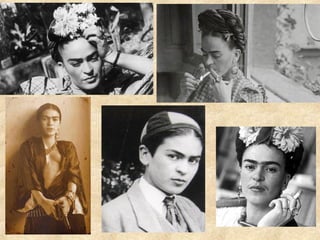
Diego Rivera and Frida Kahlo
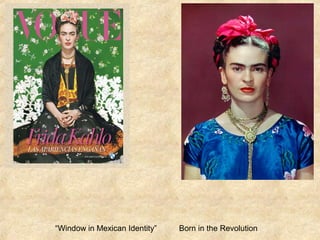
“Window in Mexican Identity” Born in the Revolution
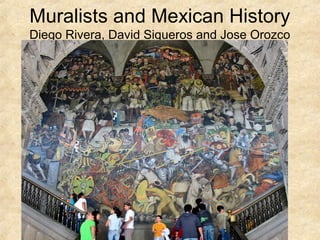
Muralists and Mexican History
Diego Rivera, David Siqueros and Jose Orozco
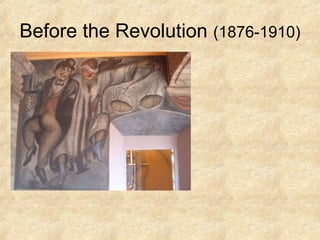
Before the Revolution (1876-1910)
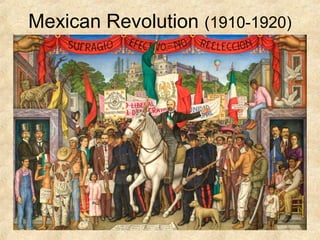
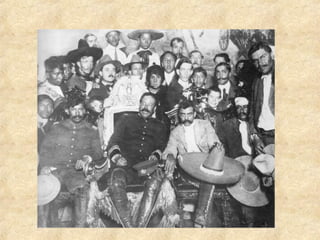
Mexican Revolution (1910-1920)
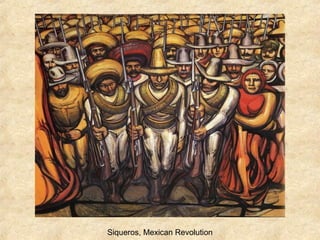
Siqueros, Mexican Revolution
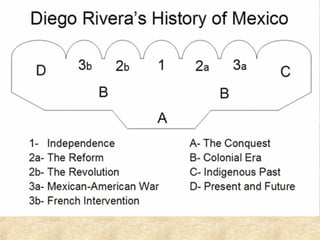
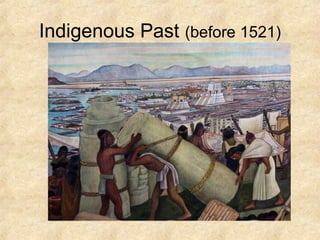
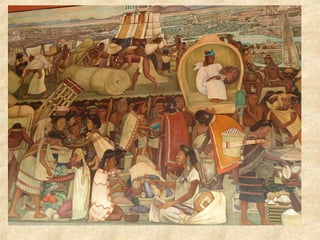
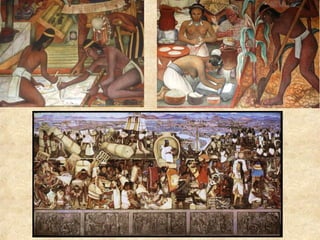
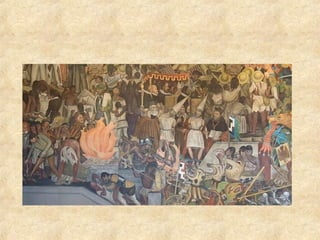
Indigenous Past (before 1521)
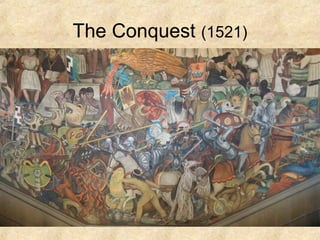
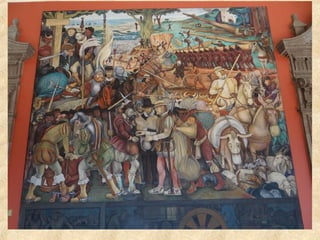
The Conquest (1521)
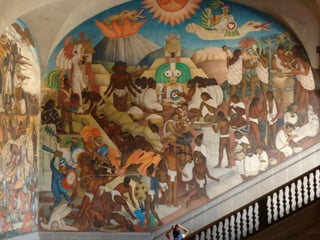
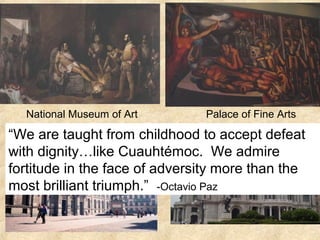
National Museum of Art Palace of Fine Arts
“We are taught from childhood to accept defeat
with dignity…like Cuauhtémoc. We admire
fortitude in the face of adversity more than the
most brilliant triumph.” -Octavio Paz
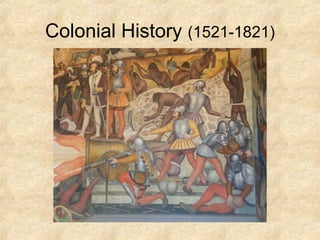
Colonial History (1521-1821)
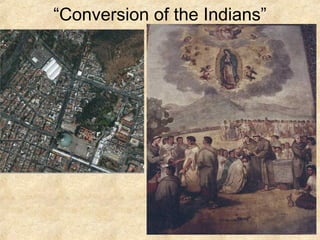
“Conversion of the Indians”
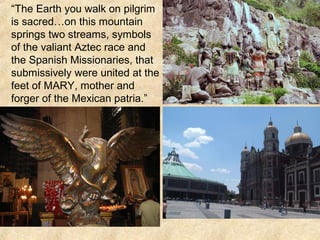
“The Earth you walk on pilgrim
is sacred…on this mountain
springs two streams, symbols
of the valiant Aztec race and
the Spanish Missionaries, that
submissively were united at the
feet of MARY, mother and
forger of the Mexican patria.”
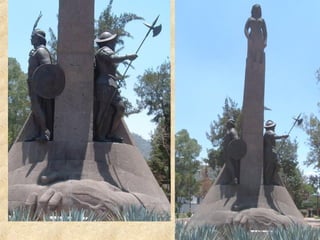
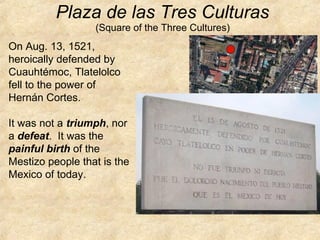
On Aug. 13, 1521,
heroically defended by
Cuauhtémoc, Tlatelolco
fell to the power of
Hernán Cortes.
It was not a triumph, nor
a defeat. It was the
painful birth of the
Mestizo people that is the
Mexico of today.
Plaza de las Tres Culturas
(Square of the Three Cultures)
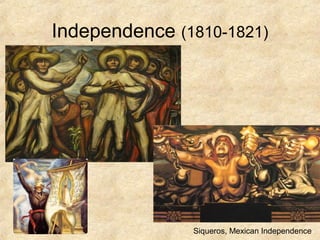
Independence (1810-1821)
Siqueros, Mexican Independence
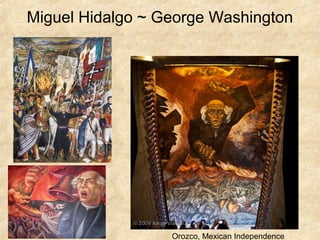
Miguel Hidalgo ~ George Washington
Orozco, Mexican Independence
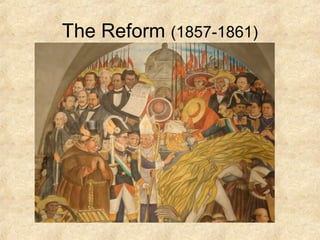
The Reform (1857-1861)
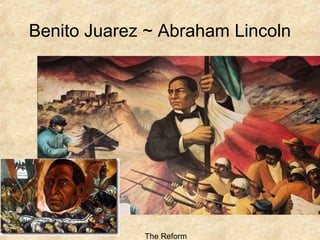
Benito Juarez ~ Abraham Lincoln
The Reform
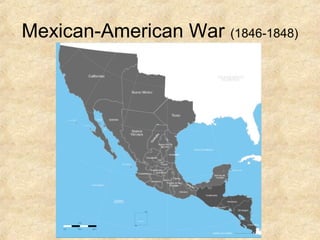
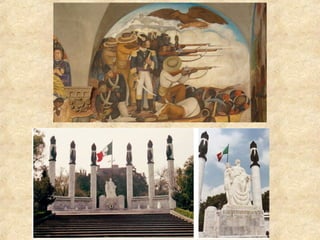
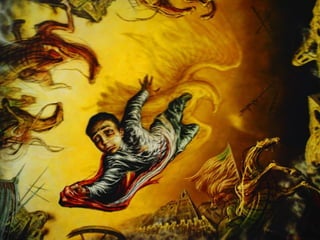
Mexican-American War (1846-1848)
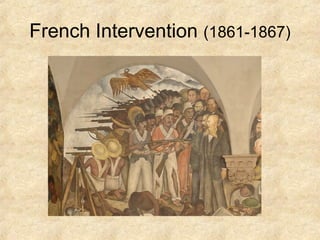
French Intervention (1861-1867)
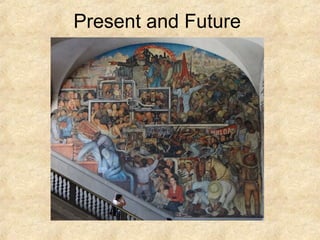
Present and Future

Mexican History through Art

Editor's Notes

  • #2 The spatial concentration of memory and identity within the right type of urban spaces shows the class element embedded within cultural constructs.
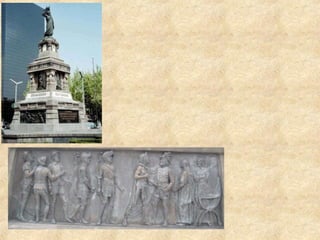
  • #19 Figure 4-2: The Cuauhtémoc Statue on Paseo de la Reforma.
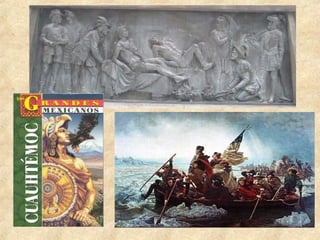
  • #20 Cuauhtemoc means “The Eagle that Falls.” CIVIC VIRTUE AND ETHNIC MESSAGE: SPANIARDS WERE EVIL AND CRUEL, NATIVES ARE COURAGEOUS AND HEROIC. Strength of the Indigenous warrior, and the cruelty of the Spaniards. This scene of torture is iconic, like Washington crossing the Delaware. General George Washington crossing the Delaware at the Battle of Trenton on Christmas night 1776 by Emmanuel Leutze This is shown as his death scene. Forget the fact that he served under the Spaniards as a local ruler until his death in 1525.
  • #21 Again, we see the ‘anchor institutions of memory and identity’ within the capital city reaffirm civic values, national identity and strengthen ethnic pride. Culture doesn’t just form itself superorganically; culture is produced. By whom? For what purpose? Who are the cultural gatekeepers?
  • #25 The historical act of the Conquest is literally purified in this symbolic framing of the events.
  • #26 Symbols of Religion and the Nation are deeply intermingled. We also see a very different gendered message of “the Birth of the Nation.”
  • #27 The mixture rises above the component parts, just as the dominant national narrative does. The Indios Verdes were ‘nomadic Indians’ until the found a place that situated it’s cultural meaning in a way that would resonate with Modern interpretations so Mexican culture. Ironically this was the EXACT same cultural message, but it was an idea that was literally ahead of it’s time and not in the right place. Cultural landscapes reflect the society that created them, but they are also carefully constructed to SHAPE cultural identity.
  • #28 The italized sections allude to the three dominant discourses of Mexican history. The Landscape affirms the dominant national narrative. We must remember though, “what is accepted as historical truth is often a narrative shaped and reshaped through time to fit the demands of contemporary society” (KF). What you need for your notes: THE DOMINANT NATIONAL NARRATIVE IS VISIBLE IS INSCRIBED IN THE LANDSCAPE (LITERALLY). This cultural message is a gendered message, as the ‘conception’ of literally protrayed as a rape, and Mexico the offspring of that horrific union.
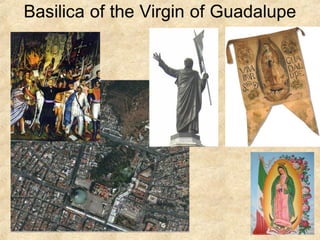
  • #33 Miguel Hidalgo, Mexico’s George Washington, led a rebellion under the banner of the Virgin Mary. Political, economic, ethnic and religious identity deeply connected to the Virgin. WHAT COULD SANCTIFY the cultural memory of the monument?
  • #36 Figure 5-25: The Monument to Benito Juárez in the Alameda, Mexico City.
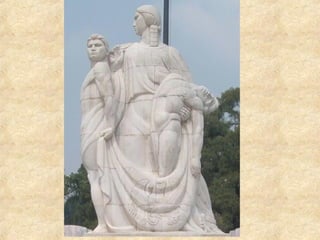
  • #39 Figure 6-11: Central sculpture group in the Monument to the Niños Héroes.