Methotrexate
Objectives:
 Overview of the drug
 Pharmacology
 Indications in dermatology
 Dosage
 Adverse effects
 Contraindications
 Monitoring
Introduction:
 Synthetic DMARD that interferes with:
 Cell growth
 Slows production of new cells
 Reduces inflammation
 Used as:
 Chemotherapeutic
 Immunosuppressive
 Anti-inflammatory
Introduction:
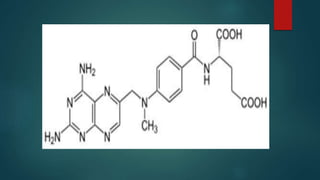
 Toxic Folic acid analogue
 Formula: C20H22N8O5
Common Brand Names:
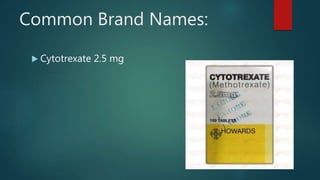
 Cytotrexate 2.5 mg
History:
 Formarly known as Amethopterin
 Used in 1958 by Edmundson & Guy in treatment
of Psoriasis
 Berlin suggest intermittent dosage schedule in
1963
 Weinstein and Frost introducd weekly dosage
schedule in 1971
Administration,Absorption
and distribution:
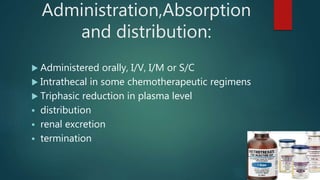
 Administered orally, I/V, I/M or S/C
 Intrathecal in some chemotherapeutic regimens
 Triphasic reduction in plasma level
 distribution
 renal excretion
 termination
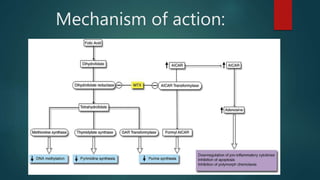
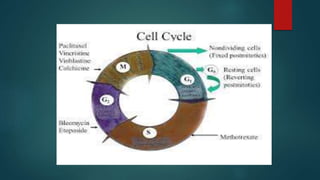
Mechanism of action:
 DNA synthesis effects:
 Inhibit Dihydrofolate reductase which converts
dihydrofolate to tetrahydrofolate
 Tetrahydrofolate is essential for DNA synthesis
 DNA Replication effects:
 Inhibit thymidylate synthase
 Decrease dTMP sythesis
Continued:
 Anti-inflammatory effects:
 Inhibits AICART enzyme and increase adenosine
concentration
 Inhibits MTHFR and decrease methionine
concentration
 T-cell effects:
 Inhibit T cells activation
 Suppression of intracellular adhesion molecules
Mechanism of action:
Pharmacokinetics
 Bioavailability : 60%
 Protein Binding : 35-50%
 Carrier protein: RFC1
 Metabolism: Hepatic and intracellular
 Half Life : 6-8 Hrs
 Excretion : Urine (8-100%),bile (small amount)
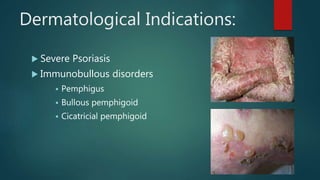
Dermatological Indications:
 Severe Psoriasis
 Immunobullous disorders
 Pemphigus
 Bullous pemphigoid
 Cicatricial pemphigoid
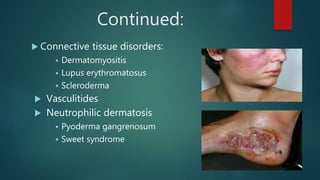
Continued:
 Connective tissue disorders:
 Dermatomyositis
 Lupus erythromatosus
 Scleroderma
 Vasculitides
 Neutrophilic dermatosis
 Pyoderma gangrenosum
 Sweet syndrome
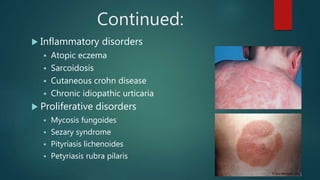
Continued:
 Inflammatory disorders
 Atopic eczema
 Sarcoidosis
 Cutaneous crohn disease
 Chronic idiopathic urticaria
 Proliferative disorders
 Mycosis fungoides
 Sezary syndrome
 Pityriasis lichenoides
 Petyriasis rubra pilaris
Contraindications:
Absolute:
 Pregnancy
 Lactation
 Hypersensitivity
Relative:
 Diabetes Mellitus
 Obesity
 Blood dyscrasias
 Alcohol intake
 Hepatic and renal impairment
 Immunodefeciency and latent infection
Dosage and preparations:
 0.2-0.4 mg/kg
 Varies from 2.5 to 25mg
 Should not exceed 25mg weekly
 Oral:
 2.5 mg
 10 mg
 Injectable: ( I.M, I.V, S.C)
 5 mg
 50 mg
 500mg
 Accumulation dose: 1.5 gm
Adverse effects:
 Systemic:
 Myelotoxicity
 Hepatotoxicity
 GI toxicity
 Nephrotoxicity
 Reproductive toxicity
 Pulmonery toxicity
 Malignancy
Continued:
 Cutaneous:
 Aphthous stomatitis
 Alopecia
 Hyperpigmentation
 Phototoxicity
 Toxic epidermal necrolysis
 Ulceration in psoriatic plaques
 Acral erythema
 Vasculitis
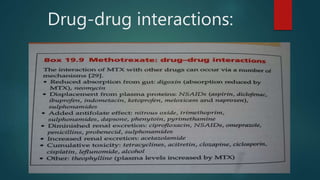
Drug-drug interactions:
Folate supplementation
Folic acid:
 Competes with MTX for DHFR
 Reduce bone marrow,GI tract and liver adverse effects
 5 mg once weekly on day following MTX
Folinic acid:
 Also known as leucovorin
 Used in MTX toxicity
 Bypass step catalyzed by DHFR and competes with MTX for
RFC1 intracellular transportation
 Rescue bone marrow and GI cells
 5 mg three doses at 12 hrs interval after 24 hrs of MTX weekly
dose if folic acid is not improving GI symptoms,liver
abnormalities or macrocytosis
Pretreatment screening:
Patient information leaflet
Risk counselling
 Infection
 Bone marrow suppression
 Skin malignancy
Contraception
Sun protection measures
Blood tests
 CBC
 U/E
 LFTs
 Hep B/C Serology
Continued:
 Vaccinations
 Pneumococcal
 Influenza
 Hep B
 Vericella zoster virus
 Pregnancy test
 CXR
Monitoring:
 Close monitoring in elderly and renal patients
 Blood tests: CBC,LFTs and creatinine
 Weekly for 1 month
 2 weekly for 2 months
 Monthly for 3 months
 3 months afterwards
 Symptoms of bone marrow supresssion
 Avoidence of drugs which interact with MTX
 Serum liver fibrosis markers
 Procollagen-III aminoterminal propeptide,hyaluronic
acid,tissue inhibitor of matrix metalloproteinase-1
Take home message:
 MTX is a human teratogen and abortificient-avoid
pregnancy
 Requires regular blood tests monitoring
 Used for a veriety of dermatological diseases
Methotrexate

Methotrexate

  • 1.
  • 2.
    Objectives:  Overview ofthe drug  Pharmacology  Indications in dermatology  Dosage  Adverse effects  Contraindications  Monitoring
  • 3.
    Introduction:  Synthetic DMARDthat interferes with:  Cell growth  Slows production of new cells  Reduces inflammation  Used as:  Chemotherapeutic  Immunosuppressive  Anti-inflammatory
  • 4.
    Introduction:  Toxic Folicacid analogue  Formula: C20H22N8O5
  • 6.
    Common Brand Names: Cytotrexate 2.5 mg
  • 7.
    History:  Formarly knownas Amethopterin  Used in 1958 by Edmundson & Guy in treatment of Psoriasis  Berlin suggest intermittent dosage schedule in 1963  Weinstein and Frost introducd weekly dosage schedule in 1971
  • 8.
    Administration,Absorption and distribution:  Administeredorally, I/V, I/M or S/C  Intrathecal in some chemotherapeutic regimens  Triphasic reduction in plasma level  distribution  renal excretion  termination
  • 9.
    Mechanism of action: DNA synthesis effects:  Inhibit Dihydrofolate reductase which converts dihydrofolate to tetrahydrofolate  Tetrahydrofolate is essential for DNA synthesis  DNA Replication effects:  Inhibit thymidylate synthase  Decrease dTMP sythesis
  • 10.
    Continued:  Anti-inflammatory effects: Inhibits AICART enzyme and increase adenosine concentration  Inhibits MTHFR and decrease methionine concentration  T-cell effects:  Inhibit T cells activation  Suppression of intracellular adhesion molecules
  • 11.
  • 13.
    Pharmacokinetics  Bioavailability :60%  Protein Binding : 35-50%  Carrier protein: RFC1  Metabolism: Hepatic and intracellular  Half Life : 6-8 Hrs  Excretion : Urine (8-100%),bile (small amount)
  • 14.
    Dermatological Indications:  SeverePsoriasis  Immunobullous disorders  Pemphigus  Bullous pemphigoid  Cicatricial pemphigoid
  • 15.
    Continued:  Connective tissuedisorders:  Dermatomyositis  Lupus erythromatosus  Scleroderma  Vasculitides  Neutrophilic dermatosis  Pyoderma gangrenosum  Sweet syndrome
  • 16.
    Continued:  Inflammatory disorders Atopic eczema  Sarcoidosis  Cutaneous crohn disease  Chronic idiopathic urticaria  Proliferative disorders  Mycosis fungoides  Sezary syndrome  Pityriasis lichenoides  Petyriasis rubra pilaris
  • 17.
    Contraindications: Absolute:  Pregnancy  Lactation Hypersensitivity Relative:  Diabetes Mellitus  Obesity  Blood dyscrasias  Alcohol intake  Hepatic and renal impairment  Immunodefeciency and latent infection
  • 18.
    Dosage and preparations: 0.2-0.4 mg/kg  Varies from 2.5 to 25mg  Should not exceed 25mg weekly  Oral:  2.5 mg  10 mg  Injectable: ( I.M, I.V, S.C)  5 mg  50 mg  500mg  Accumulation dose: 1.5 gm
  • 19.
    Adverse effects:  Systemic: Myelotoxicity  Hepatotoxicity  GI toxicity  Nephrotoxicity  Reproductive toxicity  Pulmonery toxicity  Malignancy
  • 20.
    Continued:  Cutaneous:  Aphthousstomatitis  Alopecia  Hyperpigmentation  Phototoxicity  Toxic epidermal necrolysis  Ulceration in psoriatic plaques  Acral erythema  Vasculitis
  • 21.
  • 22.
    Folate supplementation Folic acid: Competes with MTX for DHFR  Reduce bone marrow,GI tract and liver adverse effects  5 mg once weekly on day following MTX Folinic acid:  Also known as leucovorin  Used in MTX toxicity  Bypass step catalyzed by DHFR and competes with MTX for RFC1 intracellular transportation  Rescue bone marrow and GI cells  5 mg three doses at 12 hrs interval after 24 hrs of MTX weekly dose if folic acid is not improving GI symptoms,liver abnormalities or macrocytosis
  • 23.
    Pretreatment screening: Patient informationleaflet Risk counselling  Infection  Bone marrow suppression  Skin malignancy Contraception Sun protection measures Blood tests  CBC  U/E  LFTs  Hep B/C Serology
  • 24.
    Continued:  Vaccinations  Pneumococcal Influenza  Hep B  Vericella zoster virus  Pregnancy test  CXR
  • 25.
    Monitoring:  Close monitoringin elderly and renal patients  Blood tests: CBC,LFTs and creatinine  Weekly for 1 month  2 weekly for 2 months  Monthly for 3 months  3 months afterwards  Symptoms of bone marrow supresssion  Avoidence of drugs which interact with MTX  Serum liver fibrosis markers  Procollagen-III aminoterminal propeptide,hyaluronic acid,tissue inhibitor of matrix metalloproteinase-1
  • 26.
    Take home message: MTX is a human teratogen and abortificient-avoid pregnancy  Requires regular blood tests monitoring  Used for a veriety of dermatological diseases