Metadata quality
in learning repositories:
Issues & considerations
Nikos Palavitsinis, Nikos Manouselis,
Salvador-Sanchez Alonso
ED-MEDIA 2011, 27/7-1/7, Lisbon, Portugal
Key Concepts
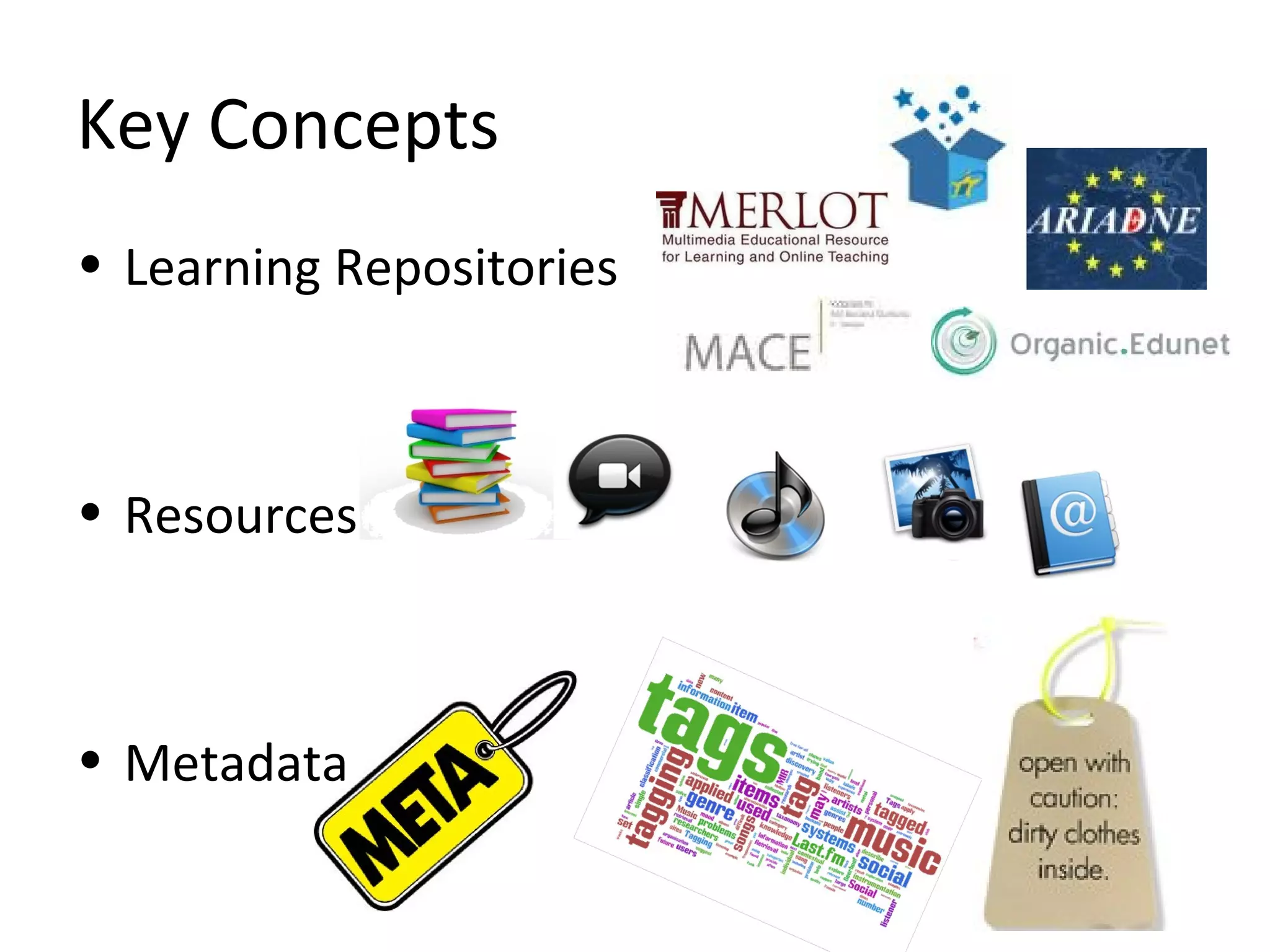
• Learning Repositories
• Resources
• Metadata
Quantity is NOT the problem!
• MERLOT, ARIADNE, LRE for schools, MACE, etc
• Millions of resources on various
topics/areas/fields
Image taken from: http://farm1.static.flickr.com/223/475156707_d56e38f251.jpg
Quality?
• Publishers of content are under pressure to
ensure that in the plethora of information that
is available in today’s web, resources are
highly discoverable and highly credible
Walker, 2010
Quality of metadata
Quality of content
Truth or…
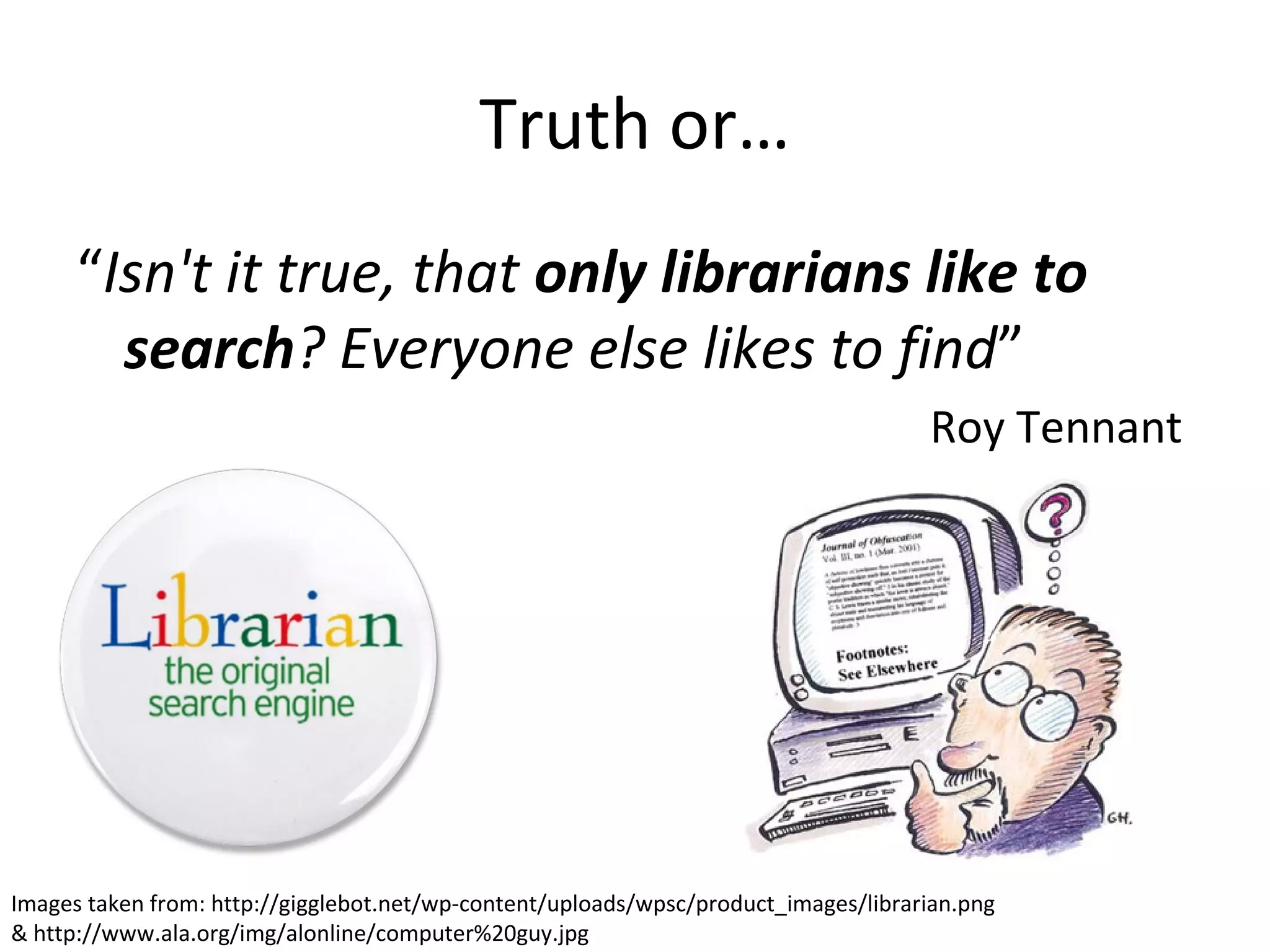
“Isn't it true, that only librarians like to
search? Everyone else likes to find”
Roy Tennant
Images taken from: http://gigglebot.net/wp-content/uploads/wpsc/product_images/librarian.png
& http://www.ala.org/img/alonline/computer%20guy.jpg
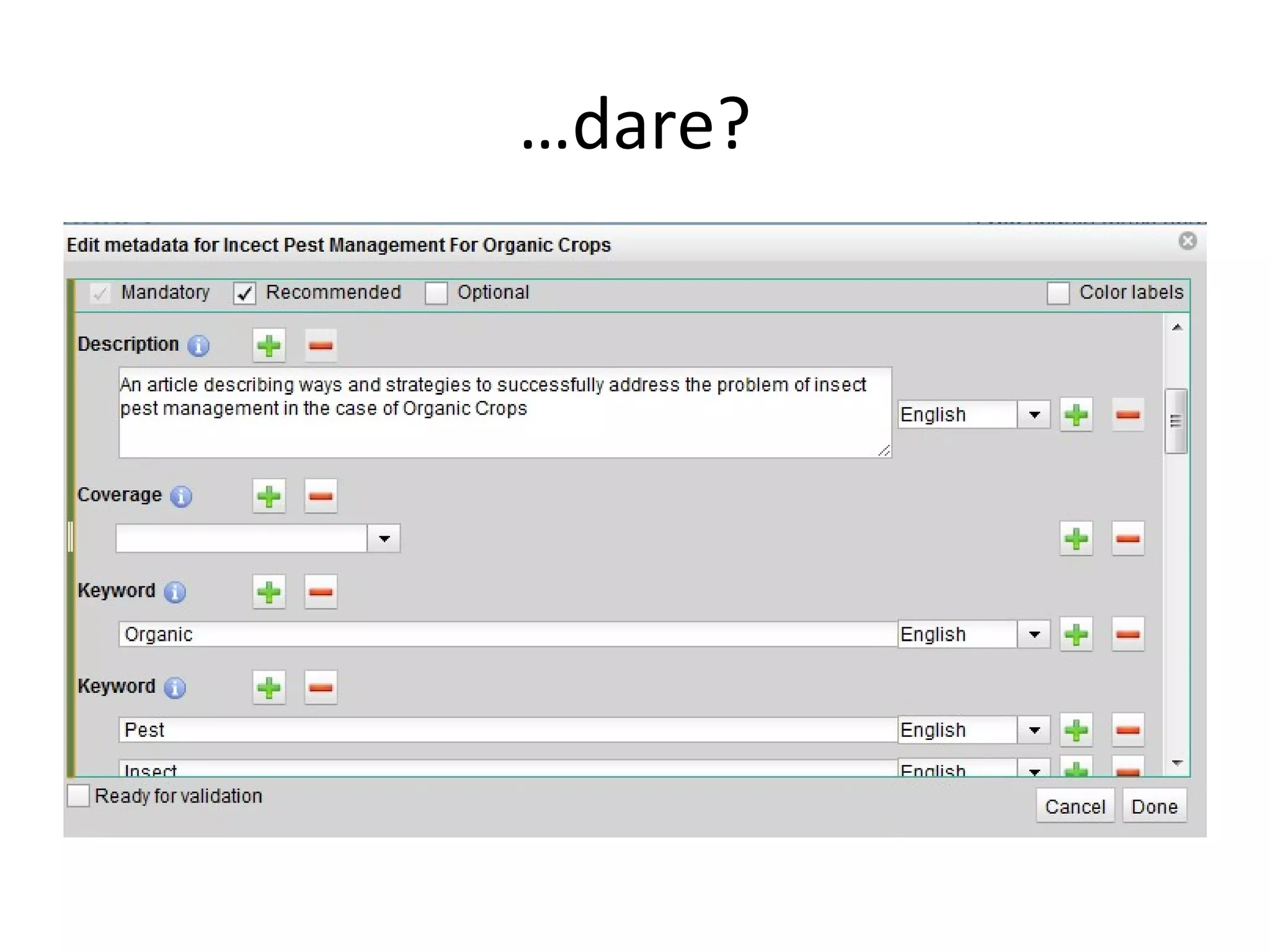
…dare?
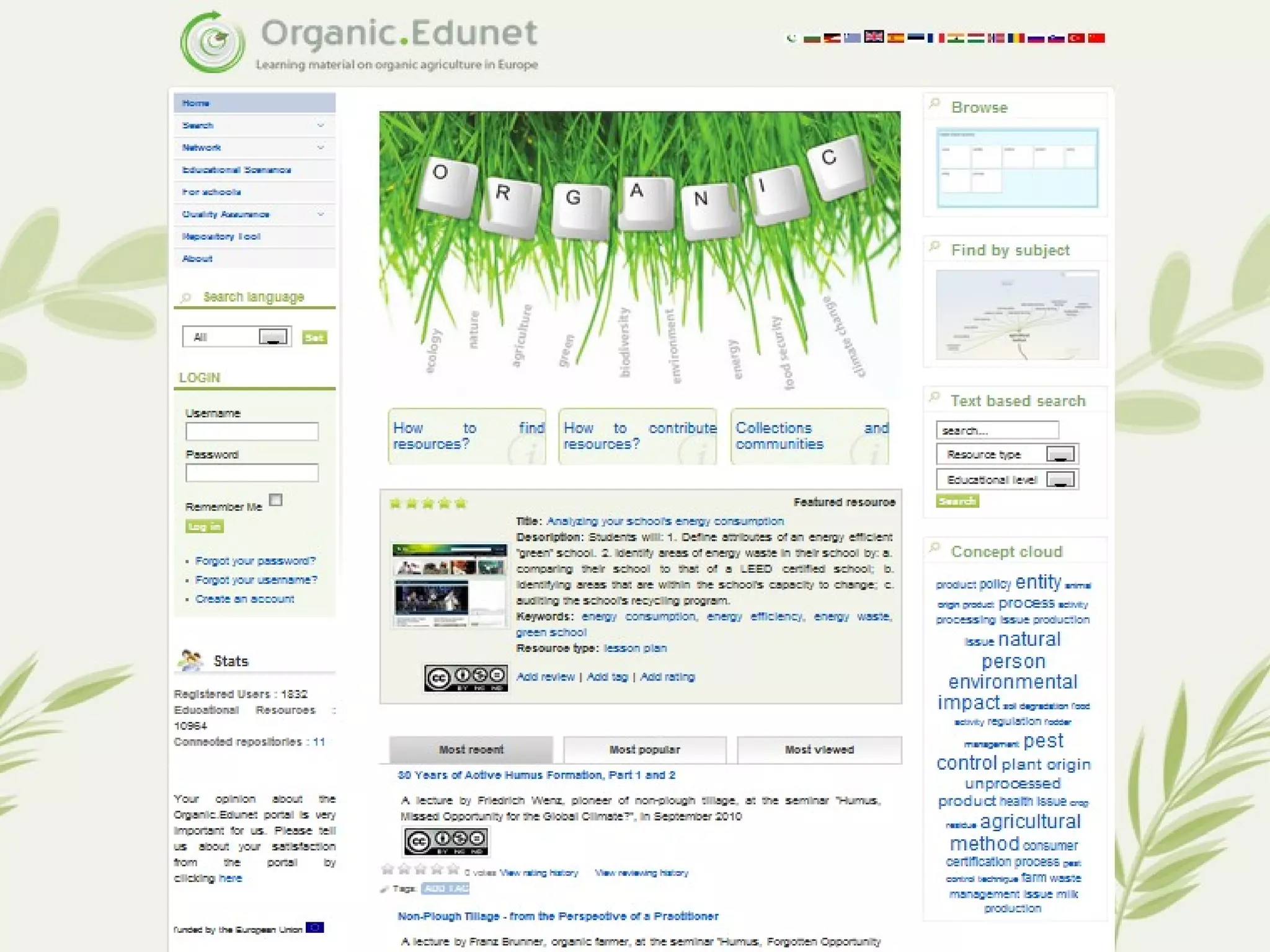
Context of the study
about Organic.Edunet
• Completed eContentPlus project (10/2007 –
10/2010) funded with 2.5M €
• Main objective: Make learning content on
Organic Agriculture and Agro-ecology
available online, for a range of stakeholders.
• And: Develop educational scenarios to be used
within schools & universities
Stats
• 1,5 year of operation
• 53.859 visits
• 208.963 page views
• 41.804 unique visitors
• 166 countries
• 2.041 registered users
• 10.967 resources
Multilingualism
• Multilingual interface (17 languages)
– Text-based search
– Browsing
– Tag-based search
– Semantic search
• Multilingual resources (10 languages)
– Images, videos, articles, scenarios, etc
• Multilingual metadata (17 languages)
– IEEE LOM Application Profile
How did we get there?
Started on June of 2008…
Process (1/2)
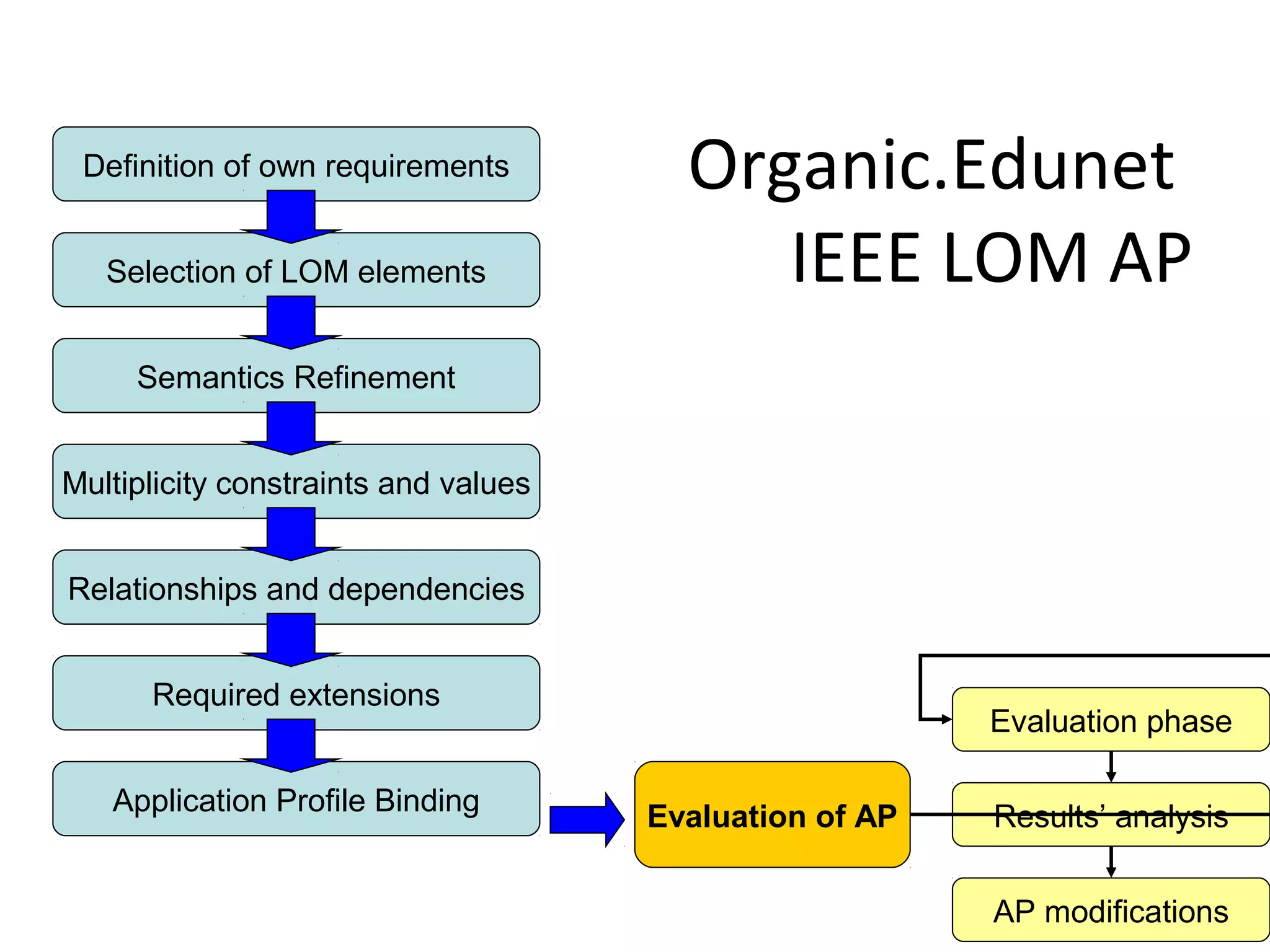
• Developed an Application Profile of IEEE LOM
to be used to describe resources on Organic
Agriculture & Agroecology
Organic.Edunet
IEEE LOM AP
Definition of own requirements
Selection of LOM elements
Semantics Refinement
Multiplicity constraints and values
Relationships and dependencies
Required extensions
Application Profile Binding
Evaluation of AP
Evaluation phase
Results’ analysis
AP modifications
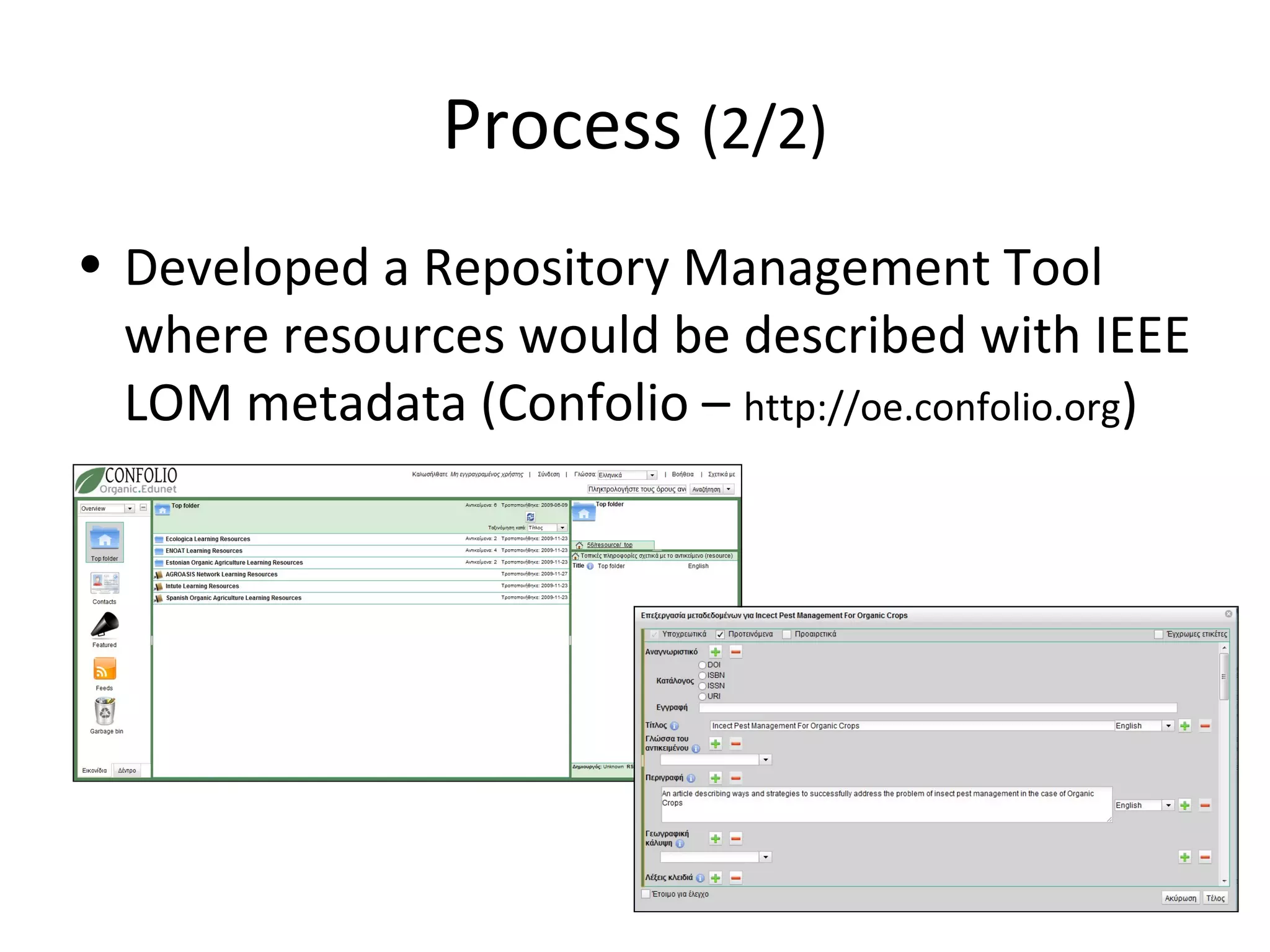
Process (2/2)
• Developed a Repository Management Tool
where resources would be described with IEEE
LOM metadata (Confolio – http://oe.confolio.org)
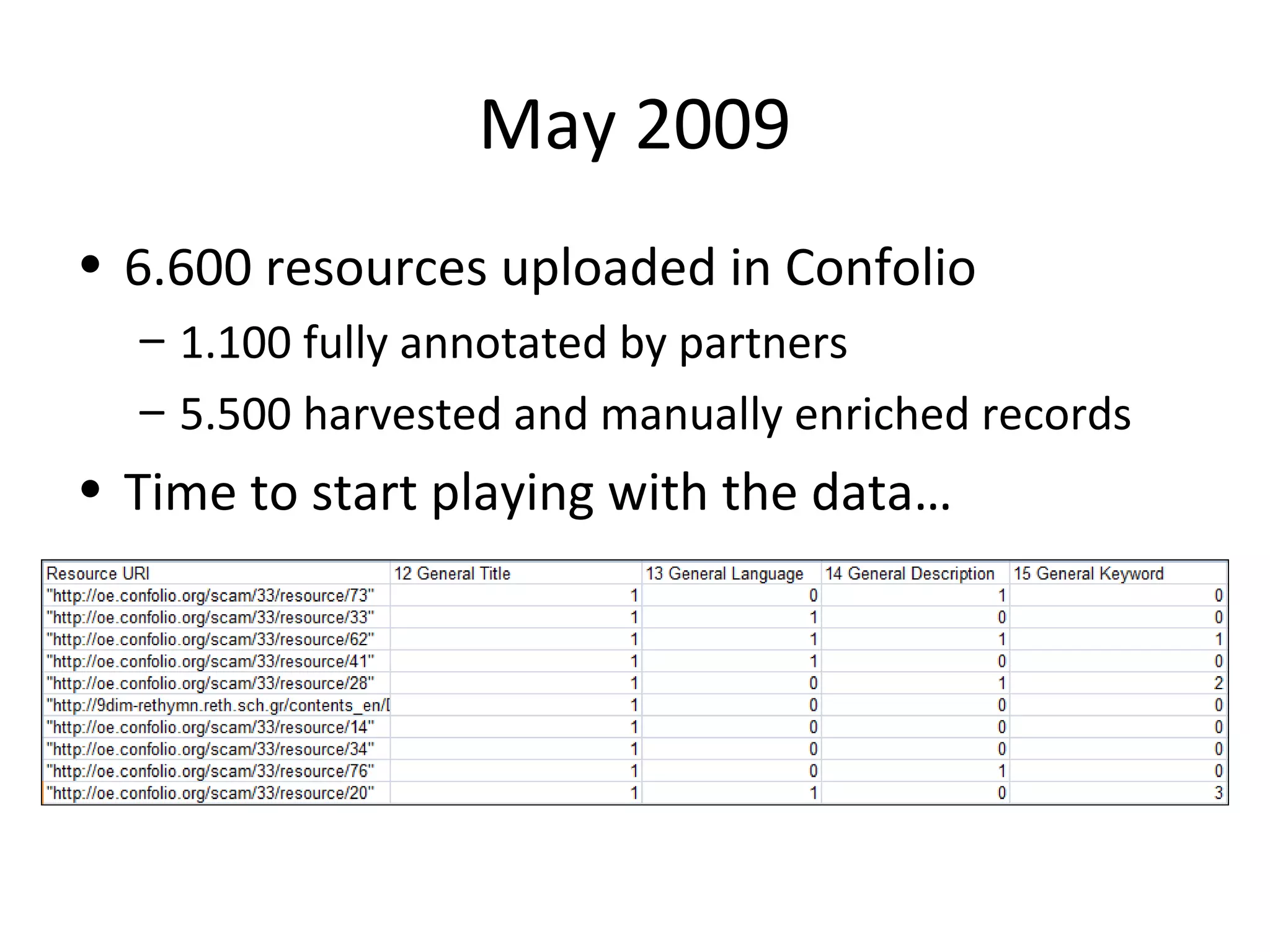
May 2009
• 6.600 resources uploaded in Confolio
– 1.100 fully annotated by partners
– 5.500 harvested and manually enriched records
• Time to start playing with the data…
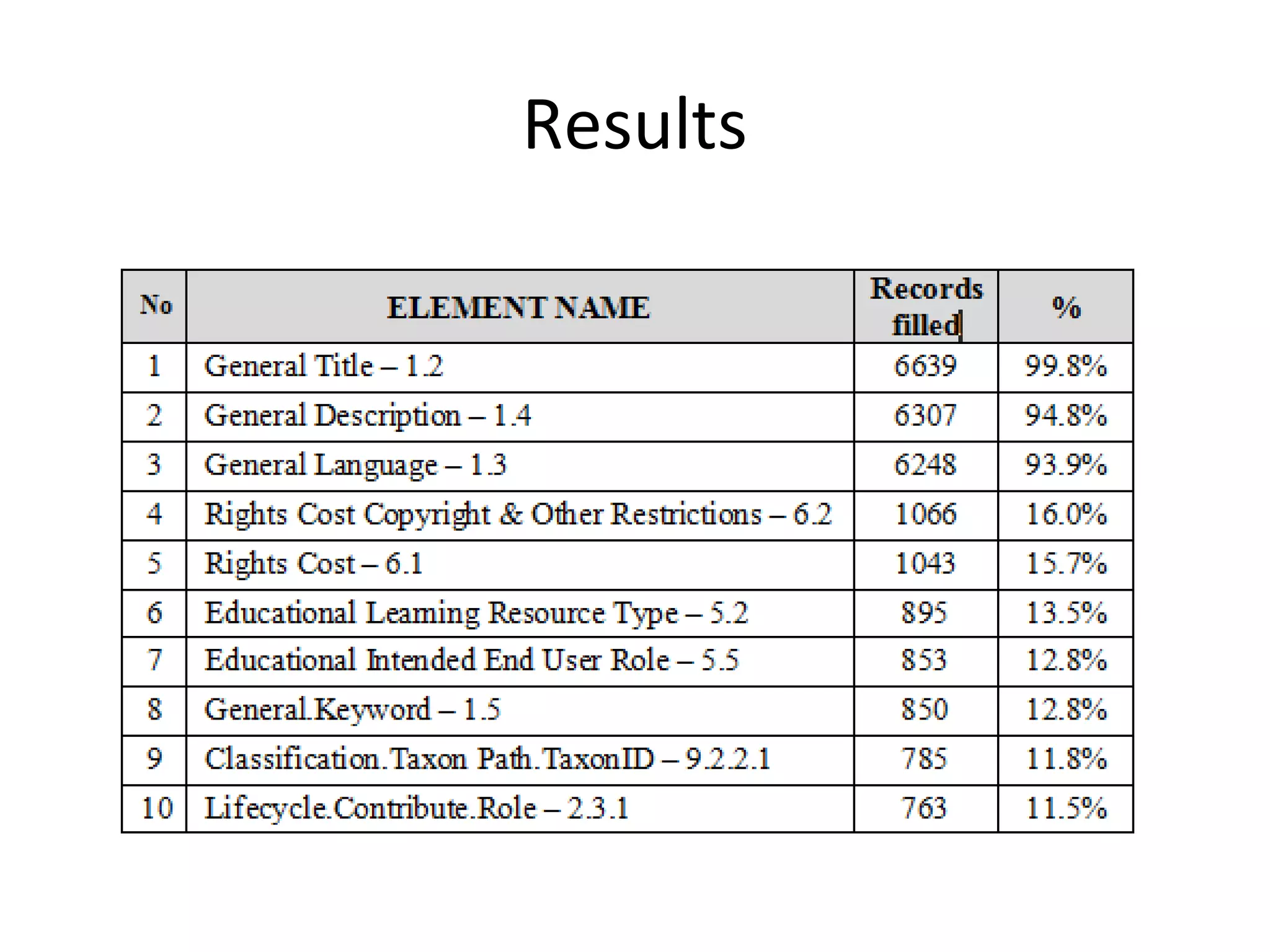
First Analysis
• Measured metadata completeness for all IEEE
LOM AP elements
• Usage of metadata elements was not as high
as desired, but was as low as anticipated!
Results
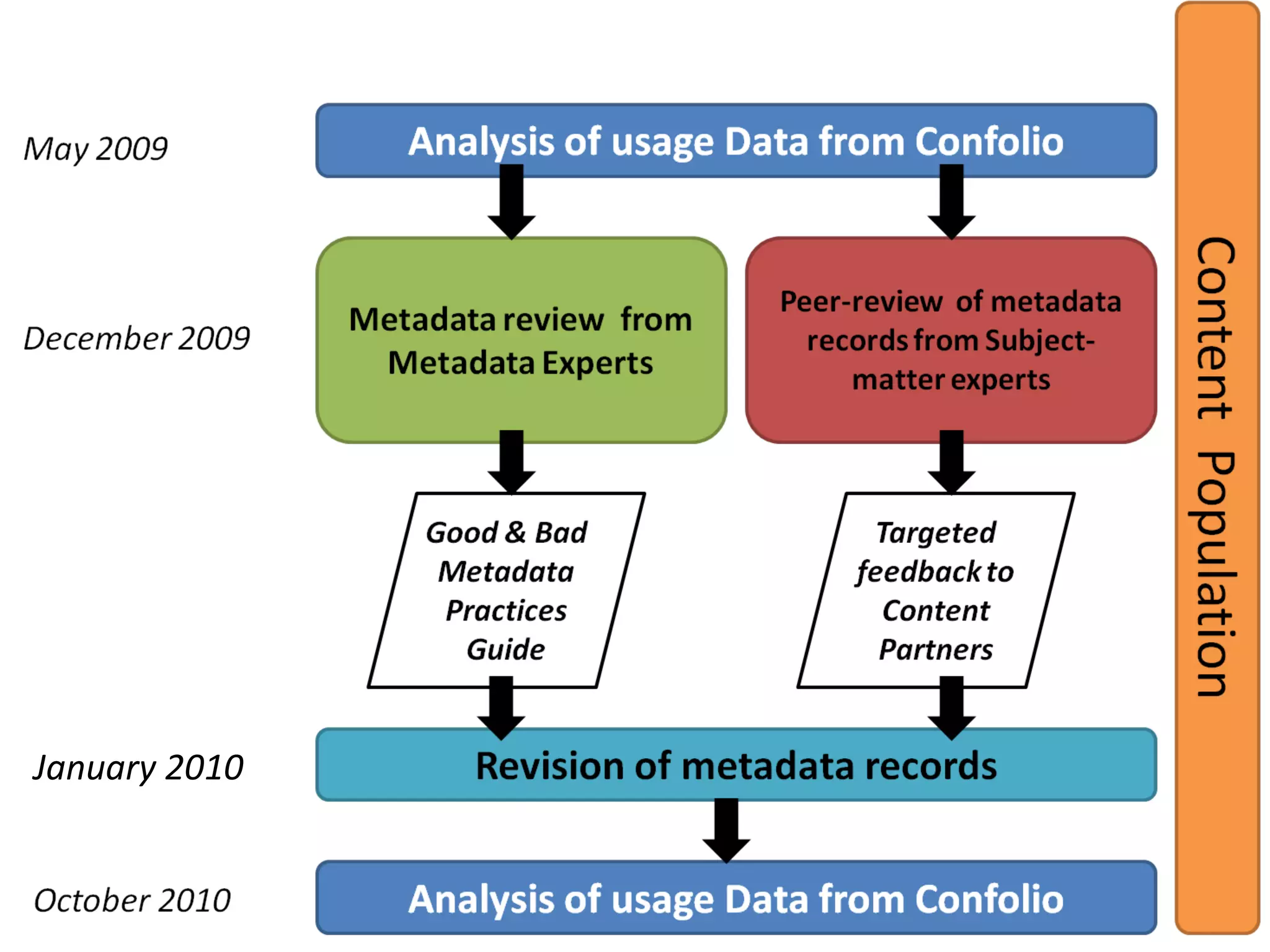
Improving Metadata Quality
Through a Metadata Quality
Assurance Mechanism
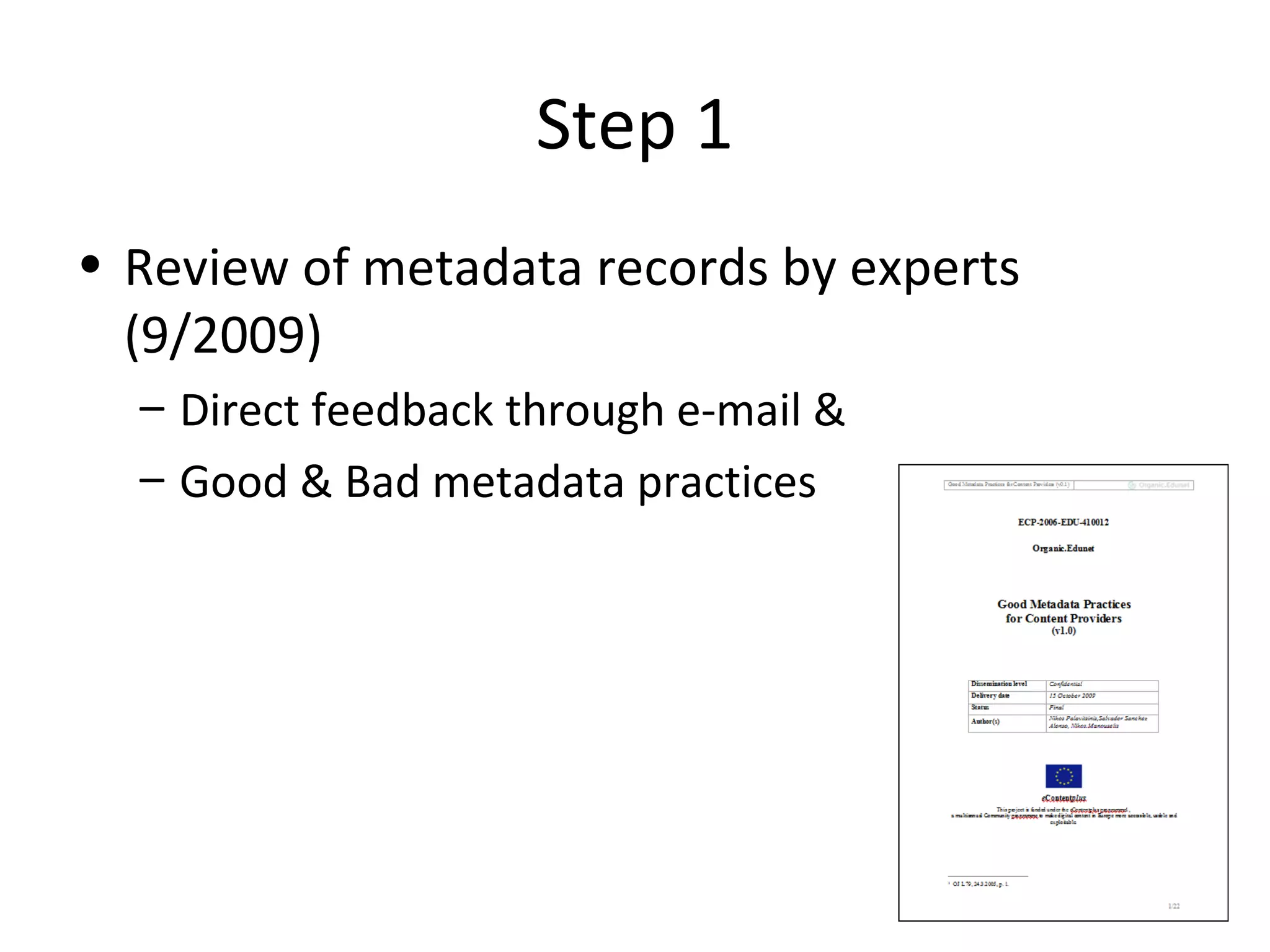
Step 1
• Review of metadata records by experts
(9/2009)
– Direct feedback through e-mail &
– Good & Bad metadata practices
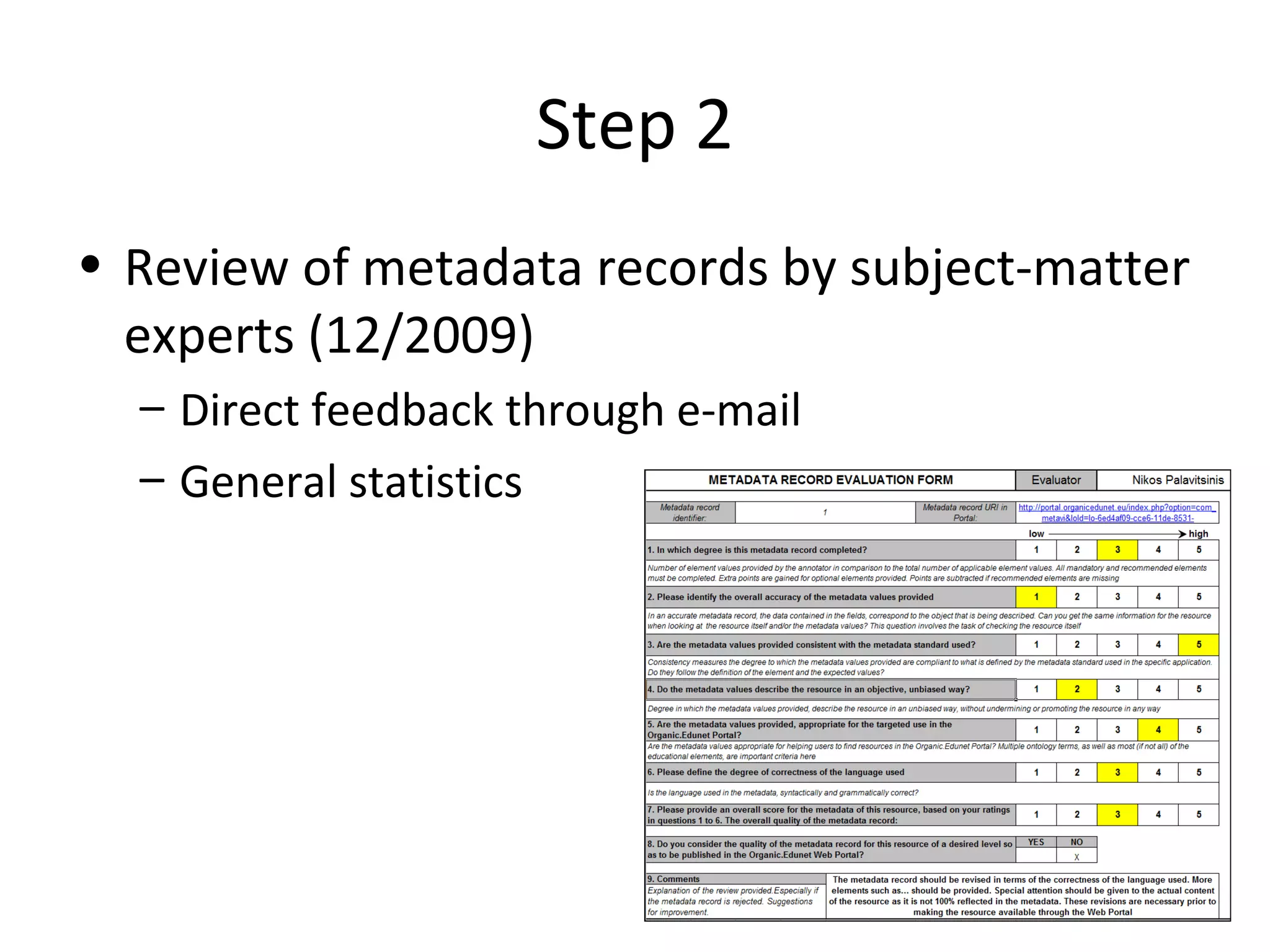
Step 2
• Review of metadata records by subject-matter
experts (12/2009)
– Direct feedback through e-mail
– General statistics
January 2010
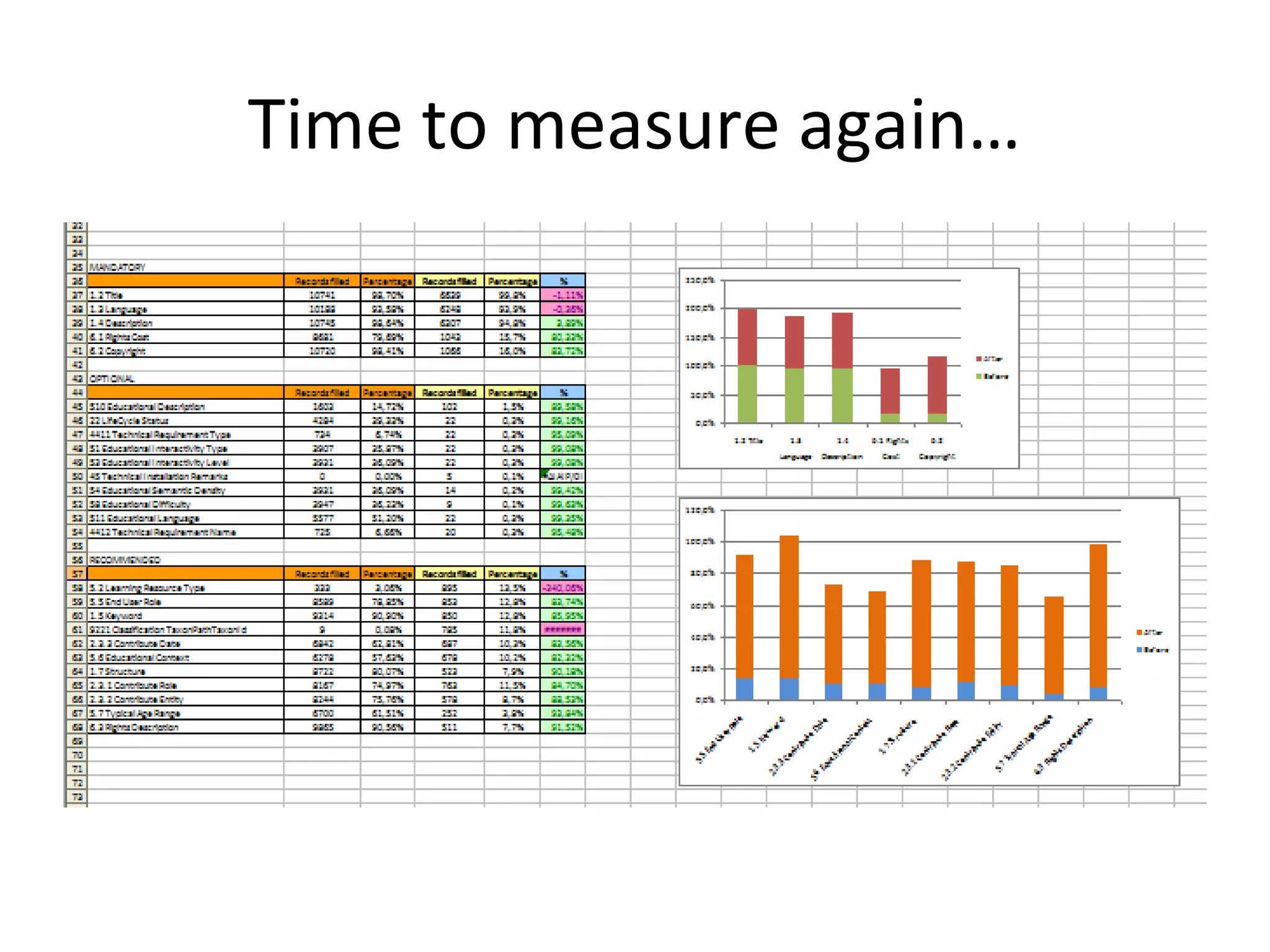
Time to measure again…
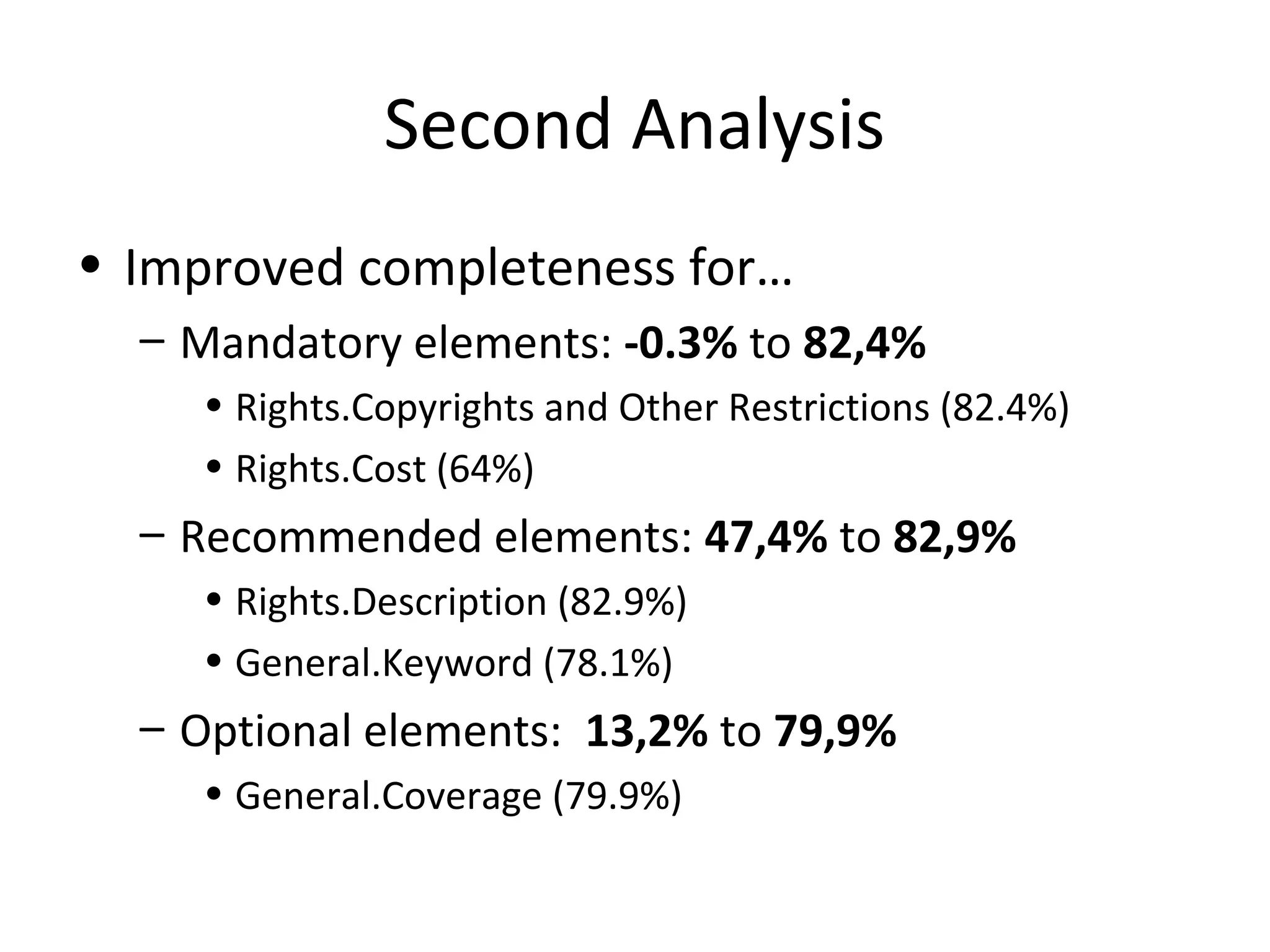
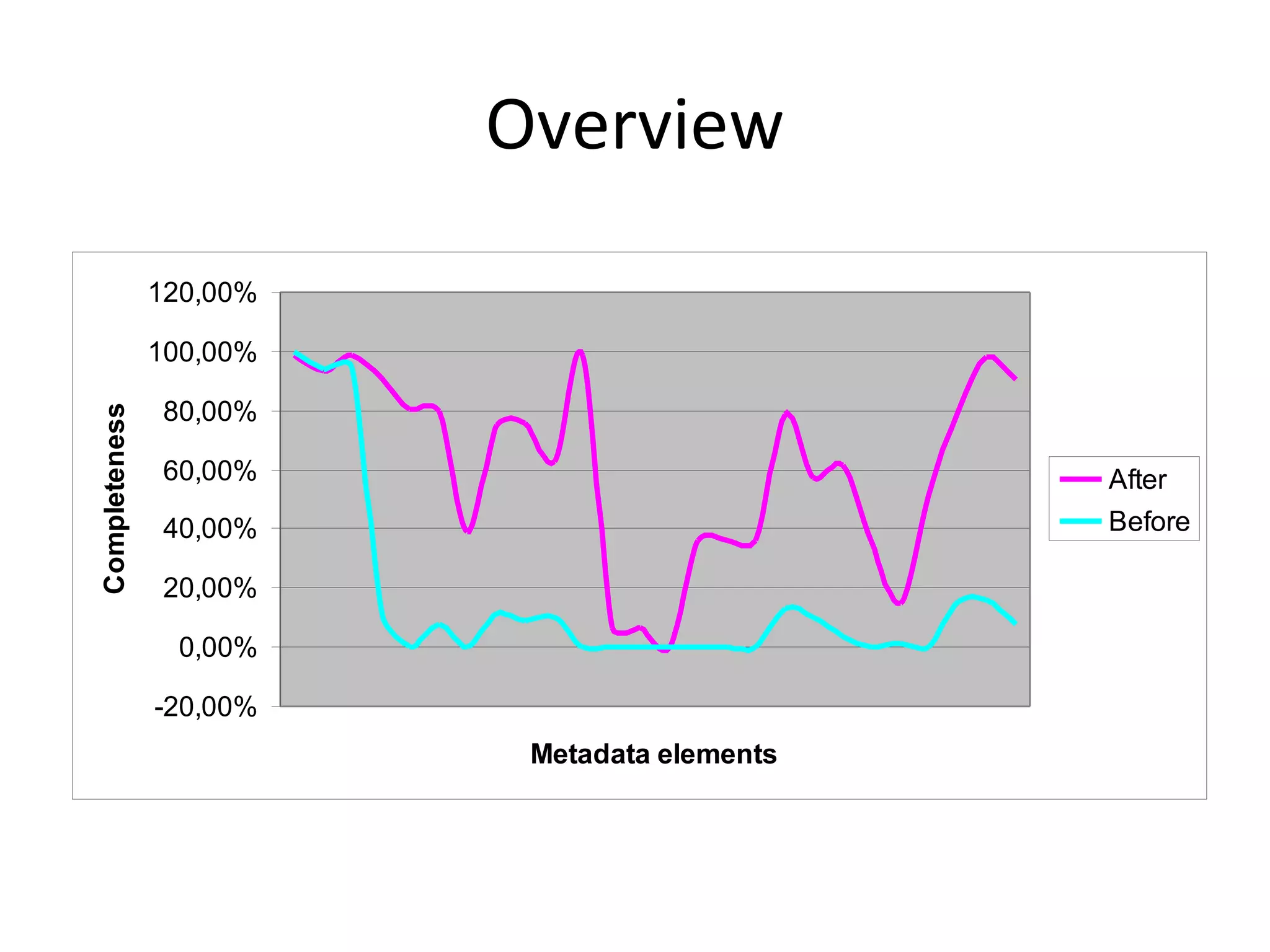
Second Analysis
• Improved completeness for…
– Mandatory elements: -0.3% to 82,4%
• Rights.Copyrights and Other Restrictions (82.4%)
• Rights.Cost (64%)
– Recommended elements: 47,4% to 82,9%
• Rights.Description (82.9%)
• General.Keyword (78.1%)
– Optional elements: 13,2% to 79,9%
• General.Coverage (79.9%)
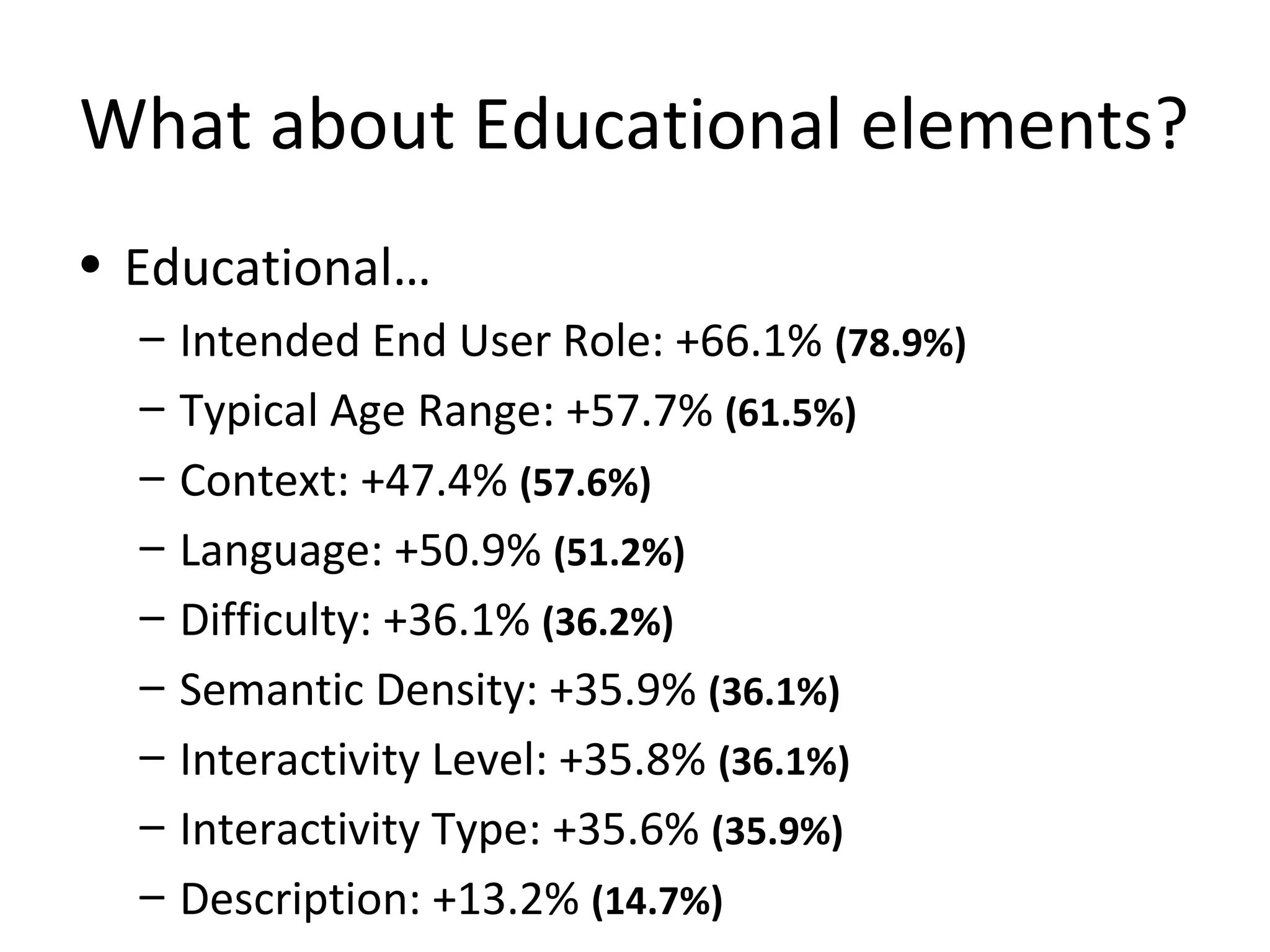
What about Educational elements?
• Educational…
– Intended End User Role: +66.1% (78.9%)
– Typical Age Range: +57.7% (61.5%)
– Context: +47.4% (57.6%)
– Language: +50.9% (51.2%)
– Difficulty: +36.1% (36.2%)
– Semantic Density: +35.9% (36.1%)
– Interactivity Level: +35.8% (36.1%)
– Interactivity Type: +35.6% (35.9%)
– Description: +13.2% (14.7%)
Overview
-20,00%
0,00%
20,00%
40,00%
60,00%
80,00%
100,00%
120,00%
Metadata elements
Completeness
After
Before
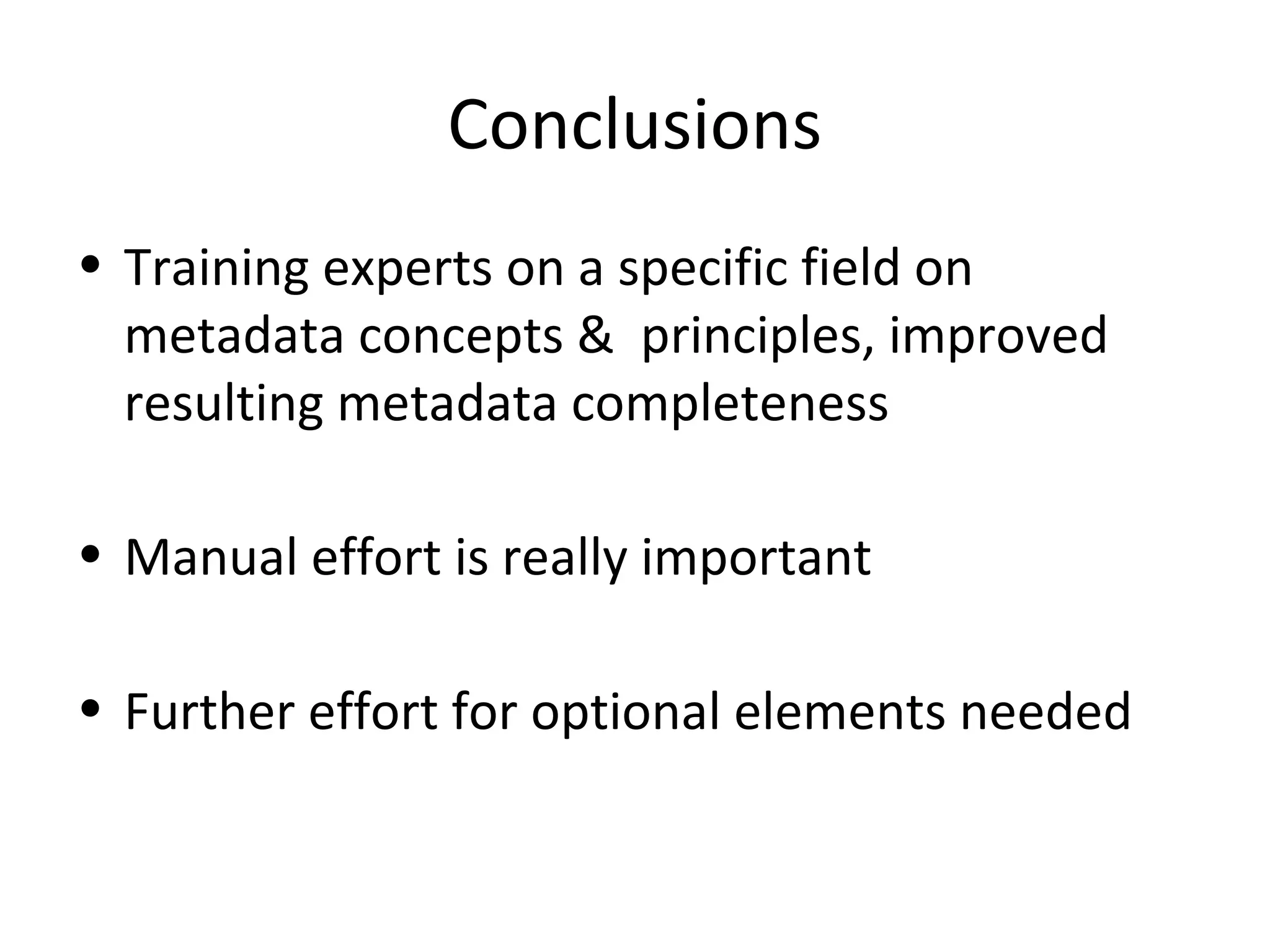
Conclusions
• Training experts on a specific field on
metadata concepts & principles, improved
resulting metadata completeness
• Manual effort is really important
• Further effort for optional elements needed
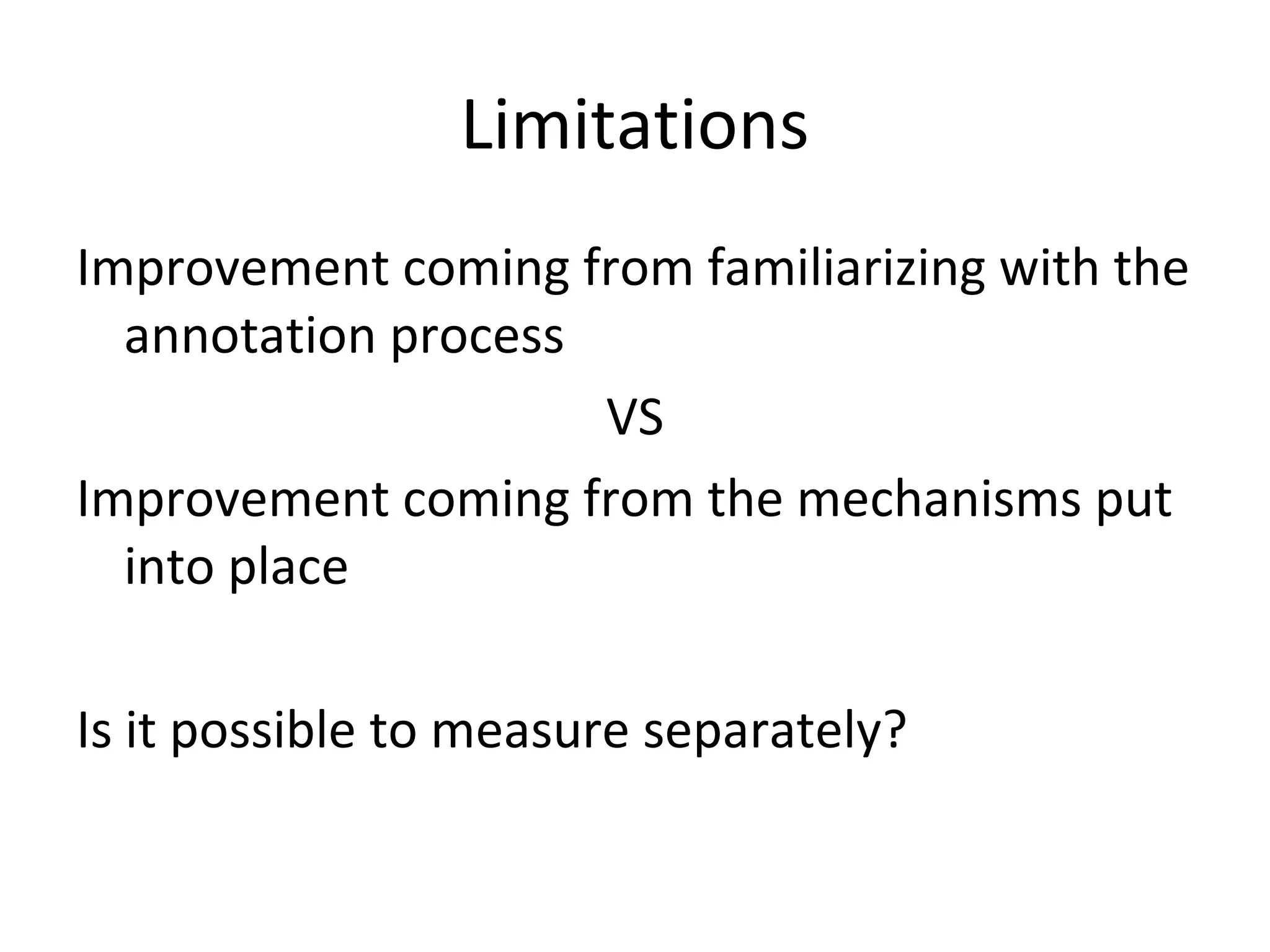
Limitations
Improvement coming from familiarizing with the
annotation process
VS
Improvement coming from the mechanisms put
into place
Is it possible to measure separately?
Future Research
• Insert more similar mechanisms throughout
the learning resource/repository lifecycle
• Focus more on additional metadata quality
metrics on top of completeness
• Extend this framework to other types of
resources, i.e. cultural collections, etc.
Metadata quality
in learning repositories:
Issues & considerations
Thank you!
palavitsinis@grnet.gr
ED-MEDIA 2011, 27/7-1/7, Lisbon, Portugal

Metadata Quality in Learning Repositories: Issues & Considerations

  • 1.
    Metadata quality in learningrepositories: Issues & considerations Nikos Palavitsinis, Nikos Manouselis, Salvador-Sanchez Alonso ED-MEDIA 2011, 27/7-1/7, Lisbon, Portugal
  • 2.
    Key Concepts • LearningRepositories • Resources • Metadata
  • 3.
    Quantity is NOTthe problem! • MERLOT, ARIADNE, LRE for schools, MACE, etc • Millions of resources on various topics/areas/fields Image taken from: http://farm1.static.flickr.com/223/475156707_d56e38f251.jpg
  • 4.
    Quality? • Publishers ofcontent are under pressure to ensure that in the plethora of information that is available in today’s web, resources are highly discoverable and highly credible Walker, 2010 Quality of metadata Quality of content
  • 5.
    Truth or… “Isn't ittrue, that only librarians like to search? Everyone else likes to find” Roy Tennant Images taken from: http://gigglebot.net/wp-content/uploads/wpsc/product_images/librarian.png & http://www.ala.org/img/alonline/computer%20guy.jpg
  • 6.
  • 7.
  • 8.
    about Organic.Edunet • CompletedeContentPlus project (10/2007 – 10/2010) funded with 2.5M € • Main objective: Make learning content on Organic Agriculture and Agro-ecology available online, for a range of stakeholders. • And: Develop educational scenarios to be used within schools & universities
  • 10.
    Stats • 1,5 yearof operation • 53.859 visits • 208.963 page views • 41.804 unique visitors • 166 countries • 2.041 registered users • 10.967 resources
  • 11.
    Multilingualism • Multilingual interface(17 languages) – Text-based search – Browsing – Tag-based search – Semantic search • Multilingual resources (10 languages) – Images, videos, articles, scenarios, etc • Multilingual metadata (17 languages) – IEEE LOM Application Profile
  • 12.
    How did weget there? Started on June of 2008…
  • 13.
    Process (1/2) • Developedan Application Profile of IEEE LOM to be used to describe resources on Organic Agriculture & Agroecology
  • 14.
    Organic.Edunet IEEE LOM AP Definitionof own requirements Selection of LOM elements Semantics Refinement Multiplicity constraints and values Relationships and dependencies Required extensions Application Profile Binding Evaluation of AP Evaluation phase Results’ analysis AP modifications
  • 15.
    Process (2/2) • Developeda Repository Management Tool where resources would be described with IEEE LOM metadata (Confolio – http://oe.confolio.org)
  • 16.
    May 2009 • 6.600resources uploaded in Confolio – 1.100 fully annotated by partners – 5.500 harvested and manually enriched records • Time to start playing with the data…
  • 17.
    First Analysis • Measuredmetadata completeness for all IEEE LOM AP elements • Usage of metadata elements was not as high as desired, but was as low as anticipated!
  • 18.
  • 19.
    Improving Metadata Quality Througha Metadata Quality Assurance Mechanism
  • 20.
    Step 1 • Reviewof metadata records by experts (9/2009) – Direct feedback through e-mail & – Good & Bad metadata practices
  • 21.
    Step 2 • Reviewof metadata records by subject-matter experts (12/2009) – Direct feedback through e-mail – General statistics
  • 22.
  • 23.
  • 24.
    Second Analysis • Improvedcompleteness for… – Mandatory elements: -0.3% to 82,4% • Rights.Copyrights and Other Restrictions (82.4%) • Rights.Cost (64%) – Recommended elements: 47,4% to 82,9% • Rights.Description (82.9%) • General.Keyword (78.1%) – Optional elements: 13,2% to 79,9% • General.Coverage (79.9%)
  • 25.
    What about Educationalelements? • Educational… – Intended End User Role: +66.1% (78.9%) – Typical Age Range: +57.7% (61.5%) – Context: +47.4% (57.6%) – Language: +50.9% (51.2%) – Difficulty: +36.1% (36.2%) – Semantic Density: +35.9% (36.1%) – Interactivity Level: +35.8% (36.1%) – Interactivity Type: +35.6% (35.9%) – Description: +13.2% (14.7%)
  • 26.
  • 27.
    Conclusions • Training expertson a specific field on metadata concepts & principles, improved resulting metadata completeness • Manual effort is really important • Further effort for optional elements needed
  • 28.
    Limitations Improvement coming fromfamiliarizing with the annotation process VS Improvement coming from the mechanisms put into place Is it possible to measure separately?
  • 29.
    Future Research • Insertmore similar mechanisms throughout the learning resource/repository lifecycle • Focus more on additional metadata quality metrics on top of completeness • Extend this framework to other types of resources, i.e. cultural collections, etc.
  • 30.
    Metadata quality in learningrepositories: Issues & considerations Thank you! palavitsinis@grnet.gr ED-MEDIA 2011, 27/7-1/7, Lisbon, Portugal