เอกสารประกอบการเรียน เรื่อง Metabolism and Energy
พิษณุ ดวงกระโทก
Metabolism and Energy
Metabolism เปนผลรวมของปฏิกิริยาทางกายภาพและเคมีที่เกิดขึ้นภายในรางกาย โดยปฏิกิริยาทาง
เคมีจะใชในการสรางพลังงาน โดยกระบวนการ metabolism แบงไดเปน 2 กระบวนการคือ Anabolism
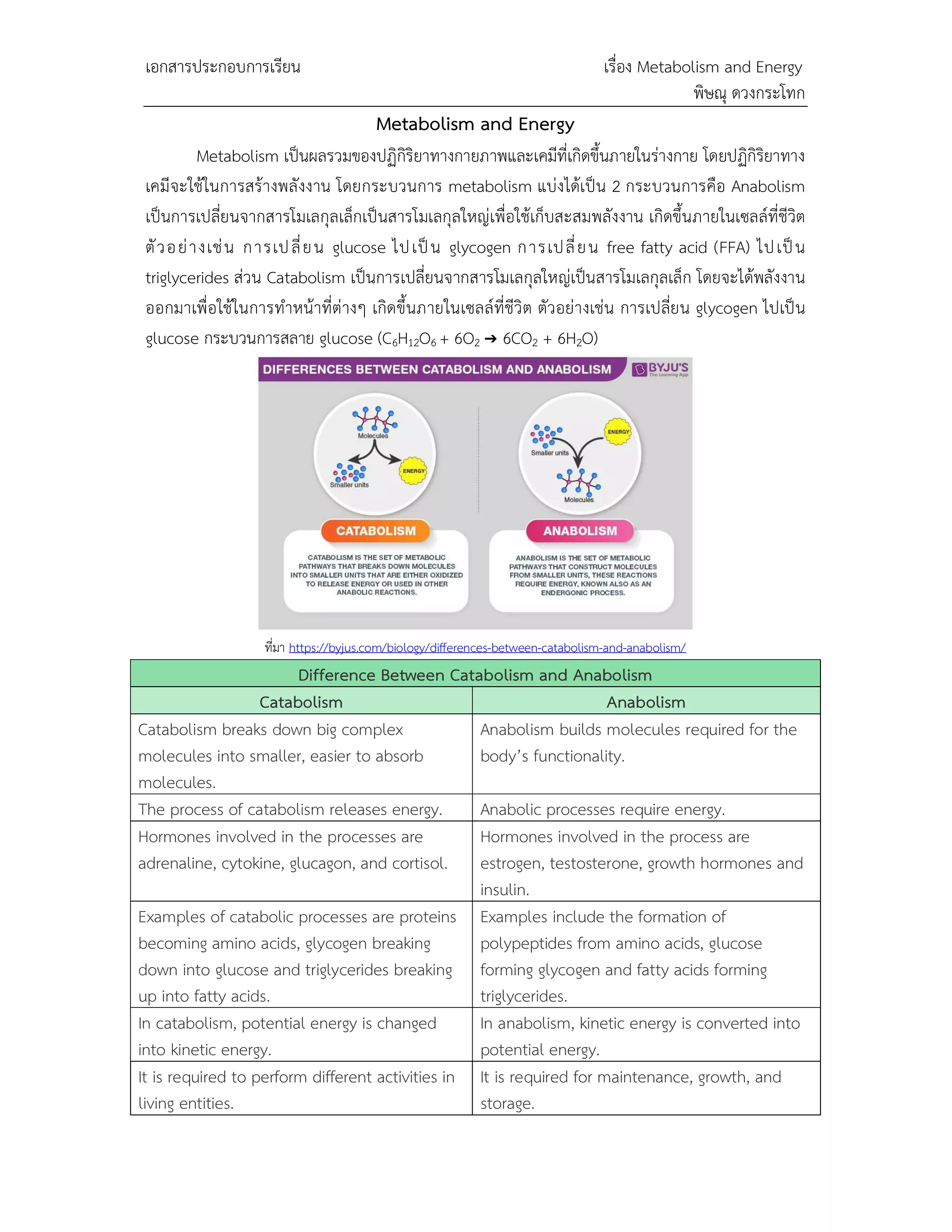
เปนการเปลี่ยนจากสารโมเลกุลเล็กเปนสารโมเลกุลใหญเพื่อใชเก็บสะสมพลังงาน เกิดขึ้นภายในเซลลที่ชีวิต
ตัวอยางเชน การเปลี่ยน glucose ไปเปน glycogen การเปลี่ยน free fatty acid (FFA) ไปเปน
triglycerides สวน Catabolism เปนการเปลี่ยนจากสารโมเลกุลใหญเปนสารโมเลกุลเล็ก โดยจะไดพลังงาน
ออกมาเพื่อใชในการทำหนาที่ตางๆ เกิดขึ้นภายในเซลลที่ชีวิต ตัวอยางเชน การเปลี่ยน glycogen ไปเปน
glucose กระบวนการสลาย glucose (C6H12O6 + 6O2 ➔ 6CO2 + 6H2O)
ที่มา https://byjus.com/biology/differences-between-catabolism-and-anabolism/
Difference Between Catabolism and Anabolism
Catabolism Anabolism
Catabolism breaks down big complex
molecules into smaller, easier to absorb
molecules.
Anabolism builds molecules required for the
body’s functionality.
The process of catabolism releases energy. Anabolic processes require energy.
Hormones involved in the processes are
adrenaline, cytokine, glucagon, and cortisol.
Hormones involved in the process are
estrogen, testosterone, growth hormones and
insulin.
Examples of catabolic processes are proteins
becoming amino acids, glycogen breaking
down into glucose and triglycerides breaking
up into fatty acids.
Examples include the formation of
polypeptides from amino acids, glucose
forming glycogen and fatty acids forming
triglycerides.
In catabolism, potential energy is changed
into kinetic energy.
In anabolism, kinetic energy is converted into
potential energy.
It is required to perform different activities in
living entities.
It is required for maintenance, growth, and
storage.

Metabolism and Energy.pdf

  • 1.
    เอกสารประกอบการเรียน เรื่อง Metabolismand Energy พิษณุ ดวงกระโทก Metabolism and Energy Metabolism เปนผลรวมของปฏิกิริยาทางกายภาพและเคมีที่เกิดขึ้นภายในรางกาย โดยปฏิกิริยาทาง เคมีจะใชในการสรางพลังงาน โดยกระบวนการ metabolism แบงไดเปน 2 กระบวนการคือ Anabolism เปนการเปลี่ยนจากสารโมเลกุลเล็กเปนสารโมเลกุลใหญเพื่อใชเก็บสะสมพลังงาน เกิดขึ้นภายในเซลลที่ชีวิต ตัวอยางเชน การเปลี่ยน glucose ไปเปน glycogen การเปลี่ยน free fatty acid (FFA) ไปเปน triglycerides สวน Catabolism เปนการเปลี่ยนจากสารโมเลกุลใหญเปนสารโมเลกุลเล็ก โดยจะไดพลังงาน ออกมาเพื่อใชในการทำหนาที่ตางๆ เกิดขึ้นภายในเซลลที่ชีวิต ตัวอยางเชน การเปลี่ยน glycogen ไปเปน glucose กระบวนการสลาย glucose (C6H12O6 + 6O2 ➔ 6CO2 + 6H2O) ที่มา https://byjus.com/biology/differences-between-catabolism-and-anabolism/ Difference Between Catabolism and Anabolism Catabolism Anabolism Catabolism breaks down big complex molecules into smaller, easier to absorb molecules. Anabolism builds molecules required for the body’s functionality. The process of catabolism releases energy. Anabolic processes require energy. Hormones involved in the processes are adrenaline, cytokine, glucagon, and cortisol. Hormones involved in the process are estrogen, testosterone, growth hormones and insulin. Examples of catabolic processes are proteins becoming amino acids, glycogen breaking down into glucose and triglycerides breaking up into fatty acids. Examples include the formation of polypeptides from amino acids, glucose forming glycogen and fatty acids forming triglycerides. In catabolism, potential energy is changed into kinetic energy. In anabolism, kinetic energy is converted into potential energy. It is required to perform different activities in living entities. It is required for maintenance, growth, and storage.