BOIWO W.
BSC CLIN MED
1
HPO AXIS
2
3
4
Outline
 Definition
 Ovarian cycle
 Endometrial/ Uterine cycle
 Hormonal regulation
 Other effects of cyclic changes
 Indicators of ovulation
 Menopause.
5
MENSTRUAL CYCLE
Definition
 Cyclic changes resulting in periodic preparation for
fertilization and pregnancy.
Most prominent feature is menstruation.
Menstruation: Visible manifestation of cyclic physiologic
uterine bleeding.
 Length of menstrual cycle variable. 21-35 days.
 Average 28 days (28 ± 7 days interval )
6
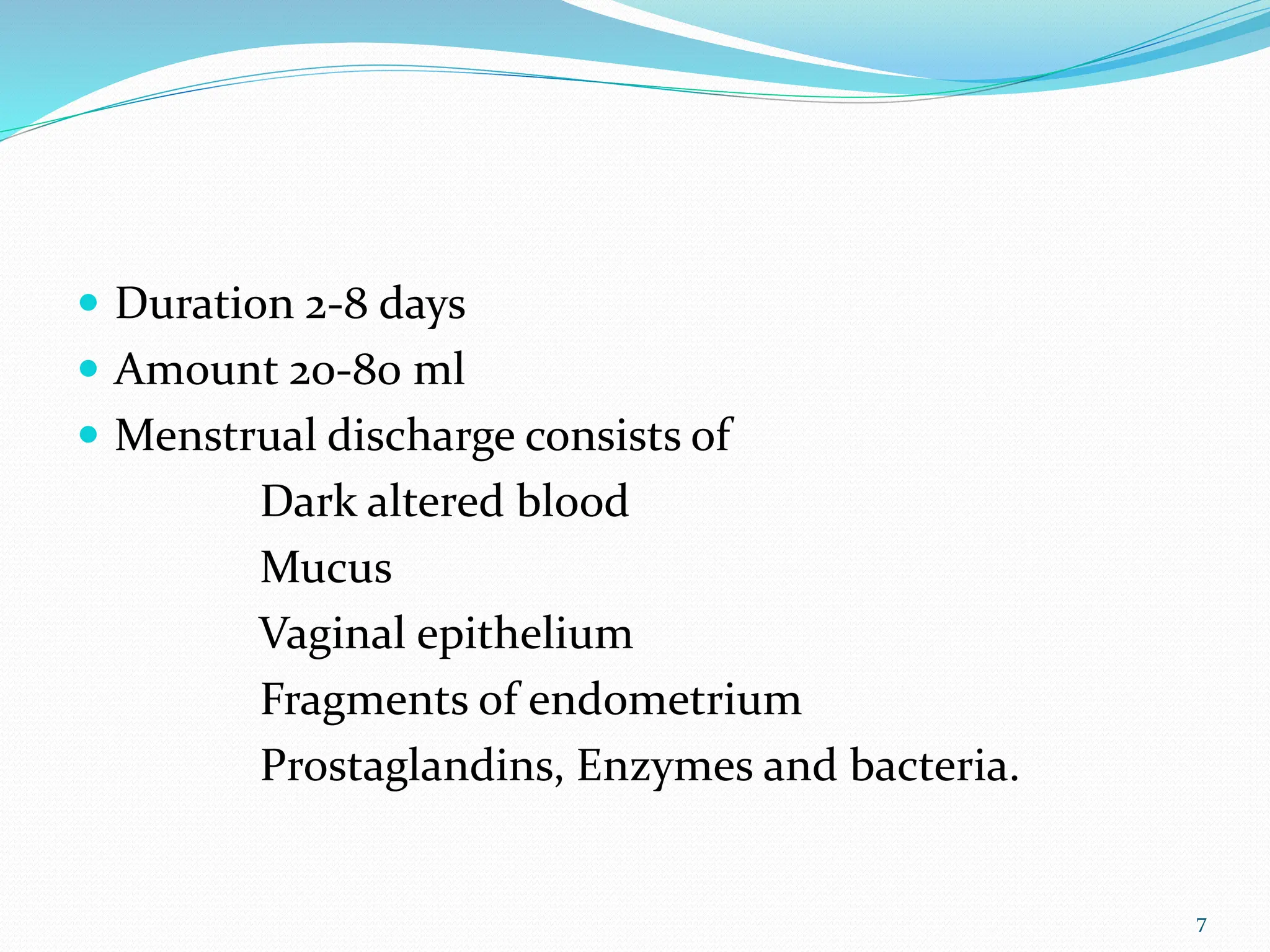
 Duration 2-8 days
 Amount 20-80 ml
 Menstrual discharge consists of
Dark altered blood
Mucus
Vaginal epithelium
Fragments of endometrium
Prostaglandins, Enzymes and bacteria.
7
 HPO Axis must be well coordinated for menstruation
to occur
 Endometrium- must be responsive to ovarian
hormones ( E & P).
 Outflow tract must be patent.
8
CONTI..
 The first menstruation (menarche) occurs between 11–15 years with a
mean of 13 years. It is more closely related to bone age than to
chronological age
 For the past couple of decades, the age of menarche is gradually
declining with improvement of nutrition and environmental condition.
 Physiologically, it is kept in abeyance due to pregnancy and lactation
 Women have around 400 menstrual cycles during the course of their
lifetimes
 Ultimately, it ceases between the ages 45–50 when menopause sets in
 The duration of menstruation (menses) is about 4–5 days and the
amount of blood loss is estimated to be 20 to 80mL with an average of
35mL.
 Nearly 70% of total menstrual blood loss occurs in the first 2 days.
9
CONTI..
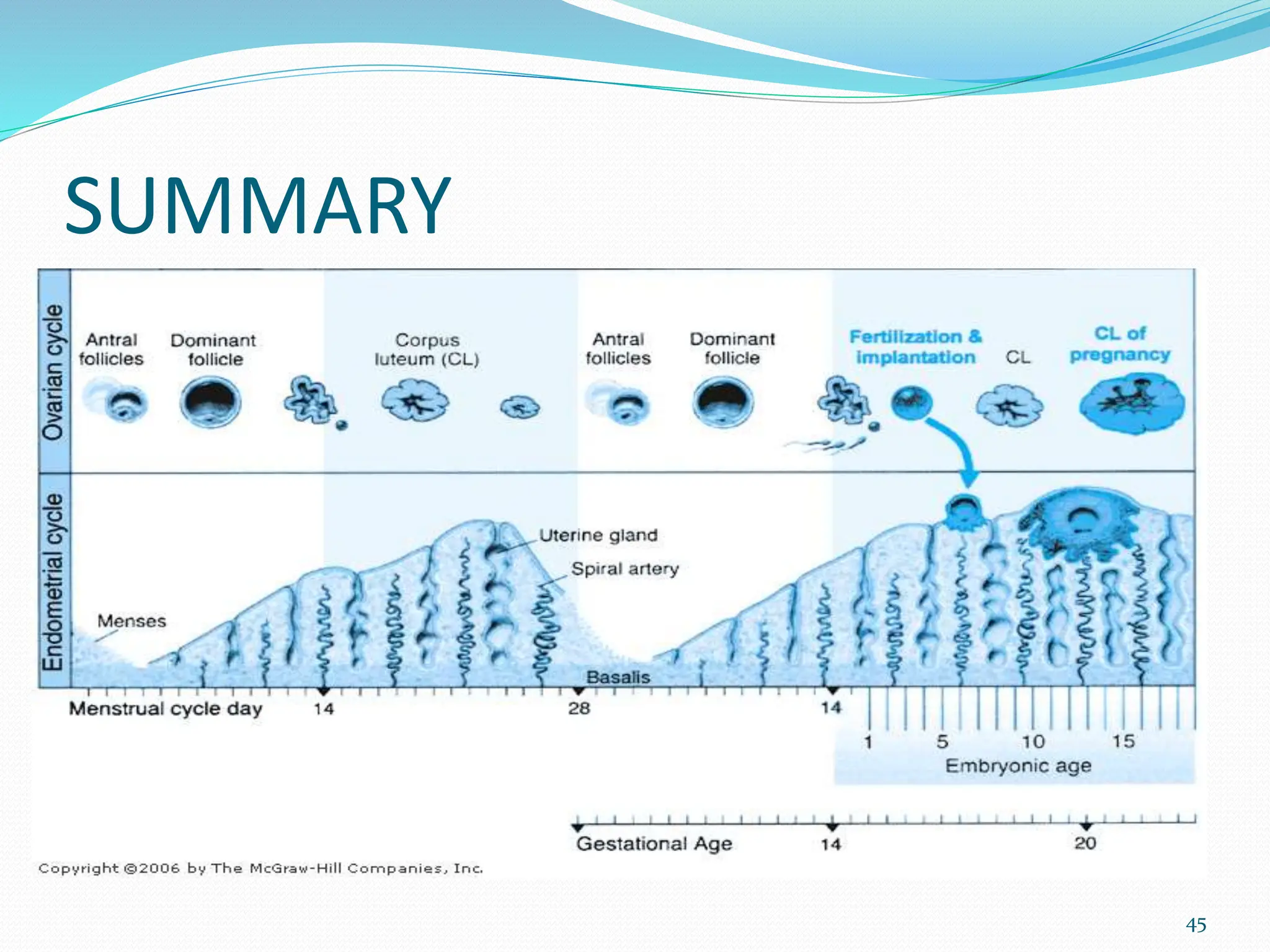
 The normal human menstrual cycle can be divided
into two segments:
 the ovarian cycle and
 the uterine cycle, based on the organ under
examination
10
Ovarian cycle
Development and maturation of a follicle, ovulation and
formation of corpus luteum and its degeneration
constitute an ovarian cycle.
 Occur within 4 weeks.
11
Primordial follicles
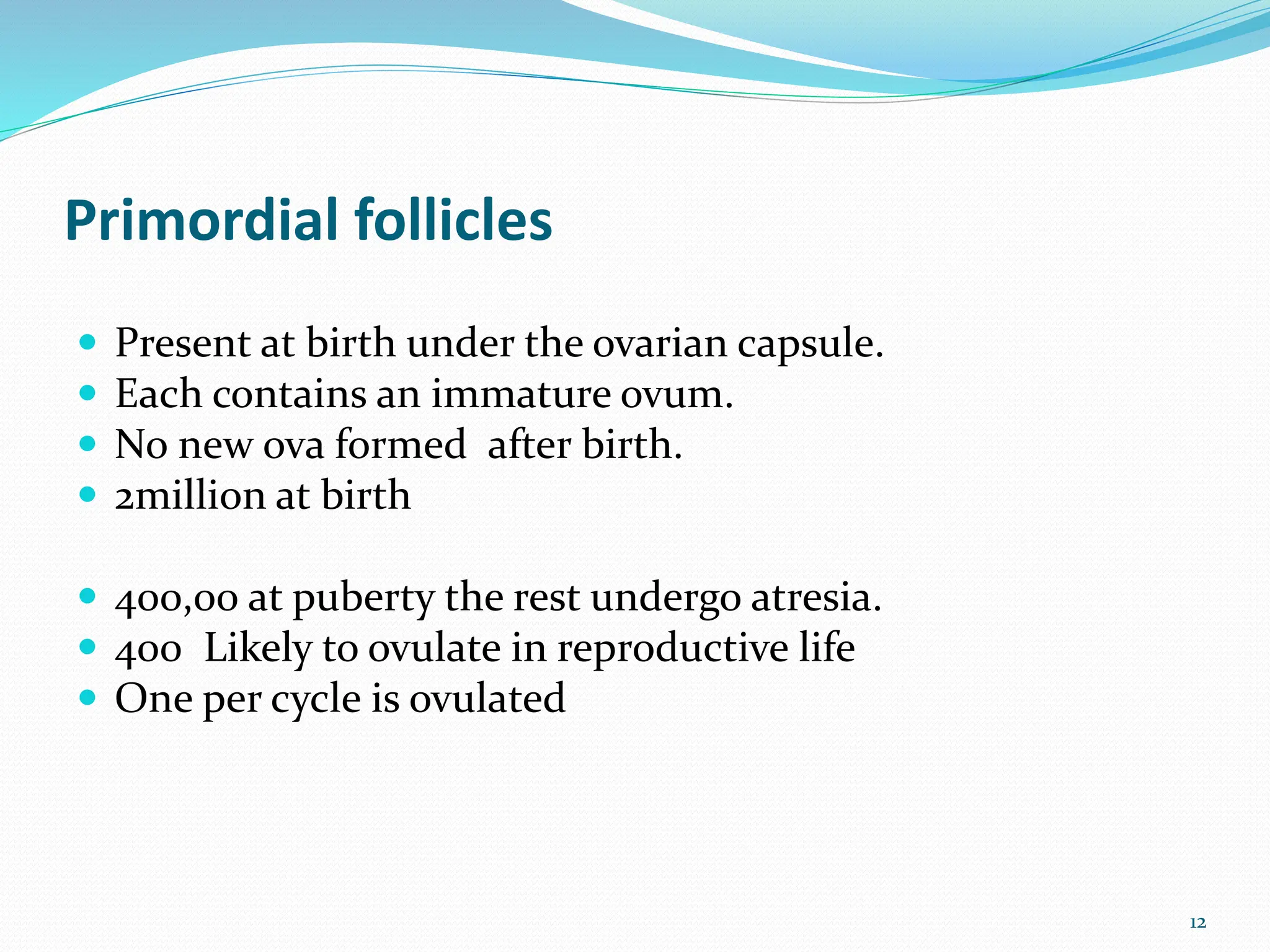
 Present at birth under the ovarian capsule.
 Each contains an immature ovum.
 No new ova formed after birth.
 2million at birth
 400,00 at puberty the rest undergo atresia.
 400 Likely to ovulate in reproductive life
 One per cycle is ovulated
12
Follicular phase
 At the start of each cycle, several follicles enlarge and a
cavity forms around the ovum
 Cavity filled with follicular fluid
 1 follicle in one ovary grows rapidly from
day 6
= Dominant follicle
13
14
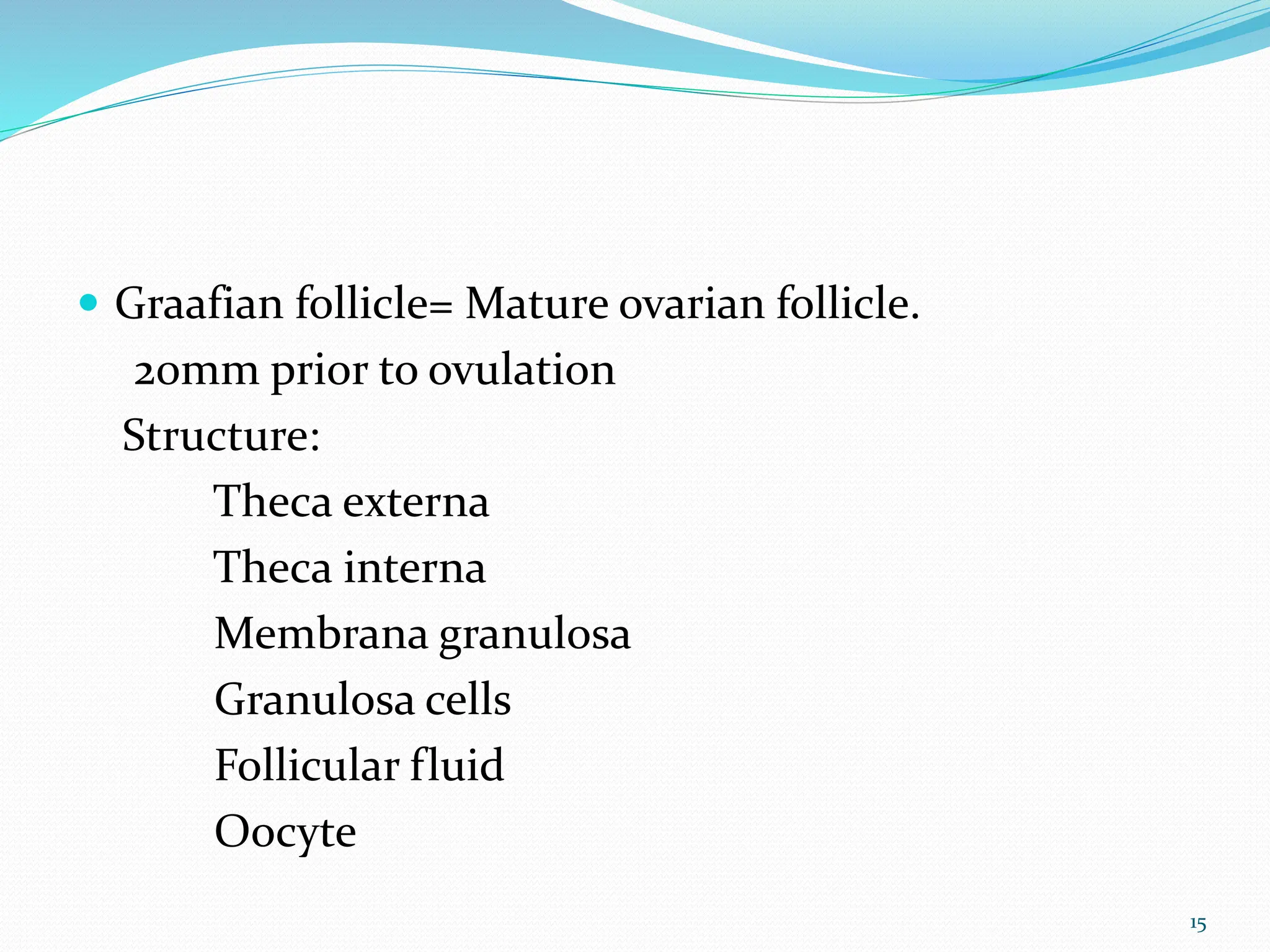
 Graafian follicle= Mature ovarian follicle.
20mm prior to ovulation
Structure:
Theca externa
Theca interna
Membrana granulosa
Granulosa cells
Follicular fluid
Oocyte
15
 Cells of Theca interna produce Estrogen.
OVULATION
Dominant follicle reaches surface of the ovary shortly
before ovulation.
Distended follicle ruptures and ovum is extruded into
the abdominal cavity= Ovulation
16
 Ovum picked by fimbriated ends of the fallopian tubes
and transported to the uterus.
 Minor bleeding from the follicle at ovulation may
cause peritoneal irritation and lower abdominal pain=
‘Mittelschmerz’.
 Ovulation occurs on day 14.
17
Luteal phase
Granulosa and theca cells begin to proliferate and yellowish
lipid rich luteal cells are formed. This forms the corpus
luteum.
Luteal cells secrete Progesterone.
If fertilization occurs, the corpus luteum persists.
If fertilization does not occur it degenerates to form the
corpus albicans
18
19
Endometrial cycle/ Uterine cycle
 Endometrium is the lining of the uterus .
 Consists of surface epithelium, glands and blood
vessels.
 2 distinct zones
Stratum basalis – Basal zone
Stratum functionale- Functional zone
20
21
Basal zone.
 Lies in contact with myometrium
 1/3 of depth of endometrium
 Uninfluenced by hormones hence no cyclic changes
 Regeneration of superficial layer occur from this zone.
 Supplied by short straight basilar arteries.
22
 Functional zone.
Under influence of fluctuating cyclic ovarian
hormones( Estrogen and Progesterone).
Supplied by long coiled spiral arteries.
Proliferative phase;
Under influence of estrogen from developing follicles,
the endometrium regenerates from the deep layer.
23
 Rapid increase in thickness from Day 5 to Day 16 of the
menstrual cycle.
 Glands tubular and lie perpendicular to the surface.
 The glands do not secrete at this stage.
 Represent restoration of the functional layer.
 =Preovulatory or follicular phase .
24
Secretory or Luteal phase
 After ovulation , the endometrium becomes highly
vascularised and edematous under influence of
estrogen and progesterone from the corpus luteum.
 Gland become coiled and tortuous and begin to
secrete clear fluid.
25
 Represents preparation for implantation of fertilized
ovum.
 Constant length of 14 days.
26
Menstruation
 Degeneration and casting off of endometrium
prepared for pregnancy.
 As corpus luteum regresses, hormonal support for the
endometrium is withdrawn.
 Endometrium becomes thinner which adds to the
coiling of spiral arteries
27
 Foci of necrosis appear and these coalesce
 Necrosis in the walls of spiral arteries occur leading to
spotty haemorrhages that become confluent to
produce the menstrual flow.
28
Hormonal regulation
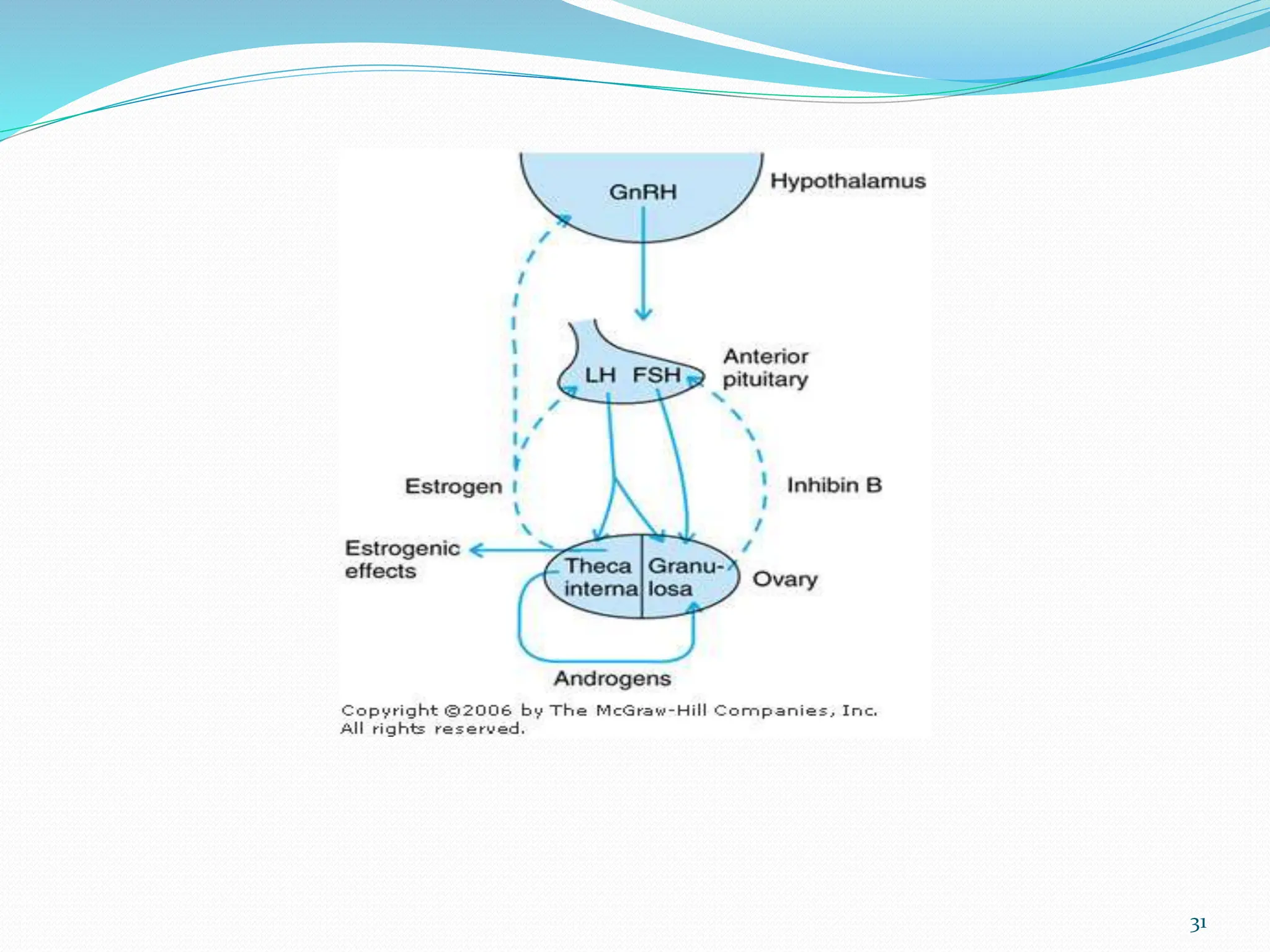
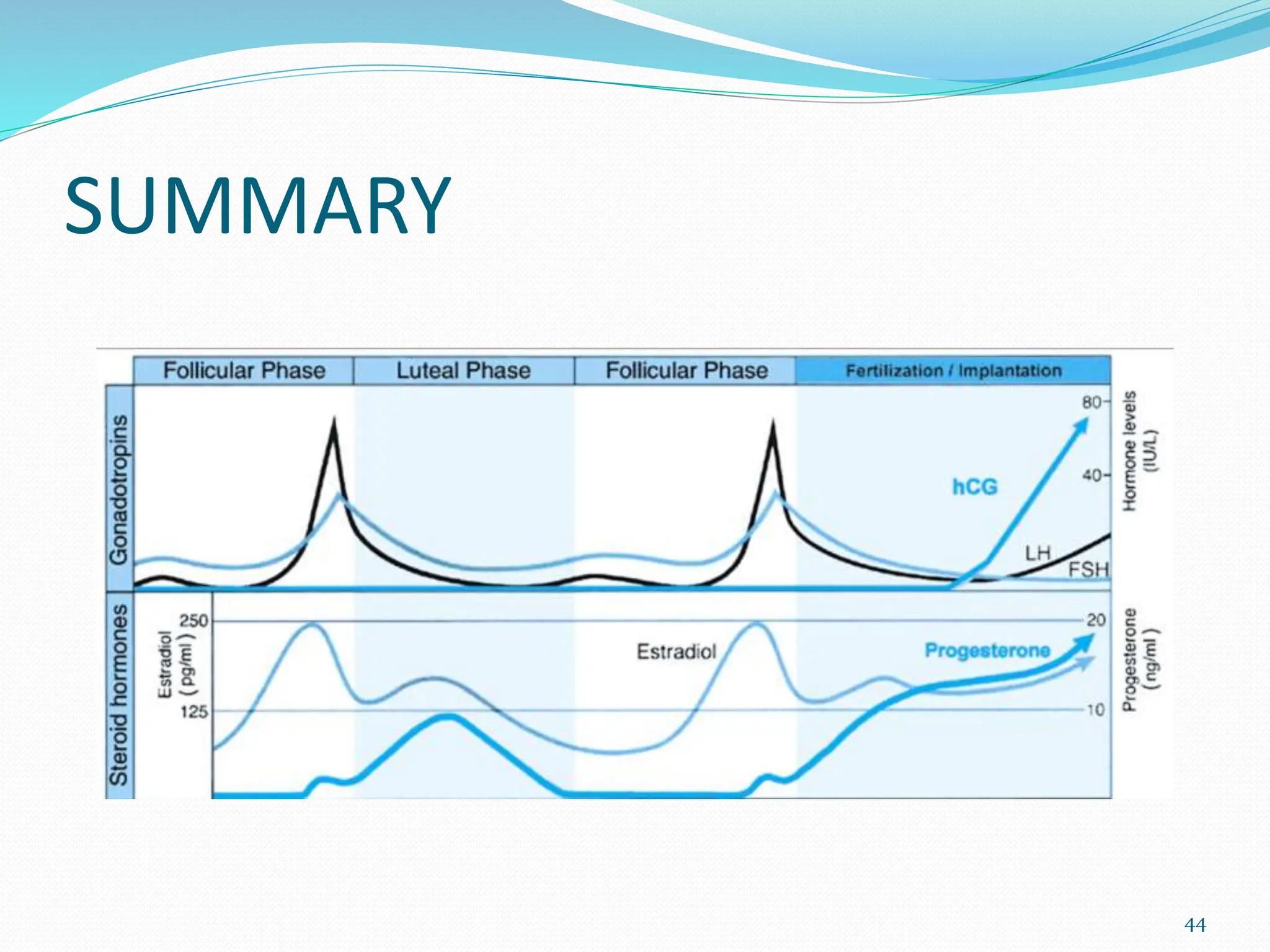
 GnRH secreted by hypothalamus in episodic bursts.
 GnRH stimulate the release of FSH and LH from
anterior pituitary.
 FSH & LH influences follicular growth & maturation.
 LH – Influences ovulation.
29
 Estrogen from developing follicles inhibits GnRH &
FSH/LH Secretion.
30
31
Other effects of the menstrual
cycle
Cyclic changes in uterine cervix.
Mucosa of uterine cervix does not undergo cyclic
desquamation
There are regular changes in the cervical mucus
Estrogen- Makes cervical mucus thinner and more alkaline.
This promote survival and transport of sperms.
Progesterone- Make cervical mucus thick
32
 Cervical mucus thinnest at time of ovulation.
 Its elasticity increases and by midcycle a drop can be
stretched into a long thin thread 8-12 cm.
= Spinberkeit test.
 At midcycle it dries in a fern like pattern when a thin
layer is spread on a slide.
Fern test
33
34
Vagina.
Estrogen- Vaginal epithelium becomes cornified
Progesterone- Thick mucus secreted and epithelium
proliferates and becomes infiltrated by leucocytes.
35
Cyclic changes in the Breasts
 Estrogen causes proliferation of mammary ducts
Progesterone causes growth of alveoli and lobules.
 Breast swelling , tenderness & pain 10 days preceding
menses is due to distension of ducts, hyperemia and
edema of interstitial tissues of the breast
36
Body temperature
Rise in body temperature during luteal phase of the
menstrual cycle.
Progesterone has thermogenic effects.
37
Changes during sexual intercourse
 During sexual excitation vaginal walls become moist
as a result of transudation of fluid through the mucus
membrane.
 Vestibular glands secrete lubricating mucus.
 Upper part of vagina is sensitive to stretch.
 Tactile stimulation from labia minora and clitoris add
to sexual excitement
38
 Stimuli reinforced by tactile stimulation from the
breasts and visual and auditory stimuli.
 Crescendo or climax known as orgasm is reached.
 Orgasm
rhythmic contractions of vaginal walls,
Bulbocavernosus and Ischiocavernosus muscles.
39
Indicators of ovulation
Knowledge important in increasing fertility and in
contraception
Rise in basal body temperature.
Rise in urinary LH levels
Cervical mucus- spinberkeit
- Fern test +ve
40
Anovulatory cycles
 Failure to ovulate in a menstrual cycle
 Common in first 12-18 months after menarche
 Corpus luteum not formed hence effect of
progesterone on endometrium is absent.
 Estrogen continue to cause growth of endometrium.
41
 Endometrium sloughs off and bleeding is variable
from scanty to relatively profuse.
42
43
SUMMARY
44
SUMMARY
45
THANK YOU.
46
TAKE HOME MASSAGE
 DISCRIBE THE MENSTRUAL CYLCE IN TERMS OF?
1. OVARIAN CYCLE
2. UTERINE CYCLE
 THE HORMONES SECRETED DURING REPRODUCTIVE CYCLE ARE REGULATED BY;
a) NEGATIVE FEEDBACK SYSTEM.
b) POSITIVE FEEDBACK SYSTEM.
c) SYMPATETIC SYSTEM.
d) PARASYMPATETIC SYSTEM.
 WHICH OF THE FOLLOWING STATEMENT IS NOT TRUE?
a) THE REPRODUCTIVE CYCLEOCCURS AFTER EVERY 26 TO 30 DAYS.
b) DURING OVULATION THE BODY TEMP FALLS.
c) PROLIFERATIVE PHASE ENDS WHEN OVULATION BEGINS.
d) FSH PROMOTES MATURATION OF OVARIAN FOLLICLES.
WHICH OF THE FOLLOWING CHANGES DOES NOT OCCUR DURING OVULATION?
a) CERVICAL MUCUS BECOMES WATERY.
b) INCREASE BODY TEMP.
c) ATROPHY OF SEX ORGAN
d) ABDOMINAL DISCOMFORT.
WHICH HORMONE STIMULATES THEANTERIOR PITUITARY FOR THE SECRETION OFFSH AND LH?
a) LHRH
b) GnRH
c) ADRENAL GLAND
d) THYROID GLAND
 WHAT SUPPRESSES THE HYPOTHALAMUS TO CONTROL ITS REGULATION?
a) OESTROGEN
b) PROGESTRPONE
c) FSH
d) BOTH a AND b
47

MENSTRUAL CYCLE AND HYPOTHALAMO PITUITARY OVARIAN AXIS

  • 1.
  • 2.
  • 3.
  • 4.
  • 5.
    Outline  Definition  Ovariancycle  Endometrial/ Uterine cycle  Hormonal regulation  Other effects of cyclic changes  Indicators of ovulation  Menopause. 5
  • 6.
    MENSTRUAL CYCLE Definition  Cyclicchanges resulting in periodic preparation for fertilization and pregnancy. Most prominent feature is menstruation. Menstruation: Visible manifestation of cyclic physiologic uterine bleeding.  Length of menstrual cycle variable. 21-35 days.  Average 28 days (28 ± 7 days interval ) 6
  • 7.
     Duration 2-8days  Amount 20-80 ml  Menstrual discharge consists of Dark altered blood Mucus Vaginal epithelium Fragments of endometrium Prostaglandins, Enzymes and bacteria. 7
  • 8.
     HPO Axismust be well coordinated for menstruation to occur  Endometrium- must be responsive to ovarian hormones ( E & P).  Outflow tract must be patent. 8
  • 9.
    CONTI..  The firstmenstruation (menarche) occurs between 11–15 years with a mean of 13 years. It is more closely related to bone age than to chronological age  For the past couple of decades, the age of menarche is gradually declining with improvement of nutrition and environmental condition.  Physiologically, it is kept in abeyance due to pregnancy and lactation  Women have around 400 menstrual cycles during the course of their lifetimes  Ultimately, it ceases between the ages 45–50 when menopause sets in  The duration of menstruation (menses) is about 4–5 days and the amount of blood loss is estimated to be 20 to 80mL with an average of 35mL.  Nearly 70% of total menstrual blood loss occurs in the first 2 days. 9
  • 10.
    CONTI..  The normalhuman menstrual cycle can be divided into two segments:  the ovarian cycle and  the uterine cycle, based on the organ under examination 10
  • 11.
    Ovarian cycle Development andmaturation of a follicle, ovulation and formation of corpus luteum and its degeneration constitute an ovarian cycle.  Occur within 4 weeks. 11
  • 12.
    Primordial follicles  Presentat birth under the ovarian capsule.  Each contains an immature ovum.  No new ova formed after birth.  2million at birth  400,00 at puberty the rest undergo atresia.  400 Likely to ovulate in reproductive life  One per cycle is ovulated 12
  • 13.
    Follicular phase  Atthe start of each cycle, several follicles enlarge and a cavity forms around the ovum  Cavity filled with follicular fluid  1 follicle in one ovary grows rapidly from day 6 = Dominant follicle 13
  • 14.
  • 15.
     Graafian follicle=Mature ovarian follicle. 20mm prior to ovulation Structure: Theca externa Theca interna Membrana granulosa Granulosa cells Follicular fluid Oocyte 15
  • 16.
     Cells ofTheca interna produce Estrogen. OVULATION Dominant follicle reaches surface of the ovary shortly before ovulation. Distended follicle ruptures and ovum is extruded into the abdominal cavity= Ovulation 16
  • 17.
     Ovum pickedby fimbriated ends of the fallopian tubes and transported to the uterus.  Minor bleeding from the follicle at ovulation may cause peritoneal irritation and lower abdominal pain= ‘Mittelschmerz’.  Ovulation occurs on day 14. 17
  • 18.
    Luteal phase Granulosa andtheca cells begin to proliferate and yellowish lipid rich luteal cells are formed. This forms the corpus luteum. Luteal cells secrete Progesterone. If fertilization occurs, the corpus luteum persists. If fertilization does not occur it degenerates to form the corpus albicans 18
  • 19.
  • 20.
    Endometrial cycle/ Uterinecycle  Endometrium is the lining of the uterus .  Consists of surface epithelium, glands and blood vessels.  2 distinct zones Stratum basalis – Basal zone Stratum functionale- Functional zone 20
  • 21.
  • 22.
    Basal zone.  Liesin contact with myometrium  1/3 of depth of endometrium  Uninfluenced by hormones hence no cyclic changes  Regeneration of superficial layer occur from this zone.  Supplied by short straight basilar arteries. 22
  • 23.
     Functional zone. Underinfluence of fluctuating cyclic ovarian hormones( Estrogen and Progesterone). Supplied by long coiled spiral arteries. Proliferative phase; Under influence of estrogen from developing follicles, the endometrium regenerates from the deep layer. 23
  • 24.
     Rapid increasein thickness from Day 5 to Day 16 of the menstrual cycle.  Glands tubular and lie perpendicular to the surface.  The glands do not secrete at this stage.  Represent restoration of the functional layer.  =Preovulatory or follicular phase . 24
  • 25.
    Secretory or Lutealphase  After ovulation , the endometrium becomes highly vascularised and edematous under influence of estrogen and progesterone from the corpus luteum.  Gland become coiled and tortuous and begin to secrete clear fluid. 25
  • 26.
     Represents preparationfor implantation of fertilized ovum.  Constant length of 14 days. 26
  • 27.
    Menstruation  Degeneration andcasting off of endometrium prepared for pregnancy.  As corpus luteum regresses, hormonal support for the endometrium is withdrawn.  Endometrium becomes thinner which adds to the coiling of spiral arteries 27
  • 28.
     Foci ofnecrosis appear and these coalesce  Necrosis in the walls of spiral arteries occur leading to spotty haemorrhages that become confluent to produce the menstrual flow. 28
  • 29.
    Hormonal regulation  GnRHsecreted by hypothalamus in episodic bursts.  GnRH stimulate the release of FSH and LH from anterior pituitary.  FSH & LH influences follicular growth & maturation.  LH – Influences ovulation. 29
  • 30.
     Estrogen fromdeveloping follicles inhibits GnRH & FSH/LH Secretion. 30
  • 31.
  • 32.
    Other effects ofthe menstrual cycle Cyclic changes in uterine cervix. Mucosa of uterine cervix does not undergo cyclic desquamation There are regular changes in the cervical mucus Estrogen- Makes cervical mucus thinner and more alkaline. This promote survival and transport of sperms. Progesterone- Make cervical mucus thick 32
  • 33.
     Cervical mucusthinnest at time of ovulation.  Its elasticity increases and by midcycle a drop can be stretched into a long thin thread 8-12 cm. = Spinberkeit test.  At midcycle it dries in a fern like pattern when a thin layer is spread on a slide. Fern test 33
  • 34.
  • 35.
    Vagina. Estrogen- Vaginal epitheliumbecomes cornified Progesterone- Thick mucus secreted and epithelium proliferates and becomes infiltrated by leucocytes. 35
  • 36.
    Cyclic changes inthe Breasts  Estrogen causes proliferation of mammary ducts Progesterone causes growth of alveoli and lobules.  Breast swelling , tenderness & pain 10 days preceding menses is due to distension of ducts, hyperemia and edema of interstitial tissues of the breast 36
  • 37.
    Body temperature Rise inbody temperature during luteal phase of the menstrual cycle. Progesterone has thermogenic effects. 37
  • 38.
    Changes during sexualintercourse  During sexual excitation vaginal walls become moist as a result of transudation of fluid through the mucus membrane.  Vestibular glands secrete lubricating mucus.  Upper part of vagina is sensitive to stretch.  Tactile stimulation from labia minora and clitoris add to sexual excitement 38
  • 39.
     Stimuli reinforcedby tactile stimulation from the breasts and visual and auditory stimuli.  Crescendo or climax known as orgasm is reached.  Orgasm rhythmic contractions of vaginal walls, Bulbocavernosus and Ischiocavernosus muscles. 39
  • 40.
    Indicators of ovulation Knowledgeimportant in increasing fertility and in contraception Rise in basal body temperature. Rise in urinary LH levels Cervical mucus- spinberkeit - Fern test +ve 40
  • 41.
    Anovulatory cycles  Failureto ovulate in a menstrual cycle  Common in first 12-18 months after menarche  Corpus luteum not formed hence effect of progesterone on endometrium is absent.  Estrogen continue to cause growth of endometrium. 41
  • 42.
     Endometrium sloughsoff and bleeding is variable from scanty to relatively profuse. 42
  • 43.
  • 44.
  • 45.
  • 46.
  • 47.
    TAKE HOME MASSAGE DISCRIBE THE MENSTRUAL CYLCE IN TERMS OF? 1. OVARIAN CYCLE 2. UTERINE CYCLE  THE HORMONES SECRETED DURING REPRODUCTIVE CYCLE ARE REGULATED BY; a) NEGATIVE FEEDBACK SYSTEM. b) POSITIVE FEEDBACK SYSTEM. c) SYMPATETIC SYSTEM. d) PARASYMPATETIC SYSTEM.  WHICH OF THE FOLLOWING STATEMENT IS NOT TRUE? a) THE REPRODUCTIVE CYCLEOCCURS AFTER EVERY 26 TO 30 DAYS. b) DURING OVULATION THE BODY TEMP FALLS. c) PROLIFERATIVE PHASE ENDS WHEN OVULATION BEGINS. d) FSH PROMOTES MATURATION OF OVARIAN FOLLICLES. WHICH OF THE FOLLOWING CHANGES DOES NOT OCCUR DURING OVULATION? a) CERVICAL MUCUS BECOMES WATERY. b) INCREASE BODY TEMP. c) ATROPHY OF SEX ORGAN d) ABDOMINAL DISCOMFORT. WHICH HORMONE STIMULATES THEANTERIOR PITUITARY FOR THE SECRETION OFFSH AND LH? a) LHRH b) GnRH c) ADRENAL GLAND d) THYROID GLAND  WHAT SUPPRESSES THE HYPOTHALAMUS TO CONTROL ITS REGULATION? a) OESTROGEN b) PROGESTRPONE c) FSH d) BOTH a AND b 47