Introduction
MEDICAL DEVICES INTRODUCTION 1
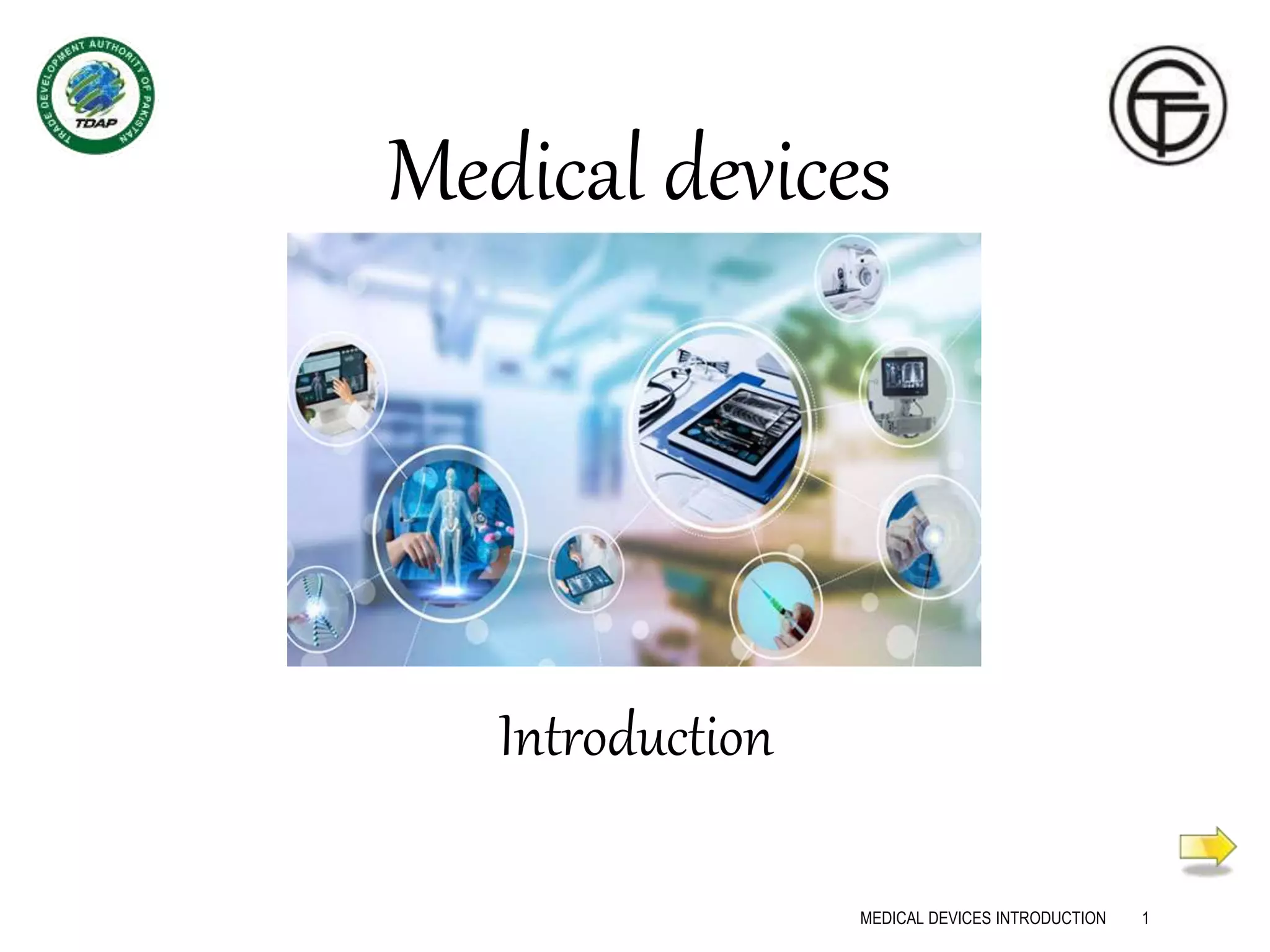
Medical devices
MEDICAL DEVICES INTRODUCTION 2
Presenter’s Profile
Muhammad Waqas Ali
Expertise
 Regulatory Affairs
 Quality Management System,
 Environmental management system
 Occupational health and safety
 Social Compliance
 R&D and
 Process validations
Qualification:
• Masters English Literature
• BSc Double Math & Physics
• Various Business and Auditing Courses
Profession:
• Working as MR in Global Tech International for
the last 12 years
Table of Contents
Section 1: Definition of Medical Devices
Section 2: Major Groups of Instruments
Section 3: Classification Intend to risk factor
Section 4: Variants and Material information
Section 5: Examples of Process Validations
MEDICAL DEVICES INTRODUCTION 3
Definition of Medical Devices
MEDICAL DEVICES INTRODUCTION 4
General Definition
A medical device is any device intended to be used for
medical purposes. Medical devices benefit patients by
helping health care providers diagnose and treat
patients and helping patients overcome sickness or
disease, improving their quality of life.
Technical Definition
medical device’ means any instrument, apparatus,
appliance, software, material or other article, whether
used alone or in combination, including the software
intended by its manufacturer to be used specifically for
diagnostic and/or therapeutic purposes and necessary
for its proper application, intended by the manufacturer
Technical Definition Continued
MEDICAL DEVICES INTRODUCTION 5
— diagnosis, prevention, monitoring, treatment
or alleviation of Disease, alleviation of or
compensation for an injury or handicap,
— investigation, replacement or modification of
the anatomy
and which does not achieve its principal
intended action in or on the human body by
pharmacological, immunological or metabolic
means.
Major Groups of Instruments
There are Six major groups of
Instruments
Surgical Instruments
Dental & Orthopedic
Instruments
Ophthalmology Instruments
Implants
Diagnostic Instruments
Electrosurgical Instruments
6
Anatomy Wise Categories
7
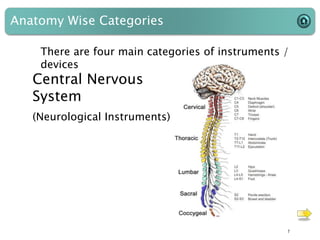
There are four main categories of instruments /
devices
Central Nervous
System
(Neurological Instruments)
Anatomy Wise Categories
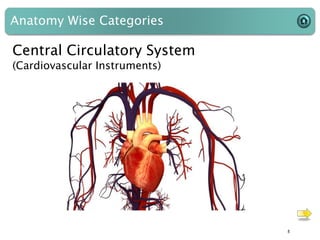
Central Circulatory System
(Cardiovascular Instruments)
8
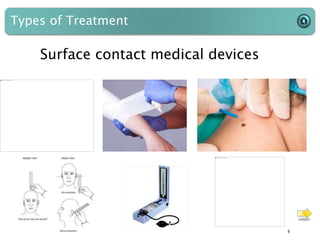
Types of Treatment
Surface contact medical devices
9
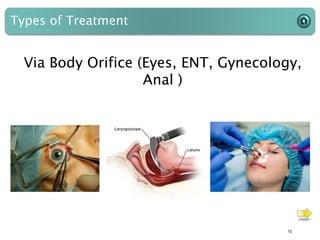
Types of Treatment
10
Via Body Orifice (Eyes, ENT, Gynecology,
Anal )
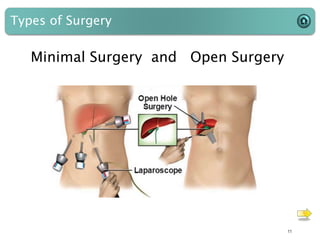
Types of Surgery
Minimal Surgery and Open Surgery
11
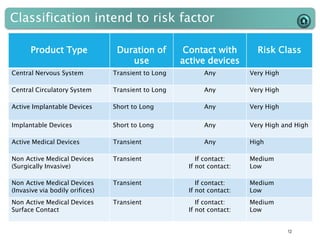
Classification intend to risk factor
12
Product Type Duration of
use
Contact with
active devices
Risk Class
Central Nervous System Transient to Long Any Very High
Central Circulatory System Transient to Long Any Very High
Active Implantable Devices Short to Long Any Very High
Implantable Devices Short to Long Any Very High and High
Active Medical Devices Transient Any High
Non Active Medical Devices
(Surgically Invasive)
Transient If contact:
If not contact:
Medium
Low
Non Active Medical Devices
(Invasive via bodily orifices)
Transient If contact:
If not contact:
Medium
Low
Non Active Medical Devices
Surface Contact
Transient If contact:
If not contact:
Medium
Low
13
Variants
and
Material information
Surgical
Forceps/Scissors/Retractors etc.
1. Construction of devices shall be
similar
2. Intended use shall be similar
3. Anatomy for use shall be
similar
4. Risk factors shall be similar
Requirements for product Variants
14
Materials Information
Medical Grade Stainless Steel 300 and 400 series
Polymers & Rubbers
• Material Selection Requirements:
1. Material shall meet the composition or
specifications of any international harmonized
standards i.e. ASTM / ISO.
2. Material shall be Biocompatible ISO 10993-1
3. Material shall be compatible with applicable
cleaning agents
4. Material shall meet the requirements of
Sterilization ISO 11135 / ISO 17665
5. Material shall meet the requirements of claimed
shelf-life 15
Process Validations
Product quality in the context of process validation means that product
performance is consistent from batch-to-batch and unit-to- unit.
16
 Identify the internal and external critical
manufacturing processes.
 Adopt risk based approach (Low-medium-high)
 Targeted expectation (output)
 Process approach (Money, material, machine and
manpower)
3 Main phases of Validation:
IQ: Installation Qualification
OQ: Operational Qualification
PQ: Performance Qualification
17
THANK YOU

Medical devices introduction

  • 1.
  • 2.
    MEDICAL DEVICES INTRODUCTION2 Presenter’s Profile Muhammad Waqas Ali Expertise  Regulatory Affairs  Quality Management System,  Environmental management system  Occupational health and safety  Social Compliance  R&D and  Process validations Qualification: • Masters English Literature • BSc Double Math & Physics • Various Business and Auditing Courses Profession: • Working as MR in Global Tech International for the last 12 years
  • 3.
    Table of Contents Section1: Definition of Medical Devices Section 2: Major Groups of Instruments Section 3: Classification Intend to risk factor Section 4: Variants and Material information Section 5: Examples of Process Validations MEDICAL DEVICES INTRODUCTION 3
  • 4.
    Definition of MedicalDevices MEDICAL DEVICES INTRODUCTION 4 General Definition A medical device is any device intended to be used for medical purposes. Medical devices benefit patients by helping health care providers diagnose and treat patients and helping patients overcome sickness or disease, improving their quality of life. Technical Definition medical device’ means any instrument, apparatus, appliance, software, material or other article, whether used alone or in combination, including the software intended by its manufacturer to be used specifically for diagnostic and/or therapeutic purposes and necessary for its proper application, intended by the manufacturer
  • 5.
    Technical Definition Continued MEDICALDEVICES INTRODUCTION 5 — diagnosis, prevention, monitoring, treatment or alleviation of Disease, alleviation of or compensation for an injury or handicap, — investigation, replacement or modification of the anatomy and which does not achieve its principal intended action in or on the human body by pharmacological, immunological or metabolic means.
  • 6.
    Major Groups ofInstruments There are Six major groups of Instruments Surgical Instruments Dental & Orthopedic Instruments Ophthalmology Instruments Implants Diagnostic Instruments Electrosurgical Instruments 6
  • 7.
    Anatomy Wise Categories 7 Thereare four main categories of instruments / devices Central Nervous System (Neurological Instruments)
  • 8.
    Anatomy Wise Categories CentralCirculatory System (Cardiovascular Instruments) 8
  • 9.
    Types of Treatment Surfacecontact medical devices 9
  • 10.
    Types of Treatment 10 ViaBody Orifice (Eyes, ENT, Gynecology, Anal )
  • 11.
    Types of Surgery MinimalSurgery and Open Surgery 11
  • 12.
    Classification intend torisk factor 12 Product Type Duration of use Contact with active devices Risk Class Central Nervous System Transient to Long Any Very High Central Circulatory System Transient to Long Any Very High Active Implantable Devices Short to Long Any Very High Implantable Devices Short to Long Any Very High and High Active Medical Devices Transient Any High Non Active Medical Devices (Surgically Invasive) Transient If contact: If not contact: Medium Low Non Active Medical Devices (Invasive via bodily orifices) Transient If contact: If not contact: Medium Low Non Active Medical Devices Surface Contact Transient If contact: If not contact: Medium Low
  • 13.
  • 14.
    Surgical Forceps/Scissors/Retractors etc. 1. Constructionof devices shall be similar 2. Intended use shall be similar 3. Anatomy for use shall be similar 4. Risk factors shall be similar Requirements for product Variants 14
  • 15.
    Materials Information Medical GradeStainless Steel 300 and 400 series Polymers & Rubbers • Material Selection Requirements: 1. Material shall meet the composition or specifications of any international harmonized standards i.e. ASTM / ISO. 2. Material shall be Biocompatible ISO 10993-1 3. Material shall be compatible with applicable cleaning agents 4. Material shall meet the requirements of Sterilization ISO 11135 / ISO 17665 5. Material shall meet the requirements of claimed shelf-life 15
  • 16.
    Process Validations Product qualityin the context of process validation means that product performance is consistent from batch-to-batch and unit-to- unit. 16  Identify the internal and external critical manufacturing processes.  Adopt risk based approach (Low-medium-high)  Targeted expectation (output)  Process approach (Money, material, machine and manpower) 3 Main phases of Validation: IQ: Installation Qualification OQ: Operational Qualification PQ: Performance Qualification
  • 17.