NAME- MERWYN FERNANDESCLASS- SYBMMROLL NO – 01SUBJECT- INTRODUCTION TO Cultural studiesSUB-TOPIC- culture and media
Culture and Media
CultureRegarded by some historians as the “Oldest living civilization of Earth", the Indian tradition dates back to 8,000 BCThe culture of India has been shaped not only by its long history, but also by its ancient heritages.India's languages, religions, dance, music, architecture and customs differ from place to place within the country
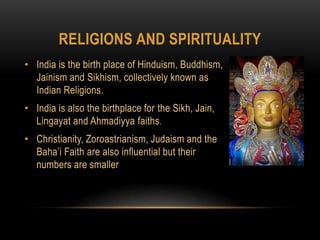
Religions and SpiritualityIndia is the birth place of Hinduism, Buddhism, Jainism and Sikhism, collectively known as Indian Religions.India is also the birthplace for the Sikh, Jain, Lingayat and Ahmadiyya faiths.Christianity, Zoroastrianism, Judaism and the Baha’i Faith are also influential but their numbers are smaller
societyFrom an early age, children are reminded of their roles and places in society.Many believe gods and spirits have an integral and functional role in determining their life.Several differences such as religion divide the culture.It is common that three or four generations of the family live under the same roof.
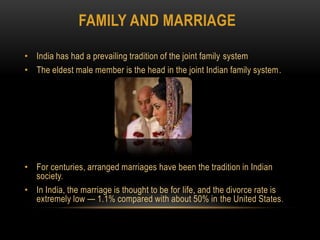
Family and MarriageIndia has had a prevailing tradition of the joint family systemThe eldest male member is the head in the joint Indian family system.For centuries, arranged marriages have been the tradition in Indian society.In India, the marriage is thought to be for life, and the divorce rate is extremely low — 1.1% compared with about 50% in the United States.
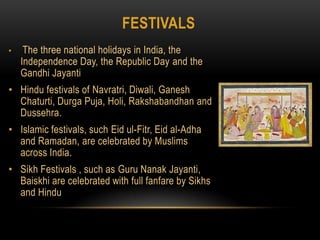
festivalsThe three national holidays in India, the Independence Day, the Republic Day and the Gandhi JayantiHindu festivals of Navratri, Diwali, Ganesh Chaturti, Durga Puja, Holi, Rakshabandhan and Dussehra.Islamic festivals, such Eidul-Fitr, Eid al-Adha and Ramadan, are celebrated by Muslims across India.Sikh Festivals , such as Guru Nanak Jayanti, Baiskhiare celebrated with full fanfare by Sikhs and Hindu
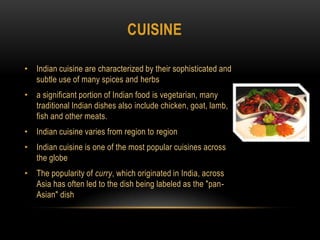
cuisineIndian cuisine are characterized by their sophisticated and subtle use of many spices and herbsa significant portion of Indian food is vegetarian, many traditional Indian dishes also include chicken, goat, lamb, fish and other meats.Indian cuisine varies from region to regionIndian cuisine is one of the most popular cuisines across the globeThe popularity of curry, which originated in India, across Asia has often led to the dish being labeled as the "pan-Asian" dish
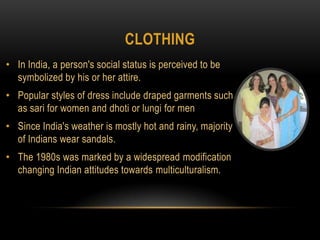
clothingIn India, a person's social status is perceived to be symbolized by his or her attire. Popular styles of dress include draped garments such as sari for women and dhoti or lungi for menSince India's weather is mostly hot and rainy, majority of Indians wear sandals. The 1980s was marked by a widespread modification changing Indian attitudes towards multiculturalism.
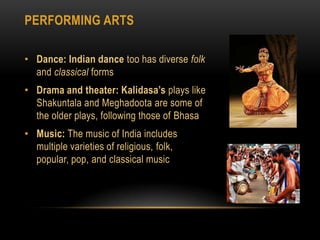
Performing artsDance: Indian dancetoo has diverse folk and classical formsDrama and theater: Kalidasa’splays like Shakuntalaand Meghadootaare some of the older plays, following those of BhasaMusic: The music of India includes multiple varieties of religious, folk, popular, pop, and classical music
Media on cultureThe impact of mass media on culture in India is very significantWith regards to their dressing and personifications of themselves, mass media has affected the lives of people in many ways. Social structures in India have also changed with respect to the caste system.Village theatre and dance (nautanki) has been replaced by cinema and television serials.
Traditional forms of communication and entertainmentIn the past, Indian drama and theatre were a significant part of “Indian culture” and some of the oldest plays in the world originated from India. These have since been replaced by Bollywood cinema and the tv-serial market. Finally, the music of India includes multiple varieties of folk, pop and classical music.
Changes in Social StructureCaste members are expected to marry within the group and follow caste rules pertaining to diet, avoidance of ritual pollution, and many other aspects of life.With the advent of mass media and channels of communication and information, the Brahmins who have traditionally been at the top of the caste system have been replaced by those with colour television sets in their homes
Thank youHave a good day

Media & culture

  • 1.
    NAME- MERWYN FERNANDESCLASS-SYBMMROLL NO – 01SUBJECT- INTRODUCTION TO Cultural studiesSUB-TOPIC- culture and media
  • 2.
  • 3.
    CultureRegarded by somehistorians as the “Oldest living civilization of Earth", the Indian tradition dates back to 8,000 BCThe culture of India has been shaped not only by its long history, but also by its ancient heritages.India's languages, religions, dance, music, architecture and customs differ from place to place within the country
  • 4.
    Religions and SpiritualityIndiais the birth place of Hinduism, Buddhism, Jainism and Sikhism, collectively known as Indian Religions.India is also the birthplace for the Sikh, Jain, Lingayat and Ahmadiyya faiths.Christianity, Zoroastrianism, Judaism and the Baha’i Faith are also influential but their numbers are smaller
  • 5.
    societyFrom an earlyage, children are reminded of their roles and places in society.Many believe gods and spirits have an integral and functional role in determining their life.Several differences such as religion divide the culture.It is common that three or four generations of the family live under the same roof.
  • 6.
    Family and MarriageIndiahas had a prevailing tradition of the joint family systemThe eldest male member is the head in the joint Indian family system.For centuries, arranged marriages have been the tradition in Indian society.In India, the marriage is thought to be for life, and the divorce rate is extremely low — 1.1% compared with about 50% in the United States.
  • 7.
    festivalsThe three nationalholidays in India, the Independence Day, the Republic Day and the Gandhi JayantiHindu festivals of Navratri, Diwali, Ganesh Chaturti, Durga Puja, Holi, Rakshabandhan and Dussehra.Islamic festivals, such Eidul-Fitr, Eid al-Adha and Ramadan, are celebrated by Muslims across India.Sikh Festivals , such as Guru Nanak Jayanti, Baiskhiare celebrated with full fanfare by Sikhs and Hindu
  • 8.
    cuisineIndian cuisine arecharacterized by their sophisticated and subtle use of many spices and herbsa significant portion of Indian food is vegetarian, many traditional Indian dishes also include chicken, goat, lamb, fish and other meats.Indian cuisine varies from region to regionIndian cuisine is one of the most popular cuisines across the globeThe popularity of curry, which originated in India, across Asia has often led to the dish being labeled as the "pan-Asian" dish
  • 9.
    clothingIn India, aperson's social status is perceived to be symbolized by his or her attire. Popular styles of dress include draped garments such as sari for women and dhoti or lungi for menSince India's weather is mostly hot and rainy, majority of Indians wear sandals. The 1980s was marked by a widespread modification changing Indian attitudes towards multiculturalism.
  • 10.
    Performing artsDance: Indiandancetoo has diverse folk and classical formsDrama and theater: Kalidasa’splays like Shakuntalaand Meghadootaare some of the older plays, following those of BhasaMusic: The music of India includes multiple varieties of religious, folk, popular, pop, and classical music
  • 11.
    Media on cultureTheimpact of mass media on culture in India is very significantWith regards to their dressing and personifications of themselves, mass media has affected the lives of people in many ways. Social structures in India have also changed with respect to the caste system.Village theatre and dance (nautanki) has been replaced by cinema and television serials.
  • 12.
    Traditional forms ofcommunication and entertainmentIn the past, Indian drama and theatre were a significant part of “Indian culture” and some of the oldest plays in the world originated from India. These have since been replaced by Bollywood cinema and the tv-serial market. Finally, the music of India includes multiple varieties of folk, pop and classical music.
  • 13.
    Changes in SocialStructureCaste members are expected to marry within the group and follow caste rules pertaining to diet, avoidance of ritual pollution, and many other aspects of life.With the advent of mass media and channels of communication and information, the Brahmins who have traditionally been at the top of the caste system have been replaced by those with colour television sets in their homes
  • 14.