8.7 Mutations
KEY CONCEPT
Mutations are changes in DNA that may or may not
affect phenotype.
8.7 Mutations
• A mutation is a change in an organism’s DNA.
• Many kinds of mutations can occur, especially during
replication.
• Most mutations are repaired by organism’s enzymes
and have no effect.
• If not repaired, the altered gene/chromosome will be
passed to daughter cells.
8.7 Mutations
Mutations in body (somatic) cells verses gametes.
• In a somatic cell, daughter cells are affected by the DNA
but not the offspring of the organism.
– Body cell mutations contribute to aging or the
development of cancer.
• If the mutant is a gamete (sex cell), the altered DNA will
be transmitted to the embryo and may be passed on from
generation to generation. These cause genetic
disorders.
• If the mutation affects a gene, then it’s a gene mutation.
• If the mutation affects a chromosome or multiple genes
it’s a chromosomal mutation.
8.7 Mutations
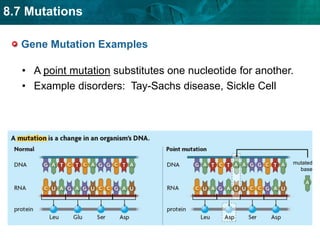
Gene Mutation Examples
• A point mutation substitutes one nucleotide for another.
• Example disorders: Tay-Sachs disease, Sickle Cell
mutated
base
8.7 Mutations
– A frameshift mutation inserts (insertion) or deletes
(deletion) a nucleotide in the DNA sequence.
Frameshift Mutation
8.7 Mutations
– Gene duplication results from unequal crossing over.
• Chromosomal mutations may occur during crossing over
Chromosomal Mutations
8.7 Mutations
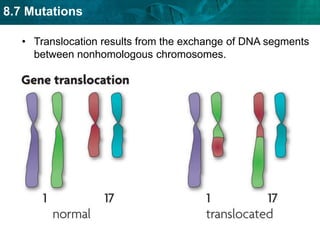
• Translocation results from the exchange of DNA segments
between nonhomologous chromosomes.
8.7 Mutations
Deletion
Duplication
Inversion
Translocation
Figure 12–20 Chromosomal Mutations
Section 12-4
8.7 Mutations
Nondisjunction
• Usually occurs during meiosis and can cause gametes to
lack a chromosome or have an extra chromosome.
– Example: An egg may have 22 or 24 chromosomes.
• If a zygote has only 45 chromosomes then one pair has only
one chromosome (monosomy).
• If a zygote has 47 chromosomes then there are 3 copies of
one chromosome (trisomy).
– Example disorders: Down syndrome, klinefelter’s
syndrome and Turner’s syndrome
8.7 Mutations Turner Syndrome
Nondisjunction
8.7 Mutations
Mutations can be caused by several factors.
• Replication errors can cause
mutations.
• Mutagens, such as UV ray and
chemicals (carcinogens), can
cause mutations.
• Some cancer drugs use
mutagenic properties to kill
cancer cells.
8.7 Mutations
• Mutations in body cells do not affect offspring.
• Mutations in sex cells
can be harmful or
beneficial to offspring.
• Natural selection often
removes mutant alleles
from a population when
they are less adaptive.
• Beneficial mutations
may be useful to
organisms in changing
environments.
These mutations
may be favored by
natural selection.

mdougallmutations.ppt

  • 1.
    8.7 Mutations KEY CONCEPT Mutationsare changes in DNA that may or may not affect phenotype.
  • 2.
    8.7 Mutations • Amutation is a change in an organism’s DNA. • Many kinds of mutations can occur, especially during replication. • Most mutations are repaired by organism’s enzymes and have no effect. • If not repaired, the altered gene/chromosome will be passed to daughter cells.
  • 3.
    8.7 Mutations Mutations inbody (somatic) cells verses gametes. • In a somatic cell, daughter cells are affected by the DNA but not the offspring of the organism. – Body cell mutations contribute to aging or the development of cancer. • If the mutant is a gamete (sex cell), the altered DNA will be transmitted to the embryo and may be passed on from generation to generation. These cause genetic disorders. • If the mutation affects a gene, then it’s a gene mutation. • If the mutation affects a chromosome or multiple genes it’s a chromosomal mutation.
  • 4.
    8.7 Mutations Gene MutationExamples • A point mutation substitutes one nucleotide for another. • Example disorders: Tay-Sachs disease, Sickle Cell mutated base
  • 5.
    8.7 Mutations – Aframeshift mutation inserts (insertion) or deletes (deletion) a nucleotide in the DNA sequence. Frameshift Mutation
  • 6.
    8.7 Mutations – Geneduplication results from unequal crossing over. • Chromosomal mutations may occur during crossing over Chromosomal Mutations
  • 7.
    8.7 Mutations • Translocationresults from the exchange of DNA segments between nonhomologous chromosomes.
  • 8.
  • 9.
    8.7 Mutations Nondisjunction • Usuallyoccurs during meiosis and can cause gametes to lack a chromosome or have an extra chromosome. – Example: An egg may have 22 or 24 chromosomes. • If a zygote has only 45 chromosomes then one pair has only one chromosome (monosomy). • If a zygote has 47 chromosomes then there are 3 copies of one chromosome (trisomy). – Example disorders: Down syndrome, klinefelter’s syndrome and Turner’s syndrome
  • 10.
    8.7 Mutations TurnerSyndrome Nondisjunction
  • 11.
    8.7 Mutations Mutations canbe caused by several factors. • Replication errors can cause mutations. • Mutagens, such as UV ray and chemicals (carcinogens), can cause mutations. • Some cancer drugs use mutagenic properties to kill cancer cells.
  • 12.
    8.7 Mutations • Mutationsin body cells do not affect offspring. • Mutations in sex cells can be harmful or beneficial to offspring. • Natural selection often removes mutant alleles from a population when they are less adaptive. • Beneficial mutations may be useful to organisms in changing environments. These mutations may be favored by natural selection.