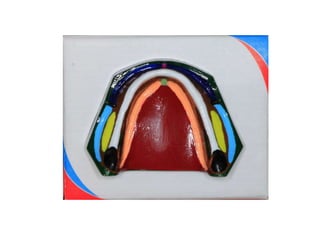
LANDMARKS OF
COMPLETE
DENTURE
FOUNDATION
AREA
By
Dr Osama Askar
BDS. MSC. PHD. Faculty of Dentistry
Mansoura University,
WHY WE SHOULD KNOW THAT?
To have the knowledge about the nature of denture
supporting and limiting structures, which allow me to
construct a complete denture with maximum stability,
retention and support. That denture can give me maximum
comfort, function, esthetic and preservation of remaining
structures
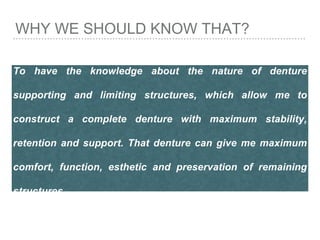
INTRA ORAL MAXILLARY ANATOMICAL
LAND MARKS
1.SUPPORTING
STRUCTURES
2.RELIEF
STRUCTURES
3.LIMITING
STRUCTURES
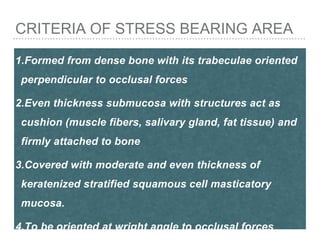
CRITERIA OF STRESS BEARING AREA
1.Formed from dense bone with its trabeculae oriented
perpendicular to occlusal forces
2.Even thickness submucosa with structures act as
cushion (muscle fibers, salivary gland, fat tissue) and
firmly attached to bone
3.Covered with moderate and even thickness of
keratenized stratified squamous cell masticatory
mucosa.
4.To be oriented at wright angle to occlusal forces
MAXILLARY
ANATOMICAL
LANDMARKS
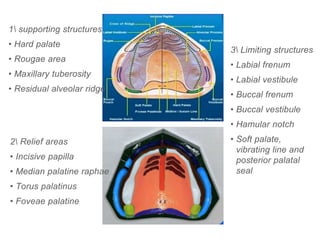
1 supporting structures
• Hard palate
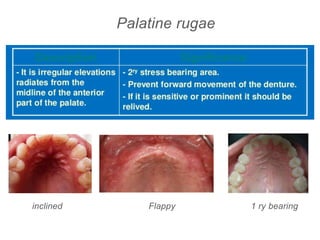
• Rougae area
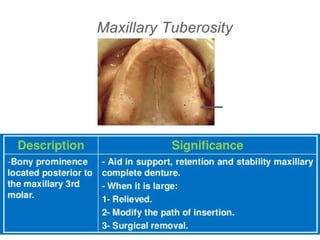
• Maxillary tuberosity
• Residual alveolar ridge
2 Relief areas
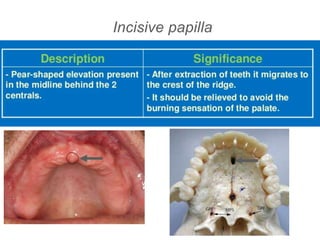
• Incisive papilla
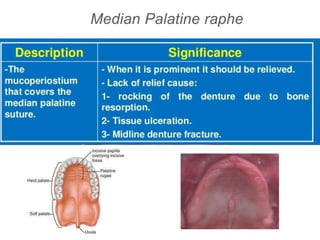
• Median palatine raphae
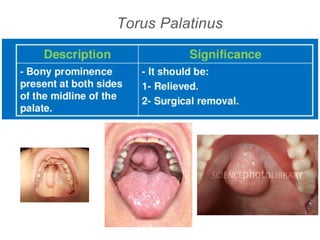
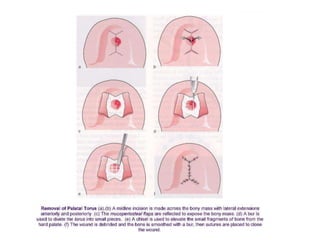
• Torus palatinus
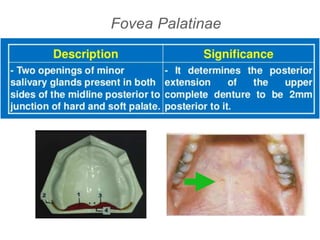
• Foveae palatine
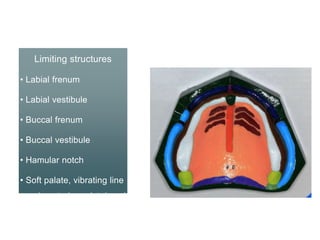
3 Limiting structures
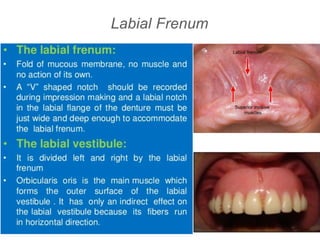
• Labial frenum
• Labial vestibule
• Buccal frenum
• Buccal vestibule
• Hamular notch
• Soft palate,
vibrating line and
posterior palatal
seal
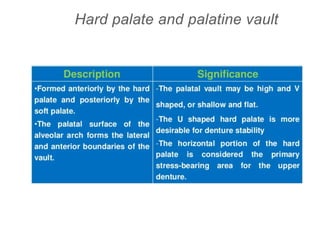
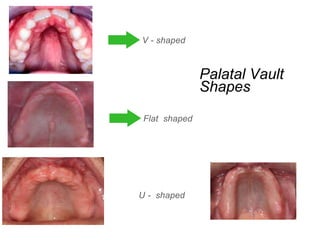
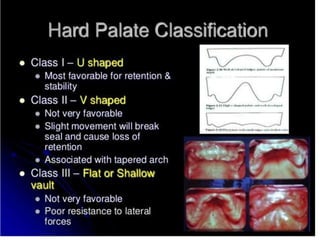
Hard palate and palatine vault
Flat shaped
Palatal Vault
Shapes
U - shaped
V - shaped
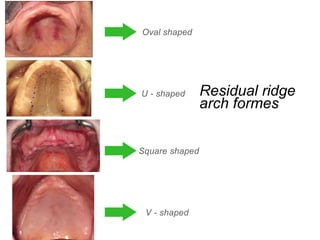
Oval shaped
Square shaped
U - shaped
V - shaped
Residual ridge
arch formes
Maxillary Tuberosity
Palatine rugae
1 ry bearingFlappyinclined
Incisive papilla
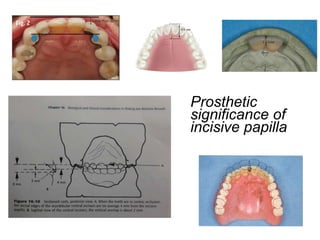
Prosthetic
significance of
incisive papilla
Median Palatine raphe
Torus Palatinus
Fovea Palatinae
Limiting structures
• Labial frenum
• Labial vestibule
• Buccal frenum
• Buccal vestibule
• Hamular notch
• Soft palate, vibrating line
and posterior palatal seal
Labial Frenum
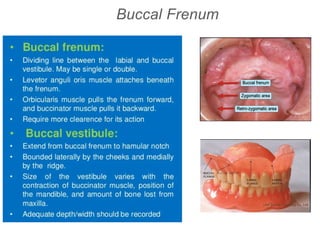
Buccal Frenum
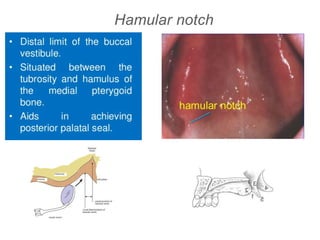
Hamular notch
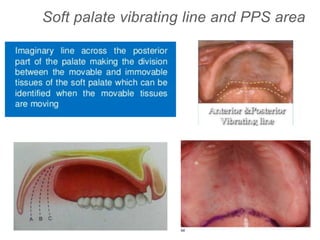
Soft palate vibrating line and PPS area
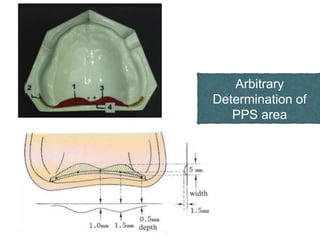
Arbitrary
Determination of
PPS area
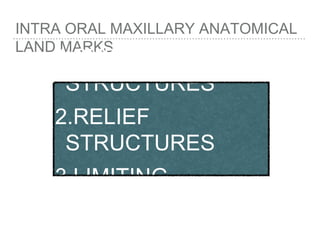
MANDIBULAR
ANATOMICAL
LANDMARKS
1 supporting structures
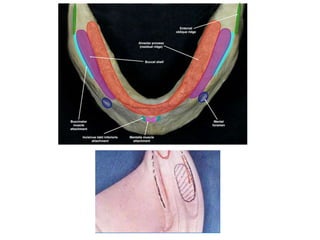
• Buccal shelf area
• Residual alveolar ridge
• External oblique ridge
2 Relief areas
• Mental foramen area
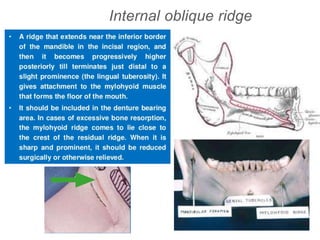
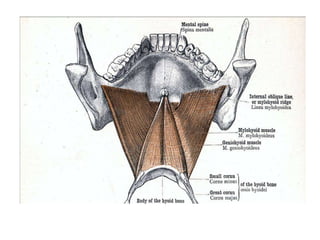
• Internal oblique ridge
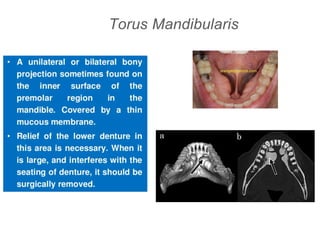
• Torus Mandibularis
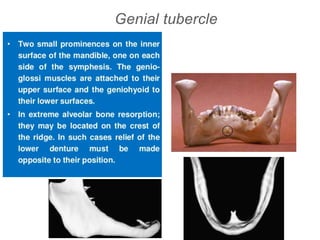
• Genial tubercles
3 Limiting structures
• Labial frenum
• Labial vestibule
• Buccal frenum
• Buccal vestibule
• Retromolar pad
• Lingual frenum
• Lingual vestibule
(sublingual cresent
area, mylohyoid
area,
retromylohyoid area
or lingual pouch)
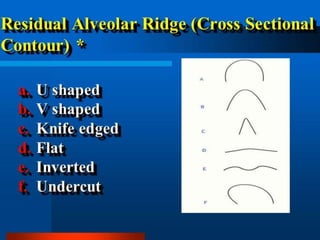
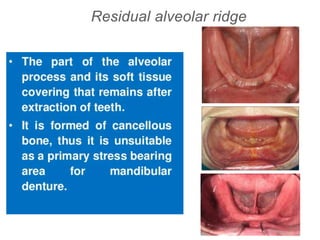
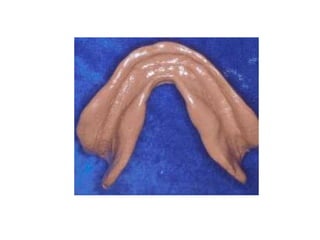
Residual alveolar ridge
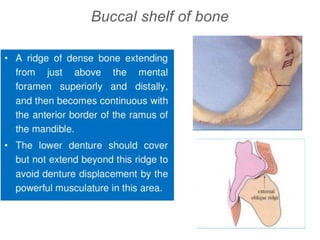
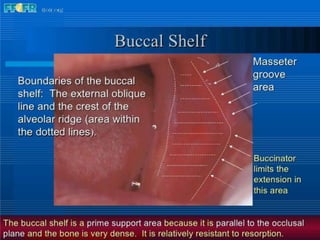
Buccal shelf of bone
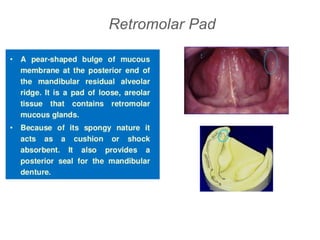
Retromolar Pad
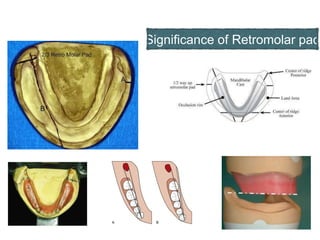
Significance of Retromolar pad
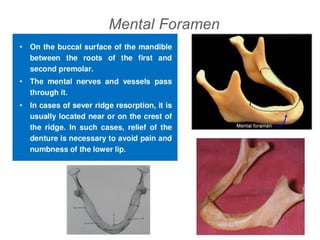
Mental Foramen
Internal oblique ridge
Torus Mandibularis
Genial tubercle
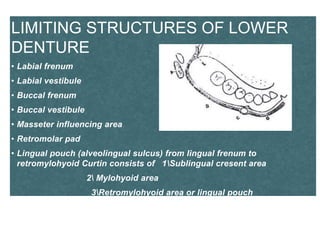
LIMITING STRUCTURES OF LOWER
DENTURE
• Labial frenum
• Labial vestibule
• Buccal frenum
• Buccal vestibule
• Masseter influencing area
• Retromolar pad
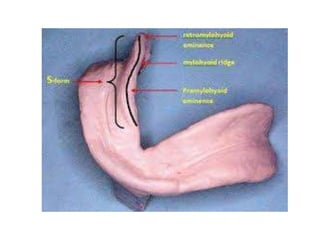
• Lingual pouch (alveolingual sulcus) from lingual frenum to
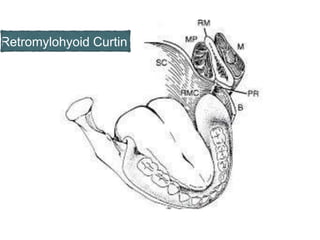
retromylohyoid Curtin consists of 1Sublingual cresent area
2 Mylohyoid area
3Retromylohyoid area or lingual pouch
Retromylohyoid Curtin
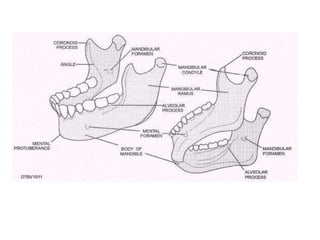
Maxillary and mandibular anatomical land marks

Maxillary and mandibular anatomical land marks