PHASES OF MATTER
WHAT IS MATTER?
 Anything
        that occupies SPACE and
 has MASS.


 Everything   we see around us are
 MATTER.
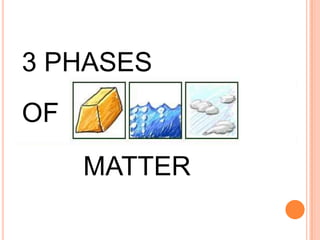
3 PHASES
OF

     MATTER
A phase is a distinct and
 homogeneous state of a system with
 no visible boundary separating it into
 parts.

 Conversion between these states is
 called a phase transition.
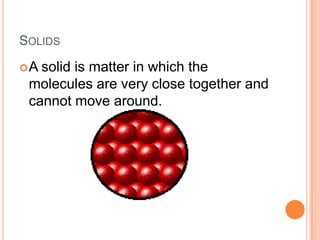
SOLIDS
A solid is matter in which the
 molecules are very close together and
 cannot move around.
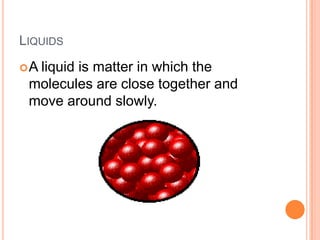
LIQUIDS
Aliquid is matter in which the
 molecules are close together and
 move around slowly.
GASES
   A gas is matter in which the molecules are widely
    separated, move around freely, and move at high
    speeds.
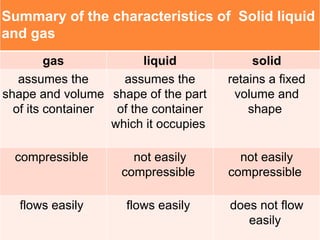
Summary of the characteristics of Solid liquid
and gas
         gas             liquid             solid
   assumes the       assumes the       retains a fixed
shape and volume shape of the part      volume and
  of its container  of the container       shape
                   which it occupies

  compressible         not easily        not easily
                     compressible      compressible

   flows easily      flows easily      does not flow
                                          easily
ARE THERE ONLY 3 PHASES OF
MATTER????

4th phase of matter PLASMA

5th Phase of matter- BEC or
 Bose-Einstein Liquid
 condensate
PLASMA
 Eventually, given enough heat, the electrons
 and nucleus become separated and into
 positively, charged ions and negatively
 charged electrons.

 This
     group or cluster of ions and electrons is
 known as a plasma.

 PLASMAparticles are VERY EXCITED
 PARTICLES.
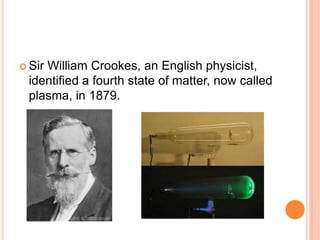
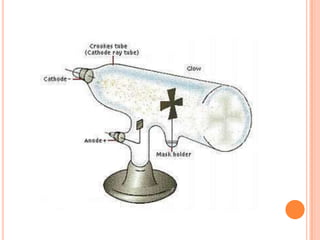
 Sir
    William Crookes, an English physicist,
 identified a fourth state of matter, now called
 plasma, in 1879.
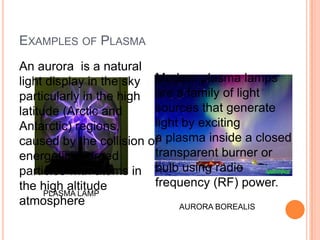
EXAMPLES OF PLASMA
An aurora is a natural
light display in the sky Modern plasma lamps
particularly in the high are a family of light
latitude (Arctic and     sources that generate
Antarctic) regions,      light by exciting
caused by the collision of plasma inside a closed
                         a
energetic charged        transparent burner or
particles with atoms in bulb using radio
the high altitude        frequency (RF) power.
      PLASMA LAMP
atmosphere                    AURORA BOREALIS
BEC OR BOSE-EINSTEIN LIQUID
CONDENSATE
 In
   1995, two scientists, Eric AllinCornell and
 Carl Weiman, finally created the condensate
 Two other scientists, Satyendra Bose and
 Albert Einstein, had predicted it in the
 1920s, but they didn't have the equipment
 and facilities to make it happen at that time.
 They are super unexcited and super
 cold atoms.
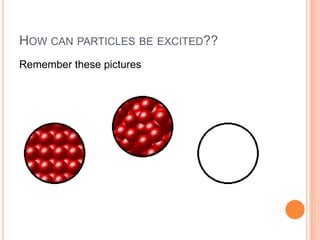
HOW CAN PARTICLES BE EXCITED??
Remember these pictures
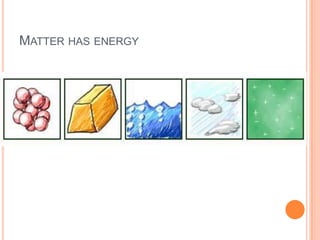
MATTER HAS ENERGY

Matter

  • 1.
  • 2.
    WHAT IS MATTER? Anything that occupies SPACE and has MASS.  Everything we see around us are MATTER.
  • 3.
  • 4.
    A phase isa distinct and homogeneous state of a system with no visible boundary separating it into parts.  Conversion between these states is called a phase transition.
  • 5.
    SOLIDS A solid ismatter in which the molecules are very close together and cannot move around.
  • 6.
    LIQUIDS Aliquid is matterin which the molecules are close together and move around slowly.
  • 7.
    GASES  A gas is matter in which the molecules are widely separated, move around freely, and move at high speeds.
  • 8.
    Summary of thecharacteristics of Solid liquid and gas gas liquid solid assumes the assumes the retains a fixed shape and volume shape of the part volume and of its container of the container shape which it occupies compressible not easily not easily compressible compressible flows easily flows easily does not flow easily
  • 9.
    ARE THERE ONLY3 PHASES OF MATTER???? 4th phase of matter PLASMA 5th Phase of matter- BEC or Bose-Einstein Liquid condensate
  • 10.
    PLASMA  Eventually, givenenough heat, the electrons and nucleus become separated and into positively, charged ions and negatively charged electrons.  This group or cluster of ions and electrons is known as a plasma.  PLASMAparticles are VERY EXCITED PARTICLES.
  • 11.
     Sir William Crookes, an English physicist, identified a fourth state of matter, now called plasma, in 1879.
  • 13.
    EXAMPLES OF PLASMA Anaurora is a natural light display in the sky Modern plasma lamps particularly in the high are a family of light latitude (Arctic and sources that generate Antarctic) regions, light by exciting caused by the collision of plasma inside a closed a energetic charged transparent burner or particles with atoms in bulb using radio the high altitude frequency (RF) power. PLASMA LAMP atmosphere AURORA BOREALIS
  • 14.
    BEC OR BOSE-EINSTEINLIQUID CONDENSATE  In 1995, two scientists, Eric AllinCornell and Carl Weiman, finally created the condensate  Two other scientists, Satyendra Bose and Albert Einstein, had predicted it in the 1920s, but they didn't have the equipment and facilities to make it happen at that time.  They are super unexcited and super cold atoms.
  • 15.
    HOW CAN PARTICLESBE EXCITED?? Remember these pictures
  • 16.