MATERNITY BENEFIT ACT,1961
N.SUBHASHINI
Pre Senior year
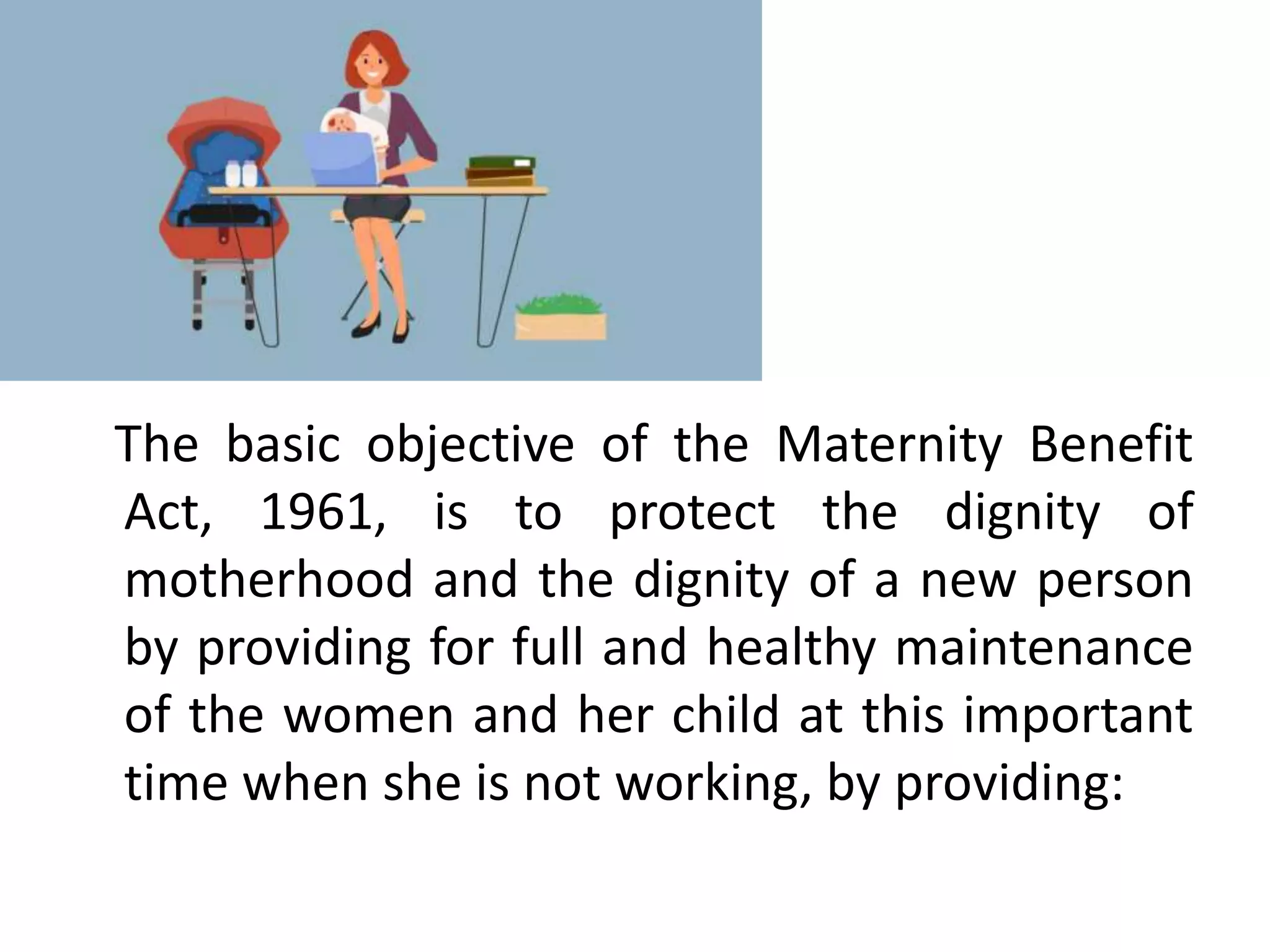
The basic objective of the Maternity Benefit
Act, 1961, is to protect the dignity of
motherhood and the dignity of a new person
by providing for full and healthy maintenance
of the women and her child at this important
time when she is not working, by providing:
Cash Benefits
• Leave with average pay for six weeks before the child
birth
• Leave with average pay for six weeks after the child
birth
• A medical bonus if the employer does not provide free
medical care to the mother
• An additional leave with pay up to one month if the
woman shows proof of illness owing to the pregnancy,
delivery, miscarriage or premature birth
• In case of miscarriage, six weeks leave with average pay
starting from the date of miscarriage.
Non Cash Benefits/Privilege
• Light work for ten weeks (six weeks plus one month)
before the date of expected delivery, if the affected
person asks for it
• Two nursing breaks in the course of lady's daily work
until the child is 15 months old
• No discharge or dismissal while on maternity leave
• No change to disadvantage in any of the conditions of
her employment while on maternity leave
• Pregnant women discharged or dismissed can still
claim maternity benefit from the employer.
ELIGIBILITY
As per the Act, to be eligible for maternity
benefit, a woman must have been working as
an employee in an establishment for a period
of at least 80 days within the past 12 months.
Payment during the leave period is based on
the average daily wage for the period of actual
absence.
Maternity Benefit(Amendment) Act,
2017
The Maternity (Amendment) Bill 2017, an
amendment to the Maternity Benefit Act, 1961:
Increased Paid Maternity Leave-26 weeks
Maternity leave for adoptive and commissioning
mothers-12 weeks
Work from Home option(once leave period of 26
weeks ends)
Crèche facility- organizations having 50 or more
employees
Beneficiary Statistics
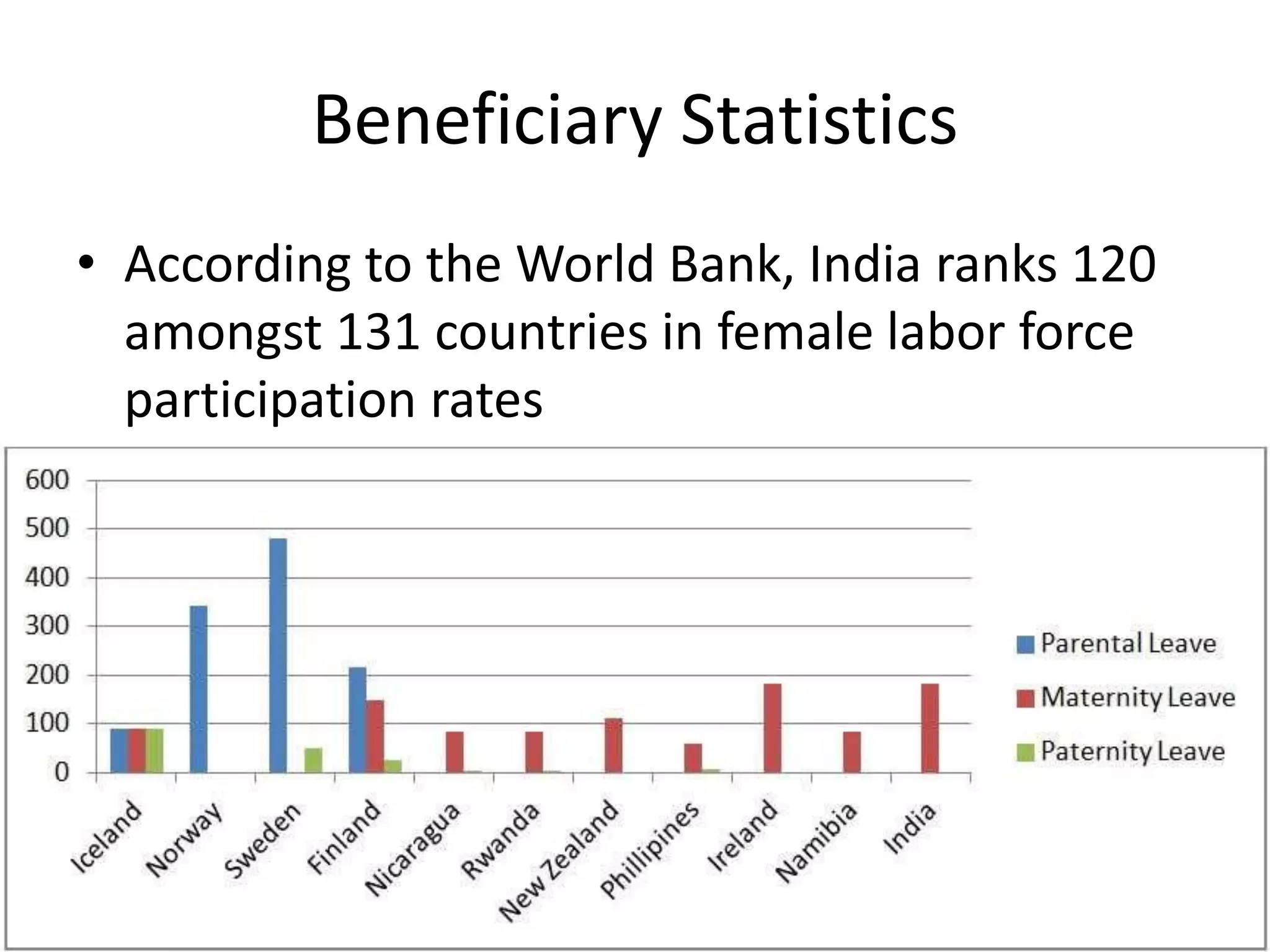
• According to the World Bank, India ranks 120
amongst 131 countries in female labor force
participation rates
Lack of Clarity
• Mental and Physical Health
• Hiring problem(Gender Inequality)
• Post Pregnancy resignation
• Child Care Facilities
• Paternity Leave-not included
PHYSICAL AND
MENTAL HEALTH
HIRING PROBLEMS
• Over 12 million women across all sectors
in India might not even get jobs because of
maternity leaves policy.
• Since employers, especially of small
businesses, incur huge costs due to maternity
leaves, they choose to hire men instead.
POST PREGNANCY
RESIGNATION
The various reasons:
1. Lacking family support
2. Access to childcare
3. Unable to work long hours and night shifts
4. Not given challenges and responsibilities in
work, not given promotion in work
5. Domestic duties and responsibilities
6. Social stigma against women in employment,
gender stereotype and aggressive behavior of
employees.
CHILD CARE FACILITIES
“Section 11A, introduced by the Maternity Act is
that any establishment which has 50 or more
employees shall have the facility of crèches.
The term 'employees' has been used to make
the provision neutral value in gender ,
because though a woman is biologically built
to give birth, however, the responsibility to
take care of a child lies with both the partners
of the family.
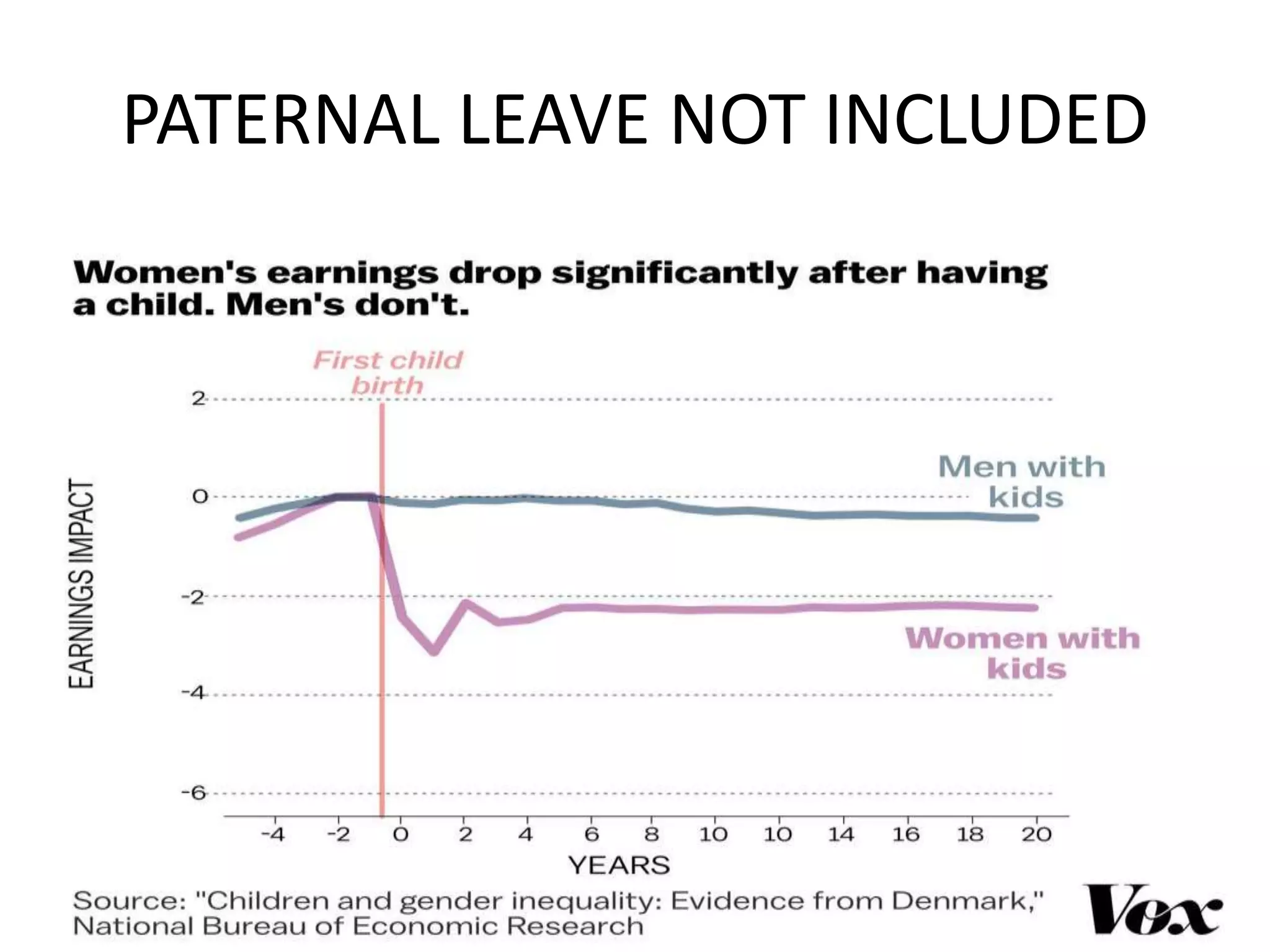
PATERNAL LEAVE NOT INCLUDED
• By providing paid paternity leave, increasing
the post pregnancy leave for women,
providing rights to claim their support at
workplace and many more benefits, could
have benefitted women as an employee.
• The act cannot fulfill the dreams of
motherhood who wants to accomplish in their
profession.
THANK YOU
“Women can’t have it all precisely
because they are responsible for too
many things!”

Maternity ppt

  • 1.
  • 2.
    The basic objectiveof the Maternity Benefit Act, 1961, is to protect the dignity of motherhood and the dignity of a new person by providing for full and healthy maintenance of the women and her child at this important time when she is not working, by providing:
  • 3.
    Cash Benefits • Leavewith average pay for six weeks before the child birth • Leave with average pay for six weeks after the child birth • A medical bonus if the employer does not provide free medical care to the mother • An additional leave with pay up to one month if the woman shows proof of illness owing to the pregnancy, delivery, miscarriage or premature birth • In case of miscarriage, six weeks leave with average pay starting from the date of miscarriage.
  • 4.
    Non Cash Benefits/Privilege •Light work for ten weeks (six weeks plus one month) before the date of expected delivery, if the affected person asks for it • Two nursing breaks in the course of lady's daily work until the child is 15 months old • No discharge or dismissal while on maternity leave • No change to disadvantage in any of the conditions of her employment while on maternity leave • Pregnant women discharged or dismissed can still claim maternity benefit from the employer.
  • 5.
    ELIGIBILITY As per theAct, to be eligible for maternity benefit, a woman must have been working as an employee in an establishment for a period of at least 80 days within the past 12 months. Payment during the leave period is based on the average daily wage for the period of actual absence.
  • 6.
    Maternity Benefit(Amendment) Act, 2017 TheMaternity (Amendment) Bill 2017, an amendment to the Maternity Benefit Act, 1961: Increased Paid Maternity Leave-26 weeks Maternity leave for adoptive and commissioning mothers-12 weeks Work from Home option(once leave period of 26 weeks ends) Crèche facility- organizations having 50 or more employees
  • 7.
    Beneficiary Statistics • Accordingto the World Bank, India ranks 120 amongst 131 countries in female labor force participation rates
  • 8.
    Lack of Clarity •Mental and Physical Health • Hiring problem(Gender Inequality) • Post Pregnancy resignation • Child Care Facilities • Paternity Leave-not included
  • 9.
  • 10.
    HIRING PROBLEMS • Over12 million women across all sectors in India might not even get jobs because of maternity leaves policy. • Since employers, especially of small businesses, incur huge costs due to maternity leaves, they choose to hire men instead.
  • 11.
    POST PREGNANCY RESIGNATION The variousreasons: 1. Lacking family support 2. Access to childcare 3. Unable to work long hours and night shifts 4. Not given challenges and responsibilities in work, not given promotion in work 5. Domestic duties and responsibilities 6. Social stigma against women in employment, gender stereotype and aggressive behavior of employees.
  • 12.
    CHILD CARE FACILITIES “Section11A, introduced by the Maternity Act is that any establishment which has 50 or more employees shall have the facility of crèches. The term 'employees' has been used to make the provision neutral value in gender , because though a woman is biologically built to give birth, however, the responsibility to take care of a child lies with both the partners of the family.
  • 13.
  • 14.
    • By providingpaid paternity leave, increasing the post pregnancy leave for women, providing rights to claim their support at workplace and many more benefits, could have benefitted women as an employee. • The act cannot fulfill the dreams of motherhood who wants to accomplish in their profession.
  • 15.
    THANK YOU “Women can’thave it all precisely because they are responsible for too many things!”