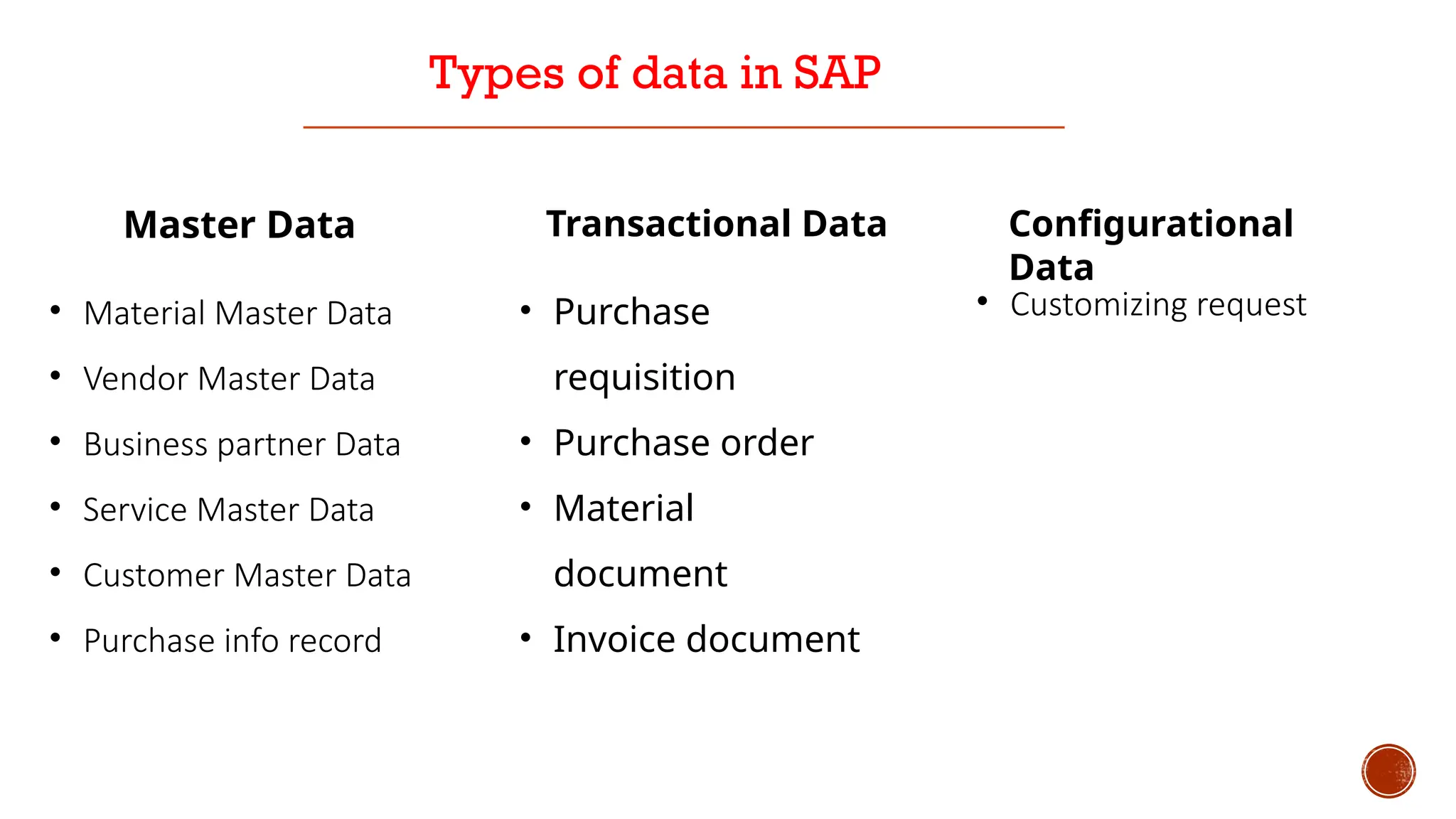
Types of datain SAP
Master Data Transactional Data Configurational
Data
• Material Master Data
• Vendor Master Data
• Business partner Data
• Service Master Data
• Customer Master Data
• Purchase info record
• Purchase
requisition
• Purchase order
• Material
document
• Invoice document
• Customizing request
3.
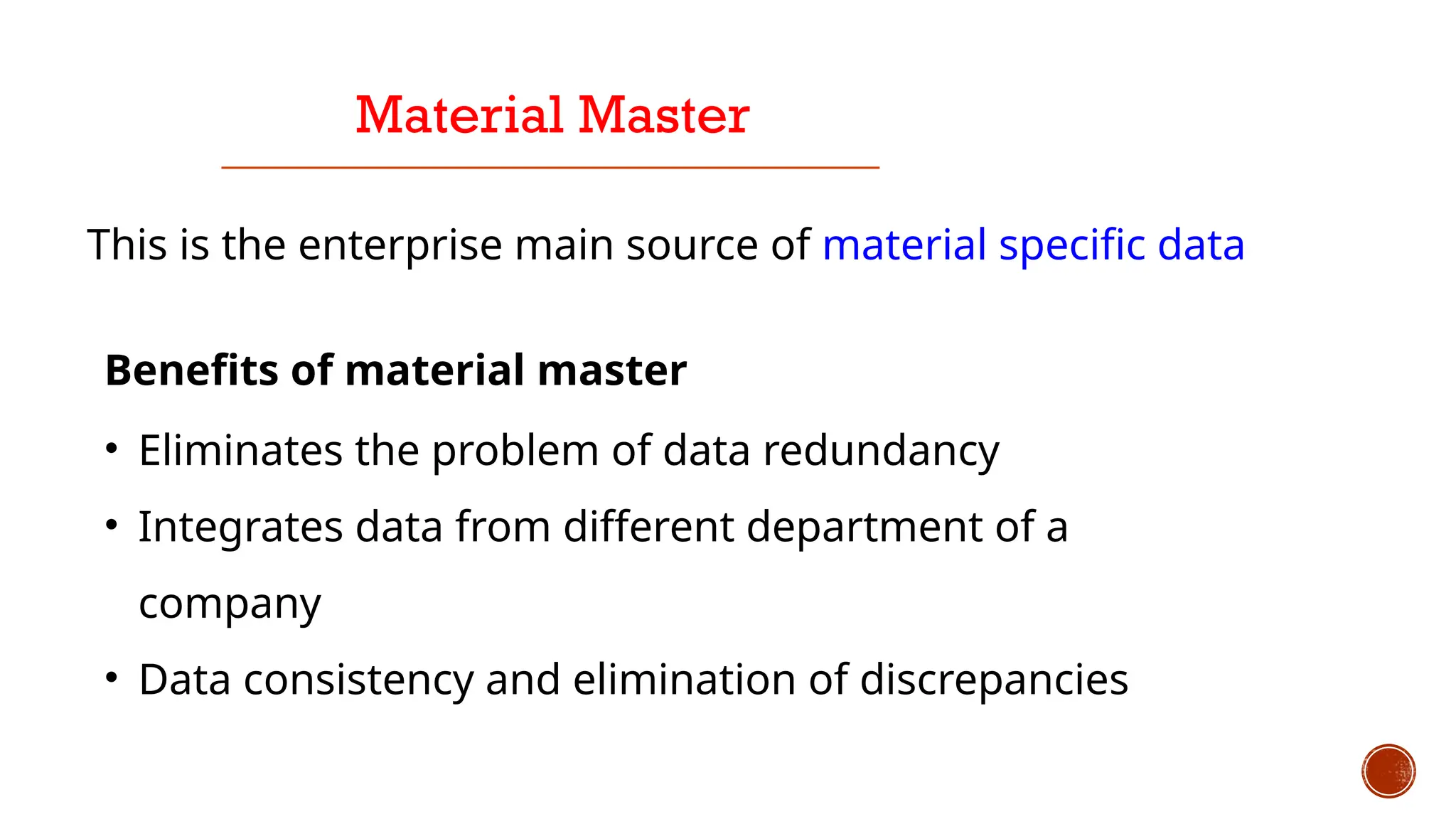
Material Master
This isthe enterprise main source of material specific data
Benefits of material master
• Eliminates the problem of data redundancy
• Integrates data from different department of a
company
• Data consistency and elimination of discrepancies
4.
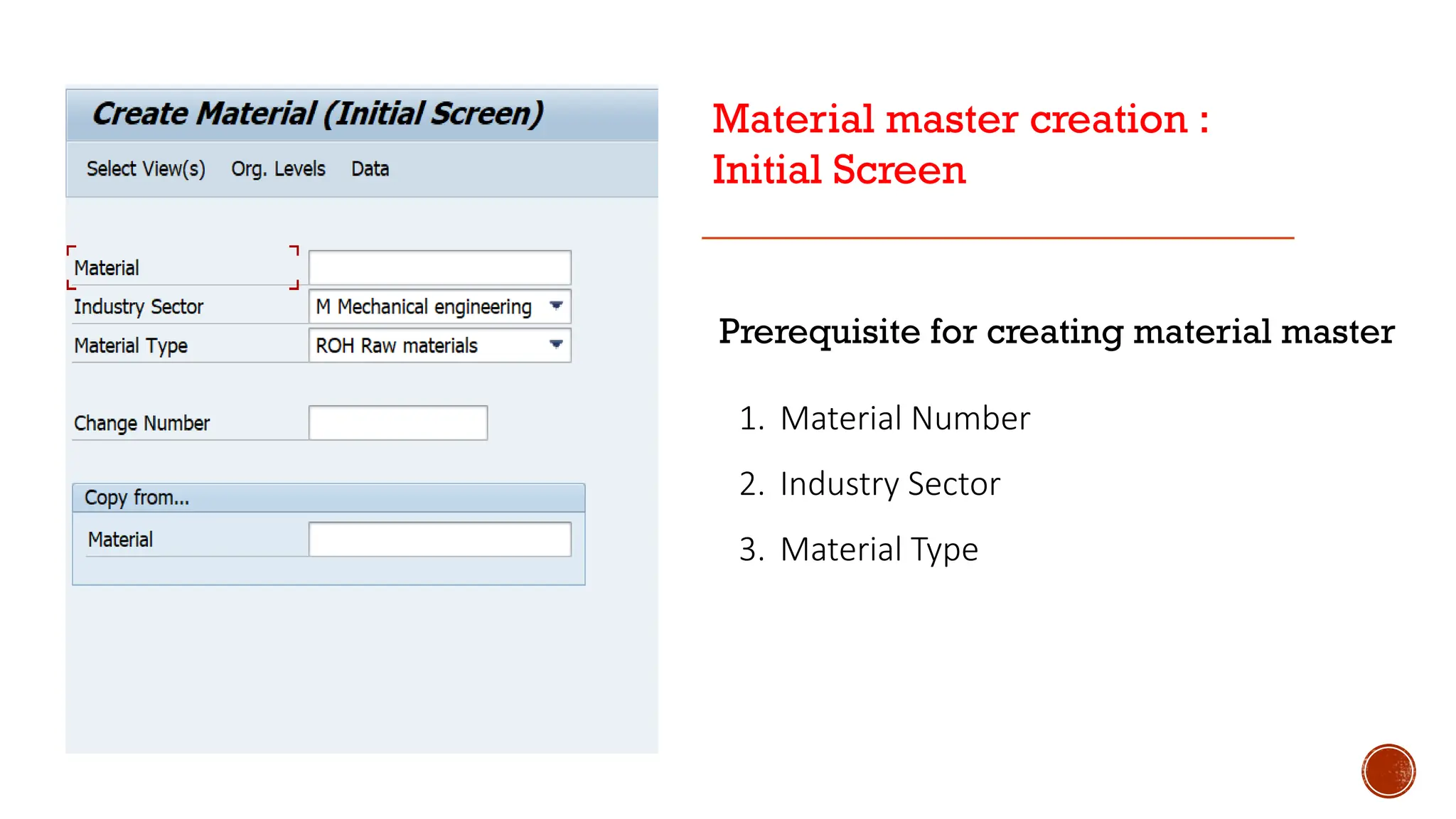
Prerequisite for creatingmaterial master
1. Material Number
2. Industry Sector
3. Material Type
Material master creation :
Initial Screen
5.
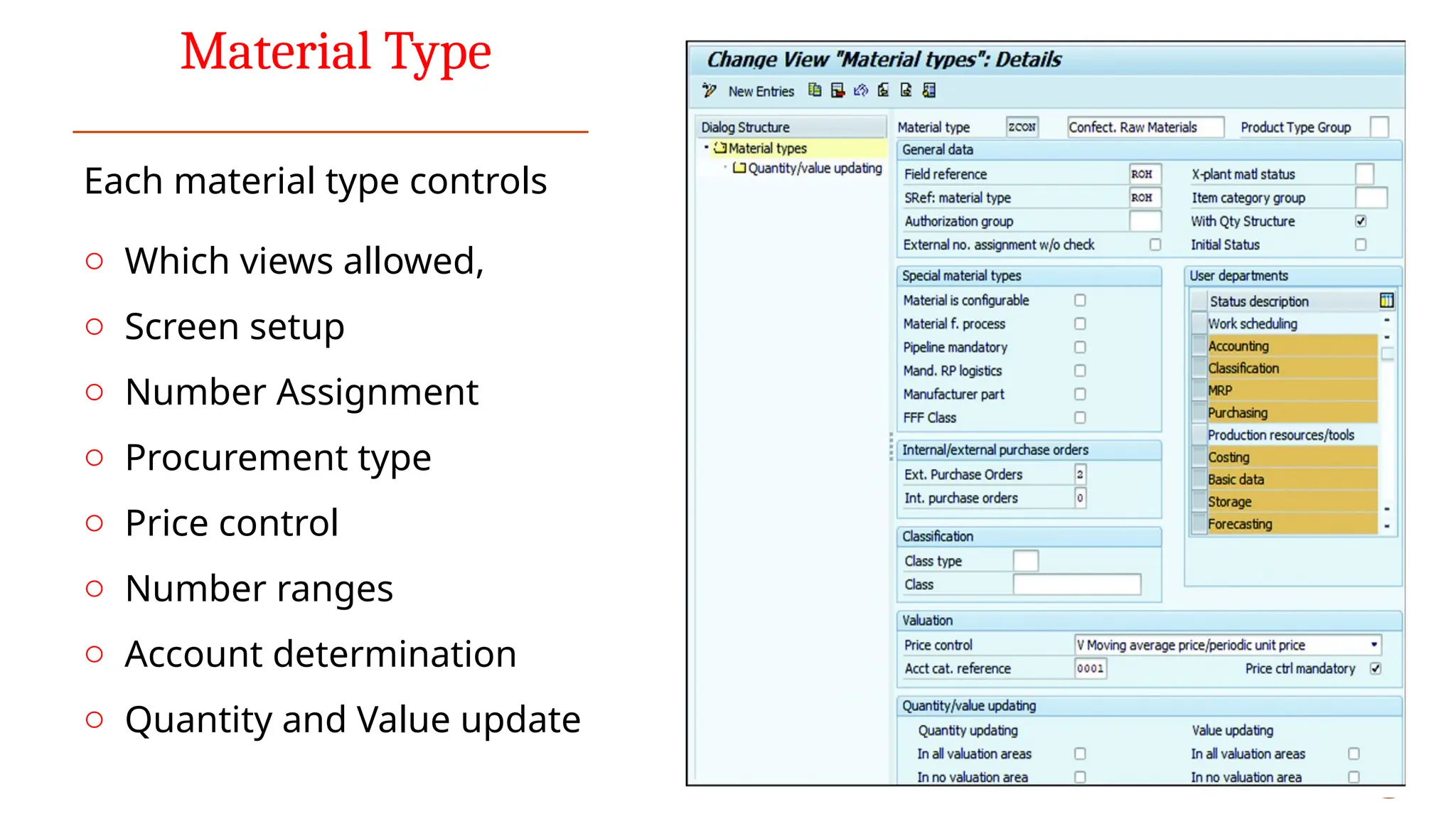
Material Type
Each materialtype controls
o Which views allowed,
o Screen setup
o Number Assignment
o Procurement type
o Price control
o Number ranges
o Account determination
o Quantity and Value update
6.
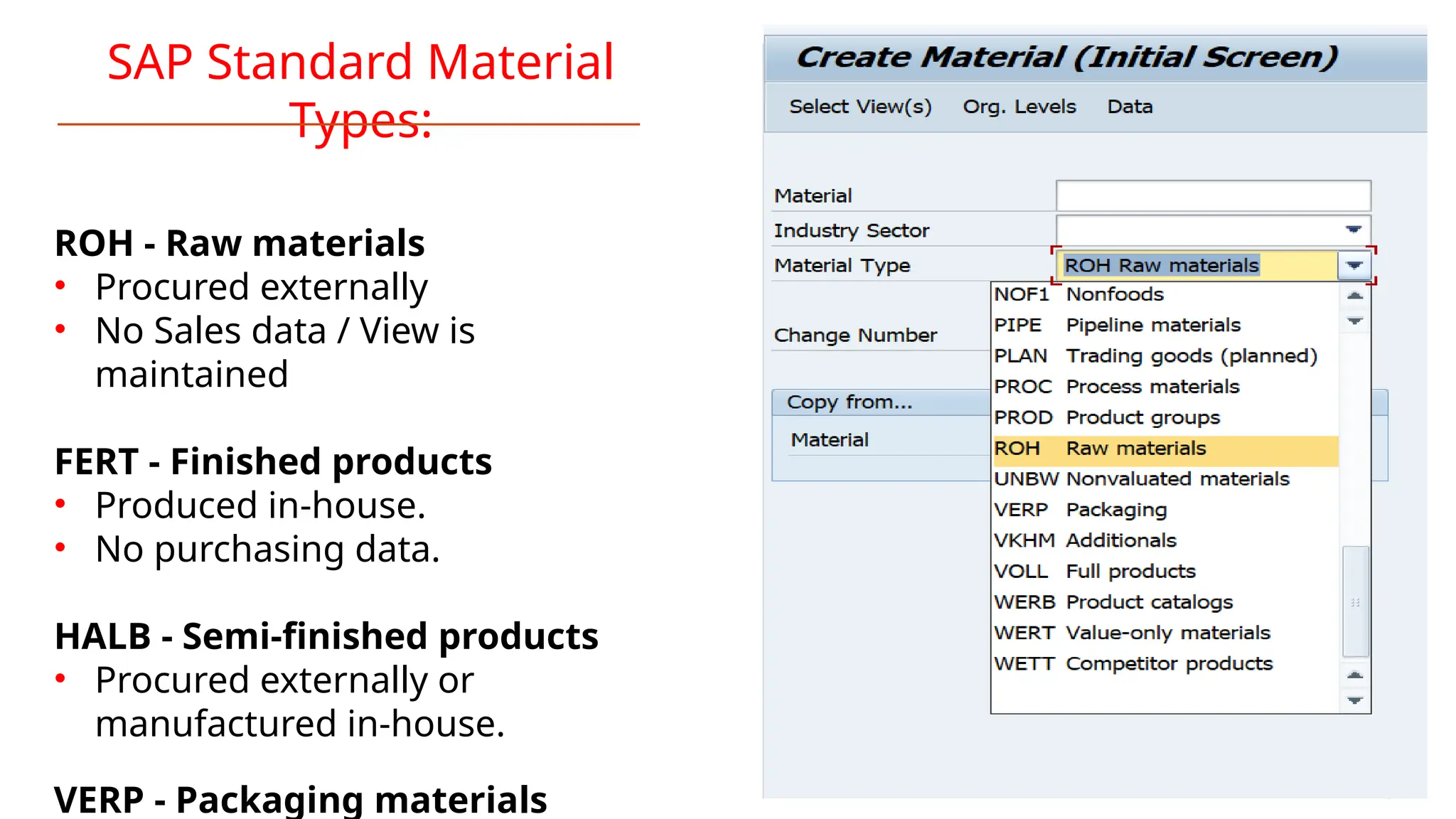
SAP Standard Material
Types:
ROH- Raw materials
• Procured externally
• No Sales data / View is
maintained
FERT - Finished products
• Produced in-house.
• No purchasing data.
HALB - Semi-finished products
• Procured externally or
manufactured in-house.
VERP - Packaging materials
7.
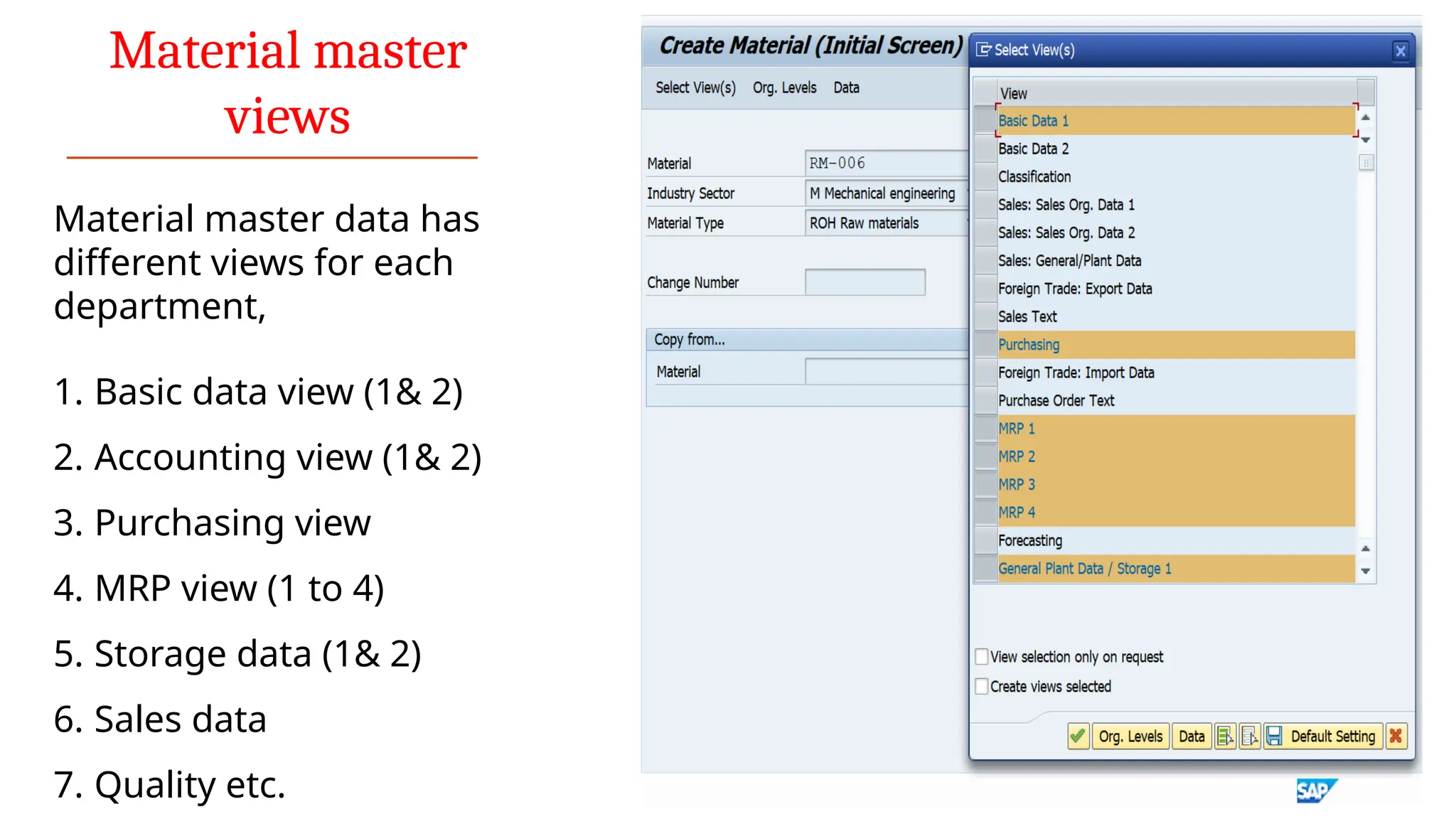
Material master
views
Material masterdata has
different views for each
department,
1. Basic data view (1& 2)
2. Accounting view (1& 2)
3. Purchasing view
4. MRP view (1 to 4)
5. Storage data (1& 2)
6. Sales data
7. Quality etc.
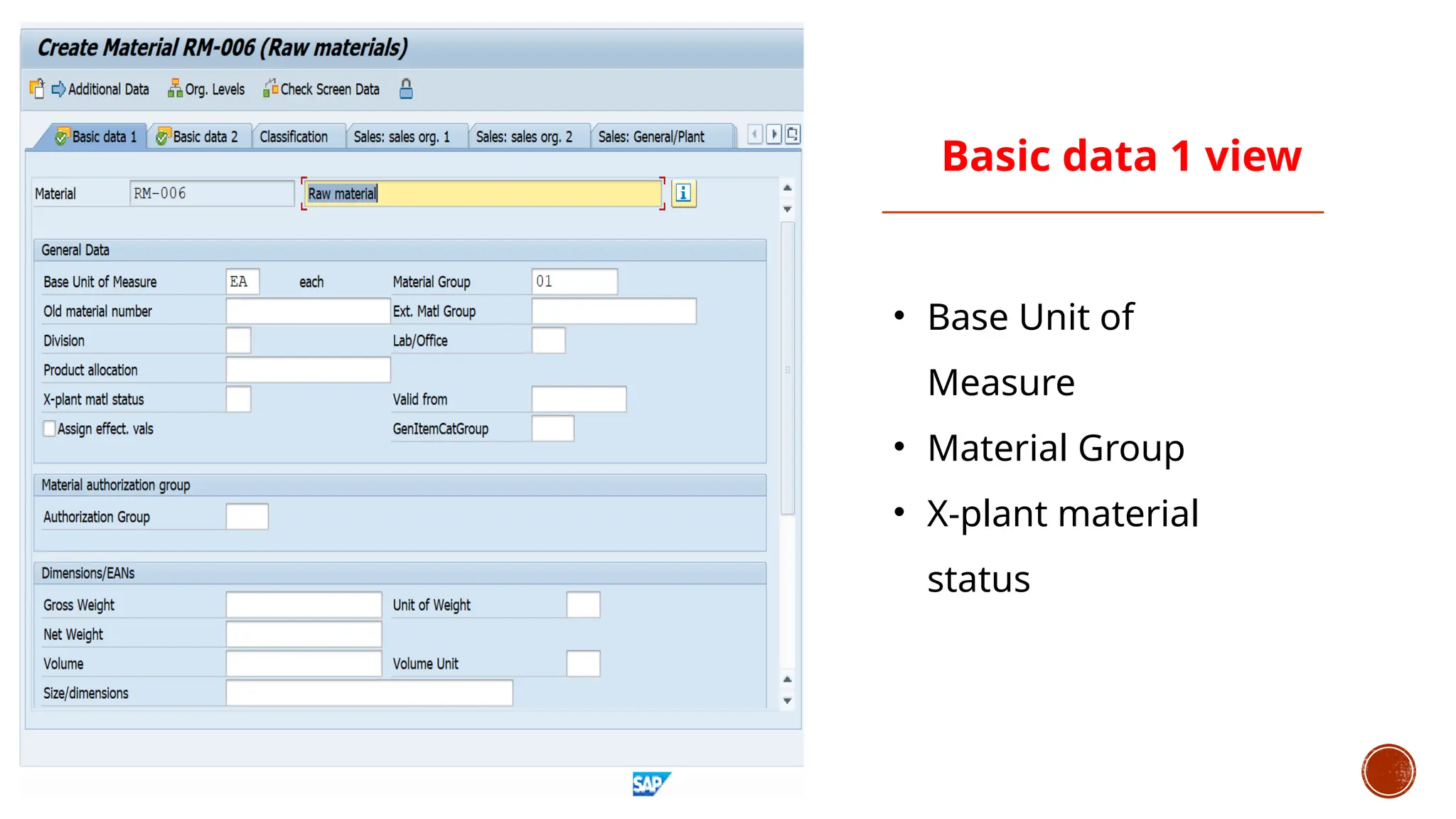
Basic data 1view
• Base Unit of
Measure
• Material Group
• X-plant material
status
10.
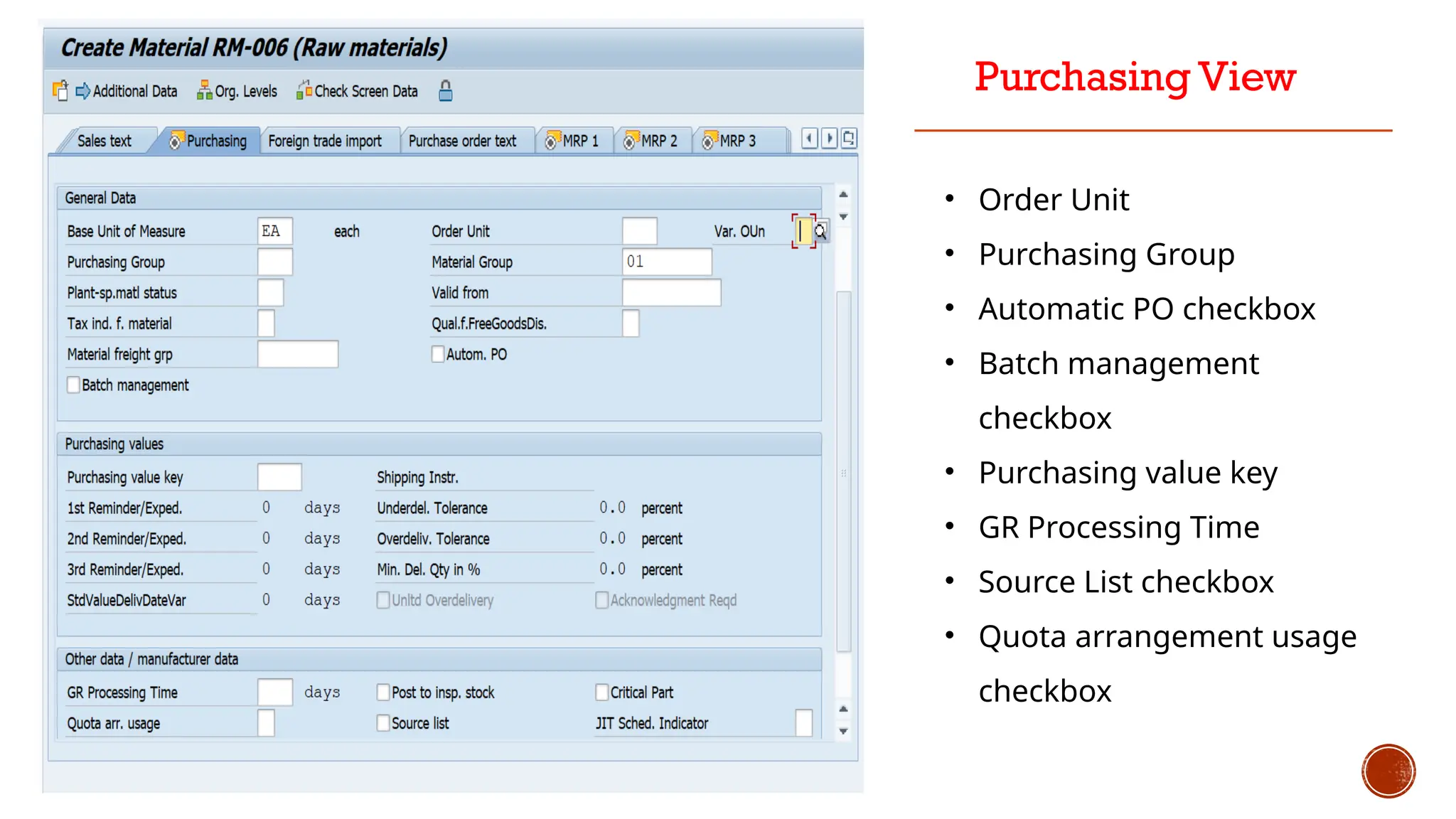
Purchasing View
• OrderUnit
• Purchasing Group
• Automatic PO checkbox
• Batch management
checkbox
• Purchasing value key
• GR Processing Time
• Source List checkbox
• Quota arrangement usage
checkbox
11.
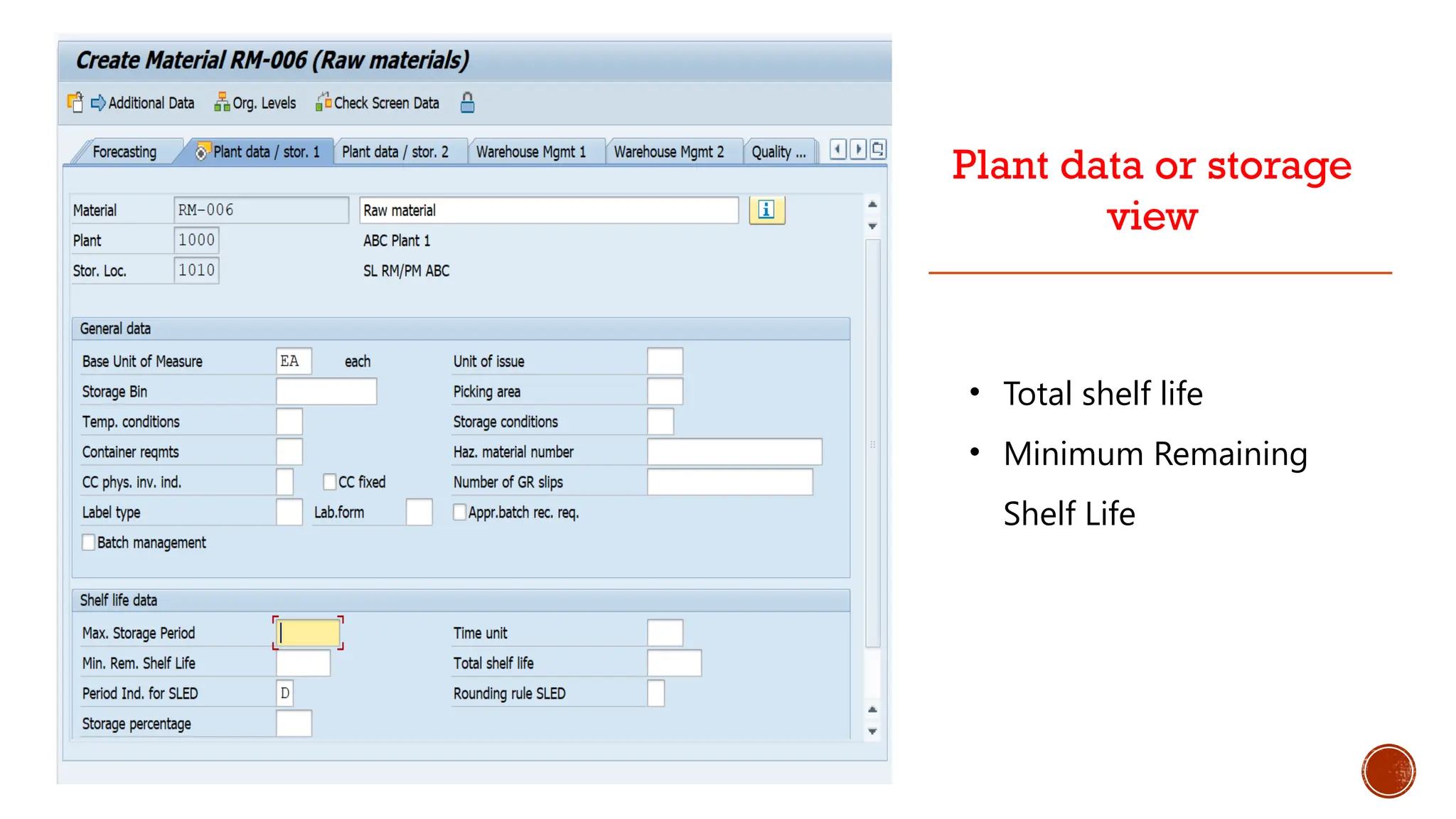
Plant data orstorage
view
• Total shelf life
• Minimum Remaining
Shelf Life
12.
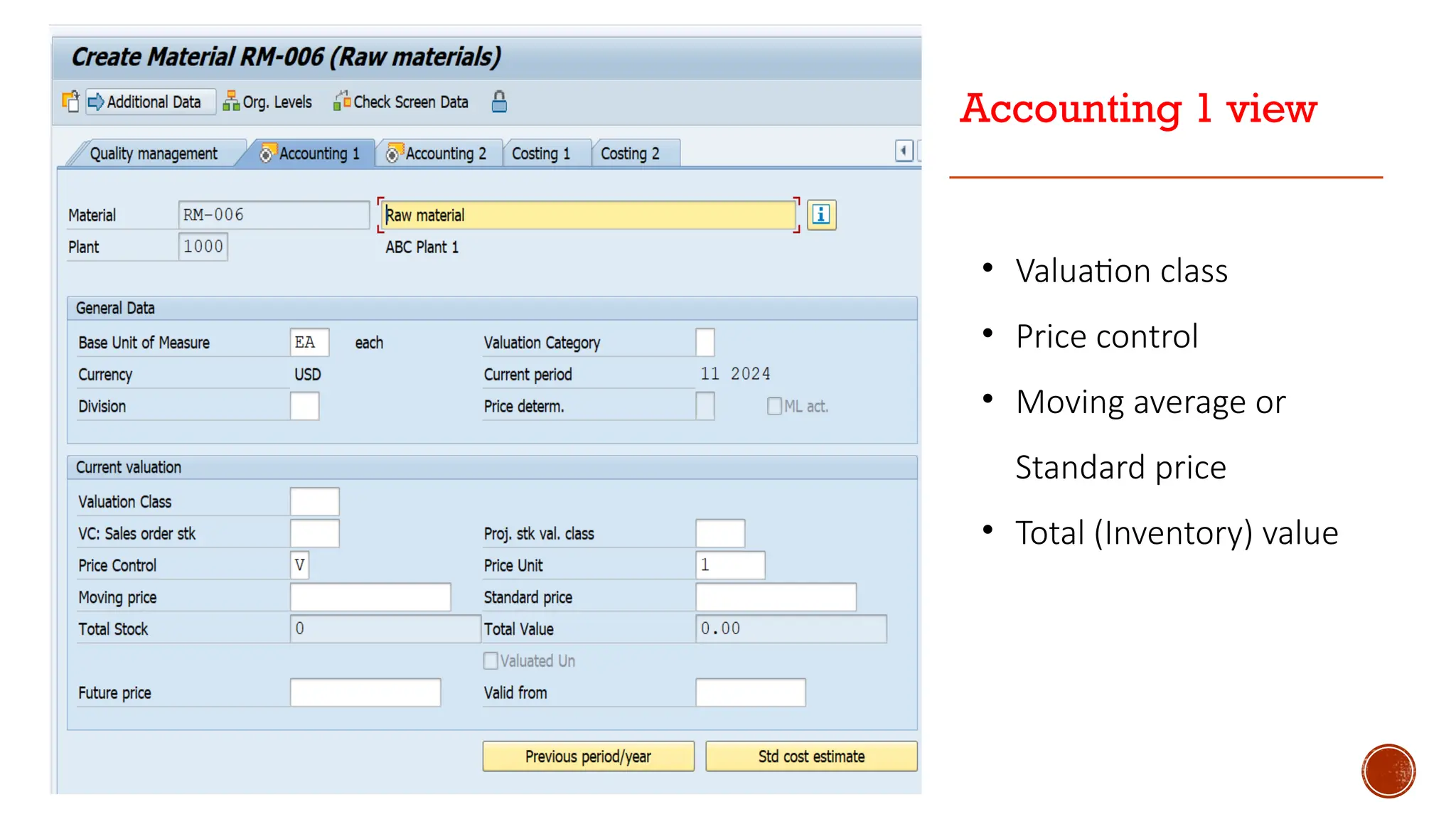
Accounting 1 view
•Valuation class
• Price control
• Moving average or
Standard price
• Total (Inventory) value
13.
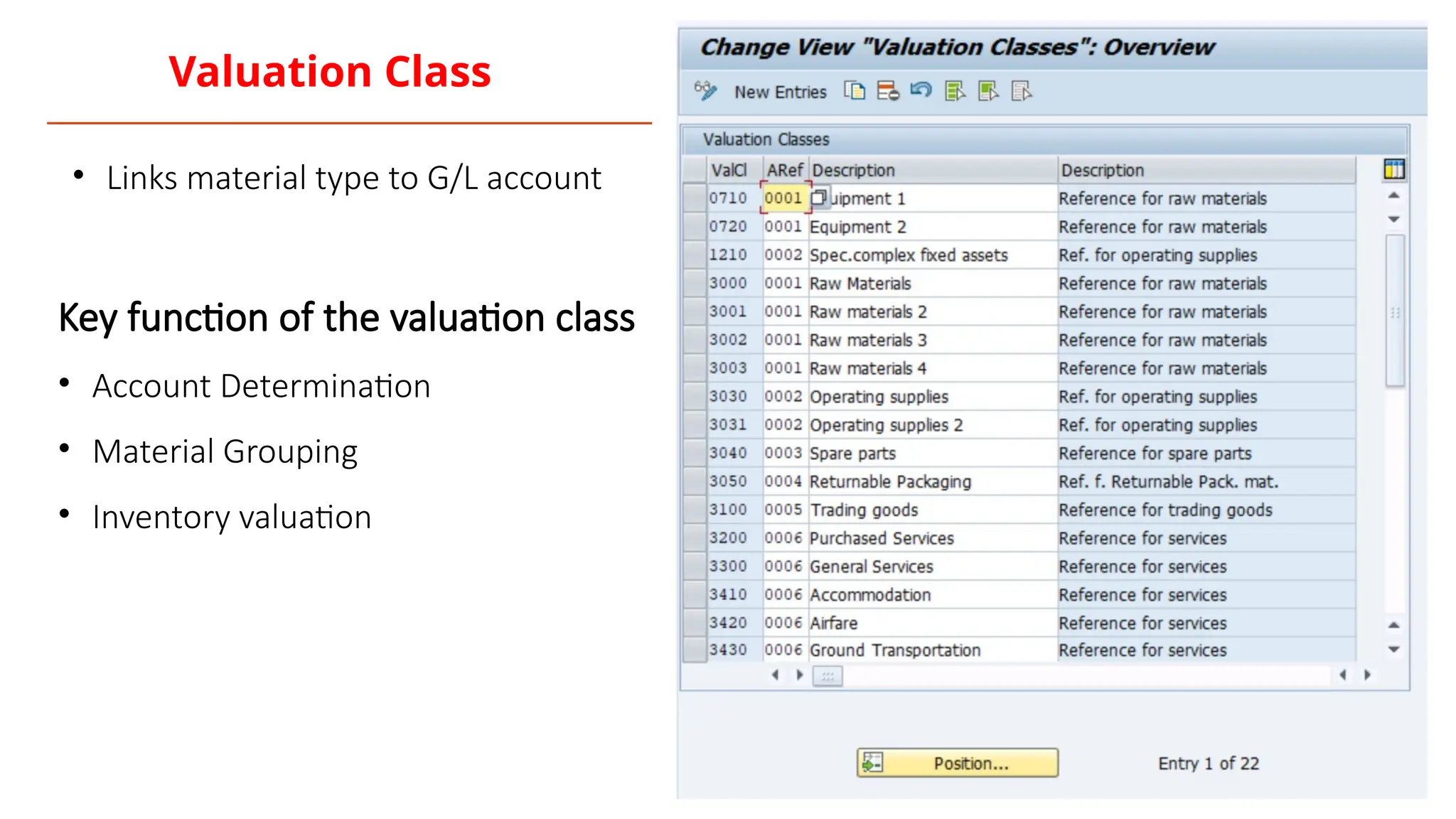
Valuation Class
Key functionof the valuation class
• Account Determination
• Material Grouping
• Inventory valuation
• Links material type to G/L account
14.
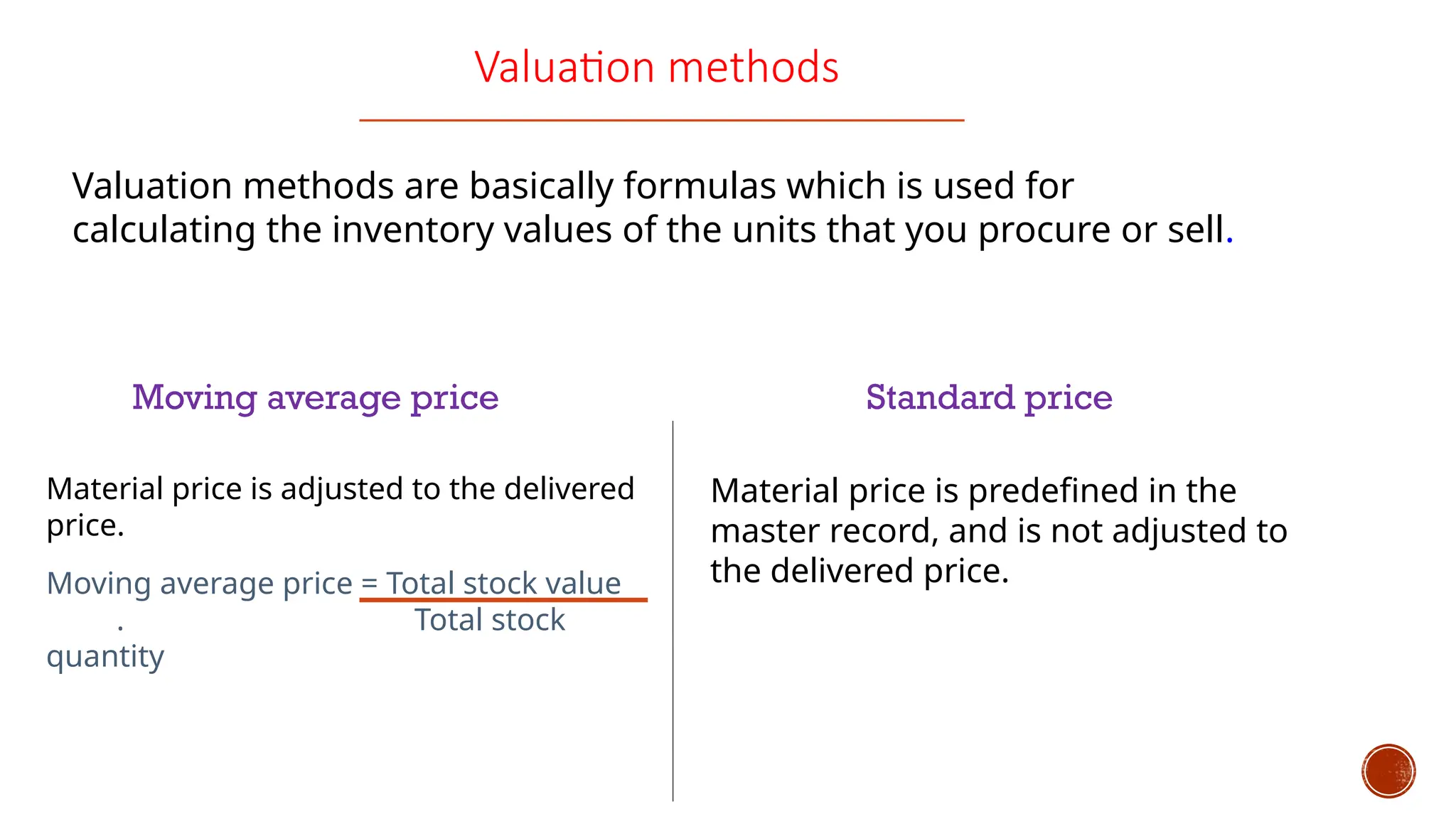
Valuation methods
Valuation methodsare basically formulas which is used for
calculating the inventory values of the units that you procure or sell.
Moving average price Standard price
Material price is adjusted to the delivered
price.
Moving average price = Total stock value
. Total stock
quantity
Material price is predefined in the
master record, and is not adjusted to
the delivered price.
15.
Material master transactions
MM01 Create or Extend the Material Master
MM02 Change Material Master
MM03 Display Material Master
MM04 Display changes
MM60 Material list (Reports of material)
MM50 For extending Material views
MMAM Change the Material type
MM06 Flagging Material for deletion (Block the
material)



![Vibe Coding vs. Spec-Driven Development [Free Meetup]](https://cdn.slidesharecdn.com/ss_thumbnails/vibecodingvsspecdrivendevelopment-251209105622-43f455e7-thumbnail.jpg?width=640&height=640&fit=bounds)


