Mastering the Review Article:
Structure, Strategy & Success
Rajendra Dev Bhatt, PhD Scholar
Asst. Professor/ Clinical Biochemist
Clinical Biochemistry & Laboratory Medicine
Kathmandu University School of Medical Sciences
Fellow: Translational Research (2018-2022) in CVD
in Nepal, NHLBI & NIH, USA
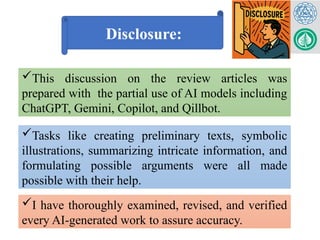
Disclosure:
This discussion on the review articles was
prepared with the partial use of AI models including
ChatGPT, Gemini, Copilot, and Qillbot.
Tasks like creating preliminary texts, symbolic
illustrations, summarizing intricate information, and
formulating possible arguments were all made
possible with their help.
I have thoroughly examined, revised, and verified
every AI-generated work to assure accuracy.
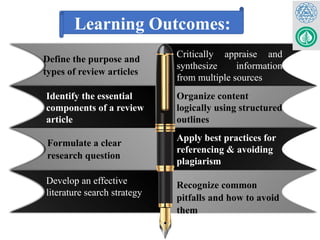
Define the purpose and
types of review articles
Identify the essential
components of a review
article
Formulate a clear
research question
Develop an effective
literature search strategy
Critically appraise and
synthesize information
from multiple sources
Organize content
logically using structured
outlines
Apply best practices for
referencing & avoiding
plagiarism
Recognize common
pitfalls and how to avoid
them
Learning Outcomes:
What is a Review Article?
A critical summary of existing research on a
topic.
It gives an overview of current ideas but does
not include new experiments or findings
Review articles can highlight future research
ideas and sometimes offer new insights from
existing data.
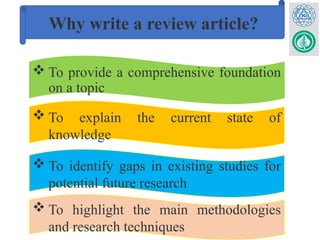
Why write a review article?
 To provide a comprehensive foundation
on a topic
 To explain the current state of
knowledge
 To identify gaps in existing studies for
potential future research
 To highlight the main methodologies
and research techniques
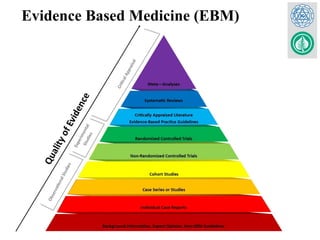
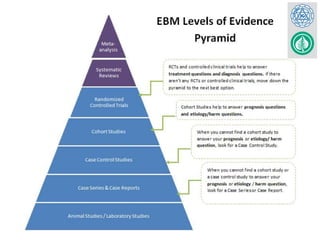
Evidence Based Medicine (EBM)
Types of review Articles:
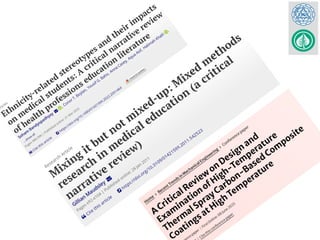
A scoping search identified various
types of review articles. For this
training, most common types were
selected, highlighting their key
features, strengths, weaknesses, and
uses.
Literature Review
The term literature review broadly refers to
a critical summary of existing research on a
topic.
According to MeSH, it helps address a
specific research question and can vary in
depth.
It includes selected sources based on set criteria
but doesn't require a formal, exhaustive search or
systematic analysis.
Scoping Review:
Aims to map the existing research on a broad
topic or question.
It identifies key concepts, types of evidence, and
gaps in knowledge to guide future research.
Unlike systematic reviews, scoping reviews do
not typically assess the quality of studies but
focus on the extent, range, and nature of the
literature
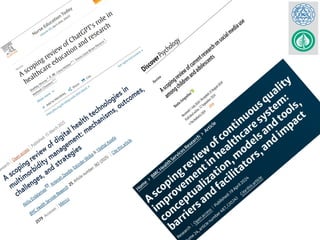
A scoping review helps assess how much research
exists on a topic and what it covers.
It maps available studies, including ongoing work, and
highlights gaps where more research is needed.
Critical Review:
A critical review goes beyond summarizing articles,
it deeply analyzes the quality, strengths, weaknesses,
and validity of sources.
It extracts key ideas, synthesizes them, and
may offer new insights, models, or theories.
The goal is to help readers form informed
judgments and potentially develop new
hypotheses.
Systematic Review:
It is a structured method of searching, analyzing,
and summarizing existing literature on a specific
topic.
Guided by protocols like those from the Cochrane
Collaboration and NHS Centre for Reviews and
Dissemination, by using clear, replicable methods
to reduce bias and ensure quality.
Its rigorous approach often makes it count as an
original research article.
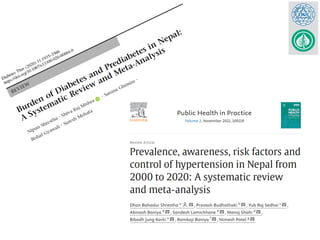
Meta-Analysis:
A statistical method that combines data from multiple
studies to estimate an overall effect, increasing
precision and power compared to individual studies.
For a high-quality meta-analysis, included studies
must have similar populations, interventions,
comparisons, and outcomes.
It also helps assess consistency across studies,
making the results useful for policy and decision-
making.
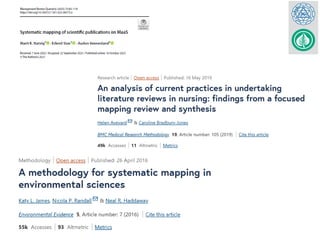
Mapping Review/Systematic Map:
This review type, developed by the EPPI-Centre
(Evidence for Policy and Practice Information and
Co-ordinating Centre University college London)
maps and classifies existing studies on a topic to
identify gaps and generate ideas for future research.
Unlike scoping reviews, it does not start with a
defined outcome; instead, outcomes emerge during
the review, guiding further investigation.
Qualitative Systematic Review/
Qualitative Evidence Synthesis:
a systematic method for collecting, analyzing, and
synthesizing findings from multiple qualitative
studies to gain a deeper understanding of a specific
phenomenon, experience, or context.
It integrates findings from qualitative studies to
develop broader interpretations or new theories.
Unlike meta-analysis, it focuses on synthesis, not
aggregation.
Meta-Synthesis:
A systematic approach that evaluates, interprets,
and transforms findings from multiple qualitative
studies to generate new insights useful for
evidence-based medicine (EBM).
Unlike meta-analysis, which quantifies effects,
meta-synthesis focuses on interpreting and
explaining a shared phenomenon, requiring studies
with similar criteria and context.
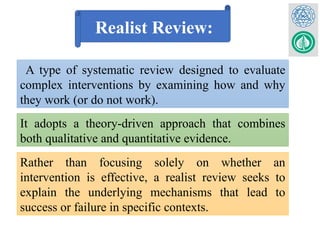
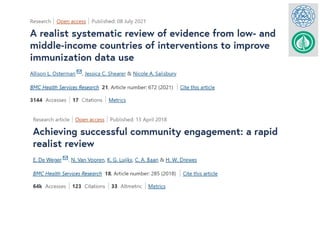
Realist Review:
A type of systematic review designed to evaluate
complex interventions by examining how and why
they work (or do not work).
It adopts a theory-driven approach that combines
both qualitative and quantitative evidence.
Rather than focusing solely on whether an
intervention is effective, a realist review seeks to
explain the underlying mechanisms that lead to
success or failure in specific contexts.
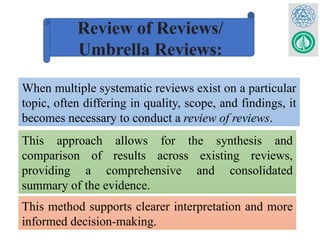
Review of Reviews/
Umbrella Reviews:
When multiple systematic reviews exist on a particular
topic, often differing in quality, scope, and findings, it
becomes necessary to conduct a review of reviews.
This approach allows for the synthesis and
comparison of results across existing reviews,
providing a comprehensive and consolidated
summary of the evidence.
This method supports clearer interpretation and more
informed decision-making.
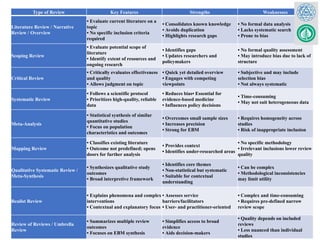
Type of Review Key Features Strengths Weaknesses
Literature Review / Narrative
Review / Overview
• Evaluate current literature on a
topic
• No specific inclusion criteria
required
• Consolidates known knowledge
• Avoids duplication
• Highlights research gaps
• No formal data analysis
• Lacks systematic search
• Prone to bias
Scoping Review
• Evaluate potential scope of
literature
• Identify extent of resources and
ongoing research
• Identifies gaps
• Updates researchers and
policymakers
• No formal quality assessment
• May introduce bias due to lack of
structure
Critical Review
• Critically evaluates effectiveness
and quality
• Allows judgment on topic
• Quick yet detailed overview
• Engages with competing
viewpoints
• Subjective and may include
selection bias
• Not always systematic
Systematic Review
• Follows a scientific protocol
• Prioritizes high-quality, reliable
data
• Reduces bias• Essential for
evidence-based medicine
• Influences policy decisions
• Time-consuming
• May not suit heterogeneous data
Meta-Analysis
• Statistical synthesis of similar
quantitative studies
• Focus on population
characteristics and outcomes
• Overcomes small sample sizes
• Increases precision
• Strong for EBM
• Requires homogeneity across
studies
• Risk of inappropriate inclusion
Mapping Review
• Classifies existing literature
• Outcome not predefined; opens
doors for further analysis
• Provides context
• Identifies under-researched areas
• No specific methodology
• Irrelevant inclusions lower review
quality
Qualitative Systematic Review /
Meta-Synthesis
• Synthesizes qualitative study
outcomes
• Broad interpretive framework
• Identifies core themes
• Non-statistical but systematic
• Suitable for contextual
understanding
• Can be complex
• Methodological inconsistencies
may limit utility
Realist Review
• Explains phenomena and complex
interventions
• Contextual and explanatory focus
• Assesses service
barriers/facilitators
• User- and practitioner-oriented
• Complex and time-consuming
• Requires pre-defined narrow
review scope
Review of Reviews / Umbrella
Review
• Summarizes multiple review
outcomes
• Focuses on EBM synthesis
• Simplifies access to broad
evidence
• Aids decision-makers
• Quality depends on included
reviews
• Less nuanced than individual
studies
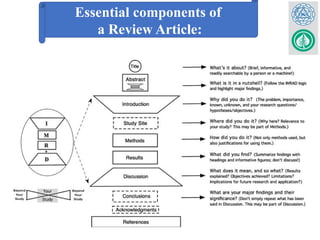
Essential components of
a Review Article:
Formulate a Clear Research Question
It defines the scope, purpose, and direction of the
review and helps determine which studies are
relevant.
For review articles, formulating a well-constructed
research question is essential to ensure
reproducibility, transparency, and scientific rigor.
A research question for a review article is a clear,
focused, and structured query that guides the entire
process of literature search, selection, analysis, and
synthesis.
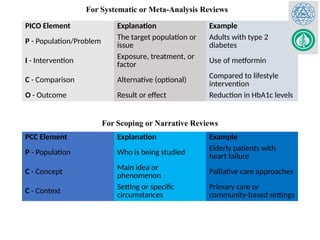
PICO Element Explanation Example
P - Population/Problem The target population or
issue
Adults with type 2
diabetes
I - Intervention
Exposure, treatment, or
factor Use of metformin
C - Comparison Alternative (optional)
Compared to lifestyle
intervention
O - Outcome Result or effect Reduction in HbA1c levels
PCC Element Explanation Example
P - Population Who is being studied Elderly patients with
heart failure
C - Concept
Main idea or
phenomenon Palliative care approaches
C - Context
Setting or specific
circumstances
Primary care or
community-based settings
For Scoping or Narrative Reviews
For Systematic or Meta-Analysis Reviews
Effective literature search strategy
Formulate a specific, answerable research question. (PICO)
Set Objectives and Inclusion/Exclusion Criteria
Identify Appropriate Databases
Choose Keywords and Controlled Vocabulary
Use Boolean Operators and Search Techniques
Use Filters Cautiously
Document Your Search Strategy
Screen and Select Studies Systematically
Review Reference Lists and Grey Literature
Consider PRISMA Guidelines (for Systematic Reviews)
Critically appraise and synthesize
information from multiple sources
Critical appraise the process of carefully and
systematically examining research to judge its
trustworthiness, value, and relevance in a particular
context.
Synthesis of information involves integrating
results from multiple studies to construct a coherent
narrative, highlight consistencies and
contradictions, and identify gaps in knowledge.
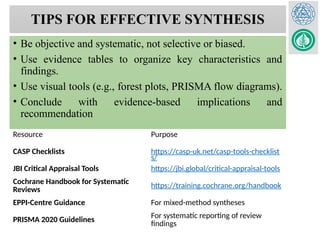
TIPS FOR EFFECTIVE SYNTHESIS
• Be objective and systematic, not selective or biased.
• Use evidence tables to organize key characteristics and
findings.
• Use visual tools (e.g., forest plots, PRISMA flow diagrams).
• Conclude with evidence-based implications and
recommendation
Resource Purpose
CASP Checklists https://casp-uk.net/casp-tools-checklist
s/
JBI Critical Appraisal Tools https://jbi.global/critical-appraisal-tools
Cochrane Handbook for Systematic
Reviews
https://training.cochrane.org/handbook
EPPI-Centre Guidance For mixed-method syntheses
PRISMA 2020 Guidelines For systematic reporting of review
findings
Organize content logically using
structured outlines and thematic flow
• Does the article flow logically from one section to
the next?
• Are headings and subheadings consistent in tone
and structure?
• Are transitions between sections smooth and
purposeful?
• Are redundancies and repetitions eliminated?
• Have all figures, tables, and appendices been
labeled and referenced properly?
Best practices for referencing, avoiding
plagiarism, and ensuring academic integrity
• Use Reference Management Tools
• Use a Consistent Citation Style
• Cite Primary Sources Whenever Possible
• Cite All Factual, Theoretical, or Quoted Content
• Provide DOI or Stable URLs
• Avoid plagiarism
• Acknowledge All Contributions
• Avoid Ghostwriting and Contract Cheating
• Provide Transparent Methodology
• Disclose Conflicts of Interest
• Maintain Research Ethics
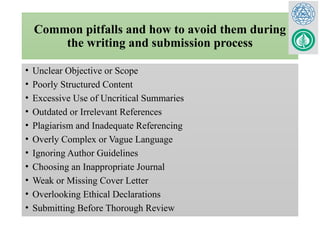
Common pitfalls and how to avoid them during
the writing and submission process
• Unclear Objective or Scope
• Poorly Structured Content
• Excessive Use of Uncritical Summaries
• Outdated or Irrelevant References
• Plagiarism and Inadequate Referencing
• Overly Complex or Vague Language
• Ignoring Author Guidelines
• Choosing an Inappropriate Journal
• Weak or Missing Cover Letter
• Overlooking Ethical Declarations
• Submitting Before Thorough Review
Every Case Tells a Story:
How to Write and Publish Case Reports
 A case report is a detailed narrative that describes
a single patient's medical history, clinical
presentation, diagnosis, treatment, and follow-up.
 It often highlights rare or unusual conditions,
unexpected outcomes, novel treatment
approaches, or diagnostic challenges.
 Case reports are valuable for educational
purposes, hypothesis generation, and sharing
clinical experiences that may not yet be
documented in the literature.
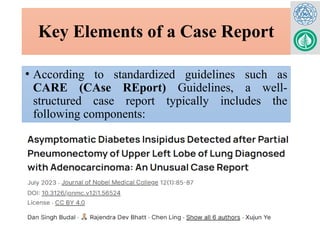
Key Elements of a Case Report
• According to standardized guidelines such as
CARE (CAse REport) Guidelines, a well-
structured case report typically includes the
following components:
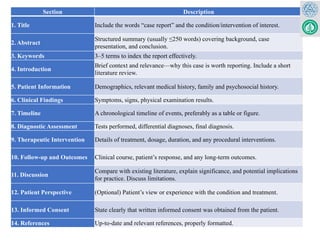
Section Description
1. Title Include the words “case report” and the condition/intervention of interest.
2. Abstract
Structured summary (usually ≤250 words) covering background, case
presentation, and conclusion.
3. Keywords 3–5 terms to index the report effectively.
4. Introduction
Brief context and relevance—why this case is worth reporting. Include a short
literature review.
5. Patient Information Demographics, relevant medical history, family and psychosocial history.
6. Clinical Findings Symptoms, signs, physical examination results.
7. Timeline A chronological timeline of events, preferably as a table or figure.
8. Diagnostic Assessment Tests performed, differential diagnoses, final diagnosis.
9. Therapeutic Intervention Details of treatment, dosage, duration, and any procedural interventions.
10. Follow-up and Outcomes Clinical course, patient’s response, and any long-term outcomes.
11. Discussion
Compare with existing literature, explain significance, and potential implications
for practice. Discuss limitations.
12. Patient Perspective (Optional) Patient’s view or experience with the condition and treatment.
13. Informed Consent State clearly that written informed consent was obtained from the patient.
14. References Up-to-date and relevant references, properly formatted.
Write it Right:
Publishing Your Research
• Write it right refers to the process of preparing,
structuring, and submitting scientific findings in a
clear, accurate, ethical, and impactful manner.
• The goal is to contribute to scientific knowledge,
meet academic and professional standards, and
ensure your work is accessible and reproducible by
the global research community.
• It involves adhering to established scientific writing
norms, journal guidelines, and publication ethics,
and includes selecting the appropriate journal,
preparing manuscripts, handling peer-review
feedback, and following publication protocols.
“The Title Says It All”
Be concise and Clear:
• Titles are the first element readers encounter, yet
they are often written last and frequently receive the
least attention during manuscript preparation.
• When asked “How long should a title be?” simply
the answer is that the length should be just right.
• Avoid using wasted words such as “a study of,”
“investigation of,” “development of,” or
“observations on.”
• Similarly, avoid including adjectives such as “new,”
“improved,” “novel,” “validated,” and “sensitive.”
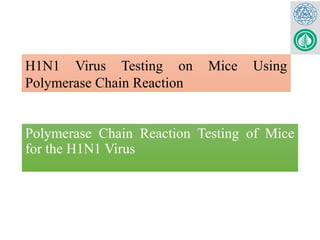
Polymerase Chain Reaction Testing of Mice
for the H1N1 Virus
H1N1 Virus Testing on Mice Using
Polymerase Chain Reaction
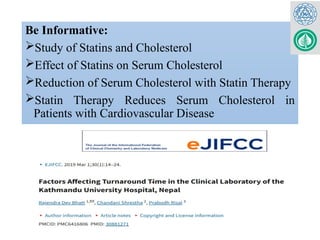
Be Informative:
Study of Statins and Cholesterol
Effect of Statins on Serum Cholesterol
Reduction of Serum Cholesterol with Statin Therapy
Statin Therapy Reduces Serum Cholesterol in
Patients with Cardiovascular Disease
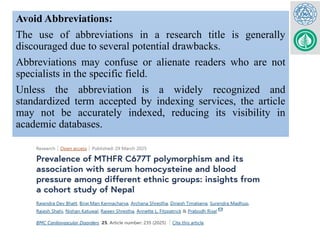
Avoid Abbreviations:
The use of abbreviations in a research title is generally
discouraged due to several potential drawbacks.
Abbreviations may confuse or alienate readers who are not
specialists in the specific field.
Unless the abbreviation is a widely recognized and
standardized term accepted by indexing services, the article
may not be accurately indexed, reducing its visibility in
academic databases.
Final Thoughts
• There is an old saying, “You don’t get a second
chance to make a first impression.”
• The title of an article has the power to influence
the first impression of your work by a reader,
reviewer, or editor.
The Abstract and the Elevator Talk:
Tell a Story by Answering Questions:
An abstract is a summary or, more precisely, a
condensed version of your paper.
Its purpose is to tell the reader not just the basic
information or data contained in the paper but also
why the paper was written and what value it adds.
• Use the Correct Style and Format
• Create an Abstract That Stands on Its Own
• Write the Abstract after Completing the Main Text
• Avoid Abbreviations
Final Thoughts
Former US President
Woodrow Wilson once said,
“If I am to speak ten
minutes, I need a week for
preparation;
If fifteen minutes, three
days;
If half an hour, two days; if
an hour, I am ready now.”
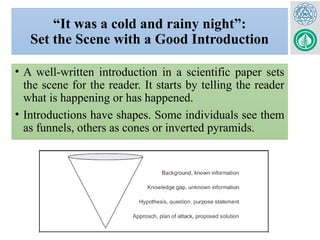
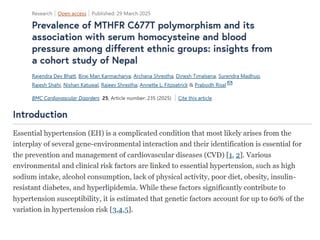
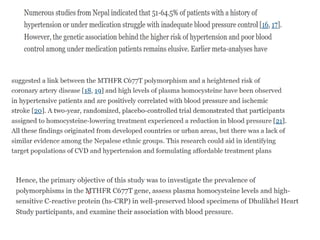
“It was a cold and rainy night”:
Set the Scene with a Good Introduction
• A well-written introduction in a scientific paper sets
the scene for the reader. It starts by telling the reader
what is happening or has happened.
• Introductions have shapes. Some individuals see them
as funnels, others as cones or inverted pyramids.
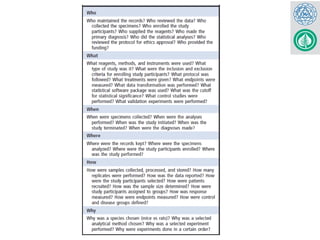
Who, What, When, Where, How, and Why:
The Ingredients in the Recipe for a Successful
Methods Section
• The Methods section of a paper answers, the first
response that comes to reader’s my mind is “How
did I perform the study?” Yet “how” is just one of
the main ingredients in the recipe for a successful
Methods section.
• Methods section also starts with 1 part what, 1 part
when, 1 part where, 1 part who, and 1 part why.
• Length and Detail
• Style and Format
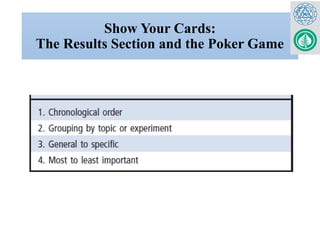
Show Your Cards:
The Results Section and the Poker Game
• State the Result, the Whole Result, and Nothing
but the Result
• “Significance” Is Misused a Significant
Amount of the Time
• Consistency of Results with Other Sections
“The Discussion Section:
Your Closing Argument”
• In the judicial system in many countries, a jury
decides the final outcome in a court case.
• A poor closing argument can hurt even the best
case.
• A great closing argument can convince the jury that
the evidence is sound and the lawyer’s
interpretation of it has merit.
• Invert the Cone
• End of the Introduction is the beginning of the
Discussion
• Be Fair and Balanced
• Use Transition Words and Phrases: Our results show
that . . . Additional evidence comes from . . .
Final Thoughts
• There is a well-known adage: "You never get a
second chance to make a first impression." This
principle is particularly relevant to the title and
abstract of a scientific paper, as they serve as the
initial point of engagement for readers.
• Equally important, however, is the final impression
left by the Discussion section.
• It represents the author’s opportunity to effectively
interpret findings, highlight significance, and
reinforce the contribution of the study.
Thank You

Mastering the Review Article: Structure, Strategy & Success

  • 1.
    Mastering the ReviewArticle: Structure, Strategy & Success Rajendra Dev Bhatt, PhD Scholar Asst. Professor/ Clinical Biochemist Clinical Biochemistry & Laboratory Medicine Kathmandu University School of Medical Sciences Fellow: Translational Research (2018-2022) in CVD in Nepal, NHLBI & NIH, USA
  • 2.
    Disclosure: This discussion onthe review articles was prepared with the partial use of AI models including ChatGPT, Gemini, Copilot, and Qillbot. Tasks like creating preliminary texts, symbolic illustrations, summarizing intricate information, and formulating possible arguments were all made possible with their help. I have thoroughly examined, revised, and verified every AI-generated work to assure accuracy.
  • 3.
    Define the purposeand types of review articles Identify the essential components of a review article Formulate a clear research question Develop an effective literature search strategy Critically appraise and synthesize information from multiple sources Organize content logically using structured outlines Apply best practices for referencing & avoiding plagiarism Recognize common pitfalls and how to avoid them Learning Outcomes:
  • 4.
    What is aReview Article? A critical summary of existing research on a topic. It gives an overview of current ideas but does not include new experiments or findings Review articles can highlight future research ideas and sometimes offer new insights from existing data.
  • 5.
    Why write areview article?  To provide a comprehensive foundation on a topic  To explain the current state of knowledge  To identify gaps in existing studies for potential future research  To highlight the main methodologies and research techniques
  • 6.
  • 8.
    Types of reviewArticles: A scoping search identified various types of review articles. For this training, most common types were selected, highlighting their key features, strengths, weaknesses, and uses.
  • 9.
    Literature Review The termliterature review broadly refers to a critical summary of existing research on a topic. According to MeSH, it helps address a specific research question and can vary in depth. It includes selected sources based on set criteria but doesn't require a formal, exhaustive search or systematic analysis.
  • 10.
    Scoping Review: Aims tomap the existing research on a broad topic or question. It identifies key concepts, types of evidence, and gaps in knowledge to guide future research. Unlike systematic reviews, scoping reviews do not typically assess the quality of studies but focus on the extent, range, and nature of the literature A scoping review helps assess how much research exists on a topic and what it covers. It maps available studies, including ongoing work, and highlights gaps where more research is needed.
  • 12.
    Critical Review: A criticalreview goes beyond summarizing articles, it deeply analyzes the quality, strengths, weaknesses, and validity of sources. It extracts key ideas, synthesizes them, and may offer new insights, models, or theories. The goal is to help readers form informed judgments and potentially develop new hypotheses.
  • 14.
    Systematic Review: It isa structured method of searching, analyzing, and summarizing existing literature on a specific topic. Guided by protocols like those from the Cochrane Collaboration and NHS Centre for Reviews and Dissemination, by using clear, replicable methods to reduce bias and ensure quality. Its rigorous approach often makes it count as an original research article.
  • 16.
    Meta-Analysis: A statistical methodthat combines data from multiple studies to estimate an overall effect, increasing precision and power compared to individual studies. For a high-quality meta-analysis, included studies must have similar populations, interventions, comparisons, and outcomes. It also helps assess consistency across studies, making the results useful for policy and decision- making.
  • 18.
    Mapping Review/Systematic Map: Thisreview type, developed by the EPPI-Centre (Evidence for Policy and Practice Information and Co-ordinating Centre University college London) maps and classifies existing studies on a topic to identify gaps and generate ideas for future research. Unlike scoping reviews, it does not start with a defined outcome; instead, outcomes emerge during the review, guiding further investigation.
  • 20.
    Qualitative Systematic Review/ QualitativeEvidence Synthesis: a systematic method for collecting, analyzing, and synthesizing findings from multiple qualitative studies to gain a deeper understanding of a specific phenomenon, experience, or context. It integrates findings from qualitative studies to develop broader interpretations or new theories. Unlike meta-analysis, it focuses on synthesis, not aggregation.
  • 22.
    Meta-Synthesis: A systematic approachthat evaluates, interprets, and transforms findings from multiple qualitative studies to generate new insights useful for evidence-based medicine (EBM). Unlike meta-analysis, which quantifies effects, meta-synthesis focuses on interpreting and explaining a shared phenomenon, requiring studies with similar criteria and context.
  • 24.
    Realist Review: A typeof systematic review designed to evaluate complex interventions by examining how and why they work (or do not work). It adopts a theory-driven approach that combines both qualitative and quantitative evidence. Rather than focusing solely on whether an intervention is effective, a realist review seeks to explain the underlying mechanisms that lead to success or failure in specific contexts.
  • 26.
    Review of Reviews/ UmbrellaReviews: When multiple systematic reviews exist on a particular topic, often differing in quality, scope, and findings, it becomes necessary to conduct a review of reviews. This approach allows for the synthesis and comparison of results across existing reviews, providing a comprehensive and consolidated summary of the evidence. This method supports clearer interpretation and more informed decision-making.
  • 28.
    Type of ReviewKey Features Strengths Weaknesses Literature Review / Narrative Review / Overview • Evaluate current literature on a topic • No specific inclusion criteria required • Consolidates known knowledge • Avoids duplication • Highlights research gaps • No formal data analysis • Lacks systematic search • Prone to bias Scoping Review • Evaluate potential scope of literature • Identify extent of resources and ongoing research • Identifies gaps • Updates researchers and policymakers • No formal quality assessment • May introduce bias due to lack of structure Critical Review • Critically evaluates effectiveness and quality • Allows judgment on topic • Quick yet detailed overview • Engages with competing viewpoints • Subjective and may include selection bias • Not always systematic Systematic Review • Follows a scientific protocol • Prioritizes high-quality, reliable data • Reduces bias• Essential for evidence-based medicine • Influences policy decisions • Time-consuming • May not suit heterogeneous data Meta-Analysis • Statistical synthesis of similar quantitative studies • Focus on population characteristics and outcomes • Overcomes small sample sizes • Increases precision • Strong for EBM • Requires homogeneity across studies • Risk of inappropriate inclusion Mapping Review • Classifies existing literature • Outcome not predefined; opens doors for further analysis • Provides context • Identifies under-researched areas • No specific methodology • Irrelevant inclusions lower review quality Qualitative Systematic Review / Meta-Synthesis • Synthesizes qualitative study outcomes • Broad interpretive framework • Identifies core themes • Non-statistical but systematic • Suitable for contextual understanding • Can be complex • Methodological inconsistencies may limit utility Realist Review • Explains phenomena and complex interventions • Contextual and explanatory focus • Assesses service barriers/facilitators • User- and practitioner-oriented • Complex and time-consuming • Requires pre-defined narrow review scope Review of Reviews / Umbrella Review • Summarizes multiple review outcomes • Focuses on EBM synthesis • Simplifies access to broad evidence • Aids decision-makers • Quality depends on included reviews • Less nuanced than individual studies
  • 29.
  • 30.
    Formulate a ClearResearch Question It defines the scope, purpose, and direction of the review and helps determine which studies are relevant. For review articles, formulating a well-constructed research question is essential to ensure reproducibility, transparency, and scientific rigor. A research question for a review article is a clear, focused, and structured query that guides the entire process of literature search, selection, analysis, and synthesis.
  • 31.
    PICO Element ExplanationExample P - Population/Problem The target population or issue Adults with type 2 diabetes I - Intervention Exposure, treatment, or factor Use of metformin C - Comparison Alternative (optional) Compared to lifestyle intervention O - Outcome Result or effect Reduction in HbA1c levels PCC Element Explanation Example P - Population Who is being studied Elderly patients with heart failure C - Concept Main idea or phenomenon Palliative care approaches C - Context Setting or specific circumstances Primary care or community-based settings For Scoping or Narrative Reviews For Systematic or Meta-Analysis Reviews
  • 32.
    Effective literature searchstrategy Formulate a specific, answerable research question. (PICO) Set Objectives and Inclusion/Exclusion Criteria Identify Appropriate Databases Choose Keywords and Controlled Vocabulary Use Boolean Operators and Search Techniques Use Filters Cautiously Document Your Search Strategy Screen and Select Studies Systematically Review Reference Lists and Grey Literature Consider PRISMA Guidelines (for Systematic Reviews)
  • 33.
    Critically appraise andsynthesize information from multiple sources Critical appraise the process of carefully and systematically examining research to judge its trustworthiness, value, and relevance in a particular context. Synthesis of information involves integrating results from multiple studies to construct a coherent narrative, highlight consistencies and contradictions, and identify gaps in knowledge.
  • 34.
    TIPS FOR EFFECTIVESYNTHESIS • Be objective and systematic, not selective or biased. • Use evidence tables to organize key characteristics and findings. • Use visual tools (e.g., forest plots, PRISMA flow diagrams). • Conclude with evidence-based implications and recommendation Resource Purpose CASP Checklists https://casp-uk.net/casp-tools-checklist s/ JBI Critical Appraisal Tools https://jbi.global/critical-appraisal-tools Cochrane Handbook for Systematic Reviews https://training.cochrane.org/handbook EPPI-Centre Guidance For mixed-method syntheses PRISMA 2020 Guidelines For systematic reporting of review findings
  • 35.
    Organize content logicallyusing structured outlines and thematic flow • Does the article flow logically from one section to the next? • Are headings and subheadings consistent in tone and structure? • Are transitions between sections smooth and purposeful? • Are redundancies and repetitions eliminated? • Have all figures, tables, and appendices been labeled and referenced properly?
  • 36.
    Best practices forreferencing, avoiding plagiarism, and ensuring academic integrity • Use Reference Management Tools • Use a Consistent Citation Style • Cite Primary Sources Whenever Possible • Cite All Factual, Theoretical, or Quoted Content • Provide DOI or Stable URLs • Avoid plagiarism • Acknowledge All Contributions • Avoid Ghostwriting and Contract Cheating • Provide Transparent Methodology • Disclose Conflicts of Interest • Maintain Research Ethics
  • 37.
    Common pitfalls andhow to avoid them during the writing and submission process • Unclear Objective or Scope • Poorly Structured Content • Excessive Use of Uncritical Summaries • Outdated or Irrelevant References • Plagiarism and Inadequate Referencing • Overly Complex or Vague Language • Ignoring Author Guidelines • Choosing an Inappropriate Journal • Weak or Missing Cover Letter • Overlooking Ethical Declarations • Submitting Before Thorough Review
  • 38.
    Every Case Tellsa Story: How to Write and Publish Case Reports  A case report is a detailed narrative that describes a single patient's medical history, clinical presentation, diagnosis, treatment, and follow-up.  It often highlights rare or unusual conditions, unexpected outcomes, novel treatment approaches, or diagnostic challenges.  Case reports are valuable for educational purposes, hypothesis generation, and sharing clinical experiences that may not yet be documented in the literature.
  • 39.
    Key Elements ofa Case Report • According to standardized guidelines such as CARE (CAse REport) Guidelines, a well- structured case report typically includes the following components:
  • 40.
    Section Description 1. TitleInclude the words “case report” and the condition/intervention of interest. 2. Abstract Structured summary (usually ≤250 words) covering background, case presentation, and conclusion. 3. Keywords 3–5 terms to index the report effectively. 4. Introduction Brief context and relevance—why this case is worth reporting. Include a short literature review. 5. Patient Information Demographics, relevant medical history, family and psychosocial history. 6. Clinical Findings Symptoms, signs, physical examination results. 7. Timeline A chronological timeline of events, preferably as a table or figure. 8. Diagnostic Assessment Tests performed, differential diagnoses, final diagnosis. 9. Therapeutic Intervention Details of treatment, dosage, duration, and any procedural interventions. 10. Follow-up and Outcomes Clinical course, patient’s response, and any long-term outcomes. 11. Discussion Compare with existing literature, explain significance, and potential implications for practice. Discuss limitations. 12. Patient Perspective (Optional) Patient’s view or experience with the condition and treatment. 13. Informed Consent State clearly that written informed consent was obtained from the patient. 14. References Up-to-date and relevant references, properly formatted.
  • 42.
    Write it Right: PublishingYour Research • Write it right refers to the process of preparing, structuring, and submitting scientific findings in a clear, accurate, ethical, and impactful manner. • The goal is to contribute to scientific knowledge, meet academic and professional standards, and ensure your work is accessible and reproducible by the global research community. • It involves adhering to established scientific writing norms, journal guidelines, and publication ethics, and includes selecting the appropriate journal, preparing manuscripts, handling peer-review feedback, and following publication protocols.
  • 43.
    “The Title SaysIt All” Be concise and Clear: • Titles are the first element readers encounter, yet they are often written last and frequently receive the least attention during manuscript preparation. • When asked “How long should a title be?” simply the answer is that the length should be just right. • Avoid using wasted words such as “a study of,” “investigation of,” “development of,” or “observations on.” • Similarly, avoid including adjectives such as “new,” “improved,” “novel,” “validated,” and “sensitive.”
  • 44.
    Polymerase Chain ReactionTesting of Mice for the H1N1 Virus H1N1 Virus Testing on Mice Using Polymerase Chain Reaction
  • 45.
    Be Informative: Study ofStatins and Cholesterol Effect of Statins on Serum Cholesterol Reduction of Serum Cholesterol with Statin Therapy Statin Therapy Reduces Serum Cholesterol in Patients with Cardiovascular Disease
  • 46.
    Avoid Abbreviations: The useof abbreviations in a research title is generally discouraged due to several potential drawbacks. Abbreviations may confuse or alienate readers who are not specialists in the specific field. Unless the abbreviation is a widely recognized and standardized term accepted by indexing services, the article may not be accurately indexed, reducing its visibility in academic databases.
  • 47.
    Final Thoughts • Thereis an old saying, “You don’t get a second chance to make a first impression.” • The title of an article has the power to influence the first impression of your work by a reader, reviewer, or editor.
  • 48.
    The Abstract andthe Elevator Talk: Tell a Story by Answering Questions: An abstract is a summary or, more precisely, a condensed version of your paper. Its purpose is to tell the reader not just the basic information or data contained in the paper but also why the paper was written and what value it adds.
  • 49.
    • Use theCorrect Style and Format • Create an Abstract That Stands on Its Own • Write the Abstract after Completing the Main Text • Avoid Abbreviations
  • 50.
    Final Thoughts Former USPresident Woodrow Wilson once said, “If I am to speak ten minutes, I need a week for preparation; If fifteen minutes, three days; If half an hour, two days; if an hour, I am ready now.”
  • 51.
    “It was acold and rainy night”: Set the Scene with a Good Introduction • A well-written introduction in a scientific paper sets the scene for the reader. It starts by telling the reader what is happening or has happened. • Introductions have shapes. Some individuals see them as funnels, others as cones or inverted pyramids.
  • 54.
    Who, What, When,Where, How, and Why: The Ingredients in the Recipe for a Successful Methods Section
  • 55.
    • The Methodssection of a paper answers, the first response that comes to reader’s my mind is “How did I perform the study?” Yet “how” is just one of the main ingredients in the recipe for a successful Methods section. • Methods section also starts with 1 part what, 1 part when, 1 part where, 1 part who, and 1 part why. • Length and Detail • Style and Format
  • 58.
    Show Your Cards: TheResults Section and the Poker Game
  • 59.
    • State theResult, the Whole Result, and Nothing but the Result • “Significance” Is Misused a Significant Amount of the Time • Consistency of Results with Other Sections
  • 60.
    “The Discussion Section: YourClosing Argument” • In the judicial system in many countries, a jury decides the final outcome in a court case. • A poor closing argument can hurt even the best case. • A great closing argument can convince the jury that the evidence is sound and the lawyer’s interpretation of it has merit.
  • 61.
    • Invert theCone • End of the Introduction is the beginning of the Discussion • Be Fair and Balanced • Use Transition Words and Phrases: Our results show that . . . Additional evidence comes from . . .
  • 62.
    Final Thoughts • Thereis a well-known adage: "You never get a second chance to make a first impression." This principle is particularly relevant to the title and abstract of a scientific paper, as they serve as the initial point of engagement for readers. • Equally important, however, is the final impression left by the Discussion section. • It represents the author’s opportunity to effectively interpret findings, highlight significance, and reinforce the contribution of the study.
  • 63.

Editor's Notes

  • #4 (1)https://authorservices.taylorandfrancis.com/publishing-your-research/writing-your-paper/how-to-write-review-article/
  • #6 https://www.barefootdoctorsjournal.org/evidence-based-medicine-in-the-age-of-covid/
  • #8 Sunil Sadruddin Samnani, Marcus Vaska, Salim Ahmed and Tanvir C. Turin. Review Typology: The Basic Types of Reviews for Synthesizing Evidence for the Purpose of Knowledge Translation. Journal of the College of Physicians and Surgeons Pakistan 2017, Vol. 27 (10): 635-641
  • #29 Jianguo Wu, Improving the writing of research papers: IMRAD and beyond. Landscape Ecol (2011) 26:1345–1349 DOI 10.1007/s10980-011-9674-3
  • #38 https://www.bmj.com/content/350/bmj.h2693
  • #41 https://www.equator-network.org/toolkits/writing-research/
  • #43 https://myadlm.org/science-and-research/clinical-chemistry/clinical-chemistry-guide-to-scientific-writing
  • #44 https://academic.oup.com/clinchem/article-abstract/56/3/357/5622542?redirectedFrom=fulltext&login=false
  • #48 https://academic.oup.com/clinchem/article-abstract/56/4/521/5622417?redirectedFrom=fulltext&login=false
  • #51 https://academic.oup.com/clinchem/article-abstract/56/5/708/5622456?redirectedFrom=fulltext&login=false
  • #54 https://academic.oup.com/clinchem/article-abstract/56/6/897/5622467?redirectedFrom=fulltext&login=false
  • #58 https://academic.oup.com/clinchem/article-abstract/56/7/1066/5622366?redirectedFrom=fulltext&login=false
  • #59 https://academic.oup.com/clinchem/article-abstract/56/7/1066/5622366?redirectedFrom=fulltext&login=false
  • #60 https://academic.oup.com/clinchem/article-abstract/56/11/1671/5622326?redirectedFrom=fulltext&login=false