Mastering Impression
Management Techniques
Whether you are a business professional, an aspiring influencer, or
simply navigating everyday life, mastering impression management
techniques is essential for success. It allows you to shape
perceptions, refine your self-presentation, and ultimately control
how others perceive you.
What is Impression Management?
Impression management is the conscious or subconscious process
of controlling other people’s impressions. It involves influencing how
others perceive oneself, brand, or products/services. This concept
was first introduced by sociologist Erving Goffman in 1959 and is still
relevant today in personal and corporate branding.
Impression management requires a conscious effort to shape and
control perceptions. Whether in social interactions or professional
settings, individuals engage in impression management to influence
opinions and create a positive image. Personal branding is an
essential aspect of impression management, as it involves carefully
crafting and managing one’s public persona.
Importance of Impression Management
In a business environment, impression management holds
significant weight. The way we present ourselves and our brand to
clients, partners, and colleagues can greatly influence the perception
of our professionalism, competence, and trustworthiness. Positive
impressions establish a foundation of trust and credibility, making it
easier to attract customers, win contracts, and forge long-term
relationships.
Examples of Impression Management
1. Down-to-earth Leader
2. Confident Expert
3. Supportive Team Player
4. Strategic Advertising
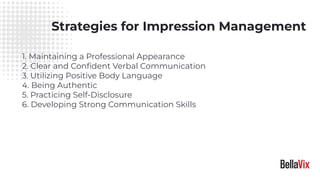
Strategies for Impression Management
1. Maintaining a Professional Appearance
2. Clear and Confident Verbal Communication
3. Utilizing Positive Body Language
4. Being Authentic
5. Practicing Self-Disclosure
6. Developing Strong Communication Skills
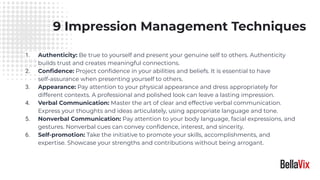
9 Impression Management Techniques
1. Authenticity: Be true to yourself and present your genuine self to others. Authenticity
builds trust and creates meaningful connections.
2. Confidence: Project confidence in your abilities and beliefs. It is essential to have
self-assurance when presenting yourself to others.
3. Appearance: Pay attention to your physical appearance and dress appropriately for
different contexts. A professional and polished look can leave a lasting impression.
4. Verbal Communication: Master the art of clear and effective verbal communication.
Express your thoughts and ideas articulately, using appropriate language and tone.
5. Nonverbal Communication: Pay attention to your body language, facial expressions, and
gestures. Nonverbal cues can convey confidence, interest, and sincerity.
6. Self-promotion: Take the initiative to promote your skills, accomplishments, and
expertise. Showcase your strengths and contributions without being arrogant.
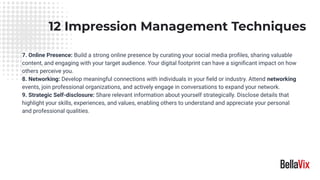
12 Impression Management Techniques
7. Online Presence: Build a strong online presence by curating your social media profiles, sharing valuable
content, and engaging with your target audience. Your digital footprint can have a significant impact on how
others perceive you.
8. Networking: Develop meaningful connections with individuals in your field or industry. Attend networking
events, join professional organizations, and actively engage in conversations to expand your network.
9. Strategic Self-disclosure: Share relevant information about yourself strategically. Disclose details that
highlight your skills, experiences, and values, enabling others to understand and appreciate your personal
and professional qualities.
Thank You

Mastering Impression Management Techniques.pdf

  • 2.
    Mastering Impression Management Techniques Whetheryou are a business professional, an aspiring influencer, or simply navigating everyday life, mastering impression management techniques is essential for success. It allows you to shape perceptions, refine your self-presentation, and ultimately control how others perceive you.
  • 3.
    What is ImpressionManagement? Impression management is the conscious or subconscious process of controlling other people’s impressions. It involves influencing how others perceive oneself, brand, or products/services. This concept was first introduced by sociologist Erving Goffman in 1959 and is still relevant today in personal and corporate branding. Impression management requires a conscious effort to shape and control perceptions. Whether in social interactions or professional settings, individuals engage in impression management to influence opinions and create a positive image. Personal branding is an essential aspect of impression management, as it involves carefully crafting and managing one’s public persona.
  • 4.
    Importance of ImpressionManagement In a business environment, impression management holds significant weight. The way we present ourselves and our brand to clients, partners, and colleagues can greatly influence the perception of our professionalism, competence, and trustworthiness. Positive impressions establish a foundation of trust and credibility, making it easier to attract customers, win contracts, and forge long-term relationships.
  • 5.
    Examples of ImpressionManagement 1. Down-to-earth Leader 2. Confident Expert 3. Supportive Team Player 4. Strategic Advertising
  • 6.
    Strategies for ImpressionManagement 1. Maintaining a Professional Appearance 2. Clear and Confident Verbal Communication 3. Utilizing Positive Body Language 4. Being Authentic 5. Practicing Self-Disclosure 6. Developing Strong Communication Skills
  • 7.
    9 Impression ManagementTechniques 1. Authenticity: Be true to yourself and present your genuine self to others. Authenticity builds trust and creates meaningful connections. 2. Confidence: Project confidence in your abilities and beliefs. It is essential to have self-assurance when presenting yourself to others. 3. Appearance: Pay attention to your physical appearance and dress appropriately for different contexts. A professional and polished look can leave a lasting impression. 4. Verbal Communication: Master the art of clear and effective verbal communication. Express your thoughts and ideas articulately, using appropriate language and tone. 5. Nonverbal Communication: Pay attention to your body language, facial expressions, and gestures. Nonverbal cues can convey confidence, interest, and sincerity. 6. Self-promotion: Take the initiative to promote your skills, accomplishments, and expertise. Showcase your strengths and contributions without being arrogant.
  • 8.
    12 Impression ManagementTechniques 7. Online Presence: Build a strong online presence by curating your social media profiles, sharing valuable content, and engaging with your target audience. Your digital footprint can have a significant impact on how others perceive you. 8. Networking: Develop meaningful connections with individuals in your field or industry. Attend networking events, join professional organizations, and actively engage in conversations to expand your network. 9. Strategic Self-disclosure: Share relevant information about yourself strategically. Disclose details that highlight your skills, experiences, and values, enabling others to understand and appreciate your personal and professional qualities.
  • 9.