Elevating Service Delivery Through Effective Expectation Management: Mastering Client Communication
Mastering client communication and expectation management to elevate service delivery, build trust, and drive long-term success. Learn strategies for clear goals, transparency, and proactive relationship-building to exceed client expectations.
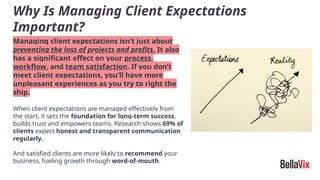
Why Is ManagingClient Expectations
Important?
Managing client expectations isn’t just about
preventing the loss of projects and profits. It also
has a significant effect on your process,
workflow, and team satisfaction. If you don’t
meet client expectations, you’ll have more
unpleasant experiences as you try to right the
ship.
When client expectations are managed effectively from
the start, it sets the foundation for long-term success,
builds trust and empowers teams. Research shows 69% of
clients expect honest and transparent communication
regularly.
And satisfied clients are more likely to recommend your
business, fueling growth through word-of-mouth.
4.
Strategies to ManageClient Expectations
Effective client expectation management is
crucial for fostering strong relationships,
ensuring project success, and driving business
growth. By aligning client expectations with
deliverables, businesses can enhance satisfaction
and encourage positive referrals.
5.
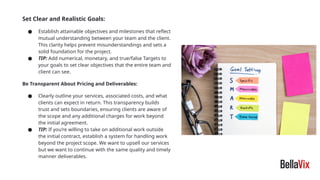
Set Clear andRealistic Goals:
● Establish attainable objectives and milestones that reflect
mutual understanding between your team and the client.
This clarity helps prevent misunderstandings and sets a
solid foundation for the project.
● TIP: Add numerical, monetary, and true/false Targets to
your goals to set clear objectives that the entire team and
client can see.
Be Transparent About Pricing and Deliverables:
● Clearly outline your services, associated costs, and what
clients can expect in return. This transparency builds
trust and sets boundaries, ensuring clients are aware of
the scope and any additional charges for work beyond
the initial agreement.
● TIP: If you’re willing to take on additional work outside
the initial contract, establish a system for handling work
beyond the project scope. We want to upsell our services
but we want to continue with the same quality and timely
manner deliverables.
6.
Develop a ComprehensiveCommunication Plan:
● Implement a structured plan detailing how and when
updates will be shared. Regular, transparent
communication keeps clients informed and engaged
throughout the project lifecycle.
● Some clients want in-depth reports at every stage while
others may prefer brief interactions on an as-needed
basis.
● TIP: Personalize the follow-up as much as you can.
Establish what are the biggest priorities and milestones
and set notification settings based on client preferences.
● Understanding how they think and work helps you tailor
the customer journey and your interactions so they feel
comfortable working with you. At the end of the day,
people would rather work with those who understand
them rather than cold, nameless service providers.
7.
Document All Communications:
●Maintain detailed records of all client interactions,
agreements, and changes. This documentation serves as
a reference, helps manage expectations, and protects
both parties in case of disputes.
● TIP: Save all your meeting recordings and transcriptions
in one all access document where you can go back and
double check the KPI and deliverables. Be sure to push
for assets that the client is responsible for.
Under-Promise and Over-Deliver:
● Create accessible platforms where clients can provide
feedback, approve deliverables, and monitor project
progress in real-time. This fosters collaboration and
keeps clients actively involved.
● TIP: After setting clear and achievable KPIs give the client
exactly what you said you would—and more. It’s always
better to under-promise and over-deliver than to come in
below expectations.
● Find time to strategically go above and beyond to create
a "wow" moment for a client.
8.
Proactively Build ClientRelationships:
● Engage with clients beyond transactional interactions.
Building rapport through regular check-ins and
personalized communication demonstrates commitment
and can lead to long-term partnerships.
● TIP: During conversations, try to find out if you have
similar interests or hobbies. Connecting personally leads
to more loyal customers—studies show that fast-growing
companies generate 40% more revenue than businesses
that don’t take a personalized approach. And 71% of
customers expect customized interactions.
Utilize Client Portals for Collaboration:
● Create a mehanizam or structure that is personalized but
easy to track all communication and deliverables. When a
clear communication on responsibilities is set all sides
work more seamlessly.
● TIP: Deliverables can be shared in joint Google Calendar
with multiple tasks for the client and the agency team
9.
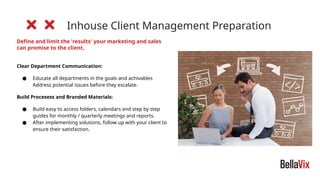
Inhouse Client ManagementPreparation
Define and limit the 'results' your marketing and sales
can promise to the client.
Clear Department Communication:
● Educate all departments in the goals and achivables
Address potential issues before they escalate.
Build Procesess and Branded Materials:
● Build easy to access folders, calendars and step by step
guides for monthly / quarterly meetings and reports.
● After implementing solutions, follow up with your client to
ensure their satisfaction.