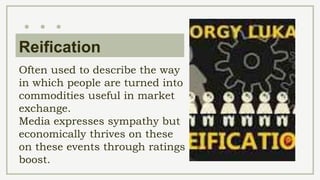
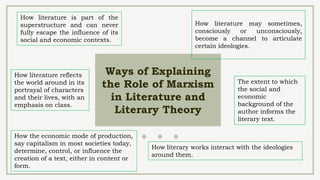
This document discusses Marxist literary criticism and concepts relevant to analyzing works through that lens. It defines Marxism as focusing on socio-economic relationships and class struggles. Marxist criticism examines how a literary work relates to class and can be ideological, fitting into the base/superstructure model of economic base determining superstructure elements like art. Key concepts discussed include ideology, hegemony, reification, and ways Marxist criticism can explain literature's role in society and interaction with ideologies. Guiding questions are provided to analyze class relations and social conflicts in a work. An example analyzes how Romeo and Juliet touches on class associations and conflicts between the feudal Montagues and bourgeois Capulets during Renaissance transition.