Marketing your
organisation
All material © Caroline Oubridge
You want people to know:
• Who you are
• What you do
• How they can be involved
Today: a step to the side
• Look at ingredients
• Share ideas and
experiences
Today
• Who you need to reach
• What you want to say
• Ways to do it
Target audience(s)?
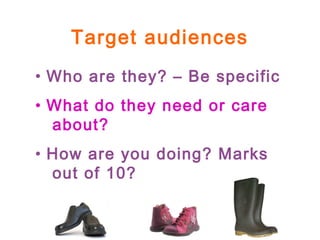
Target audiences
• Who are they? – Be specific
• What do they need or care
about?
• How are you doing? Marks
out of 10?
Target audience(s)
Target audience(s)
• Once you know who they are
• Design your activities or
services for them
• Know who to:
prioritise
find out about
Elevator pitch
About Ecotricity:
Ecotricity is an electricity company with a
difference - we're dedicated to changing the way
electricity is made.
We take the money our customers spend on
electricity and invest it in clean forms of power like
wind energy.
What's more, we're the only green electricity
company actually building these new renewable
energy sources. In 2007 alone we invested £25
million in wind energy.
Interview your neighbour
• 1 minute per
answer
• First thing
that comes
into your head
• Make notes
afterwards
Key messages are:
MORE THAN AIMS &
OBJECTIVES
• Your purpose
• Your values
• The need for your activities
Key messages will:
• Give you a clear identity
• Help you communicate
consistently
• Make the most of
scarce resources
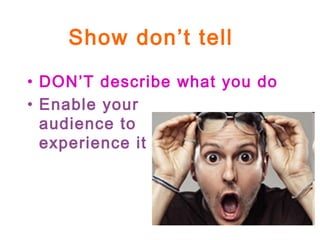
Show don’t tell
• DON’T describe what you do
• Enable your
audience to
experience it
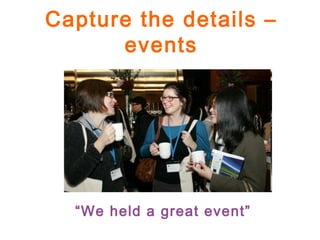
Capture the details –
events
“We held a great event”
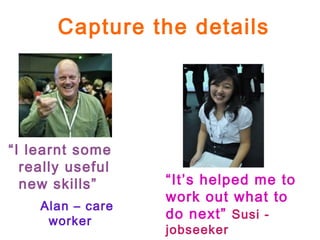
Capture the details
“I learnt some
really useful
new skills”
Alan – care
worker
“It’s helped me to
work out what to
do next” Susi -
jobseeker
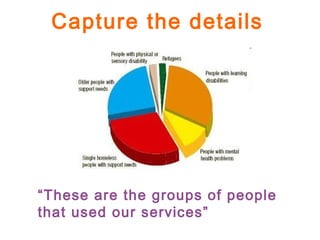
Capture the details
“These are the groups of people
that used our services”
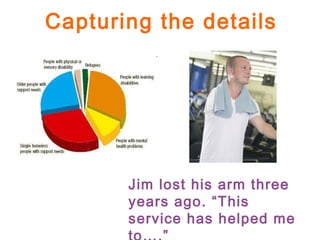
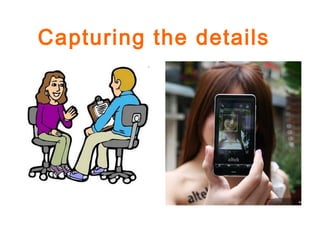
Capturing the details
Jim lost his arm three
years ago. “This
service has helped me
Capturing the details
Capturing success:
• Benefits and outcomes?
• Numbers?
• Experiences, thoughts and
feelings?
• Changes made?
• How achieving aims?
• Lessons learned?
We all love a good
story
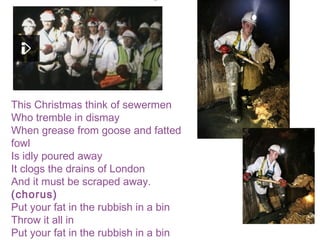
This Christmas think of sewermen
Who tremble in dismay
When grease from goose and fatted
fowl
Is idly poured away
It clogs the drains of London
And it must be scraped away.
(chorus)
Put your fat in the rubbish in a bin
Throw it all in
Put your fat in the rubbish in a bin
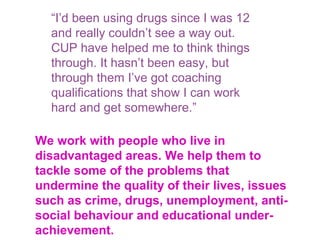
We work with people who live in
disadvantaged areas. We help them to
tackle some of the problems that
undermine the quality of their lives, issues
such as crime, drugs, unemployment, anti-
social behaviour and educational under-
achievement.
“I’d been using drugs since I was 12
and really couldn’t see a way out.
CUP have helped me to think things
through. It hasn’t been easy, but
through them I’ve got coaching
qualifications that show I can work
hard and get somewhere.”
Channels of
communication
Action plan
• What are you going
to do differently?
• Three realistic
changes?

Marketing your community organisation

  • 1.
  • 2.
    You want peopleto know: • Who you are • What you do • How they can be involved
  • 3.
    Today: a stepto the side • Look at ingredients • Share ideas and experiences
  • 4.
    Today • Who youneed to reach • What you want to say • Ways to do it
  • 5.
  • 6.
    Target audiences • Whoare they? – Be specific • What do they need or care about? • How are you doing? Marks out of 10?
  • 7.
  • 8.
    Target audience(s) • Onceyou know who they are • Design your activities or services for them • Know who to: prioritise find out about
  • 9.
  • 13.
    About Ecotricity: Ecotricity isan electricity company with a difference - we're dedicated to changing the way electricity is made. We take the money our customers spend on electricity and invest it in clean forms of power like wind energy. What's more, we're the only green electricity company actually building these new renewable energy sources. In 2007 alone we invested £25 million in wind energy.
  • 14.
    Interview your neighbour •1 minute per answer • First thing that comes into your head • Make notes afterwards
  • 15.
    Key messages are: MORETHAN AIMS & OBJECTIVES • Your purpose • Your values • The need for your activities
  • 16.
    Key messages will: •Give you a clear identity • Help you communicate consistently • Make the most of scarce resources
  • 17.
    Show don’t tell •DON’T describe what you do • Enable your audience to experience it
  • 18.
    Capture the details– events “We held a great event”
  • 19.
    Capture the details “Ilearnt some really useful new skills” Alan – care worker “It’s helped me to work out what to do next” Susi - jobseeker
  • 20.
    Capture the details “Theseare the groups of people that used our services”
  • 21.
    Capturing the details Jimlost his arm three years ago. “This service has helped me
  • 22.
  • 23.
    Capturing success: • Benefitsand outcomes? • Numbers? • Experiences, thoughts and feelings? • Changes made? • How achieving aims? • Lessons learned?
  • 24.
    We all lovea good story
  • 25.
    This Christmas thinkof sewermen Who tremble in dismay When grease from goose and fatted fowl Is idly poured away It clogs the drains of London And it must be scraped away. (chorus) Put your fat in the rubbish in a bin Throw it all in Put your fat in the rubbish in a bin
  • 26.
    We work withpeople who live in disadvantaged areas. We help them to tackle some of the problems that undermine the quality of their lives, issues such as crime, drugs, unemployment, anti- social behaviour and educational under- achievement. “I’d been using drugs since I was 12 and really couldn’t see a way out. CUP have helped me to think things through. It hasn’t been easy, but through them I’ve got coaching qualifications that show I can work hard and get somewhere.”
  • 27.
  • 28.
    Action plan • Whatare you going to do differently? • Three realistic changes?

Editor's Notes

  • #6 On a piece of paper – 4 columns, in first column write your target audiences – be specific
  • #10 After activity – What works well? would everyone in your organisation say the same thing?
  • #11 What do they do? How do they do it? What do you think about them?
  • #18 Where are your ingredients?
  • #23 Where are your ingredients?