PANDIT JAWAHARLAL NEHRU COLLEGE OF AGRICULTURE &
RESEARCH INSTITUTE.
KARAIKAL
AEC505 AGRICULTURAL MARKETING AND PRICE ANALYSIS (2+1)
TOPIC ON: MARKET INTEGRATION
COURSE TEACHER: Dr. K. S. KUMARAVEL
SUBMITTED BY,
R. Jp sivam
CONTENT
Introduction
Types of market integration
Examples for market integration types
Effects of market integration types
Advantages and disadvantages of types of market integration.
Reasons for market integration
Degree of market integration
Measurement of market integration
Market integration
● Integration shows the relationship of the firm in a market.
The extent of integration influences the conduct of the firms
and consequently their marketing efficiency.
● The behaviour of a highly integrated market is different from
that of a disintegrated market.
● Markets differ in the extent of integration and therefore,there
is a variation in their degree of efficiency.
CONTD.,
● Kohls and uhl have defined market integration as a process
which refers to the expansion of firms by consolidating additional
marketing functions and activities under a single management.
● Examples of market integration are the establishment of
wholesaling facilities by food retailers and the setting up of
another plant by a milk processor.
● In each case, there is a concentration of decision making in
the hands of a single management.
Types of Market Integration
There are three basic kinds of market integration
1.Horizontal integration.
2.vertical integration.
3.Conglomeration.
Horizontal integration
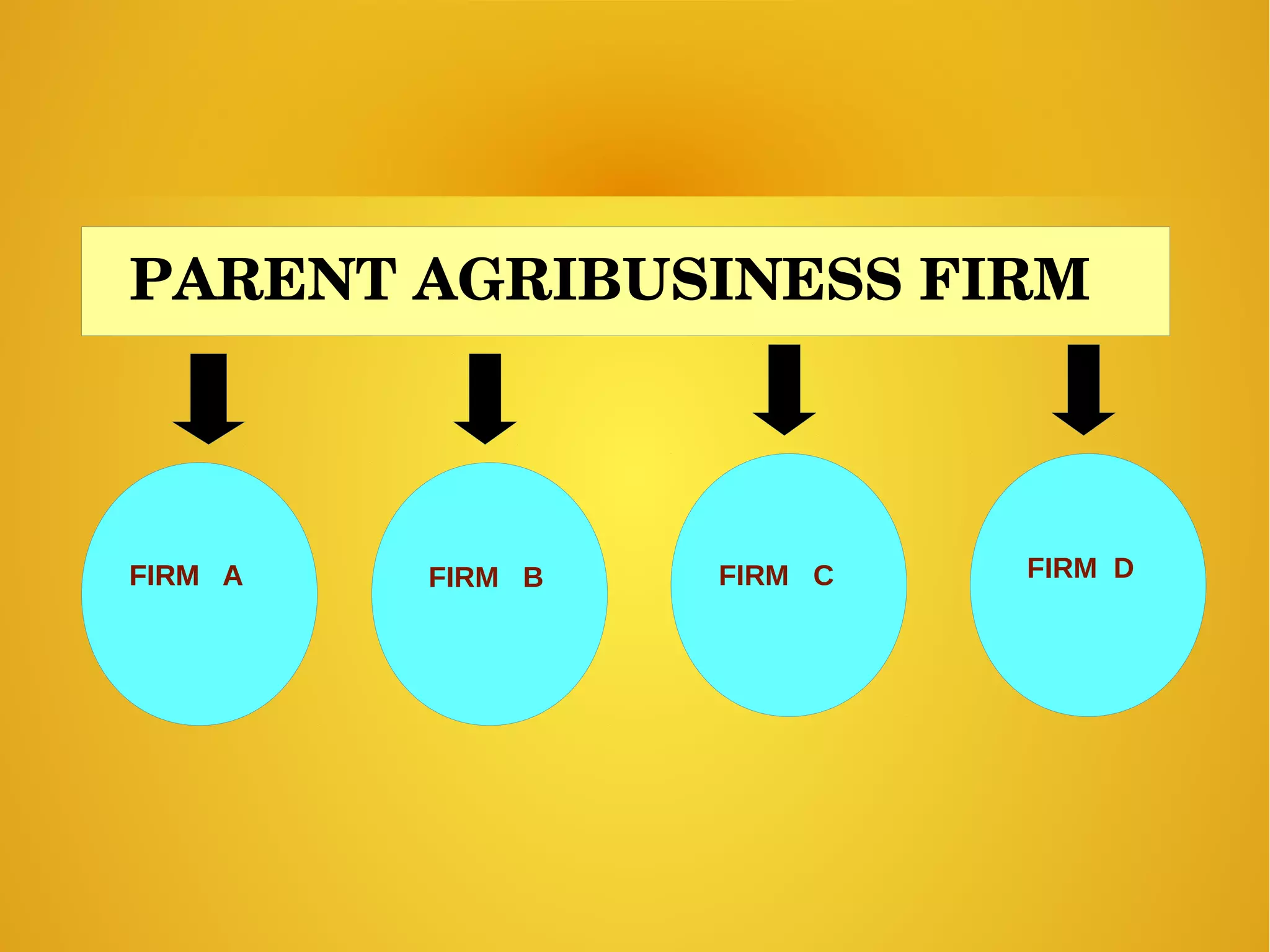
● This occurs when a firm or agency gains control of other
firms or agencies performing similar marketing functions at the
same level in the marketing sequence
● In this type of integration, some marketing agencies combine
to form a union with a view to reducing their effective number
and the extent of actual competition in the market.
● It is advantageous for the members who join the group.
PARENT AGRIBUSINESS FIRM
FIRM AFIRM AFIRM A FIRM DFIRM CFIRM B
CONTD.,
● In most markets, there is a large number of agencies
which do not effectively compete with each other.
● This is indicative of some element of horizontal
integration.
● It leads to reduced cost of marketing.
● In this reduced competition possible.
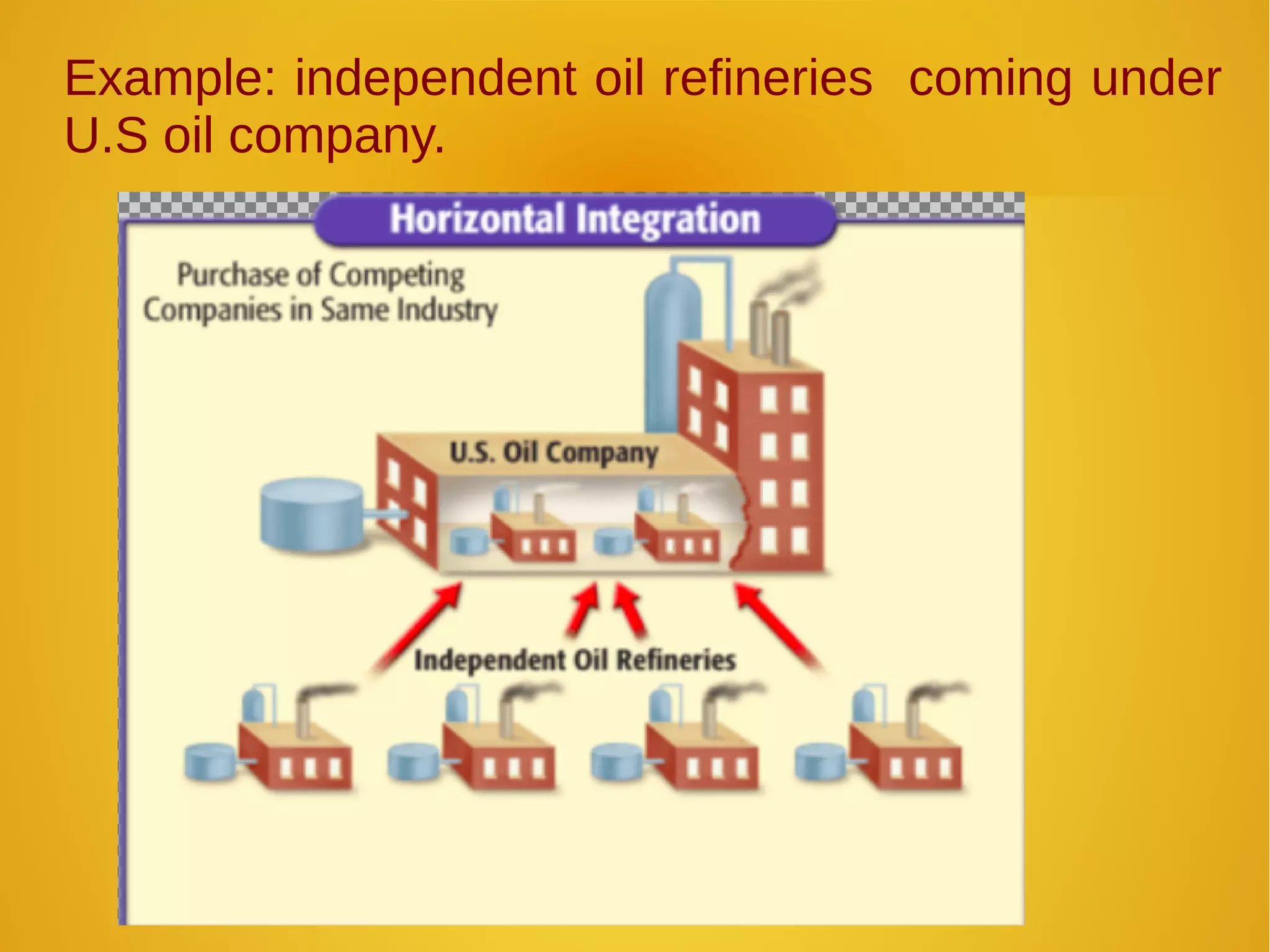
Example: independent oil refineries coming under
U.S oil company.
Effects of Horizontal integration
● Buying out a competitor in a time bound way to
reduce competition.
● Gaining larger share of the market and higher
profits.
● Attaining economies of scale.
● Specializing in the trade.
Advantages of Horizontal integration
(1)Lower costs.
(2)Higher efficiency.
(3)Increased differentiation.
(4)Increased market power.
(5)Reduced competition.
(6)Access to new markets.
(7)Economics of scale.
(8)Economics of scope.
(9)International trade.
Disadvantages of the Horizontal integration
(1)Destroyed value.
(2)Legal repercussions.
(3)Reduced flexibility.
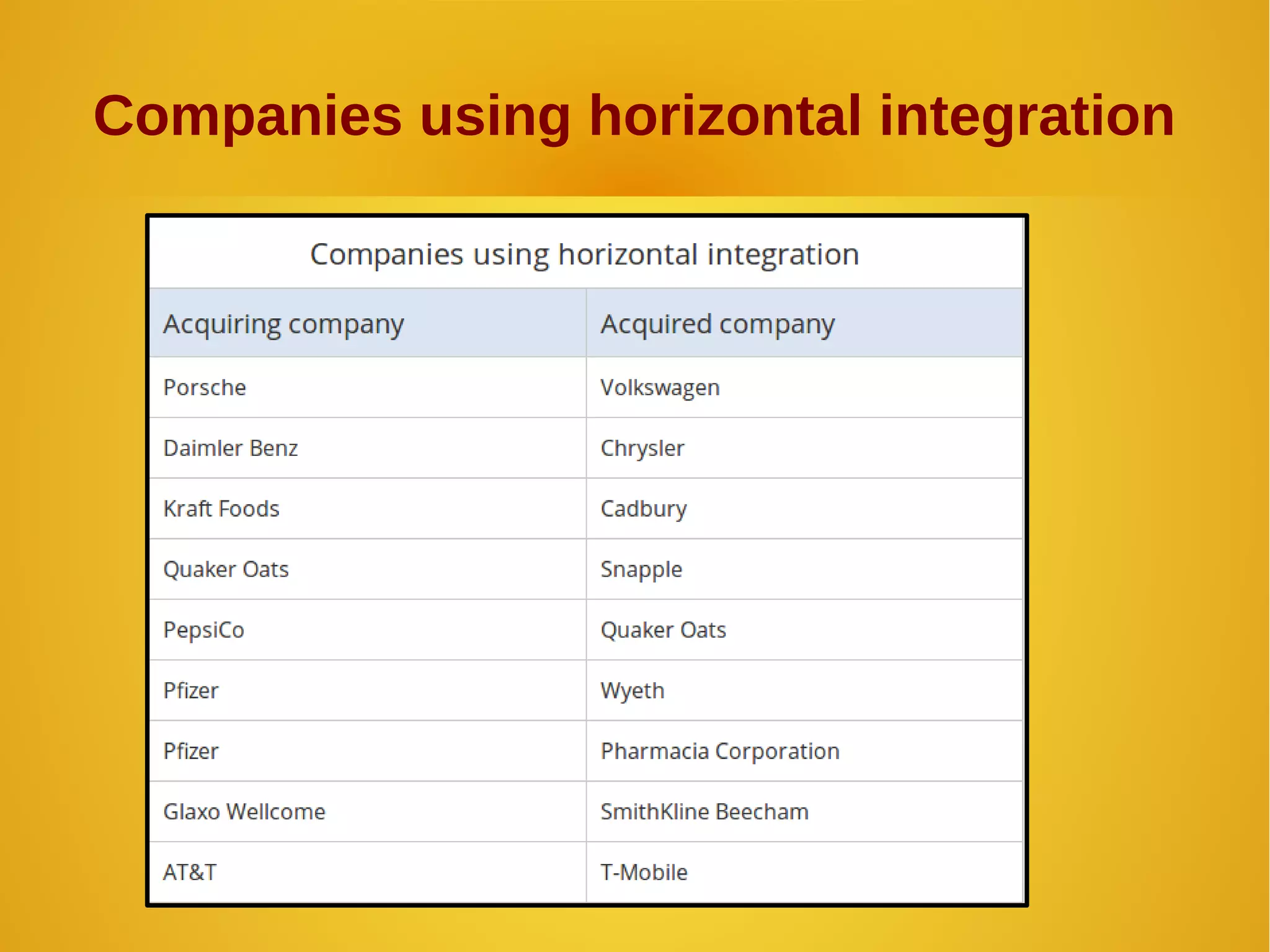
Companies using horizontal integration
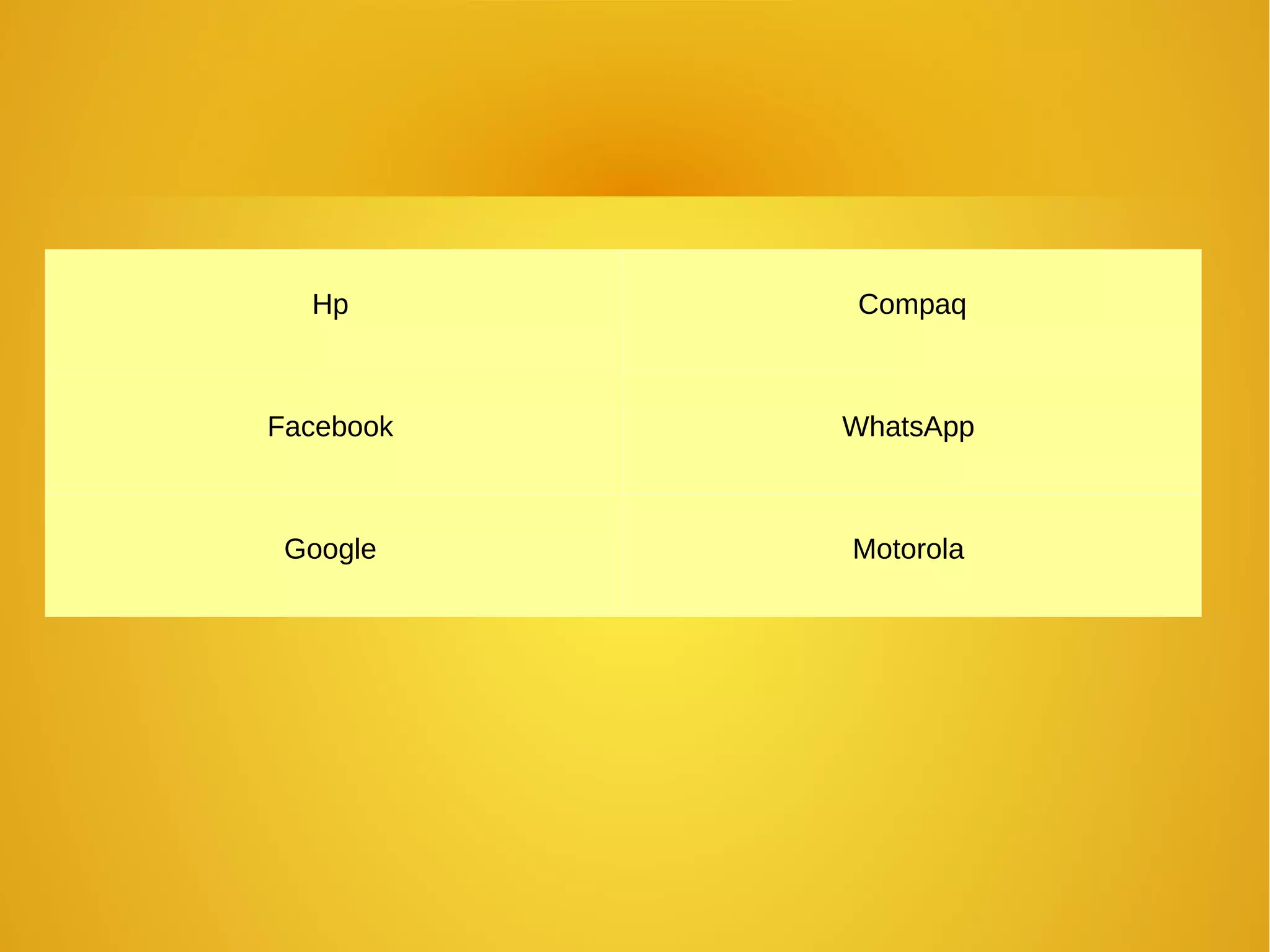
Hp Compaq
Facebook WhatsApp
Google Motorola
2. Vertical integration
● This occurs when a firm performs more than one activity in
the sequence of the marketing process.
● It is a linking together of two or more functions in the
marketing process within a single firm or under a single
ownership.
● This type of integration makes it possible to exercise control
over both quality and quantity of the product from the
beginning of the production process until the product is ready
for the consumer.
● It reduces the number of middle men in the marketing
channel.
Arrangemet of vertical integration
Wholesaling of feed
Feed mill
Transport agency
Food grains trade
PARENT AGRI
BUSINESS
FIRM
Example
Meat industry buys
all the functioning
plants needed for
running this meat
industry.
Contd.,
a) Forward integration
If a firm assumes another function of
marketing which is closer to the consumption
function, it is a case of forward integration.
Example: wholesaler assuming the function of
retailing
b) Backward integration
This involves ownership or a combination of
sources of supply. Example: when a
processing firm assumes the function of
assembling/purchasing the produce from the
villages.
● Balanced vertical integration
The third type of vertical integration is a
combination of the backward and the
forward vertical integration.
Advantages of Vertical Integration
1. It allows you to invest in assets that are highly
specialized.
2. It gives you more control over your business.
3. It allows for positive differentiation.
4. It requires lower costs of transaction.
5. It offers more cost control.
6. It ensures a high level of certainty when it comes to
quality.
7. It provides more competitive advantages.
Disadvantages of Vertical
Integration
1. It can have capacity-balancing problems.
2. It can bring about more difficulties.
3. It can result in decreased flexibility.
4. It can create some barriers to market entry.
5. It can cause confusion within the business.
6. It requires a huge amount of money.
7. It makes things more difficult.
Effects of Vertical integration
● More profits by taking up additional functions
● Risk reduction through improved market co-
ordination
● Improvement in bargaining power and the prospects
of influencing prices
● Lowering costs through achieving operational
efficiency
3. Conglomeration
A combination of agencies or activities
not directly related to each other may,
when it operates under a unified
management, be termed a conglomeration.
AGRI -BUSINESS CONGLOMERATE
MANUFACTURE
OF
VANASPATI
SALES
AND
REPAIRS
OF
ELECTRONIC
GOODS
CLOTH
MILLRETAIL -
CHAIN
FRUIT
PROCESSING
UNIT
FOOD-
GRAINS
TRADE
Examples
● Hindustan unilever ltd.
● Delhi cloth and general mills.
● Birla group.
● Tatas.
● J.K.group.
● ITC. And
● NAFED.
Effects of Conglomeration
● Risk reduction through diversification
● Acquisition of financial leverage
● Empire – building urge.
Reasons for market integration
● To remove transaction costs
● Foster competition
● Provide better signals for optimal generation and
consumption decisions.
● Improve security of supply
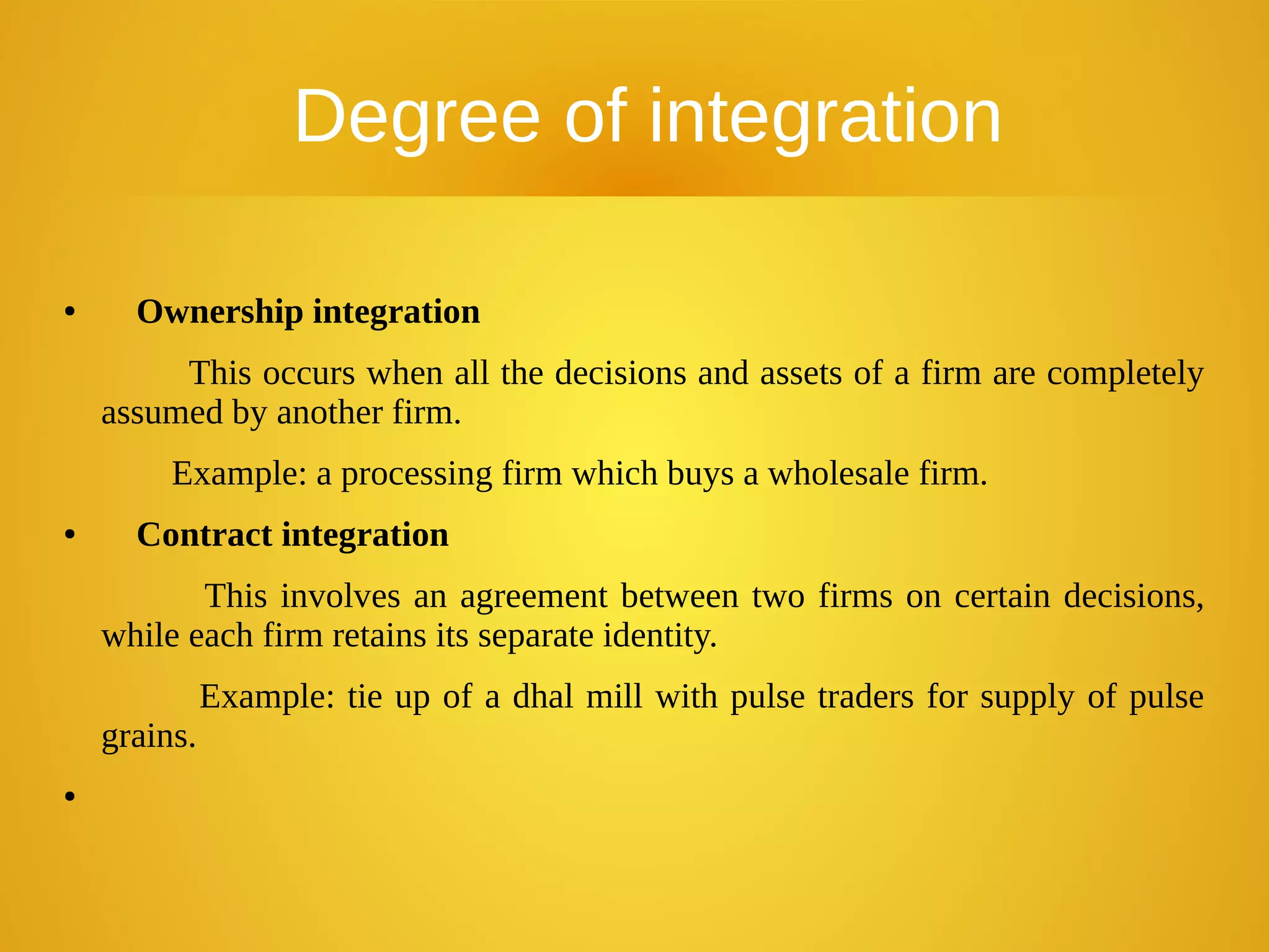
Degree of integration
● Ownership integration
This occurs when all the decisions and assets of a firm are completely
assumed by another firm.
Example: a processing firm which buys a wholesale firm.
● Contract integration
This involves an agreement between two firms on certain decisions,
while each firm retains its separate identity.
Example: tie up of a dhal mill with pulse traders for supply of pulse
grains.
●
Measurement of market
integration
The measurement or assessment of the extent of market
integration is helpful in the formation of appropriate policies
for increasing the efficiency of marketing process.
The measurement or assessment of market integration
may be attempted at two levels.
1) Integration among firms of a market.
2) Integration among spatially seperated markets.
Integration among firms of a market
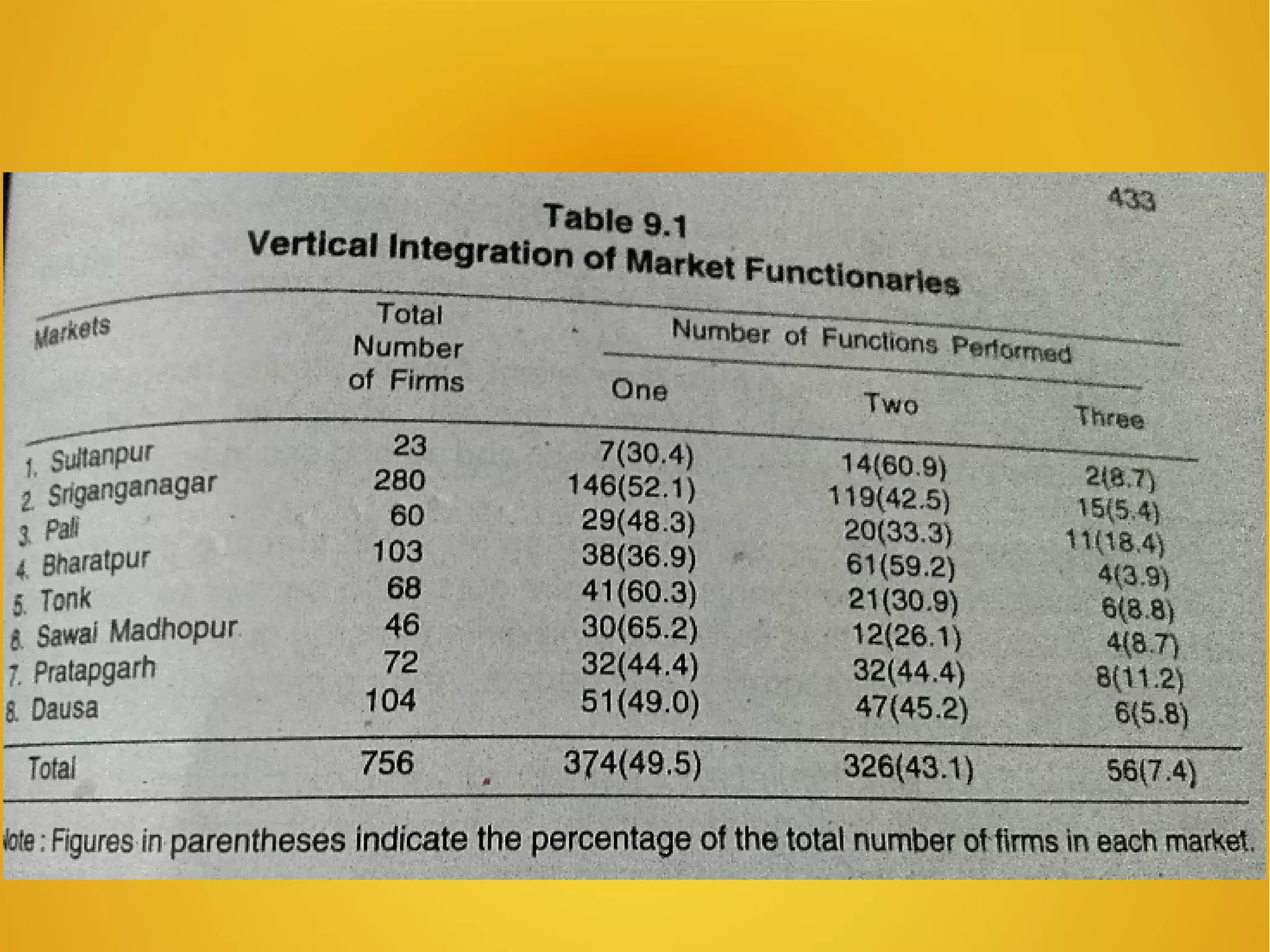
● The extent of vertical integration in a market may be assessed by counting
the number of functions performed by each firm in the market.
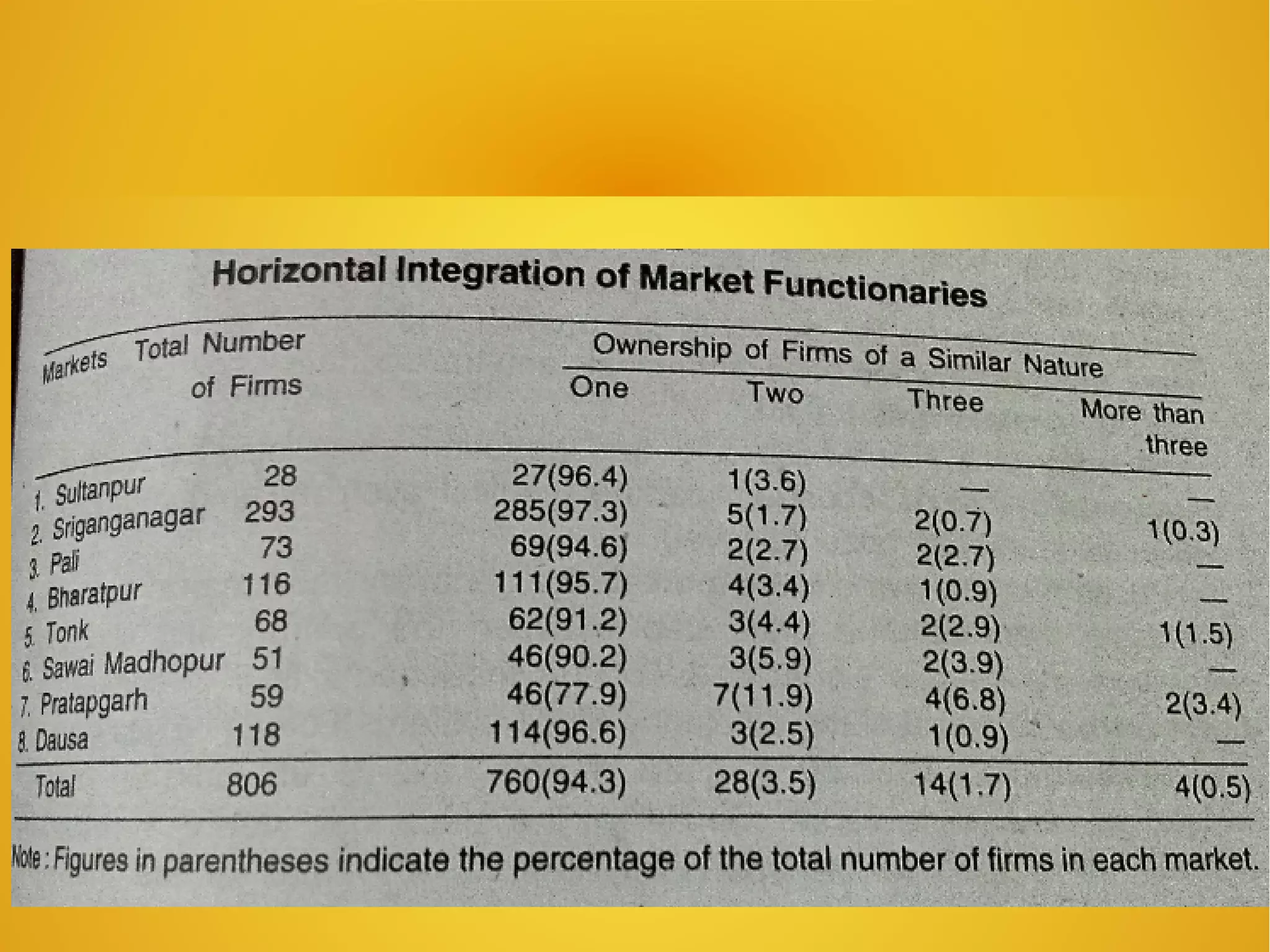
● The extent of horizontal integration may be measured by studying the
number of firms performing the same marketing function but operating
under one common management.
● The result of a study on the exsistence of vertical and horizontal
integration in the marketing of wheat in eight main wheat producing districts
of Rajasthan revealed that about half of the marketing firms (50.5%) were
integrated vertically because they performed two or three functions.
Integration among spatially
separated markets
●
The extent to which prices in spatially seperated markets
move together or are related to transport costs reflects the
degree of integration.
● A two-way analysis of prices in spatially seperated markets
may be used to assess the degree of integration.
1) Price correlations.
2) Spatial price differential and Transportation costs.
Price correlation
● The degree of correlation between two prices is
taken as an index of the extent to which the two
markets are integrated.
● A higher degree of correlation coefficient
indicates a greater degree of integration atleast in
terms of the pricing of the product between market
centres and vice versa.
● The correlation in the price of commodity in
any markets is unity under spatial price integration.
Spatial price differential and Transportation
costs.
● Correlation method.
● Ravallion procedure.
● Co integration approach.
● Parity bound models (PBM).

Market integration

  • 1.
    PANDIT JAWAHARLAL NEHRUCOLLEGE OF AGRICULTURE & RESEARCH INSTITUTE. KARAIKAL AEC505 AGRICULTURAL MARKETING AND PRICE ANALYSIS (2+1) TOPIC ON: MARKET INTEGRATION COURSE TEACHER: Dr. K. S. KUMARAVEL SUBMITTED BY, R. Jp sivam
  • 2.
    CONTENT Introduction Types of marketintegration Examples for market integration types Effects of market integration types Advantages and disadvantages of types of market integration. Reasons for market integration Degree of market integration Measurement of market integration
  • 3.
    Market integration ● Integrationshows the relationship of the firm in a market. The extent of integration influences the conduct of the firms and consequently their marketing efficiency. ● The behaviour of a highly integrated market is different from that of a disintegrated market. ● Markets differ in the extent of integration and therefore,there is a variation in their degree of efficiency.
  • 4.
    CONTD., ● Kohls anduhl have defined market integration as a process which refers to the expansion of firms by consolidating additional marketing functions and activities under a single management. ● Examples of market integration are the establishment of wholesaling facilities by food retailers and the setting up of another plant by a milk processor. ● In each case, there is a concentration of decision making in the hands of a single management.
  • 5.
    Types of MarketIntegration There are three basic kinds of market integration 1.Horizontal integration. 2.vertical integration. 3.Conglomeration.
  • 6.
    Horizontal integration ● Thisoccurs when a firm or agency gains control of other firms or agencies performing similar marketing functions at the same level in the marketing sequence ● In this type of integration, some marketing agencies combine to form a union with a view to reducing their effective number and the extent of actual competition in the market. ● It is advantageous for the members who join the group.
  • 7.
  • 8.
    CONTD., ● In mostmarkets, there is a large number of agencies which do not effectively compete with each other. ● This is indicative of some element of horizontal integration. ● It leads to reduced cost of marketing. ● In this reduced competition possible.
  • 9.
    Example: independent oilrefineries coming under U.S oil company.
  • 10.
    Effects of Horizontalintegration ● Buying out a competitor in a time bound way to reduce competition. ● Gaining larger share of the market and higher profits. ● Attaining economies of scale. ● Specializing in the trade.
  • 11.
    Advantages of Horizontalintegration (1)Lower costs. (2)Higher efficiency. (3)Increased differentiation. (4)Increased market power. (5)Reduced competition. (6)Access to new markets. (7)Economics of scale. (8)Economics of scope. (9)International trade.
  • 12.
    Disadvantages of theHorizontal integration (1)Destroyed value. (2)Legal repercussions. (3)Reduced flexibility.
  • 13.
  • 15.
  • 16.
    2. Vertical integration ●This occurs when a firm performs more than one activity in the sequence of the marketing process. ● It is a linking together of two or more functions in the marketing process within a single firm or under a single ownership. ● This type of integration makes it possible to exercise control over both quality and quantity of the product from the beginning of the production process until the product is ready for the consumer. ● It reduces the number of middle men in the marketing channel.
  • 17.
    Arrangemet of verticalintegration Wholesaling of feed Feed mill Transport agency Food grains trade PARENT AGRI BUSINESS FIRM
  • 18.
    Example Meat industry buys allthe functioning plants needed for running this meat industry.
  • 19.
    Contd., a) Forward integration Ifa firm assumes another function of marketing which is closer to the consumption function, it is a case of forward integration. Example: wholesaler assuming the function of retailing
  • 20.
    b) Backward integration Thisinvolves ownership or a combination of sources of supply. Example: when a processing firm assumes the function of assembling/purchasing the produce from the villages.
  • 21.
    ● Balanced verticalintegration The third type of vertical integration is a combination of the backward and the forward vertical integration.
  • 22.
    Advantages of VerticalIntegration 1. It allows you to invest in assets that are highly specialized. 2. It gives you more control over your business. 3. It allows for positive differentiation. 4. It requires lower costs of transaction. 5. It offers more cost control. 6. It ensures a high level of certainty when it comes to quality. 7. It provides more competitive advantages.
  • 23.
    Disadvantages of Vertical Integration 1.It can have capacity-balancing problems. 2. It can bring about more difficulties. 3. It can result in decreased flexibility. 4. It can create some barriers to market entry. 5. It can cause confusion within the business. 6. It requires a huge amount of money. 7. It makes things more difficult.
  • 24.
    Effects of Verticalintegration ● More profits by taking up additional functions ● Risk reduction through improved market co- ordination ● Improvement in bargaining power and the prospects of influencing prices ● Lowering costs through achieving operational efficiency
  • 25.
    3. Conglomeration A combinationof agencies or activities not directly related to each other may, when it operates under a unified management, be termed a conglomeration.
  • 26.
  • 27.
    Examples ● Hindustan unileverltd. ● Delhi cloth and general mills. ● Birla group. ● Tatas. ● J.K.group. ● ITC. And ● NAFED.
  • 28.
    Effects of Conglomeration ●Risk reduction through diversification ● Acquisition of financial leverage ● Empire – building urge.
  • 29.
    Reasons for marketintegration ● To remove transaction costs ● Foster competition ● Provide better signals for optimal generation and consumption decisions. ● Improve security of supply
  • 30.
    Degree of integration ●Ownership integration This occurs when all the decisions and assets of a firm are completely assumed by another firm. Example: a processing firm which buys a wholesale firm. ● Contract integration This involves an agreement between two firms on certain decisions, while each firm retains its separate identity. Example: tie up of a dhal mill with pulse traders for supply of pulse grains. ●
  • 31.
    Measurement of market integration Themeasurement or assessment of the extent of market integration is helpful in the formation of appropriate policies for increasing the efficiency of marketing process. The measurement or assessment of market integration may be attempted at two levels. 1) Integration among firms of a market. 2) Integration among spatially seperated markets.
  • 32.
    Integration among firmsof a market ● The extent of vertical integration in a market may be assessed by counting the number of functions performed by each firm in the market. ● The extent of horizontal integration may be measured by studying the number of firms performing the same marketing function but operating under one common management. ● The result of a study on the exsistence of vertical and horizontal integration in the marketing of wheat in eight main wheat producing districts of Rajasthan revealed that about half of the marketing firms (50.5%) were integrated vertically because they performed two or three functions.
  • 35.
    Integration among spatially separatedmarkets ● The extent to which prices in spatially seperated markets move together or are related to transport costs reflects the degree of integration. ● A two-way analysis of prices in spatially seperated markets may be used to assess the degree of integration. 1) Price correlations. 2) Spatial price differential and Transportation costs.
  • 36.
    Price correlation ● Thedegree of correlation between two prices is taken as an index of the extent to which the two markets are integrated. ● A higher degree of correlation coefficient indicates a greater degree of integration atleast in terms of the pricing of the product between market centres and vice versa. ● The correlation in the price of commodity in any markets is unity under spatial price integration.
  • 37.
    Spatial price differentialand Transportation costs. ● Correlation method. ● Ravallion procedure. ● Co integration approach. ● Parity bound models (PBM).