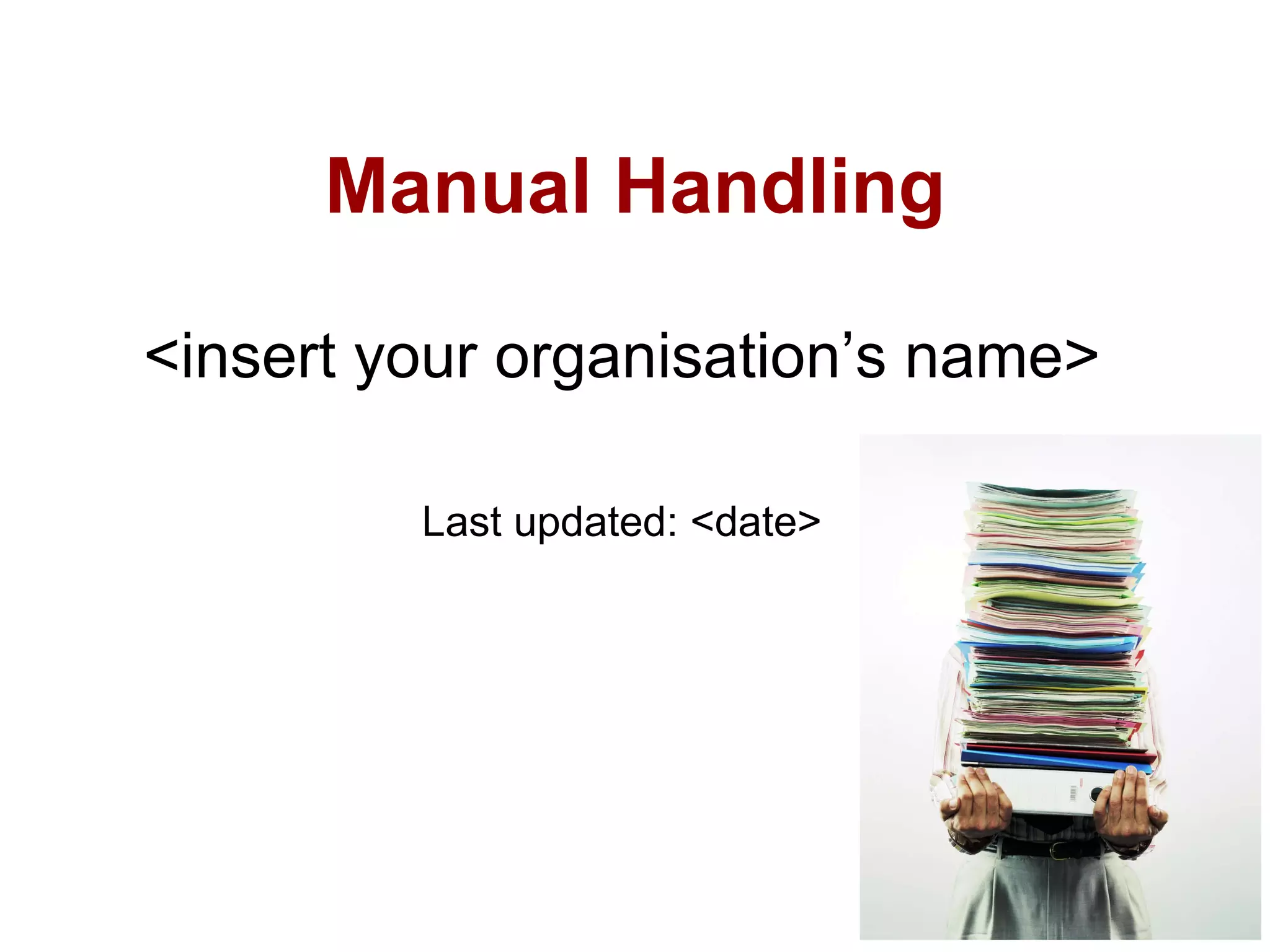
Manual Handling <insert your organisation’s name> Last updated: <date>
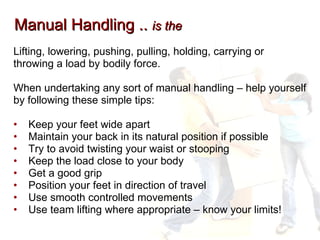
Manual Handling ..  is the Lifting, lowering, pushing, pulling, holding, carrying or  throwing a load by bodily force.  When undertaking any sort of manual handling – help yourself  by following these simple tips: Keep your feet wide apart Maintain your back in its natural position if possible Try to avoid twisting your waist or stooping Keep the load close to your body Get a good grip Position your feet in direction of travel Use smooth controlled movements Use team lifting where appropriate – know your limits!
Carrying heavy objects (“manual handling”) If you are required to carry something that is heavy or awkward, always assess the alternatives : for example could you use a trolley?   If this is not possible,   Perhaps you could ask someone else to help you. Only lift using the correct lifting technique  – see following slides …
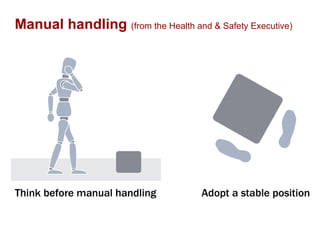
Manual handling  (from the Health and &   Safety Executive)
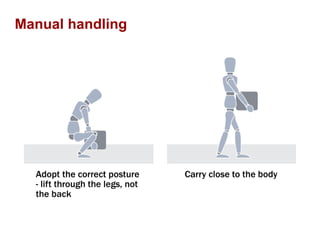
Manual handling
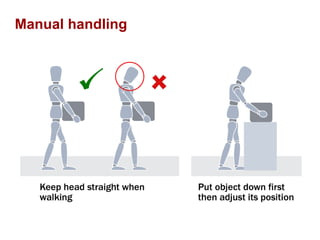
Manual handling
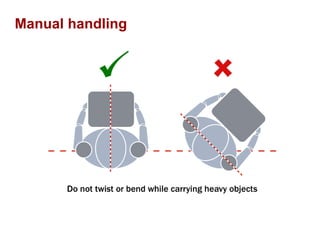
Manual handling
Slips, trips and falls What you should do: Keep the work area tidy Report all potential hazards - loose carpets, trailing cables, handbags, etc – to: your manager  the Health and Safety Officer Keep all exits and walk ways clear Pick up those banana skins! This is the second highest cause of workplace accidents / near misses after manual handling.
PPE, COSHH, RIDDOR, Electrical safety PPE  – Personal Protective Equipment – eg hard hats, safety goggles – COSHH   - Control of Substances Hazardous to Health – this could apply to products you use everyday – ALSO – be aware that printer products can be hazardous if handled or disposed of inappropriately Always follow the manufacturer’s instructions  RIDDOR  – Reporting of Injuries, Diseases and Dangerous Occurrences Regulations Report all accidents or near misses to the Health and Safety Officer or your manager Electrical  safety  – do not attempt to carry out any work to electrical appliances, including  simple tasks such as  changing plugs. If you spot frayed cables or appliances that require attention - please contact the Health and Safety Officer
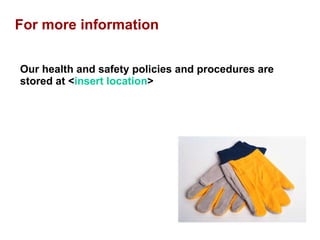
For more information Our health and safety policies and procedures are stored at < insert location >

Manual handling overview

  • 1.
    Manual Handling <insertyour organisation’s name> Last updated: <date>
  • 2.
    Manual Handling .. is the Lifting, lowering, pushing, pulling, holding, carrying or throwing a load by bodily force. When undertaking any sort of manual handling – help yourself by following these simple tips: Keep your feet wide apart Maintain your back in its natural position if possible Try to avoid twisting your waist or stooping Keep the load close to your body Get a good grip Position your feet in direction of travel Use smooth controlled movements Use team lifting where appropriate – know your limits!
  • 3.
    Carrying heavy objects(“manual handling”) If you are required to carry something that is heavy or awkward, always assess the alternatives : for example could you use a trolley? If this is not possible, Perhaps you could ask someone else to help you. Only lift using the correct lifting technique – see following slides …
  • 4.
    Manual handling (from the Health and & Safety Executive)
  • 5.
  • 6.
  • 7.
  • 8.
    Slips, trips andfalls What you should do: Keep the work area tidy Report all potential hazards - loose carpets, trailing cables, handbags, etc – to: your manager the Health and Safety Officer Keep all exits and walk ways clear Pick up those banana skins! This is the second highest cause of workplace accidents / near misses after manual handling.
  • 9.
    PPE, COSHH, RIDDOR,Electrical safety PPE – Personal Protective Equipment – eg hard hats, safety goggles – COSHH - Control of Substances Hazardous to Health – this could apply to products you use everyday – ALSO – be aware that printer products can be hazardous if handled or disposed of inappropriately Always follow the manufacturer’s instructions RIDDOR – Reporting of Injuries, Diseases and Dangerous Occurrences Regulations Report all accidents or near misses to the Health and Safety Officer or your manager Electrical safety – do not attempt to carry out any work to electrical appliances, including simple tasks such as changing plugs. If you spot frayed cables or appliances that require attention - please contact the Health and Safety Officer
  • 10.
    For more informationOur health and safety policies and procedures are stored at < insert location >

Editor's Notes