Chapter 3 Part 2
Development and the Prenatal Environment
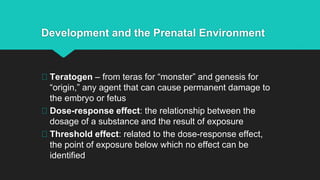
Teratogen – from teras for “monster” and genesis for
“origin,” any agent that can cause permanent damage to
the embryo or fetus
Dose-response effect: the relationship between the
dosage of a substance and the result of exposure
Threshold effect: related to the dose-response effect,
the point of exposure below which no effect can be
identified
Copyright © 2017 Pearson, Inc. All Rights Reserved
Environmental Influences on Prenatal Development
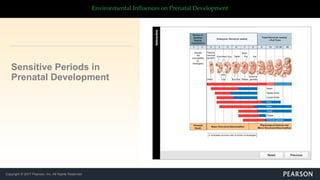
Sensitive Periods in
Prenatal Development
Alcohol
Alcohol is one of the most common causes of birth
abnormalities and one of the most preventable causes
of birth defects.
Fetal Alcohol Syndrome (FAS): characterized by
distinctive facial features, intellectual disabilities (IQ
less than 70), and physical growth below the 10th
percentile in height or weight for age and race.
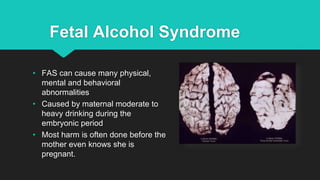
Fetal Alcohol Syndrome
• FAS can cause many physical,
mental and behavioral
abnormalities
• Caused by maternal moderate to
heavy drinking during the
embryonic period
• Most harm is often done before the
mother even knows she is
pregnant.
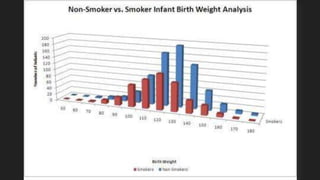
Tobacco
Women who smoke during pregnancy are twice as likely to
experience two specific complications:
Placenta previa: a condition in which the placenta
attaches low on the wall of the uterus, with the potential to
cause bleeding late in pregnancy
Placenta abruptio: a life-threatening emergency
condition in which the placenta peels away from the wall
of the uterus, causing massive bleeding
Copyright © 2017 Pearson, Inc. All Rights Reserved
Environmental Influences on Prenatal Development
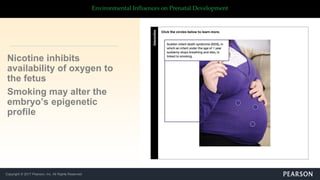
Nicotine inhibits
availability of oxygen to
the fetus
Smoking may alter the
embryo’s epigenetic
profile
Drugs and Medications
Cocaine - affects the brain, heart rate, and blood
pressure of both mother and fetus.
Increases the risk of miscarriage, premature birth, and death.
Opiates: - six times more likely to experience
complications during pregnancy. The fetus may
experience withdrawal symptoms, which causes fetal
distress.
OTC Medications
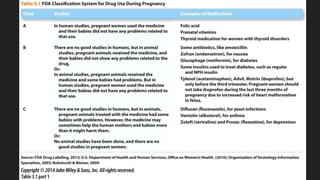
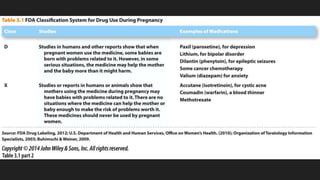
Medications: The FDA has a classification system
for drugs to guide physicians’ decisions regarding
medications.
Herbal medicines and supplements: Chemical
compounds created by nature are largely
unregulated. Women should discuss the use of
these substances with their professional health care
provider.
Maternal Disease, Illness, and Stress
Communicable diseases: may be caused by viruses, bacteria, or
parasites that cross the placenta or are transmitted during vaginal
birth.
Some diseases may cause serious birth defects depending on
timing and extent of exposure.
HIV and AIDS: attacks the immune system, leaving the person
vulnerable to infections and eventually leading to death.
AIDS can be transmitted during pregnancy, vaginal birth, and
breastfeeding.
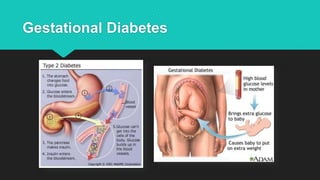
Gestational Diabetes
High-Risk Pregnancies
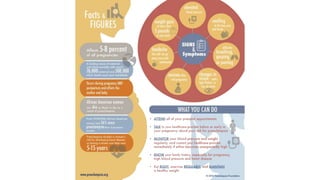
Prenatal care: health care during pregnancy which monitors
health of mother and baby, provides education and counseling
about pregnancy, birth, and newborns to women and their
partners
Preeclampsia: a treatable medical condition that begins after the 20th
week, characterized by high blood pressure, protein in the urine, and
sometimes swelling
Eclampsia: a medical emergency which left untreated leads to maternal
seizures and/or coma and even death of mother and baby
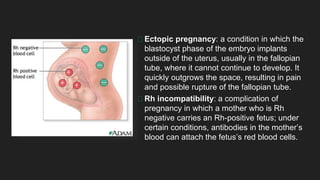
Ectopic pregnancy: a condition in which the
blastocyst phase of the embryo implants
outside of the uterus, usually in the fallopian
tube, where it cannot continue to develop. It
quickly outgrows the space, resulting in pain
and possible rupture of the fallopian tube.
Rh incompatibility: a complication of
pregnancy in which a mother who is Rh
negative carries an Rh-positive fetus; under
certain conditions, antibodies in the mother’s
blood can attach the fetus’s red blood cells.
Nearly 1 million pregnant women in the United
States do not receive adequate prenatal care.
Lack of access to quality affordable health care
increases the risk of complications.
Prenatal Health Care
Manis 2017   ch 3 pt 2 no vid

Manis 2017 ch 3 pt 2 no vid

  • 1.
  • 3.
    Development and thePrenatal Environment Teratogen – from teras for “monster” and genesis for “origin,” any agent that can cause permanent damage to the embryo or fetus Dose-response effect: the relationship between the dosage of a substance and the result of exposure Threshold effect: related to the dose-response effect, the point of exposure below which no effect can be identified
  • 4.
    Copyright © 2017Pearson, Inc. All Rights Reserved Environmental Influences on Prenatal Development Sensitive Periods in Prenatal Development
  • 5.
    Alcohol Alcohol is oneof the most common causes of birth abnormalities and one of the most preventable causes of birth defects. Fetal Alcohol Syndrome (FAS): characterized by distinctive facial features, intellectual disabilities (IQ less than 70), and physical growth below the 10th percentile in height or weight for age and race.
  • 6.
    Fetal Alcohol Syndrome •FAS can cause many physical, mental and behavioral abnormalities • Caused by maternal moderate to heavy drinking during the embryonic period • Most harm is often done before the mother even knows she is pregnant.
  • 7.
    Tobacco Women who smokeduring pregnancy are twice as likely to experience two specific complications: Placenta previa: a condition in which the placenta attaches low on the wall of the uterus, with the potential to cause bleeding late in pregnancy Placenta abruptio: a life-threatening emergency condition in which the placenta peels away from the wall of the uterus, causing massive bleeding
  • 8.
    Copyright © 2017Pearson, Inc. All Rights Reserved Environmental Influences on Prenatal Development Nicotine inhibits availability of oxygen to the fetus Smoking may alter the embryo’s epigenetic profile
  • 10.
    Drugs and Medications Cocaine- affects the brain, heart rate, and blood pressure of both mother and fetus. Increases the risk of miscarriage, premature birth, and death. Opiates: - six times more likely to experience complications during pregnancy. The fetus may experience withdrawal symptoms, which causes fetal distress.
  • 11.
    OTC Medications Medications: TheFDA has a classification system for drugs to guide physicians’ decisions regarding medications. Herbal medicines and supplements: Chemical compounds created by nature are largely unregulated. Women should discuss the use of these substances with their professional health care provider.
  • 15.
    Maternal Disease, Illness,and Stress Communicable diseases: may be caused by viruses, bacteria, or parasites that cross the placenta or are transmitted during vaginal birth. Some diseases may cause serious birth defects depending on timing and extent of exposure. HIV and AIDS: attacks the immune system, leaving the person vulnerable to infections and eventually leading to death. AIDS can be transmitted during pregnancy, vaginal birth, and breastfeeding.
  • 19.
  • 20.
    High-Risk Pregnancies Prenatal care:health care during pregnancy which monitors health of mother and baby, provides education and counseling about pregnancy, birth, and newborns to women and their partners Preeclampsia: a treatable medical condition that begins after the 20th week, characterized by high blood pressure, protein in the urine, and sometimes swelling Eclampsia: a medical emergency which left untreated leads to maternal seizures and/or coma and even death of mother and baby
  • 22.
    Ectopic pregnancy: acondition in which the blastocyst phase of the embryo implants outside of the uterus, usually in the fallopian tube, where it cannot continue to develop. It quickly outgrows the space, resulting in pain and possible rupture of the fallopian tube. Rh incompatibility: a complication of pregnancy in which a mother who is Rh negative carries an Rh-positive fetus; under certain conditions, antibodies in the mother’s blood can attach the fetus’s red blood cells.
  • 23.
    Nearly 1 millionpregnant women in the United States do not receive adequate prenatal care. Lack of access to quality affordable health care increases the risk of complications. Prenatal Health Care

Editor's Notes

  • #4 Key question 3: How do a woman’s health habits and the environment affect the developing embryo and fetus?
  • #5 LO 3.6: Explain the general principles governing the impact of teratogens on prenatal development. Figure 3.6: Sensitive Periods in Prenatal Development During the germinal period (dividing zygote, implantation), teratogens most likely result in the death of the organism. In the embryonic and fetal periods, the sensitive periods are different for each organ. During the embryonic period, teratogens can affect the development of major organs and body parts, causing permanent structural damage. Damage during the fetal period can occur as well but tends to involve fewer major structural abnormalities and physiological defects such as a disturbance of heart, lung, or brain functioning. Student clicks to reveal sensitive periods in prenatal development in sequential order.
  • #9 LO 3.7: Explain how smoking affects fetal growth. Smoking has an impact on fetal growth in that nicotine inhibits availability of oxygen to the fetus. Smoking may alter the embryo’s epigenetic profile (Brion et al., 2010). This may deactivate some genes, or increase methylation in other genes that are linked to cancer (Breton et al., 2009).