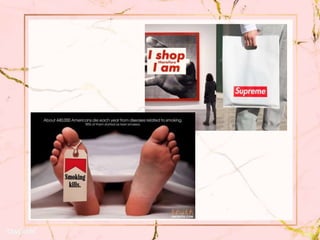
Manipulation of consumers by
marketers and compulsive buying
Who is a customer?
• A customer is an individual or business that
purchases another company's goods or services.
• Customers are important because they drive
revenues; without them, businesses cannot
continue to exist.
• All businesses compete with other companies to
attract customers, either by aggressively
advertising their products, by lowering prices to
expand their customer bases or developing
unique products and experiences that
customers love.
• E.g Apple, Tesla, Google or TikTok.
Role of customer in Marketing
• Marketing Research- Consumers play a
major role in marketing research before a
product or service is released to the public.
• Product Feedback- The consumer also plays
a role in the feedback-gathering process after
a company’s offering hits the market.
• Bring in New Consumers- Consumers also
can act as agents to further the effects of
your marketing plan.
Role of marketing on lives of consumers
Meets consumer needs and wants
Ensures organization survival,
growth and reputation
Widens market
Adapting the right price
Better product offerings
Creates utility
Management of demand
Face competition
Discharge social responsibilities
Economic growth
Advertisers Use to Manipulate
cosumers by
Anthropomorphism
Social proof
Acknowledging resistance
Experts’ opinions
Reverse psychology
Misleading visuals
Manipulation through language
Visual techniques of manipulation-
• Product placement
• Visual merchandising
Anthropomorphism
• One way that advertisers get consumers attention
is by giving human qualities to non-human objects
or beings.
• E.g- The World Wildlife Fund also makes use of
anthropomorphism, frequently giving animals
human characteristics in its advertising to make
viewers feel an emotional closeness or empathy
with the animal.
Social proof
• The popularity of consumer review sites
and apps is evidence of just how much
value today’s consumers place on
customer feedback.
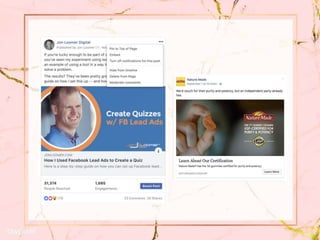
• Brands know this, and they now use
Facebook “likes” and other forms of social
approval to advertise their products.
Different tactics that are generally
used for social proof
 Positive Reviews
 Customer Testimonials
 Endorsements from Celebrities & Influencers
 Social Media Following
 User or Customer Count
 Awards & Recognition
Acknowledging resistance
• Transparency, or the illusion of transparency,
is one way that brands attempt to use
consumer resistance to their advantage.
• As noticed consumers don’t like to be told
what to do or what to buy. Some claim
advertisers effectively use anti-consumerism
or anti-advertising sentiments and turn them
against consumers to sell them product.
Experts’ opinions
• the kind of TV commercial with a professionally-looking
expert talking about the benefits of the product.
• It’s a common technique to build trust.
• Often they are presented as doctors or members of
associations with seriously sounding names that call to
mind an official institution.
• Do these organizations really exist? Are these people legit
experts or just actors? Why on earth would a health
organization promote a certain brand of products?! No one
knows, and no one infact-checks this.
• But even that we are not really aware of it, we
unconsciously remember the product as reliable and
recommended by experts, and this affects our shopping
decisions.
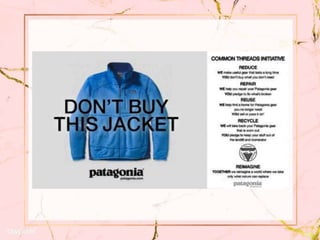
Reverse psychology
• Taking advantage of reverse psychology, a
technique largely tied in with acknowledging
resistance, involves persuading someone to
do what you want by pretending not to want
it or by pretending to want something else.
• The principle is closely related to reactance
theory, or the idea that people who feel their
control is being taken away will take it back
through defiance.
Manipulation through language
• Research has revealed that much of what
happens in our minds as a result
of language use is still hidden from our
conscious awareness.
• Advertisers know this phenomenon better.
• They use the manipulation of language to
suggest something about their products
without directly claiming it to be true.
Product placement
• Although no one of us wants to admit to being
prone to such techniques considered as cheap,
inserting a product in a TV show or a movie, really
works – even when sometimes we are not aware
that we are looking at a certain product or it’s not
clearly exposed and appears only in the corner of
the screen.
• It’s even more powerful, if we like the character
portrayed or are impressed with the lifestyle shown
on screen.
• When we see the placed product while shopping in
the store, something kind of clicks in our heads and
we feel the urge to buy, despite the fact we don’t
recall seeing the merchandise on screen.
Visual merchandising
• Before we can make someone listen to us,
we will be judged by how we look. And,
it’s the same with Visual Merchandising.
• Before someone wants to try a product or
service, they will look at it first and then
decide if they want to try it out.
• It is the first level of successful customer
experience.
How to stop misleading your
customers and win their love
• Check Your Reputation
• Use Data to Track Customer Retention
• Prioritize Relationships Over One Time
Sales
• Share Content Your Audience Needs
• Add Value to Your Products And Services
• Take an Ethical Approach to Using
Psychological Triggers
• Train Sales Staff Carefully
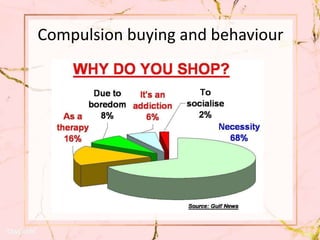
Compulsion buying and behaviour
Compulsive behavior
• refers to the continued repetition of a
behavior despite adverse consequences.
• The compulsions are fueled by the obsessions
(e.g., intrusive thoughts of contaminations).
• Compulsive buying is characterized by
excessive preoccupation or poor impulse
control with shopping, and adverse
consequences, like marital conflict and
financial problems.
Compulsive buying
Difference between impulsive and
compulsive buying
• Impulse buying is largely unplanned and
happens at the moment in reaction to an
external trigger — such as seeing the desired
item in the shop — compulsive shopping is
more inwardly motivated.
• A compulsive shopper will plan the shopping
experience as a way to avoid or relieve
uncomfortable internal feelings, such as
anxiety.
• Compulsive shoppers are also more likely to
experience negative consequences as a
result of their shopping than impulse buyers,
such as running into financial difficulties,
having arguments with family members, and
experiencing problems with work life.
• They are also more likely to fall into a
pattern of addictive behavior, in which they
shop more and more in an attempt to stave
off stress and anxiety. This is how shopping
addiction develops.
Types of Shopping Addicts
• Compulsive shopaholics- who shop when they are
feeling emotional distress
• Trophy shopaholics- who are always shopping for
the perfect item
• Shopaholics- who want the image of being a big
spender and love flashy items
• Bargain seekers- who purchase items they don’t
need because they are on sale
• Bulimic shoppers - who get caught in a vicious
cycle of buying and returning
• Collectors- who don’t feel complete unless they
have one item in each color or every piece of a set
Signs of Shopping Addiction
• Hiding shopping or the amount spent during
shopping
• Spending more than you can afford
• Shopping to console yourself when feeling angry or
depressed
• Shopping to avoid feeling guilty about a previous
shopping spree
• Distressed relationships due to spending or
shopping too much
• Losing control during shopping sprees
• Declining financial health or high amounts of credit
card debt
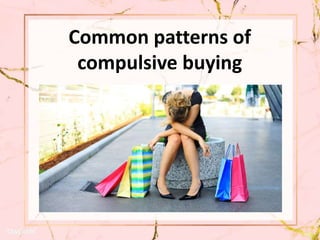
Common patterns of
compulsive buying
Impulse purchase
• Compulsive buyers often purchase things
on impulse that they can do without.
• They often try to conceal their shopping
habits.
• Spending without adequate reflection
can result in having many unopened
items (boxes of shoes or clothes) in their
closets as they continue the cycle of
buying.
Buyers high
• Compulsive shoppers experience a rush of
excitement when they buy.
• The euphoric experience is not from owning
something but from the act of buying it.
• This rush of excitement is often experienced
when they see a desirable item and consider
buying it.
• This excitement can become addictive.
Guilt and remorse
• Purchases are followed by feelings of
remorse.
• They feel guilty and irresponsible for
purchases that they perceive as indulges.
• The result may be a vicious cycle, that is,
negative feeling fuel another “fix,”
purchasing something else.
The pain of paying
• Paying with cash is more painful than paying
with credit cards.
• The main psychological force of credit cards
is that they separate the pleasure of buying
from the pain of paying.
• Credit cards seduce us into thinking about
the positive aspects of a purchase.
• In fact, CBD (Compulsive buying disorder) is
only prevalent in developed countries where
there is a system of credit and a consumer
culture.
Shopping to dampen unpleasant
emotions
• Compulsive attempt is an attempt to fill an
emotional void, like loneliness, lack of control, or
lack of self-esteem.
• Often, a negative mood, such as an argument or
frustration triggers an urge to shop.
• However, the decrease in negative emotions is
temporary and it is replaced by an increase in
anxiety or guilt
How to restrain the urge to spend?
• The most effective first step in treatment is to identify
why and how your shopping initially became a
problem.
• A useful strategy is to keep track of your triggers
(negative emotions such as family conflict, anxiety, or
loneliness).
• One needs to be reminded that additional material
goods and services initially provide extra pleasure,
but it is usually temporary.
• The extra pleasure wears off.
• It is also helpful to emphasize the importance of
managing credit cards or getting rid of credit cards. It
is a known fact that the use of cash tends to reduce
excessive spending.
Conclusion
• Remember that every touchpoint
customers have with their brand impacts
whether or not they feel manipulated or
as if they have been treated with
respect.
• In order to ensure they feel the latter,
your goal during every interaction must
be making the customer the winner.

Manipulation of consumers

  • 1.
    Manipulation of consumersby marketers and compulsive buying
  • 2.
    Who is acustomer? • A customer is an individual or business that purchases another company's goods or services. • Customers are important because they drive revenues; without them, businesses cannot continue to exist. • All businesses compete with other companies to attract customers, either by aggressively advertising their products, by lowering prices to expand their customer bases or developing unique products and experiences that customers love. • E.g Apple, Tesla, Google or TikTok.
  • 4.
    Role of customerin Marketing • Marketing Research- Consumers play a major role in marketing research before a product or service is released to the public. • Product Feedback- The consumer also plays a role in the feedback-gathering process after a company’s offering hits the market. • Bring in New Consumers- Consumers also can act as agents to further the effects of your marketing plan.
  • 5.
    Role of marketingon lives of consumers Meets consumer needs and wants Ensures organization survival, growth and reputation Widens market Adapting the right price Better product offerings Creates utility Management of demand Face competition Discharge social responsibilities Economic growth
  • 6.
    Advertisers Use toManipulate cosumers by Anthropomorphism Social proof Acknowledging resistance Experts’ opinions Reverse psychology Misleading visuals Manipulation through language Visual techniques of manipulation- • Product placement • Visual merchandising
  • 7.
    Anthropomorphism • One waythat advertisers get consumers attention is by giving human qualities to non-human objects or beings. • E.g- The World Wildlife Fund also makes use of anthropomorphism, frequently giving animals human characteristics in its advertising to make viewers feel an emotional closeness or empathy with the animal.
  • 9.
    Social proof • Thepopularity of consumer review sites and apps is evidence of just how much value today’s consumers place on customer feedback. • Brands know this, and they now use Facebook “likes” and other forms of social approval to advertise their products.
  • 11.
    Different tactics thatare generally used for social proof  Positive Reviews  Customer Testimonials  Endorsements from Celebrities & Influencers  Social Media Following  User or Customer Count  Awards & Recognition
  • 12.
    Acknowledging resistance • Transparency,or the illusion of transparency, is one way that brands attempt to use consumer resistance to their advantage. • As noticed consumers don’t like to be told what to do or what to buy. Some claim advertisers effectively use anti-consumerism or anti-advertising sentiments and turn them against consumers to sell them product.
  • 14.
    Experts’ opinions • thekind of TV commercial with a professionally-looking expert talking about the benefits of the product. • It’s a common technique to build trust. • Often they are presented as doctors or members of associations with seriously sounding names that call to mind an official institution. • Do these organizations really exist? Are these people legit experts or just actors? Why on earth would a health organization promote a certain brand of products?! No one knows, and no one infact-checks this. • But even that we are not really aware of it, we unconsciously remember the product as reliable and recommended by experts, and this affects our shopping decisions.
  • 16.
    Reverse psychology • Takingadvantage of reverse psychology, a technique largely tied in with acknowledging resistance, involves persuading someone to do what you want by pretending not to want it or by pretending to want something else. • The principle is closely related to reactance theory, or the idea that people who feel their control is being taken away will take it back through defiance.
  • 18.
    Manipulation through language •Research has revealed that much of what happens in our minds as a result of language use is still hidden from our conscious awareness. • Advertisers know this phenomenon better. • They use the manipulation of language to suggest something about their products without directly claiming it to be true.
  • 19.
    Product placement • Althoughno one of us wants to admit to being prone to such techniques considered as cheap, inserting a product in a TV show or a movie, really works – even when sometimes we are not aware that we are looking at a certain product or it’s not clearly exposed and appears only in the corner of the screen. • It’s even more powerful, if we like the character portrayed or are impressed with the lifestyle shown on screen. • When we see the placed product while shopping in the store, something kind of clicks in our heads and we feel the urge to buy, despite the fact we don’t recall seeing the merchandise on screen.
  • 21.
    Visual merchandising • Beforewe can make someone listen to us, we will be judged by how we look. And, it’s the same with Visual Merchandising. • Before someone wants to try a product or service, they will look at it first and then decide if they want to try it out. • It is the first level of successful customer experience.
  • 23.
    How to stopmisleading your customers and win their love • Check Your Reputation • Use Data to Track Customer Retention • Prioritize Relationships Over One Time Sales • Share Content Your Audience Needs • Add Value to Your Products And Services • Take an Ethical Approach to Using Psychological Triggers • Train Sales Staff Carefully
  • 24.
  • 25.
    Compulsive behavior • refersto the continued repetition of a behavior despite adverse consequences. • The compulsions are fueled by the obsessions (e.g., intrusive thoughts of contaminations). • Compulsive buying is characterized by excessive preoccupation or poor impulse control with shopping, and adverse consequences, like marital conflict and financial problems. Compulsive buying
  • 26.
    Difference between impulsiveand compulsive buying • Impulse buying is largely unplanned and happens at the moment in reaction to an external trigger — such as seeing the desired item in the shop — compulsive shopping is more inwardly motivated. • A compulsive shopper will plan the shopping experience as a way to avoid or relieve uncomfortable internal feelings, such as anxiety.
  • 27.
    • Compulsive shoppersare also more likely to experience negative consequences as a result of their shopping than impulse buyers, such as running into financial difficulties, having arguments with family members, and experiencing problems with work life. • They are also more likely to fall into a pattern of addictive behavior, in which they shop more and more in an attempt to stave off stress and anxiety. This is how shopping addiction develops.
  • 28.
    Types of ShoppingAddicts • Compulsive shopaholics- who shop when they are feeling emotional distress • Trophy shopaholics- who are always shopping for the perfect item • Shopaholics- who want the image of being a big spender and love flashy items • Bargain seekers- who purchase items they don’t need because they are on sale • Bulimic shoppers - who get caught in a vicious cycle of buying and returning • Collectors- who don’t feel complete unless they have one item in each color or every piece of a set
  • 29.
    Signs of ShoppingAddiction • Hiding shopping or the amount spent during shopping • Spending more than you can afford • Shopping to console yourself when feeling angry or depressed • Shopping to avoid feeling guilty about a previous shopping spree • Distressed relationships due to spending or shopping too much • Losing control during shopping sprees • Declining financial health or high amounts of credit card debt
  • 30.
  • 31.
    Impulse purchase • Compulsivebuyers often purchase things on impulse that they can do without. • They often try to conceal their shopping habits. • Spending without adequate reflection can result in having many unopened items (boxes of shoes or clothes) in their closets as they continue the cycle of buying.
  • 32.
    Buyers high • Compulsiveshoppers experience a rush of excitement when they buy. • The euphoric experience is not from owning something but from the act of buying it. • This rush of excitement is often experienced when they see a desirable item and consider buying it. • This excitement can become addictive.
  • 33.
    Guilt and remorse •Purchases are followed by feelings of remorse. • They feel guilty and irresponsible for purchases that they perceive as indulges. • The result may be a vicious cycle, that is, negative feeling fuel another “fix,” purchasing something else.
  • 34.
    The pain ofpaying • Paying with cash is more painful than paying with credit cards. • The main psychological force of credit cards is that they separate the pleasure of buying from the pain of paying. • Credit cards seduce us into thinking about the positive aspects of a purchase. • In fact, CBD (Compulsive buying disorder) is only prevalent in developed countries where there is a system of credit and a consumer culture.
  • 35.
    Shopping to dampenunpleasant emotions • Compulsive attempt is an attempt to fill an emotional void, like loneliness, lack of control, or lack of self-esteem. • Often, a negative mood, such as an argument or frustration triggers an urge to shop. • However, the decrease in negative emotions is temporary and it is replaced by an increase in anxiety or guilt
  • 36.
    How to restrainthe urge to spend? • The most effective first step in treatment is to identify why and how your shopping initially became a problem. • A useful strategy is to keep track of your triggers (negative emotions such as family conflict, anxiety, or loneliness). • One needs to be reminded that additional material goods and services initially provide extra pleasure, but it is usually temporary. • The extra pleasure wears off. • It is also helpful to emphasize the importance of managing credit cards or getting rid of credit cards. It is a known fact that the use of cash tends to reduce excessive spending.
  • 37.
    Conclusion • Remember thatevery touchpoint customers have with their brand impacts whether or not they feel manipulated or as if they have been treated with respect. • In order to ensure they feel the latter, your goal during every interaction must be making the customer the winner.