From managing pilot-projects
to institutionalization of
E-Learning
ILO course
Management of Distance Learning
Systems
Turin 19-20 January 2005
Lecture by G. Marconato
It is not (very) difficult to
implement a successful e-
learning
pilot project
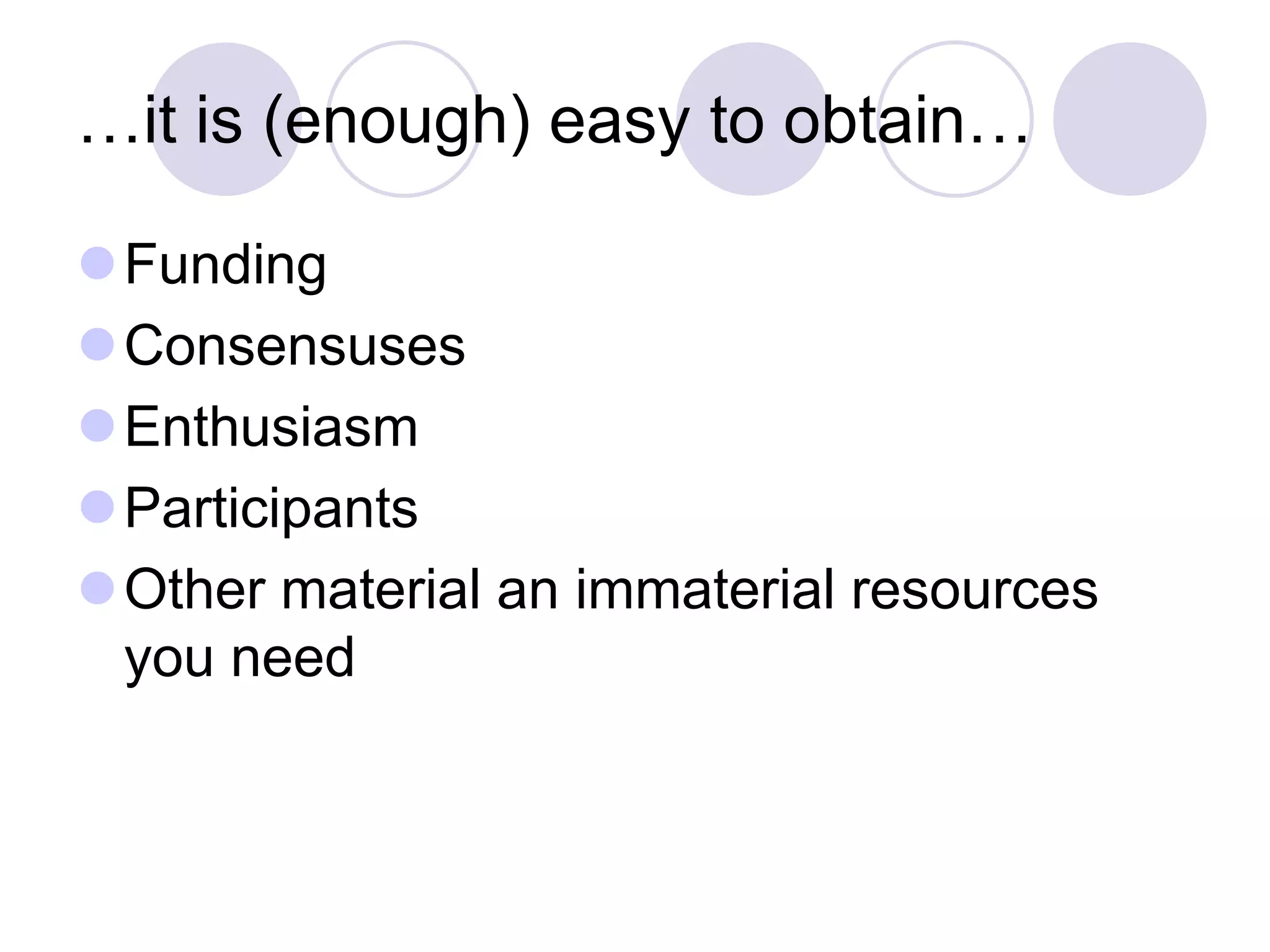
…it is (enough) easy to obtain…
⚫Funding
⚫Consensuses
⚫Enthusiasm
⚫Participants
⚫Other material an immaterial resources
you need
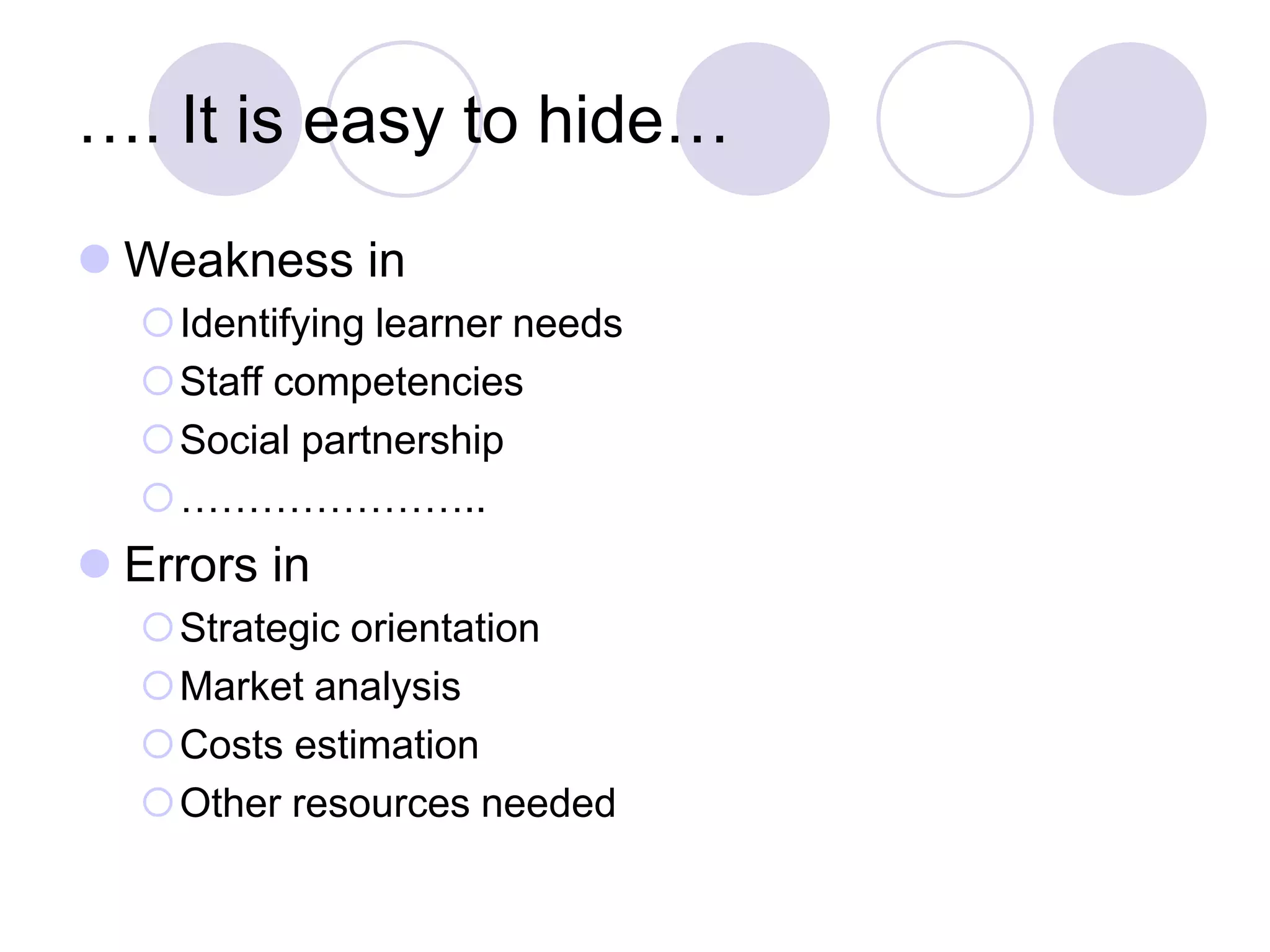
…. It is easy to hide…
⚫ Weakness in
Identifying learner needs
Staff competencies
Social partnership
…………………..
⚫ Errors in
Strategic orientation
Market analysis
Costs estimation
Other resources needed
Moving from occasionally
training offer to a well
established one require………
A well………….
⚫………… planned
⚫………….managed
Long-term programme
Awareness of….
⚫ All the variables involved in a successful
programme
⚫ All the traps might be hidden under the surface
⚫ All the resources (material and immaterial)
needed
⚫ All the conflicts between old and new
stakeholders in the training arena
⚫ The human-resistance to every innovation and
changing
The curve of dissemination of
innovation
Rogers E M (1983)Diffusion of
Innovations (1st ed.; 1962)
New York; Free Press
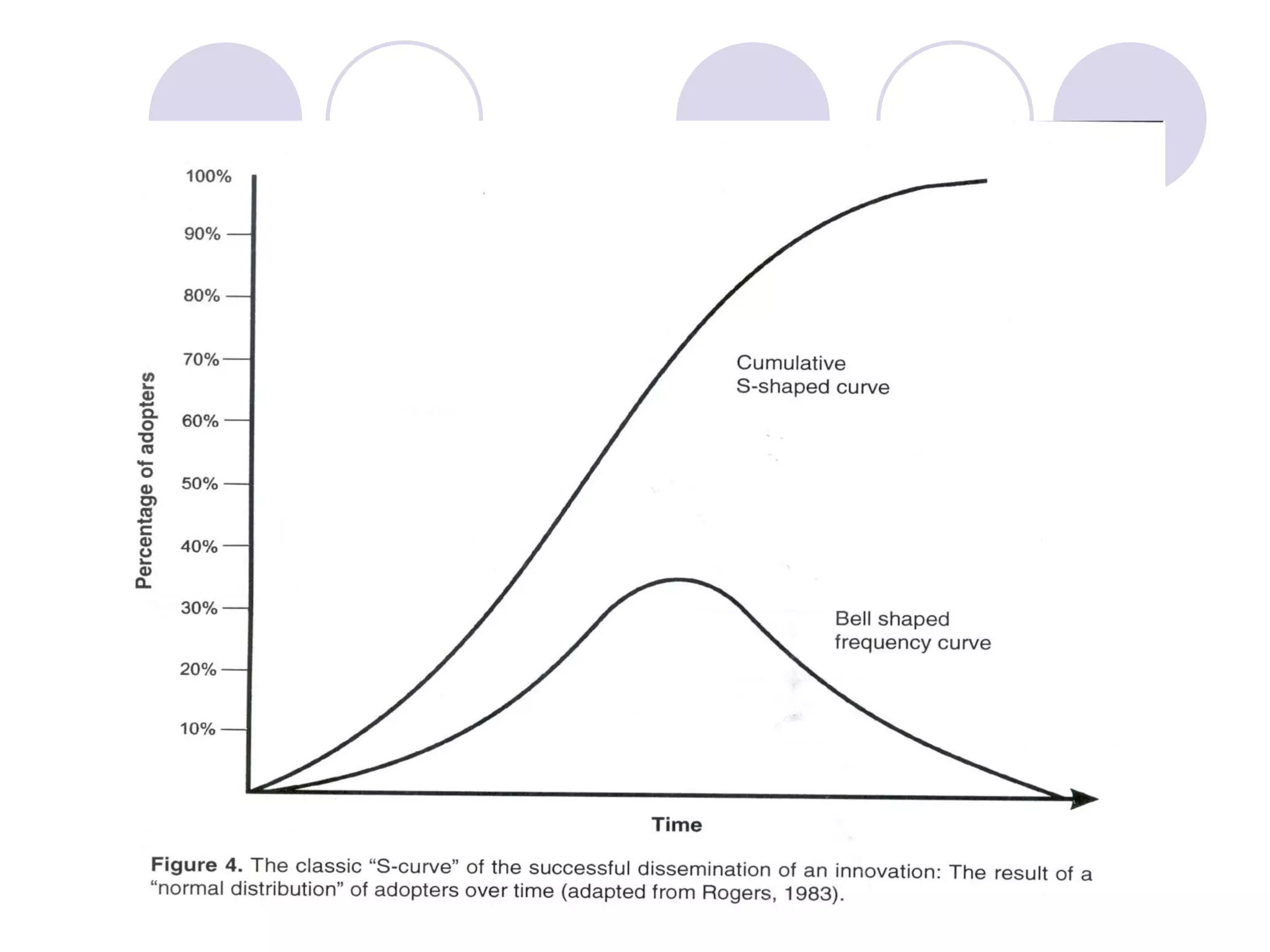
In an ideally “normal” group, an
innovation would be adopted
⚫Initially slowly by enthusiasts and early
adopters
⚫As the innovation is seen to be beneficial,
it is adopted with increasing frequency
⚫As the innovation saturates the market
there are few people left to climb aboard,
so the frequency of adoption start to
decline
The “Phoenix Phenomenon”
A brief review of the
innovation dynamics
Adapted by: A. J. Romiszowski, How,s the e-
learning Baby? Factors Leading to Success or
Failure of Educational Technology Innovation,
Educational technology, vol. 44, no.1
..such the Arabian Phoenix…
The mythical Phoenix bird is supposed
to die by fire, flying too close to the
sun, and to be reborn from its own
ashes
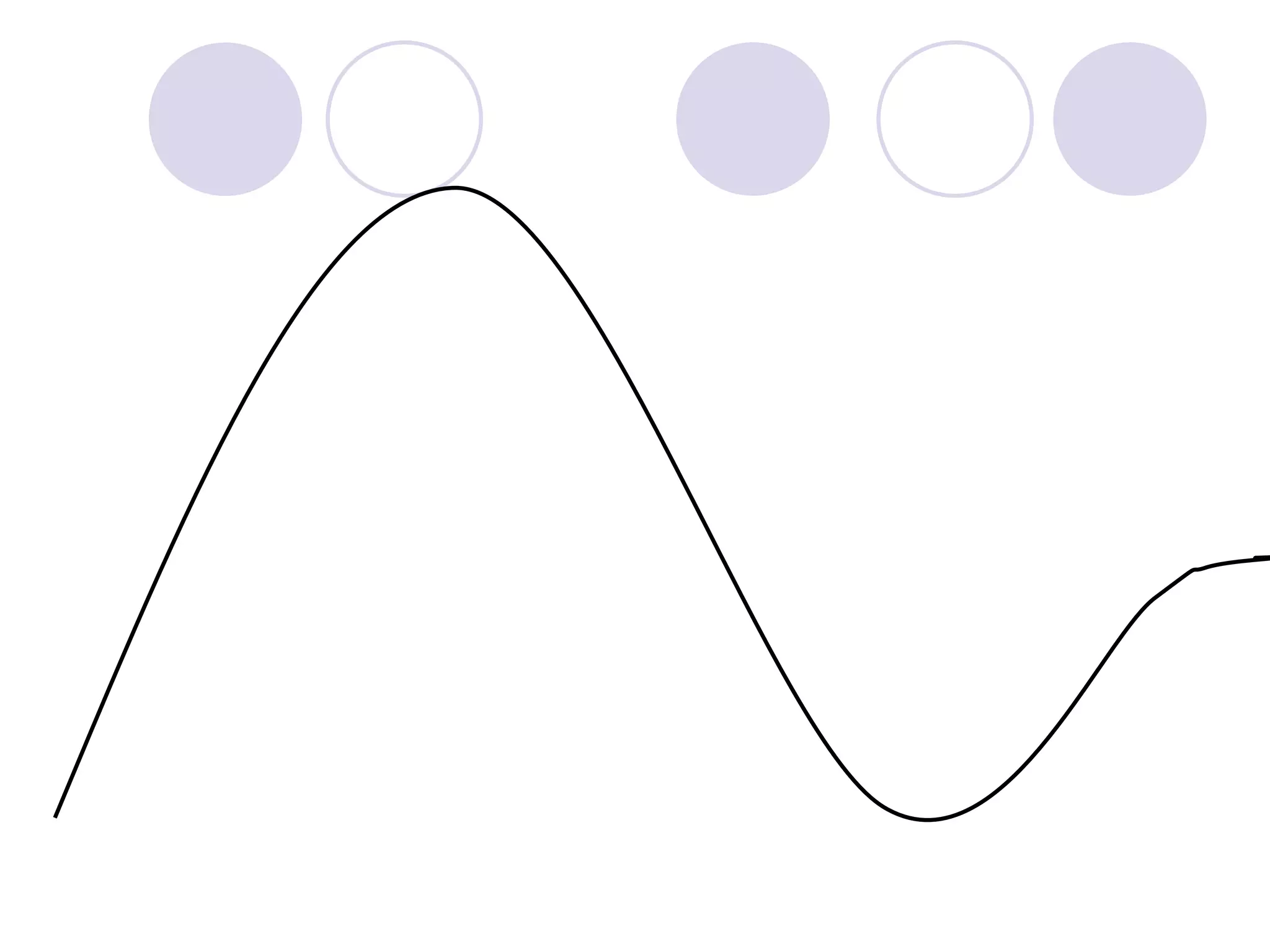
..as many innovations in training …
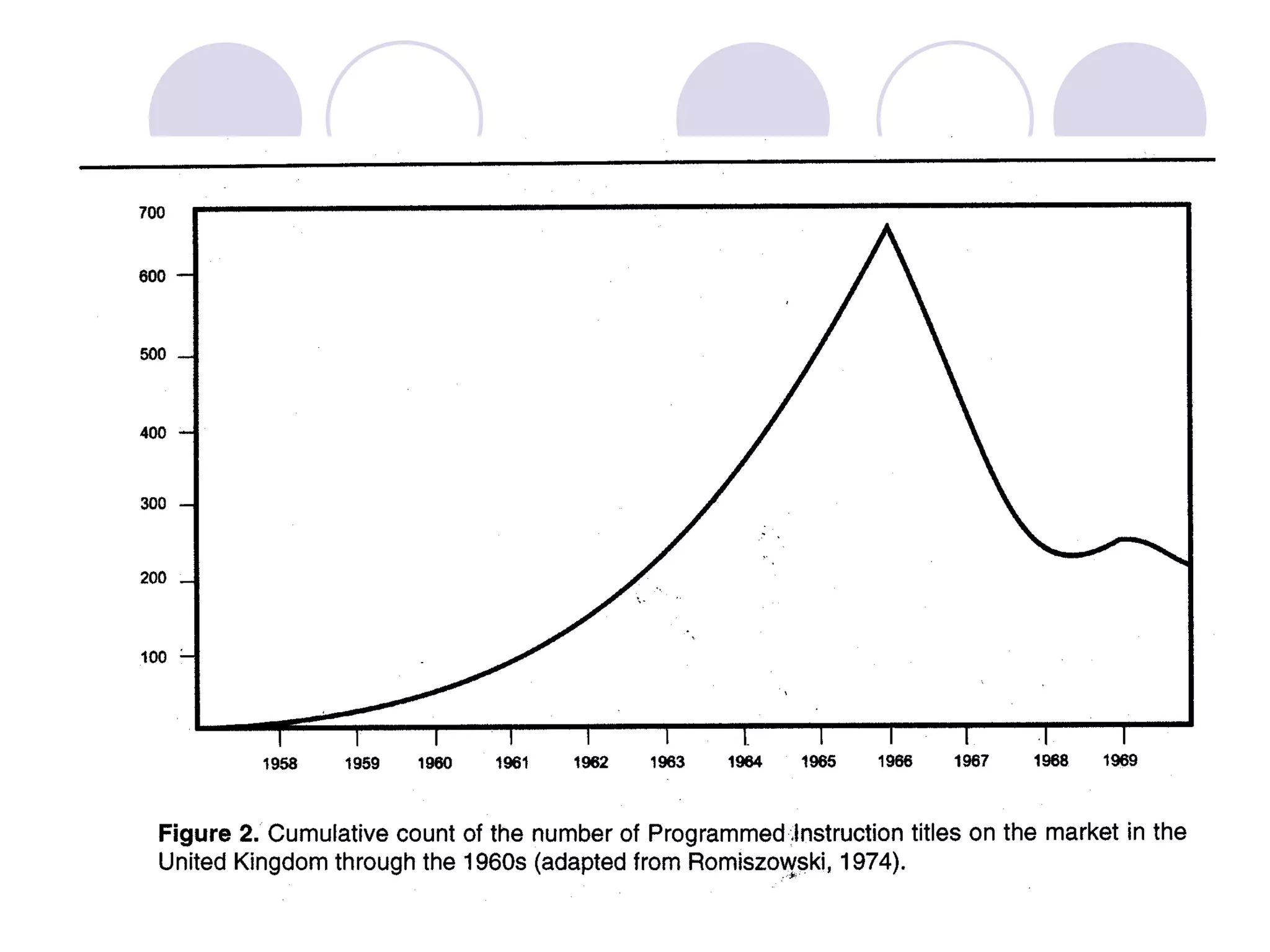
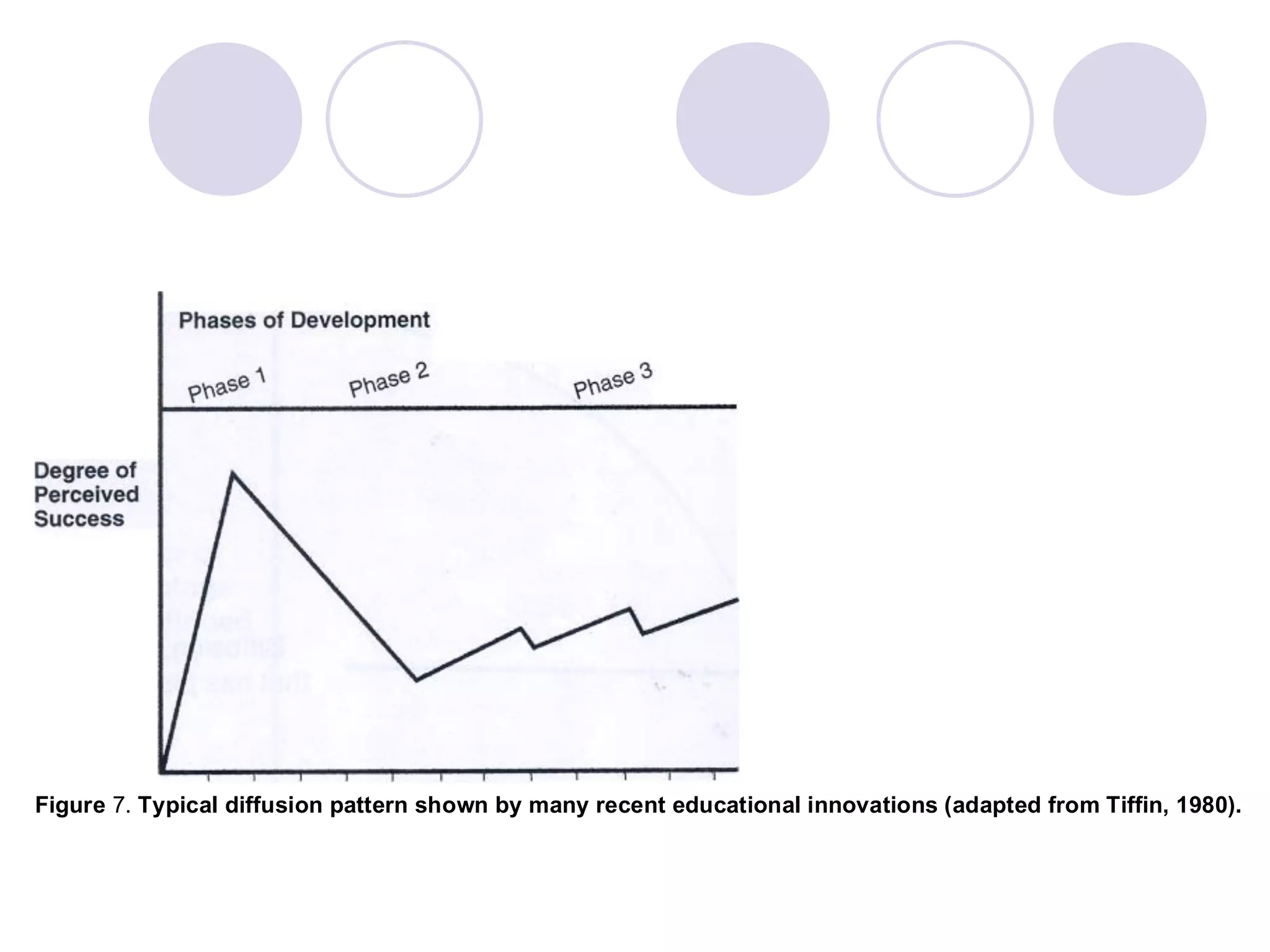
… displays the “rise – fall – plateau –
rebirth” effect
…why?
⚫ …the early adopters of the innovation,
managed, through their enthusiasm, to obtain
much support and acceptance from official
bodies and private organisations.
⚫ …with funding and organisational support, the
innovation had a rapid rise;
⚫ …some early adopters where so inexperienced
ed overconfident the bulk of the innovative
projects were poorly designed and inadequately
implemented ..
⚫…inevitably the expected benefits and
returns on investment did not
materialised
⚫…sponsor bodies began to withdraw
their support and cut off the source of
funding
⚫… the ensuing downslide was as
rapid as the previous climb
⚫ …some of the better project survive for
longer, creating a plateau at a much lower
level of market penetration than the early
peak
⚫… learning from their own mistakes,
innovation promoters identified how, when
and where it is possible to get the
innovation to deliver the expected benefits
⚫… a process of slowly and cautious rebirth
of the innovation may then take place
..like the mythical Phoenix bird…
…the adopters of the innovation first kill
it through inappropriate and
unsustainable projects, in order to
then allow it to be reborn in a more
appropriate and sustainable form
Figure 7. Typical diffusion pattern shown by many recent educational innovations (adapted from Tiffin, 1980).
Phase one…
⚫…is the initial euphoric “flight of the
Phoenix”, up into the sky much higher than
wise, driven by the enthusiasm of the early
adopters and fuelled by funding and
support from stakeholders that expect
certain benefits in return
Phase two….
⚫…is the tumble back to earth as the
project fail to deliver the promised benefits
and the stakeholders withdraw their
support – the Phoenix flies too close to the
sun and is consumed by flames
Phase three…
⚫….is the slow and careful rebirth of the
Phoenix from its ashes – the expert have
learned from their mistakes that the world
is not quite as predictable and well
ordered as they thought, and that the each
project has to be well planned and must
be skilfully implemented and managed, if
the theoretical benefits are to be reaped in
practice
From Tiffin (cited in Romiszowski)
The “rebirth” process is erratic and
bumpy, rather smooth and constant
Failure in e-learning can occur at three
interlocking levels:
⚫The product level: poor course design.
Inadequate technology structure;
⚫The learner level: poorly prepared learner,
lack of motivation, no time;
⚫The organisational level: low managerial
support, lack of reward structure
(Philips V, 2000, why does corporate e-
learning fail? Virtual University Gazette)
Product Level
⚫ Poor course design (chunk of theory and facts
with very little real-life applications)
⚫ Poor e-classroom design (complex navigation,
chat rooms that crash, ugly interface)
⚫ Ill-performing technologies (poor audio, jerky
video, interrupted data downloads..)
⚫ Poorly managed course social interactions
(untrained or untried online moderators)
⚫ Slow instructor/mentor response time
Learner Level
⚫Lack of time
⚫Low interest in subject matter
⚫Low motivation for learning
⚫Poor self-study skills
⚫Poor time-management skills
⚫Lack of necessary e-skills
⚫Psychological resistance to losing F2F
learning perks
Organisational Level
⚫ Poor marketing of course events
⚫ Lack of clear reward structure
⚫ Failure to provide quality learning environment
⚫ Failure to provide quality learning equipment
⚫ Failure to provide managerial feedback and
support of learning
⚫ Failure to provide tine on-the-job to train
⚫ Corporate-wide lack of dedication to a learning
culture
Institutionalisation of e-
Learning
Some “rule of thumb” from my
own experience
Critical dimensions
⚫You have to gain a social consensus to
your initiative: key stakeholders must “buy”
your idea
⚫You have to underpin your initiative on a
wide partnership: the larger the
competence you can count on and the
users target, the better it is
Critical dimensions (follows)
⚫You have to develop specific pedagogical,
didactics, managerial and technological
competence: developing and managing
on-line education and training requires
quite new competencies than the F2F
ones
⚫You have to manage pilot project with the
aim of creating the conditions for the
establishment of the activity
Which are the factors that
mainly affect the consolidation
process?
During the pilot project,
be careful of….
During the pilot project,
be careful of….
⚫…to spread between the stakeholders the
knowledge and the awareness about the
strengthen and the range of application of
ICT to training
⚫ … to spread between the potential users
the knowledge of the new way to access
to training opportunity: make it taste!
⚫…to develop the required competencies to
manage didactic, organisational and
technological matters
⚫…to set up an affordable technological
infrastructure
⚫… to provide your system with as much
didactic resources (learning materials,
technological support tools, hardware…),
as you can

Management of Distance Learning Systems in China - From managing pilot project to institutionalisation of e-learning

  • 1.
    From managing pilot-projects toinstitutionalization of E-Learning ILO course Management of Distance Learning Systems Turin 19-20 January 2005 Lecture by G. Marconato
  • 2.
    It is not(very) difficult to implement a successful e- learning pilot project
  • 3.
    …it is (enough)easy to obtain… ⚫Funding ⚫Consensuses ⚫Enthusiasm ⚫Participants ⚫Other material an immaterial resources you need
  • 4.
    …. It iseasy to hide… ⚫ Weakness in Identifying learner needs Staff competencies Social partnership ………………….. ⚫ Errors in Strategic orientation Market analysis Costs estimation Other resources needed
  • 5.
    Moving from occasionally trainingoffer to a well established one require………
  • 6.
  • 7.
    Awareness of…. ⚫ Allthe variables involved in a successful programme ⚫ All the traps might be hidden under the surface ⚫ All the resources (material and immaterial) needed ⚫ All the conflicts between old and new stakeholders in the training arena ⚫ The human-resistance to every innovation and changing
  • 8.
    The curve ofdissemination of innovation Rogers E M (1983)Diffusion of Innovations (1st ed.; 1962) New York; Free Press
  • 9.
    In an ideally“normal” group, an innovation would be adopted ⚫Initially slowly by enthusiasts and early adopters ⚫As the innovation is seen to be beneficial, it is adopted with increasing frequency ⚫As the innovation saturates the market there are few people left to climb aboard, so the frequency of adoption start to decline
  • 11.
    The “Phoenix Phenomenon” Abrief review of the innovation dynamics Adapted by: A. J. Romiszowski, How,s the e- learning Baby? Factors Leading to Success or Failure of Educational Technology Innovation, Educational technology, vol. 44, no.1
  • 12.
    ..such the ArabianPhoenix… The mythical Phoenix bird is supposed to die by fire, flying too close to the sun, and to be reborn from its own ashes
  • 13.
    ..as many innovationsin training … … displays the “rise – fall – plateau – rebirth” effect
  • 15.
    …why? ⚫ …the earlyadopters of the innovation, managed, through their enthusiasm, to obtain much support and acceptance from official bodies and private organisations. ⚫ …with funding and organisational support, the innovation had a rapid rise; ⚫ …some early adopters where so inexperienced ed overconfident the bulk of the innovative projects were poorly designed and inadequately implemented ..
  • 16.
    ⚫…inevitably the expectedbenefits and returns on investment did not materialised ⚫…sponsor bodies began to withdraw their support and cut off the source of funding ⚫… the ensuing downslide was as rapid as the previous climb
  • 17.
    ⚫ …some ofthe better project survive for longer, creating a plateau at a much lower level of market penetration than the early peak ⚫… learning from their own mistakes, innovation promoters identified how, when and where it is possible to get the innovation to deliver the expected benefits ⚫… a process of slowly and cautious rebirth of the innovation may then take place
  • 18.
    ..like the mythicalPhoenix bird… …the adopters of the innovation first kill it through inappropriate and unsustainable projects, in order to then allow it to be reborn in a more appropriate and sustainable form
  • 20.
    Figure 7. Typicaldiffusion pattern shown by many recent educational innovations (adapted from Tiffin, 1980).
  • 21.
    Phase one… ⚫…is theinitial euphoric “flight of the Phoenix”, up into the sky much higher than wise, driven by the enthusiasm of the early adopters and fuelled by funding and support from stakeholders that expect certain benefits in return
  • 22.
    Phase two…. ⚫…is thetumble back to earth as the project fail to deliver the promised benefits and the stakeholders withdraw their support – the Phoenix flies too close to the sun and is consumed by flames
  • 23.
    Phase three… ⚫….is theslow and careful rebirth of the Phoenix from its ashes – the expert have learned from their mistakes that the world is not quite as predictable and well ordered as they thought, and that the each project has to be well planned and must be skilfully implemented and managed, if the theoretical benefits are to be reaped in practice
  • 24.
    From Tiffin (citedin Romiszowski) The “rebirth” process is erratic and bumpy, rather smooth and constant
  • 25.
    Failure in e-learningcan occur at three interlocking levels: ⚫The product level: poor course design. Inadequate technology structure; ⚫The learner level: poorly prepared learner, lack of motivation, no time; ⚫The organisational level: low managerial support, lack of reward structure (Philips V, 2000, why does corporate e- learning fail? Virtual University Gazette)
  • 26.
    Product Level ⚫ Poorcourse design (chunk of theory and facts with very little real-life applications) ⚫ Poor e-classroom design (complex navigation, chat rooms that crash, ugly interface) ⚫ Ill-performing technologies (poor audio, jerky video, interrupted data downloads..) ⚫ Poorly managed course social interactions (untrained or untried online moderators) ⚫ Slow instructor/mentor response time
  • 27.
    Learner Level ⚫Lack oftime ⚫Low interest in subject matter ⚫Low motivation for learning ⚫Poor self-study skills ⚫Poor time-management skills ⚫Lack of necessary e-skills ⚫Psychological resistance to losing F2F learning perks
  • 28.
    Organisational Level ⚫ Poormarketing of course events ⚫ Lack of clear reward structure ⚫ Failure to provide quality learning environment ⚫ Failure to provide quality learning equipment ⚫ Failure to provide managerial feedback and support of learning ⚫ Failure to provide tine on-the-job to train ⚫ Corporate-wide lack of dedication to a learning culture
  • 29.
    Institutionalisation of e- Learning Some“rule of thumb” from my own experience
  • 30.
    Critical dimensions ⚫You haveto gain a social consensus to your initiative: key stakeholders must “buy” your idea ⚫You have to underpin your initiative on a wide partnership: the larger the competence you can count on and the users target, the better it is
  • 31.
    Critical dimensions (follows) ⚫Youhave to develop specific pedagogical, didactics, managerial and technological competence: developing and managing on-line education and training requires quite new competencies than the F2F ones ⚫You have to manage pilot project with the aim of creating the conditions for the establishment of the activity
  • 32.
    Which are thefactors that mainly affect the consolidation process? During the pilot project, be careful of….
  • 33.
    During the pilotproject, be careful of…. ⚫…to spread between the stakeholders the knowledge and the awareness about the strengthen and the range of application of ICT to training ⚫ … to spread between the potential users the knowledge of the new way to access to training opportunity: make it taste!
  • 34.
    ⚫…to develop therequired competencies to manage didactic, organisational and technological matters ⚫…to set up an affordable technological infrastructure ⚫… to provide your system with as much didactic resources (learning materials, technological support tools, hardware…), as you can