
Presented by
Dr.Md. Sher Ali
BDS(Dhaka)
BCS(Health)
FCPS Part II Trainee
Dept. of Orthodontics and
Dentofacial Orthopedics,
DDCH.
 Types of deep bite
• Congenital deep bite (skeletal and
dentoalveolar).
• Acquired deep bite.
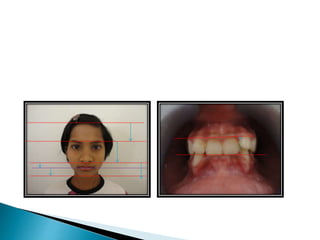
1. Skeletal deep bite, characterized by a
horizontal
growth factor.
The anterior facial height is reduced;especially the
lower third of the face, meanwhile the posterior
facial height is excessive.
When the anterior facial height is lesser than the
posterior facial height the maxillary bases
converge and the result is a deep bite of skeletal
origin.
2. Dentoalveolar deep bite is characterized by molar infraclusion and/or
incisor overeruption.
Deep bite produced by molar infraclusion presents the following
characteristics:
 a) The molars have erupted partially.
 b) The inter occlusal space is simple.
 c) The tongue occupies a lateral position.
 d) The distances between the basal planes of both maxillas and
the occlusal plane are short
The deep bite produced by the over eruption of the incisors
presents the following characteristics:
 a) The incisor edges of the incisors exceed the occlusal plane.
 b) The molars have erupted completely.
 c) The Spee curve is excessive.
 d) The inter occlusal space is reduced.
 Acquired deep bite can be caused by the
following factors:
 1. The lateral posture of the tongue.
 2. The premature loss of deciduous molars or
permanent posterior molars.
 3. Wear of the occlusal surface or dental
abrasion.
 The three fundamental orthodontic treatment
strategies
for deep bite correction (not including the surgical
option) are:
1. extrusion of posterior teeth;
2. flaring of anterior teeth;
3. and intrusion of upper and/or lower incisors.
These effects are most often achieved biomechanically
via bite plates,
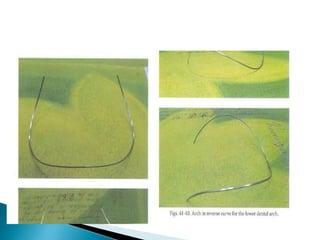
 reverse curve archwires,
 step bends in archwires, and
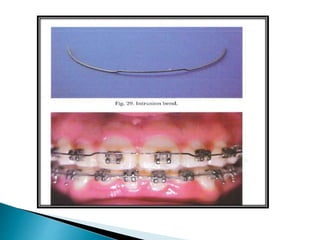
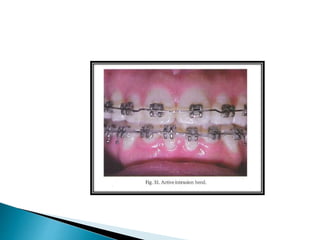
 intrusion arches .
 Extrusion of posterior teeth is one of the most
common methods to correct deep overbite . This
can be an efficacious method of bite opening.
 One millimeter of upper or lower molar
extrusion effectively reduces the incisor overlap
by 1.5–2.5 mm. A very common method to
extrude posterior teeth in patients with a deep
curve of Spee is to level the arches with the
sequential use of straight continuous archwires.
 A close variation of this technique is to use
mandibular reverse curve of Spee and/or
maxillary exaggerated curve of Spee wires.
Progressively increasing step bends in an
archwire or
purposely altering bracket placement heights also reduces
overbite.
 Other common treatment options include the use of a bite
plate, which allows the posterior teeth to erupt, thereby
reducing the overbite.
 Extrusion of posterior teeth is indicated in patients with a
short lower facial height, excessive curve of Spee, and
moderate-to-minimal incisor display.
 The stability of posterior extrusion may be questionable in
nongrowing patients.
 For patients with long lower facial heights, excessive
incisor display, or overeruption of upper incisors, true
incisor intrusion is indicated.
 The major disadvantages of correcting deep overbite by
extrusion are an excessive incisor display, an increase in
the interlabial gap, and worsening of a gingival smile
 Bite plates and reverse curve of Spee wires both
are frequently used to correct deep overbite.
 Bite plates and devices bonded to the lingual of
the upper
 incisors to disclude posterior teeth almost
invariably extrude posterior teeth.
 Reverse curve of Spee wires correct deep bite
primarily
by extrusion of posterior teeth , along with flaring
of incisors. Both extrusion and flaring may be
unstable movements in many patients due to their
effect on the facial neuromuscular balance.
 Reverse curve of Spee wires also alter the axial
inclinations of posterior teeth, which may also
contribute to relapse
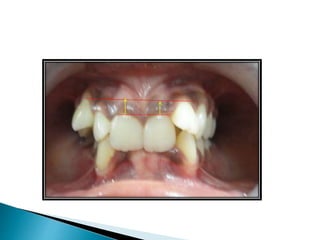
 An increase in proclination of upper and lower
incisors can effectively decrease deep overbite.
 Flaring incisors tends to decrease overbite secondary
to the rotational movement of the incisor crowns .
 For mild-to-moderate corrections, this approach
may be very effective.
 This option may be best indicated in patients with
lingually tipped incisors, such as in Class II, Division
2 patients, or Class III malocclusions that can
withstand flaring of the upper and lower incisors.
 The risk of flaring teeth include stability of proclined
incisors because of the possible disturbance of the
perioral neuromuscular balance
 Intrusion of upper and/or lower incisors is a
desirable method to correct deep bite in
many adolescent and adult patients .
 Intrusion of incisors is most reliably
accomplished if a pure intrusive force is
applied to the incisors. Intrusion is
particularly indicated in deep bite patients
with a large vertical dimension, excessive
incision–stomion distance, and a large
interlabial gap.
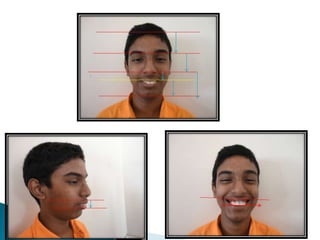
 Soft Tissue Considerations
 A careful clinical examination of a patient’s soft
tissue facial features can help in strategy selection
between extrusion of molars and intrusion of upper
and/or lower incisors.
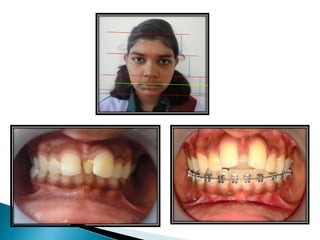
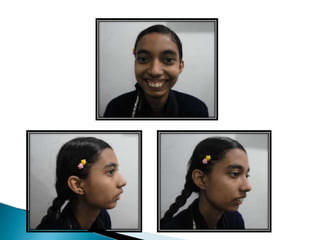
 The face is evaluated in frontal and profile views ,
both with relaxed lips and lips closed.
 Facial evaluation should include an assessment of the
interlabial gap, incision–stomion distance
 (incisor display), and lip support with the upper and
lower lips in their relaxed position.
 Observation of the patient during an unforced smile
is also important to determine the relationship of the
upper lip to the gingival line, as well as the smile line
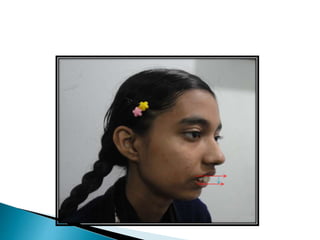
 In a relaxed lip position, an interlabial gap of 3–4 mm is
considered esthetically acceptable.
 The interlabial gap is increased in children with a long vertical
dimension and/or respiratory obstruction.
 Maintaining an acceptable interlabial gap should be
considered when selecting a strategy for deep overbite
correction. If a patient exhibits an excessive interlabial gap,
the objective should be to help reduce the discrepancy, if
possible, or at least to avoid worsening the problem.
 Class II, Division 1 patients with deep overbite, normal-to-
long lower facial heights, and increased anterior vertical
dimension, frequently present with these associated
concerns.
 Extrusion of the posterior teeth increases the lower vertical
dimension by rotating the mandible downward and backward
thereby worsening an already excessive interlabial gap.
 In a clinical situation where a patient’s incisor
display at rest (the distance of the upper incisal
edge to the lower lip, or the incision–stomion
distance) measures 3–4 mm, with a deep overbite
and a normal-to-long vertical dimension, the
treatment of choice may be intrusion of the lower
incisors.
 In adult patients, intrusion of the upper incisors
should only be planned if the incision–stomion
distance is >3 mm. A vast number of these
patients with deep overbite often benefit from
lower incisor intrusion, as its display increases
with age.
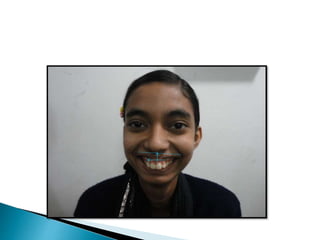
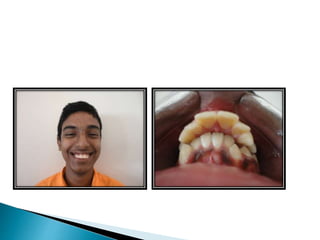
 Evaluating a natural smile provides valuable
information for planning deep overbite
correction.
 The upper lip, upper incisors, gingival levels, and
lower lip contour interrelate in an esthetic smile .
 The arc of the upper teeth should follow the
curvature of the lower lip and the upper lip
should be at or slightly above the upper gingival
line.
 Females frequently show more gingiva on
smiling than males. Planning deep overbite
correction with these important esthetic
considerations aids in determining appropriate
individualized treatment goals.
 Upper lip length can also contribute to the
overall dental esthetics of the patient at rest
or smiling.
 A short upper lip may play a role in an
excessive interlabial gap, the appearance of
excessively long maxillary anterior crown
lengths, or a gummy smile.
 Upper incisor intrusion is a valuable
alternative for patients with deep overbite
and a short upper lip.
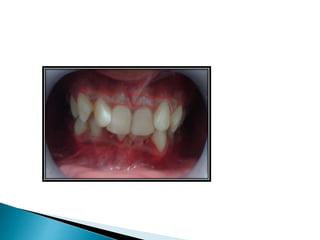
 The most favorable crown–gingival relationship is for the central incisors
and canine gingival margins to be higher than the lateral incisor
margins.
 The canine and central incisors should be at similar levels.
 This idealized “high– low–high” appearance of the gingival line of the
maxillary incisors improves the harmony of a smile.
 Class II, Division 2 malocclusions commonly show severe discrepancies
in this relationship. the central incisor gingival margins are far more
occlusal than the canine margins.
 This relationship can be corrected efficiently by anterior intrusion of the
four incisors.
 In patients with a larger discrepancy, the central incisors can be
intruded first to the level of the lateral incisors.
 Further deep overbite correction with intrusion of all four incisors may
follow to obtain the proper gingival relationship with the canine.
 In select cases, gingivectomy may further enhance this appearance.
 Three skeletal considerations can significantly affect the
outcome of overbite correction in patients:
1. Vertical dimension;
2. anteroposterior relationship of the maxilla to the
mandible;
3. and in younger patients,the amount of growth remaining
and its direction.
 Extrusion is contraindicated in patients with excessive
lower facial heights.
 In brachyfacial (short face) patients with deep overbite
malocclusions, increasing the vertical dimension through
posterior extrusion may be advised.
 It is important to consider function in these patients as a
strong musculature increases the risk of post-treatment
relapse.
 Intrusion of Incisors and Apical Root
 Resorption
 A major risk factor associated with orthodontic
treatment is external apical root resorption.
 While the prevalence of root resorption
secondary to tooth movement appears to be
high, reports average 1–2 mm for upper incisors
with 2–3% of patients showing a loss of up to 4
mm.
 An average intrusion of 2–3 mm and apical root
resorption of 1.0 mm was found.
 The stability of deep overbite correction may
be dependent on the specific nature of its
correction (intrusion, extrusion, or flaring).
 Additionally, various factors, such as growth
 and neuromuscular adaptation, may play a
role in relapse.
Thank You

Management of deep overbite

  • 1.
    Presented by Dr.Md. SherAli BDS(Dhaka) BCS(Health) FCPS Part II Trainee Dept. of Orthodontics and Dentofacial Orthopedics, DDCH.
  • 4.
     Types ofdeep bite • Congenital deep bite (skeletal and dentoalveolar). • Acquired deep bite.
  • 5.
    1. Skeletal deepbite, characterized by a horizontal growth factor. The anterior facial height is reduced;especially the lower third of the face, meanwhile the posterior facial height is excessive. When the anterior facial height is lesser than the posterior facial height the maxillary bases converge and the result is a deep bite of skeletal origin.
  • 7.
    2. Dentoalveolar deepbite is characterized by molar infraclusion and/or incisor overeruption. Deep bite produced by molar infraclusion presents the following characteristics:  a) The molars have erupted partially.  b) The inter occlusal space is simple.  c) The tongue occupies a lateral position.  d) The distances between the basal planes of both maxillas and the occlusal plane are short The deep bite produced by the over eruption of the incisors presents the following characteristics:  a) The incisor edges of the incisors exceed the occlusal plane.  b) The molars have erupted completely.  c) The Spee curve is excessive.  d) The inter occlusal space is reduced.
  • 8.
     Acquired deepbite can be caused by the following factors:  1. The lateral posture of the tongue.  2. The premature loss of deciduous molars or permanent posterior molars.  3. Wear of the occlusal surface or dental abrasion.
  • 9.
     The threefundamental orthodontic treatment strategies for deep bite correction (not including the surgical option) are: 1. extrusion of posterior teeth; 2. flaring of anterior teeth; 3. and intrusion of upper and/or lower incisors. These effects are most often achieved biomechanically via bite plates,  reverse curve archwires,  step bends in archwires, and  intrusion arches .
  • 10.
     Extrusion ofposterior teeth is one of the most common methods to correct deep overbite . This can be an efficacious method of bite opening.  One millimeter of upper or lower molar extrusion effectively reduces the incisor overlap by 1.5–2.5 mm. A very common method to extrude posterior teeth in patients with a deep curve of Spee is to level the arches with the sequential use of straight continuous archwires.  A close variation of this technique is to use mandibular reverse curve of Spee and/or maxillary exaggerated curve of Spee wires. Progressively increasing step bends in an archwire or
  • 11.
    purposely altering bracketplacement heights also reduces overbite.  Other common treatment options include the use of a bite plate, which allows the posterior teeth to erupt, thereby reducing the overbite.  Extrusion of posterior teeth is indicated in patients with a short lower facial height, excessive curve of Spee, and moderate-to-minimal incisor display.  The stability of posterior extrusion may be questionable in nongrowing patients.  For patients with long lower facial heights, excessive incisor display, or overeruption of upper incisors, true incisor intrusion is indicated.  The major disadvantages of correcting deep overbite by extrusion are an excessive incisor display, an increase in the interlabial gap, and worsening of a gingival smile
  • 16.
     Bite platesand reverse curve of Spee wires both are frequently used to correct deep overbite.  Bite plates and devices bonded to the lingual of the upper  incisors to disclude posterior teeth almost invariably extrude posterior teeth.  Reverse curve of Spee wires correct deep bite primarily by extrusion of posterior teeth , along with flaring of incisors. Both extrusion and flaring may be unstable movements in many patients due to their effect on the facial neuromuscular balance.  Reverse curve of Spee wires also alter the axial inclinations of posterior teeth, which may also contribute to relapse
  • 17.
     An increasein proclination of upper and lower incisors can effectively decrease deep overbite.  Flaring incisors tends to decrease overbite secondary to the rotational movement of the incisor crowns .  For mild-to-moderate corrections, this approach may be very effective.  This option may be best indicated in patients with lingually tipped incisors, such as in Class II, Division 2 patients, or Class III malocclusions that can withstand flaring of the upper and lower incisors.  The risk of flaring teeth include stability of proclined incisors because of the possible disturbance of the perioral neuromuscular balance
  • 19.
     Intrusion ofupper and/or lower incisors is a desirable method to correct deep bite in many adolescent and adult patients .  Intrusion of incisors is most reliably accomplished if a pure intrusive force is applied to the incisors. Intrusion is particularly indicated in deep bite patients with a large vertical dimension, excessive incision–stomion distance, and a large interlabial gap.
  • 21.
     Soft TissueConsiderations  A careful clinical examination of a patient’s soft tissue facial features can help in strategy selection between extrusion of molars and intrusion of upper and/or lower incisors.  The face is evaluated in frontal and profile views , both with relaxed lips and lips closed.  Facial evaluation should include an assessment of the interlabial gap, incision–stomion distance  (incisor display), and lip support with the upper and lower lips in their relaxed position.  Observation of the patient during an unforced smile is also important to determine the relationship of the upper lip to the gingival line, as well as the smile line
  • 22.
     In arelaxed lip position, an interlabial gap of 3–4 mm is considered esthetically acceptable.  The interlabial gap is increased in children with a long vertical dimension and/or respiratory obstruction.  Maintaining an acceptable interlabial gap should be considered when selecting a strategy for deep overbite correction. If a patient exhibits an excessive interlabial gap, the objective should be to help reduce the discrepancy, if possible, or at least to avoid worsening the problem.  Class II, Division 1 patients with deep overbite, normal-to- long lower facial heights, and increased anterior vertical dimension, frequently present with these associated concerns.  Extrusion of the posterior teeth increases the lower vertical dimension by rotating the mandible downward and backward thereby worsening an already excessive interlabial gap.
  • 24.
     In aclinical situation where a patient’s incisor display at rest (the distance of the upper incisal edge to the lower lip, or the incision–stomion distance) measures 3–4 mm, with a deep overbite and a normal-to-long vertical dimension, the treatment of choice may be intrusion of the lower incisors.  In adult patients, intrusion of the upper incisors should only be planned if the incision–stomion distance is >3 mm. A vast number of these patients with deep overbite often benefit from lower incisor intrusion, as its display increases with age.
  • 25.
     Evaluating anatural smile provides valuable information for planning deep overbite correction.  The upper lip, upper incisors, gingival levels, and lower lip contour interrelate in an esthetic smile .  The arc of the upper teeth should follow the curvature of the lower lip and the upper lip should be at or slightly above the upper gingival line.  Females frequently show more gingiva on smiling than males. Planning deep overbite correction with these important esthetic considerations aids in determining appropriate individualized treatment goals.
  • 27.
     Upper liplength can also contribute to the overall dental esthetics of the patient at rest or smiling.  A short upper lip may play a role in an excessive interlabial gap, the appearance of excessively long maxillary anterior crown lengths, or a gummy smile.  Upper incisor intrusion is a valuable alternative for patients with deep overbite and a short upper lip.
  • 29.
     The mostfavorable crown–gingival relationship is for the central incisors and canine gingival margins to be higher than the lateral incisor margins.  The canine and central incisors should be at similar levels.  This idealized “high– low–high” appearance of the gingival line of the maxillary incisors improves the harmony of a smile.  Class II, Division 2 malocclusions commonly show severe discrepancies in this relationship. the central incisor gingival margins are far more occlusal than the canine margins.  This relationship can be corrected efficiently by anterior intrusion of the four incisors.  In patients with a larger discrepancy, the central incisors can be intruded first to the level of the lateral incisors.  Further deep overbite correction with intrusion of all four incisors may follow to obtain the proper gingival relationship with the canine.  In select cases, gingivectomy may further enhance this appearance.
  • 31.
     Three skeletalconsiderations can significantly affect the outcome of overbite correction in patients: 1. Vertical dimension; 2. anteroposterior relationship of the maxilla to the mandible; 3. and in younger patients,the amount of growth remaining and its direction.  Extrusion is contraindicated in patients with excessive lower facial heights.  In brachyfacial (short face) patients with deep overbite malocclusions, increasing the vertical dimension through posterior extrusion may be advised.  It is important to consider function in these patients as a strong musculature increases the risk of post-treatment relapse.
  • 33.
     Intrusion ofIncisors and Apical Root  Resorption  A major risk factor associated with orthodontic treatment is external apical root resorption.  While the prevalence of root resorption secondary to tooth movement appears to be high, reports average 1–2 mm for upper incisors with 2–3% of patients showing a loss of up to 4 mm.  An average intrusion of 2–3 mm and apical root resorption of 1.0 mm was found.
  • 34.
     The stabilityof deep overbite correction may be dependent on the specific nature of its correction (intrusion, extrusion, or flaring).  Additionally, various factors, such as growth  and neuromuscular adaptation, may play a role in relapse.
  • 35.