Hamburg, 11th of September, 2015
Virtual Reality – Real Or Fantasy
malte@crazybunch.biz
@CrazyBunchTeam
Malte Schmidt
- What is Virtual Reality?
- What are the problems of VR?
- What are the opportunities of VR?
- Break A Brick and VR
- Conclusion
Table of Contents
What is Virtual Reality?
History
- Idea of Virtual Reality in 30‘s
- Virtual Reality totally flopped in the 90‘s
- In the era of smartphones a Luckey guy reinvented VR and the cards are now being reshuffled
- Matrix, Holodeck, Neuromancer, Ready Player One -> everyone knows what VR is
- VR is the ultimate escapist dream
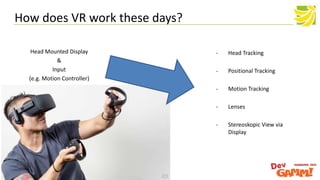
Head Mounted Display
&
Input
(e.g. Motion Controller)
How does VR work these days?
- Head Tracking
- Positional Tracking
- Motion Tracking
- Lenses
- Stereoskopic View via
Display
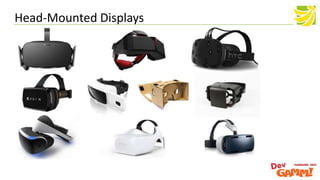
Head-Mounted Displays
Oculus Rift
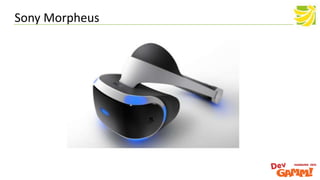
Sony Morpheus
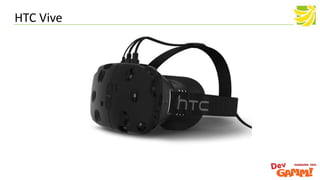
HTC Vive
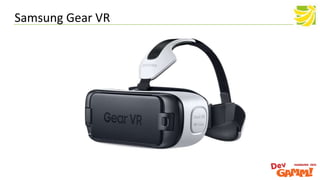
Samsung Gear VR
What are the problems of VR?
- Visual perception VS. vestibular system
- Causes dizziness, nausea and fatigue
- Prevent motion sickness in VR-applications:
- Latency
- Short play sessions
- Avoid unnatural movements like strafing or fast turning
- Haptic suits and haptic installations
- Use clever game design
Simulator- or motion sickness
- Avatar locomotion
- One of the biggest problems
- Controlling the avatar has to be reconsidered completely
- Classical Shooter controls won‘t work anymore (WASD and mouse) due to fast movements, strafing, turning and running backwards
- Body alignment and head alignment need to be controlled seperately. How to turn in VR?
- Game input
- Motion Controller
- Gamepad
- Motion Sensors (Leap Motion, Kinect, etc.)
- Treadmills (Virtualizer, Omni)
Locomotion and Input
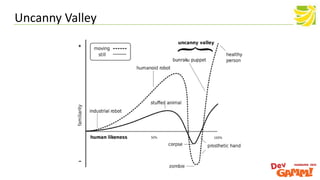
Uncanny Valley
Uncanny Valley
Uncanny Valley
- Trade-off between game complexity and the amount of peripheral hardware needed
- Mass market accessibilty with less peripheral hardware
- HMDs and hardware should be affordable and comfortable to wear
- Only hardcore gamers are going to use a lot of additional hardware
- There are still many problems like the need of wired and heavy HMDs, expensive hardware and space
needed for motion tracking systems
Ergonomics and mass market accessibility
What are the opportunities of VR?
- The feeling of being there, to have physical presence in a virtual environment
Presence
- Michael Abrash‘s checklist
- Technical aspects like low latency, high
resolution, high refresh rate, rock solid
tracking, wide field of view etc.
- Plausible virtual worlds and plausible
virtual avatars
- Haptic feedback
- Audio
Immersive
Virtual Reality
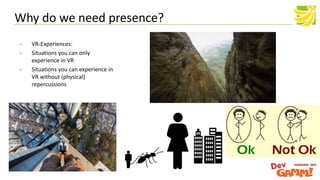
- VR-Experiences:
- Situations you can only
experience in VR
- Situations you can experience in
VR without (physical)
repercussions
Why do we need presence?
- Gaming
- Social Interaction
- Business
- Training
- Education
- Visualization
- Psychological Treatment
- Many more
Vast field of use
Replacement of most
aspects of the real world
Development
- Everyone can be an expert
- Everyone can be a pioneer
- Whole new platform
- Content is needed to prove that consumer VR works
- Indie devs can create innovative content and gameplay which AAA studios can't
- Still a small market with great visibility
Opportunities for indie devs
- Started as a game jam in early 2014
- Originally planned to be a Flash game
- 2D action puzzle shooter
- Idea to make „Break A Brick“ VR
- Release on Samsung Gear VR
Break A Brick and VR
- Short play sessions
- Do not flood the user with difficult input
- Or weird movement, that can cause motion sickness
- Less motion means less motion sickness
- Expose the strenghts of VR and conceal it‘s (current) weaknesses
- ( use cute Bricks and a cat to make the game more accessible ;) )
What we did
Conclusion
- VR is still at its beginning
- Make games which are fun with the current hardware
- Minimize motion sickness and maximize presence
- Experiment and use different approaches for VR
- Consumer-VR needs an existence proof
- It‘s not going to flop like in the 90‘s
- VR is still partially fantasy and partially real
www.virtualweekend.com
That‘s it! Thank you!

Malte Schmidt: Virtual Reality: Real Or Fantasy

  • 2.
    Hamburg, 11th ofSeptember, 2015 Virtual Reality – Real Or Fantasy malte@crazybunch.biz @CrazyBunchTeam Malte Schmidt
  • 3.
    - What isVirtual Reality? - What are the problems of VR? - What are the opportunities of VR? - Break A Brick and VR - Conclusion Table of Contents
  • 4.
  • 5.
    History - Idea ofVirtual Reality in 30‘s - Virtual Reality totally flopped in the 90‘s - In the era of smartphones a Luckey guy reinvented VR and the cards are now being reshuffled - Matrix, Holodeck, Neuromancer, Ready Player One -> everyone knows what VR is - VR is the ultimate escapist dream
  • 6.
    Head Mounted Display & Input (e.g.Motion Controller) How does VR work these days? - Head Tracking - Positional Tracking - Motion Tracking - Lenses - Stereoskopic View via Display
  • 7.
  • 8.
  • 9.
  • 10.
  • 11.
  • 12.
    What are theproblems of VR?
  • 13.
    - Visual perceptionVS. vestibular system - Causes dizziness, nausea and fatigue - Prevent motion sickness in VR-applications: - Latency - Short play sessions - Avoid unnatural movements like strafing or fast turning - Haptic suits and haptic installations - Use clever game design Simulator- or motion sickness
  • 14.
    - Avatar locomotion -One of the biggest problems - Controlling the avatar has to be reconsidered completely - Classical Shooter controls won‘t work anymore (WASD and mouse) due to fast movements, strafing, turning and running backwards - Body alignment and head alignment need to be controlled seperately. How to turn in VR? - Game input - Motion Controller - Gamepad - Motion Sensors (Leap Motion, Kinect, etc.) - Treadmills (Virtualizer, Omni) Locomotion and Input
  • 15.
  • 16.
  • 17.
  • 18.
    - Trade-off betweengame complexity and the amount of peripheral hardware needed - Mass market accessibilty with less peripheral hardware - HMDs and hardware should be affordable and comfortable to wear - Only hardcore gamers are going to use a lot of additional hardware - There are still many problems like the need of wired and heavy HMDs, expensive hardware and space needed for motion tracking systems Ergonomics and mass market accessibility
  • 19.
    What are theopportunities of VR?
  • 20.
    - The feelingof being there, to have physical presence in a virtual environment Presence - Michael Abrash‘s checklist - Technical aspects like low latency, high resolution, high refresh rate, rock solid tracking, wide field of view etc. - Plausible virtual worlds and plausible virtual avatars - Haptic feedback - Audio Immersive Virtual Reality
  • 21.
    - VR-Experiences: - Situationsyou can only experience in VR - Situations you can experience in VR without (physical) repercussions Why do we need presence?
  • 22.
    - Gaming - SocialInteraction - Business - Training - Education - Visualization - Psychological Treatment - Many more Vast field of use Replacement of most aspects of the real world Development
  • 23.
    - Everyone canbe an expert - Everyone can be a pioneer - Whole new platform - Content is needed to prove that consumer VR works - Indie devs can create innovative content and gameplay which AAA studios can't - Still a small market with great visibility Opportunities for indie devs
  • 24.
    - Started asa game jam in early 2014 - Originally planned to be a Flash game - 2D action puzzle shooter - Idea to make „Break A Brick“ VR - Release on Samsung Gear VR Break A Brick and VR
  • 26.
    - Short playsessions - Do not flood the user with difficult input - Or weird movement, that can cause motion sickness - Less motion means less motion sickness - Expose the strenghts of VR and conceal it‘s (current) weaknesses - ( use cute Bricks and a cat to make the game more accessible ;) ) What we did
  • 27.
    Conclusion - VR isstill at its beginning - Make games which are fun with the current hardware - Minimize motion sickness and maximize presence - Experiment and use different approaches for VR - Consumer-VR needs an existence proof - It‘s not going to flop like in the 90‘s - VR is still partially fantasy and partially real
  • 28.
  • 29.